
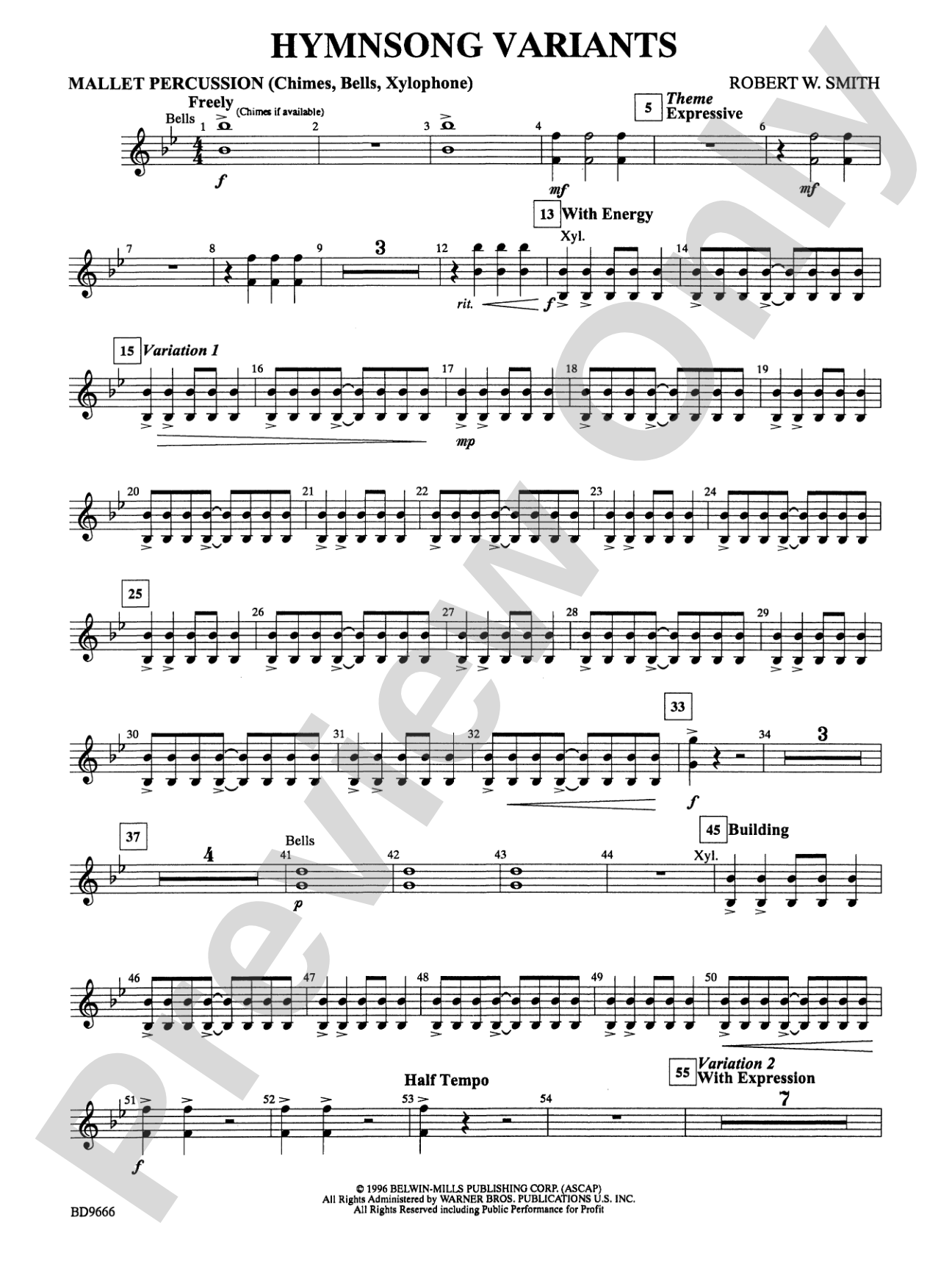

Hymnsong Variants: Mallets
By Robert W. Smith
Grade: 2 (Easy)
Item: 00-PC-0002036_M1
$3.00
Pickup currently not available
Description
This work, from the pen of Robert W. Smith, consists of an original theme with a set of three variations. A charismatic melody sets the scene and knits itself to a trio of stunning contrasts. As one expects from this talented composer, percussion plays a vital role to add hue and texture, driving the piece to a forceful finale. A dazzling display! (4:21)


Don't just read it, hear it, play along with it, and watch your students grow with it. In MakeMusic Cloud, Hymnsong Variants: Mallets comes alive with professional accompaniment, adjustable tempo, and built-in practice tools that turn solo practice into real progress.
Open in the Player
Jump straight in and assign it today.
Start Your Free Trial
Open this title and explore the full library in minutes.
Sample Audio
1
Audio File
--:--
0:00
0:00
Sample Video
No sample videos found.
Additional Details
Series:
Belwin Young Band
Publisher:
Alfred Music
Page Count:
264
SKU:
00-PC-0002036_M1
More about this title
About the Composer: Robert W. Smith

Robert W. Smith stands among America's most recorded composers for concert band and orchestra, with over 400 publications spanning nearly five decades. His education at Troy State University (Alabama) and the University of Miami prepared him for a career that would touch stages across North America, Europe, Australia, Asia, and beyond. His symphonies, The Divine Comedy and The Odyssey, have become touchstones for ambitious programs worldwide.
Smith's catalog includes works that have soundtracked moments of national significance, from presidential ceremonies in Japan to the opening of the Macy's Thanksgiving Day Parade and the Olympic Games. His gift for blending accessibility with musical substance has made him invaluable to developing ensembles and established bands alike. The Tempest and similar works for intermediate bands now anchor the standard repertoire, evidence of his ability to write music that endures.
Why we love this
Smith delivers exactly what Grade 2 musicians need: a melody so memorable that it anchors the ear through structural change, variations that genuinely contrast without demanding advanced technique, and percussion writing that invites all players into the musical storytelling. The piece moves decisively toward a satisfying climax without overreaching, leaving students with the tangible sense that they've played something complete and worthwhile.
What to expect
A charismatic theme unfolds with immediate appeal, then shifts ground beneath you three times in succession. Each variation reveals new colors in the harmony and instrumentation while keeping the core melody recognizable. The piece culminates with percussion and full ensemble driving toward a forceful, satisfying conclusion that feels earned rather than imposed.
Who it's for
Grade 2 concert bands ready to move beyond simple melodic statements into structured form. Students benefit from playing music that demonstrates how a single idea can sustain interest through contrast and development. Directors seeking contest or festival material that sounds more sophisticated than its technical demands.
How to get the most out of it
- Establish the theme in rehearsal with crystal clarity before any variation begins. The melody's strength depends on consistent intonation and phrasing across the ensemble.
- Give the percussion section intentional rehearsal time separate from the full band. Their rhythmic precision and dynamic control directly shape how each variation lands.
- Shape the three variations as distinct emotional territories rather than technical challenges. Each one should feel like a deliberate choice, not a departure.
- Build momentum gradually into the finale. Resist the urge to rush; let the accumulating energy of the percussion and harmonic movement carry the weight.
How to use it
This works beautifully as an opener or second piece on a concert, where its bright character and clear structure set an accomplished tone without requiring an intermission to shift gears. Consider pairing it with contrasting repertoire that allows the variations' structural clarity to shine. Its 4:21 duration and contest-ready polish make it ideal for festival programming where you want impact without excess.
Skills your students will build
- Following and responding to form in real time (theme recognition across three variations)
- Balance and blend when supporting a melody rather than carrying it
- Listening to percussion ensemble as a co-equal voice in shaping the musical narrative
- Dynamic control and phrasing across longer lines without text or choreography
- Tuning and intonation through harmonic changes that accompany the theme