Hymn for Those Who Serve: 1st B-flat Clarinet Sheet Music Preview

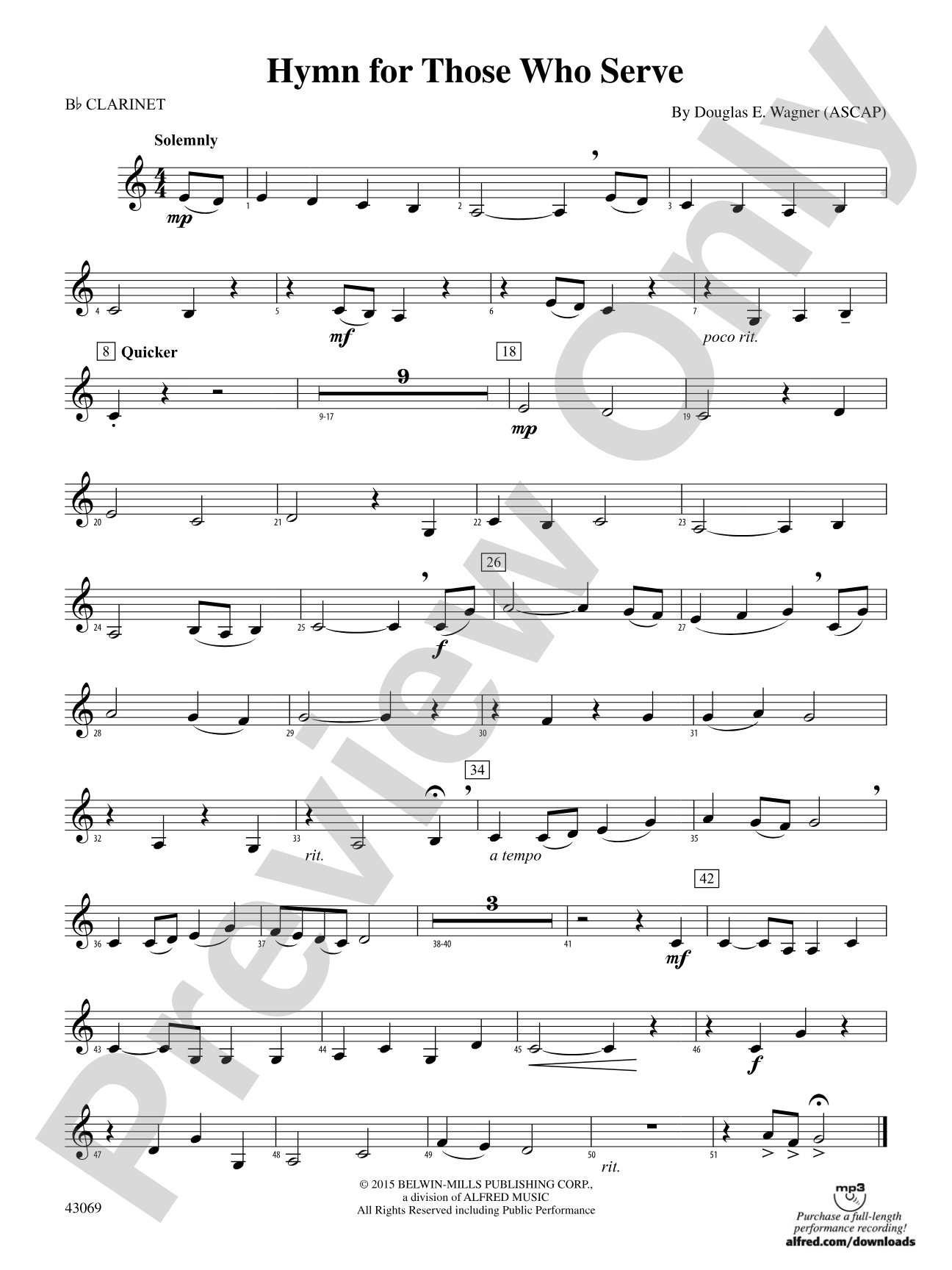
Hymn for Those Who Serve: 1st B-flat Clarinet

By Douglas E. Wagner

Grade: 1 (Very Easy)

Item: 00-PC-0016726_C1

Digital Download
$3.00
Description
Our deepest gratitude and utmost respect goes forever to the selfless men and women who leave their families, their friends, and all that they enjoy, to go where they are called, defending the freedoms each of us hold dear. This cherished work is a hymn of protection that comes from the sincerest depths of our hearts. A heartfelt setting that will reinforce musicianship in your beginning band. (2:30)

Don't just read it, hear it, play along with it, and watch your students grow with it. In MakeMusic Cloud, Hymn for Those Who Serve: 1st B-flat Clarinet comes alive with professional accompaniment, adjustable tempo, and built-in practice tools that turn solo practice into real progress.

Sample Audio
0:00
0:00
Sample Video
Additional Details
Series: Belwin Beginning Band
Publisher: Alfred Music
Page Count: 132
SKU: 00-PC-0016726_C1

More about this title

About the Composer: Douglas E. Wagner

Douglas E. Wagner

Douglas E. Wagner grew up in Chicago and studied music at Butler University, earning both undergraduate and graduate degrees. After thirty years teaching and administering music programs in high school, he redirected his full energy toward composition and arranging.

Since 1973, Wagner has published over 3,500 works across choral, concert band, orchestra, handbell, organ, piano, and vocal literature. More than seventeen million copies of his music are in circulation worldwide, performed regularly in concert halls and broadcast on radio and television throughout the United States and internationally. He currently lives in Indianapolis with his wife, Sandy.

Why we love this

Wagner writes with a deep understanding of what beginning bands can achieve musically without becoming overwhelmed technically. This hymn carries genuine emotional weight, honoring its subject with sincerity rather than bombast, and the straightforward voice-leading gives every section a meaningful part to play. The Grade 1 accessibility never compromises the emotional integrity of the music.

What to expect

This hymn feels like a quiet moment of collective respect. The music unfolds with gentle dignity, never rushing or straining, and the harmonic language supports a meditative quality that invites thoughtful playing. It's music designed to settle and center an ensemble rather than excite them.

Who it's for

Beginning band directors who need a meaningful, accessible piece that goes beyond technical exercises. The Grade 1 difficulty makes it achievable for your first-year students, while the patriotic and hymnic character gives them a chance to play music that communicates real emotion.

How to get the most out of it

  • Shape each phrase with a gentle swell to the midpoint rather than playing at a single dynamic level; this prevents the hymn from feeling static and helps students connect the larger musical arc.
  • Balance the chorale voices so that the melody remains clearly audible; ask your lower voices to support rather than fill in, creating space for the tune to breathe.
  • Allow adequate time for rest and reflection between phrases; the silence matters as much as the sound in conveying respect and contemplation.
  • Work for clean, unified articulation in the ensemble, particularly on longer notes where individual tone quality becomes most noticeable.

How to use it

This fits naturally into a summer concert that includes patriotic or commemorative themes, particularly around the Fourth of July. It also works well as a concert opener that sets a reflective tone for the rest of the program, or as a standalone standalone tribute that stands apart from your typical beginning-band repertoire.

Skills your students will build

  • Sustaining long tones with steady air support and consistent tone quality
  • Balancing individual voice parts within a four-part harmonic texture
  • Phrasing and shaping melodies with subtle dynamic contours
  • Reading and responding to tempo and dynamic markings that shape musical expression
  • Ensemble blend and intonation awareness in hymnic writing

You May Also Like