
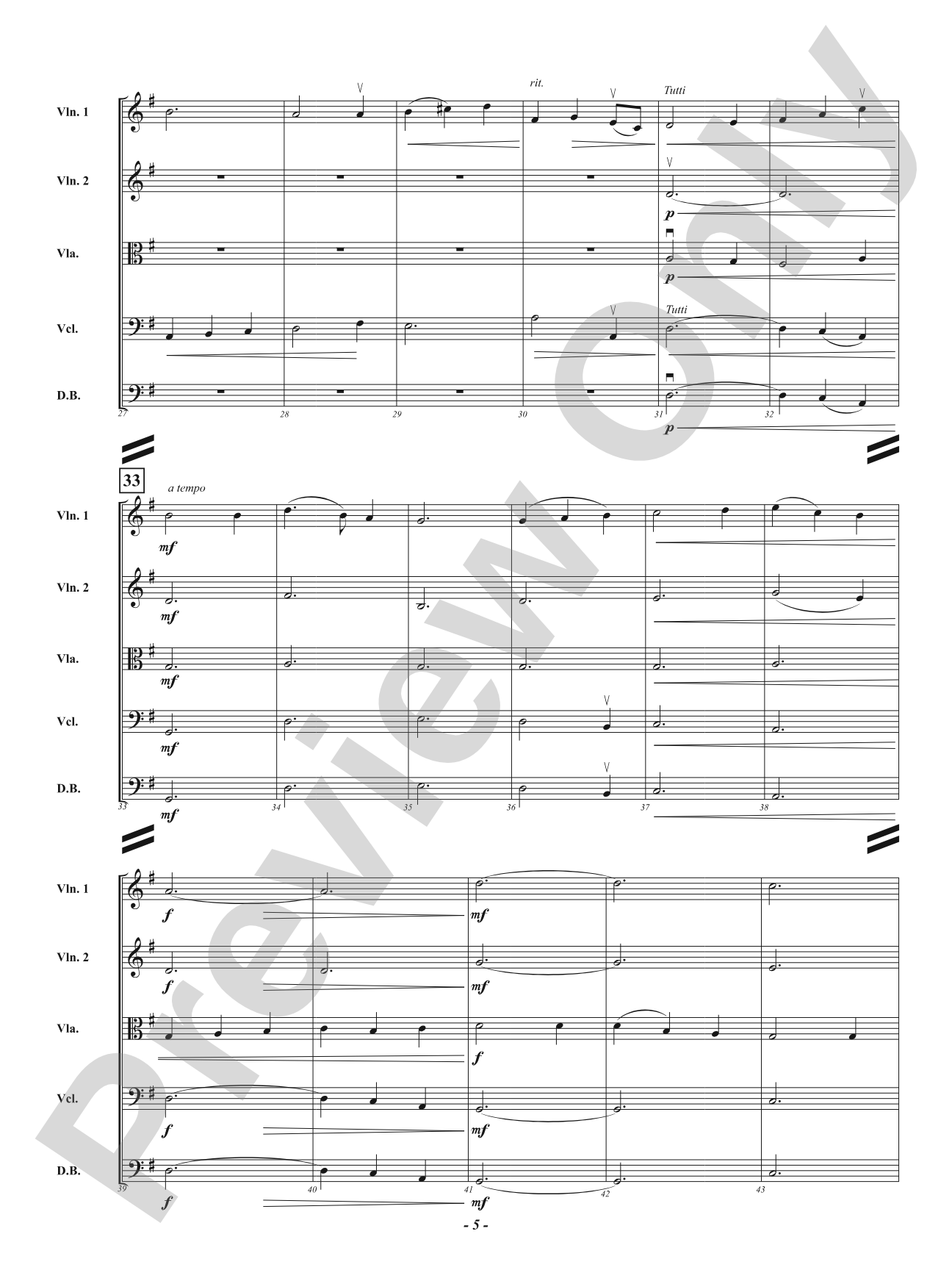
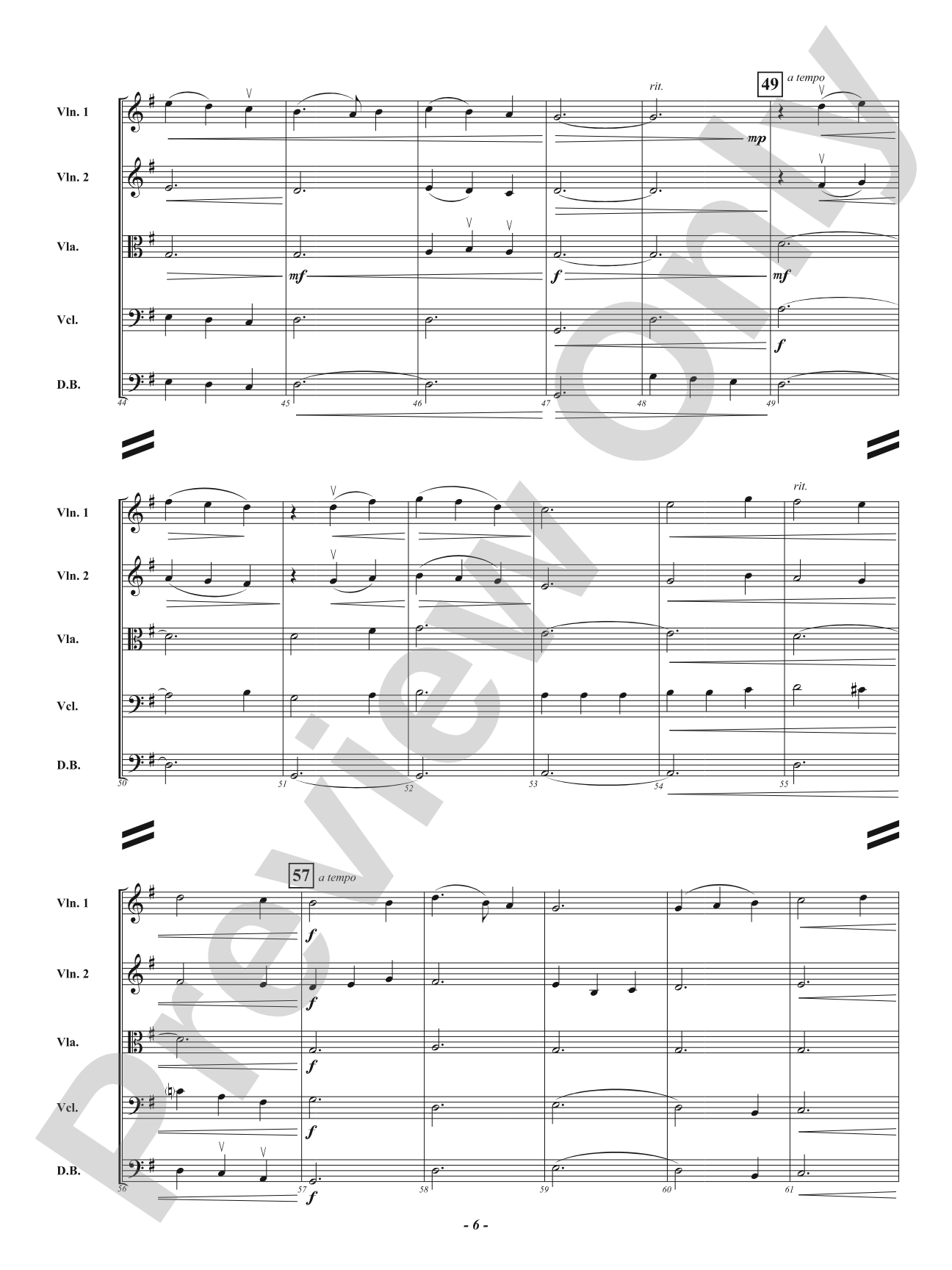
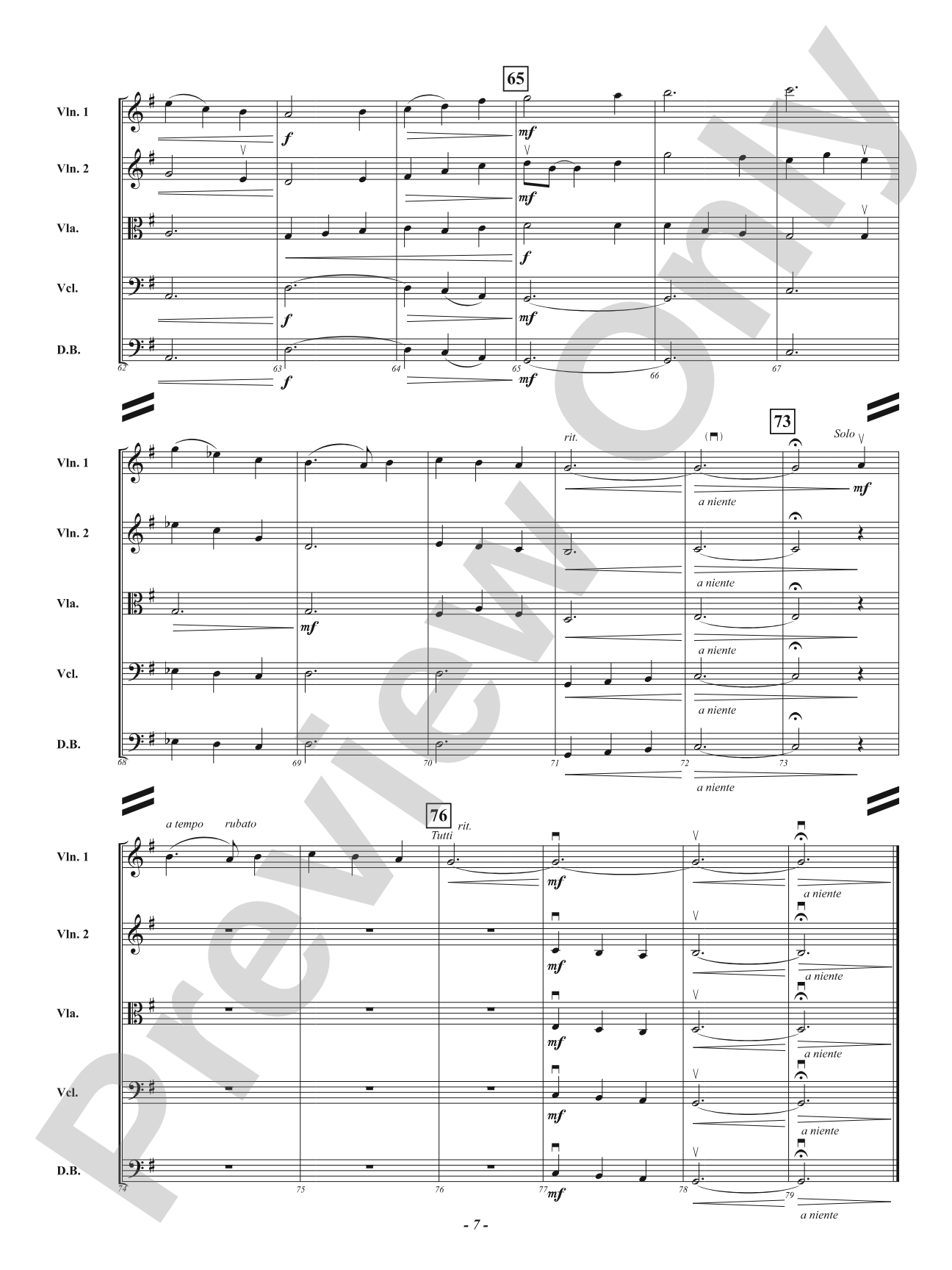


Hymn for the Discouraged - Turn Your Eyes Upon Jesus: String Orchestra Conductor Score & Parts
Turn Your Eyes Upon Jesus
By Helen Howarth Lemmel / arr. Josh McInnish
Grade: 3
Item: 98-PK-RWS2274
$60.00
Pickup currently not available
Buy Extra Parts (Digital PDF Download)
Parts Added to Cart!
Description
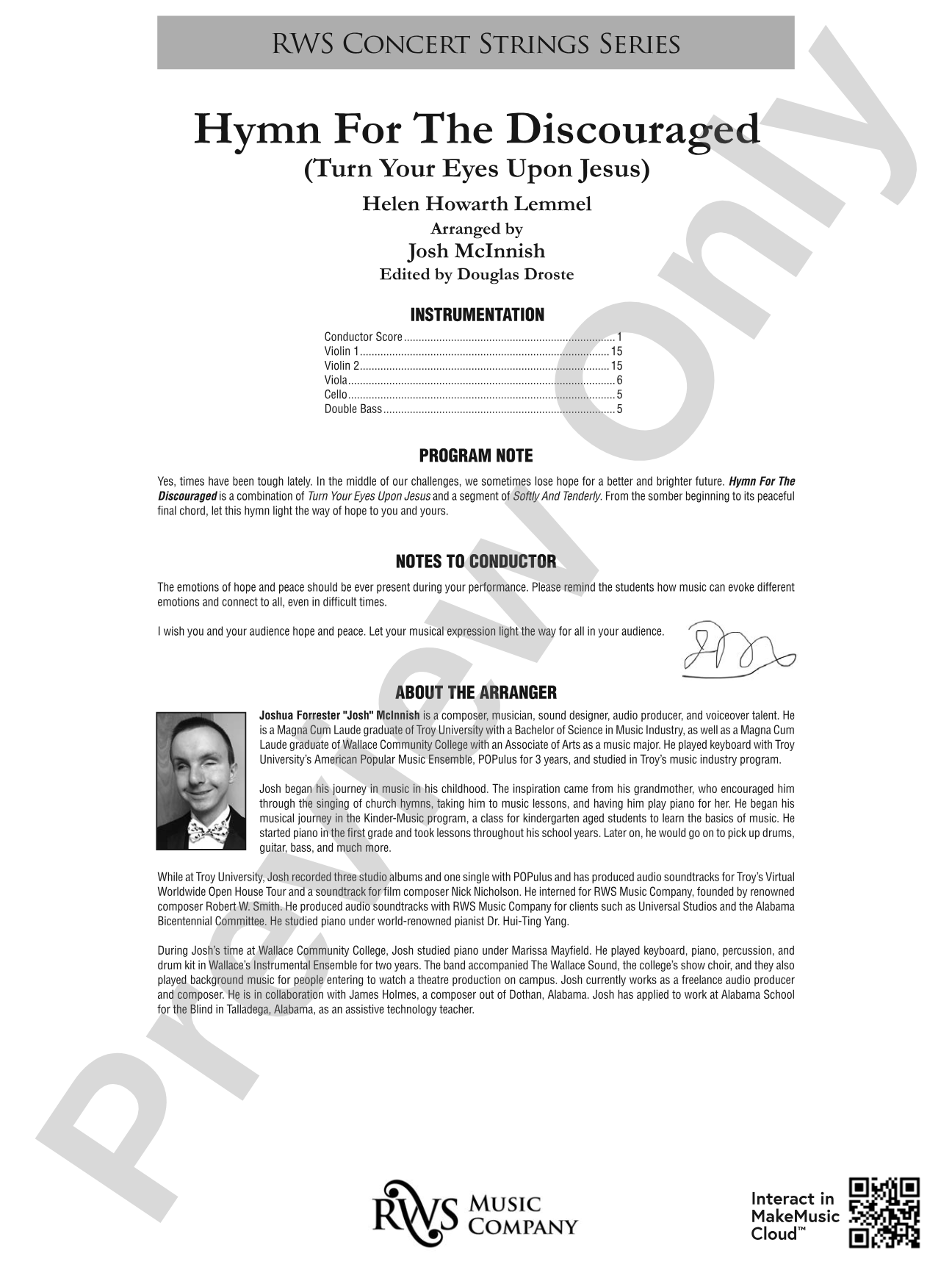
Yes, times have been tough lately, and many times we lose hope things will get better. Josh McInnish brings you a ray of musical light with this beautiful hymn arrangement, "Hymn For The Discouraged". From its somber beginning to its peaceful and hopeful ending chord, let this hymn light the way of hope for all mankind!
Original Item#: RWS-2274-00


Original Item#: RWS-2274-00
Hymn for the Discouraged - Turn Your Eyes Upon Jesus: String Orchestra Conductor Score & Parts isn't in MakeMusic Cloud just yet...but it could be. Let us know you'd like to see it, and you'll help shape what comes next. In the meantime, start a free trial and dive into thousands of interactive titles your students can play along with today.
Request This Title
Tell us you want it.
Start Your Free Trial
Explore everything that's ready to play right now.
Sample Audio
1
Audio File
--:--
0:00
0:00
Sample Video
No sample videos found.
Additional Details
Series:
RWS - Concert Strings
Publisher:
RWS Music Company
SKU:
98-PK-RWS2274
More about this title
About the Composer: Helen Howarth Lemmel
Helen Howarth Lemmel (1853–1936) was an American hymn writer and composer whose work shaped congregational music for generations. Her most enduring legacy is "Turn Your Eyes Upon Jesus," a hymn born from personal struggle and spiritual conviction that has become a cornerstone of Christian worship across denominational lines. Lemmel's gift was her ability to marry profound theological reflection with melodies that lodge themselves in the listener's memory and heart.
Why we love this
This arrangement honors the emotional arc of Lemmel's hymn while giving string orchestras the chance to explore how ensemble sound can deepen a message of hope. McInnish's orchestration respects the melodic integrity of the original while building from introspection to affirmation, creating a piece that works equally well in concert settings and services seeking music with spiritual depth. At Grade 3, it's accessible enough for developing ensembles yet substantive enough to engage musicians who care about musical storytelling.
What to expect
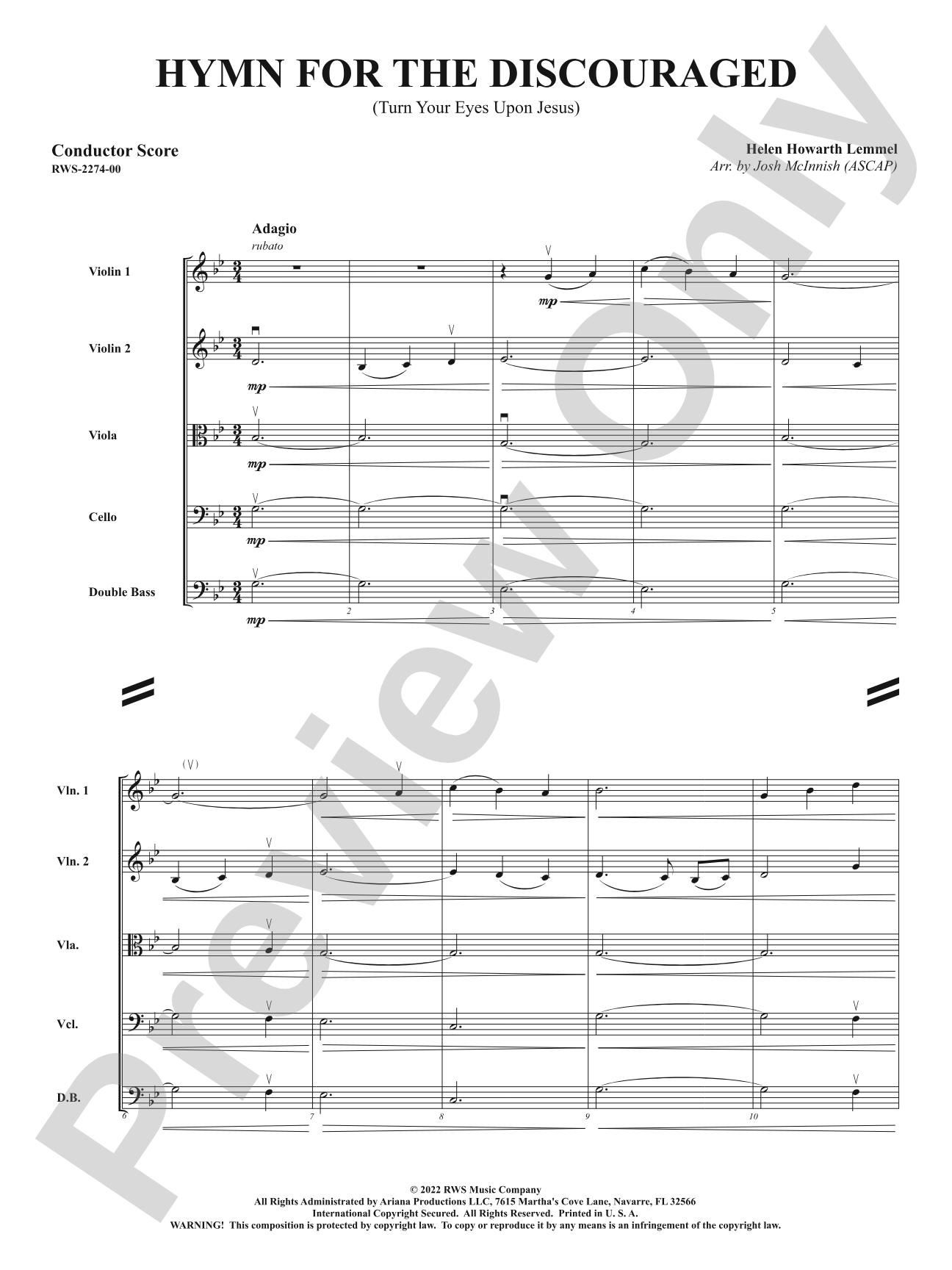
The opening settles into minor-key territory, honest about hardship and uncertainty. As the piece unfolds, harmonic movement and orchestration gradually warm the sound, building toward a resolution that feels earned rather than imposed. The final chord arrives not as escape but as genuine arrival, a moment of peace that acknowledges the journey.
Who it's for
String orchestras at the intermediate level who want to program music with emotional substance and a clear arc from darkness to light. This works for directors building a concert that includes both secular and spiritually grounded repertoire, or for ensembles seeking a signature closing piece that leaves audiences reflective.
How to get the most out of it
- Shape the opening with restraint. The somber beginning depends on a unified, warm tone from the ensemble; avoid the temptation to rush or brighten the first section.
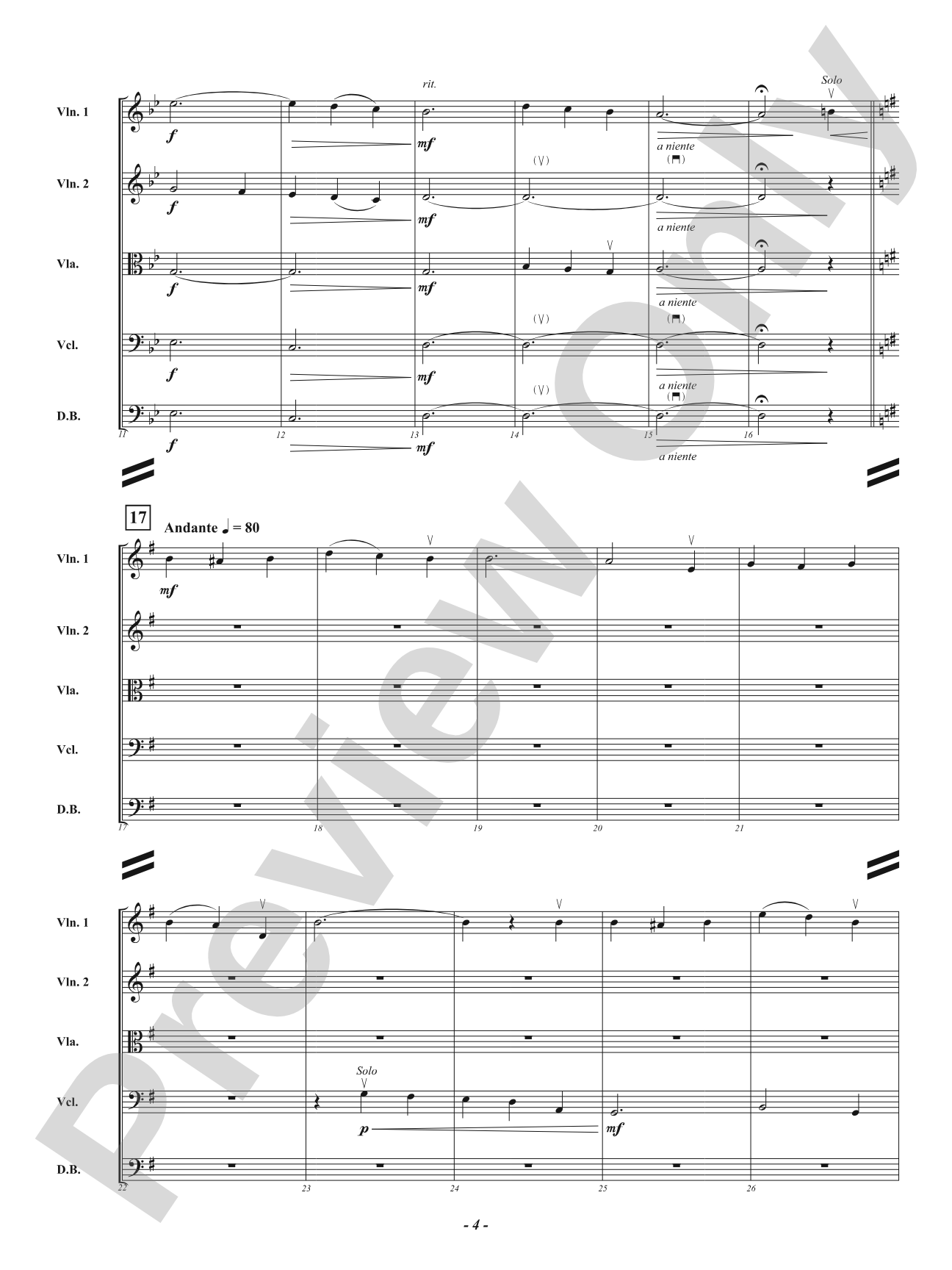
- Balance the melody across sections as it moves from violin to lower strings. Ensure inner voices support without covering the line, especially in the middle section.
- Breathe with the harmonic movement toward the final cadence. The "peaceful and hopeful ending" lands best when the ensemble feels the resolution, not just plays the notes.
How to use it
Program this as a concert closer when you want to send the audience out thoughtful rather than energized. It pairs well with lighter or more virtuosic pieces earlier in the program, offering a tonal and emotional contrast. Consider it for spring concerts, benefits, or community services where the message of hope carries particular weight.
Skills your students will build
- Sustaining tone quality in minor-key passages without losing warmth
- Following harmonic progression to shape long-phrase structures
- Balancing melody and accompaniment as the line moves across the ensemble
- Responding to emotional content and building ensemble unity around interpretive intent