
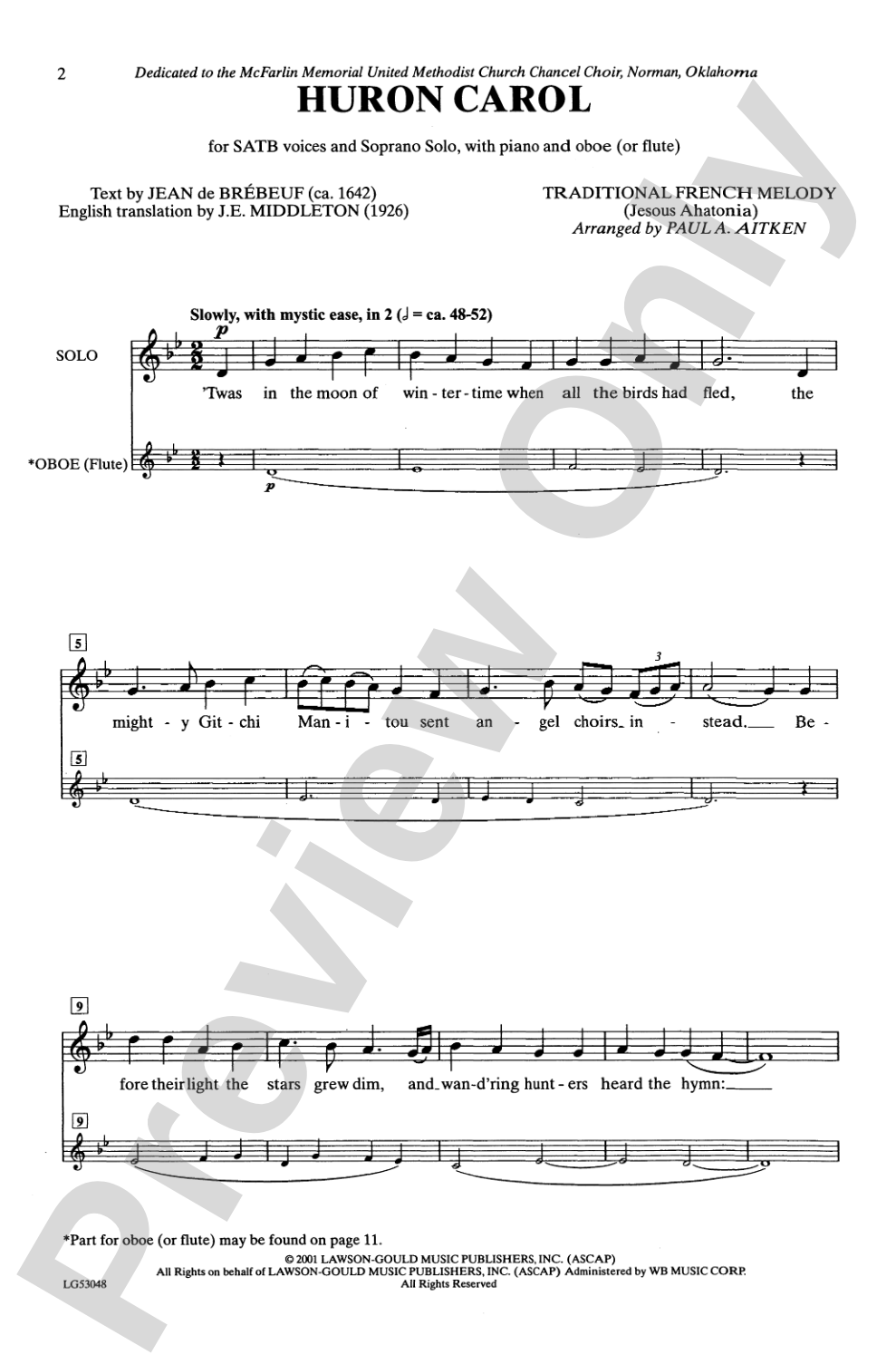

Huron Carol: SATB and Soprano Solo Choral Octavo
Traditional French Melody (Jesous Ahatonia) / arr. Paul A. Aitken
Level: Moderate
Item: 00-PO-0002687
$2.25
Minimum order quantity: 20 copies
Pickup currently not available
Related Items
Huron Carol: SATB and Soprano Solo Choral Octavo |
$2.25
|
View |
Description
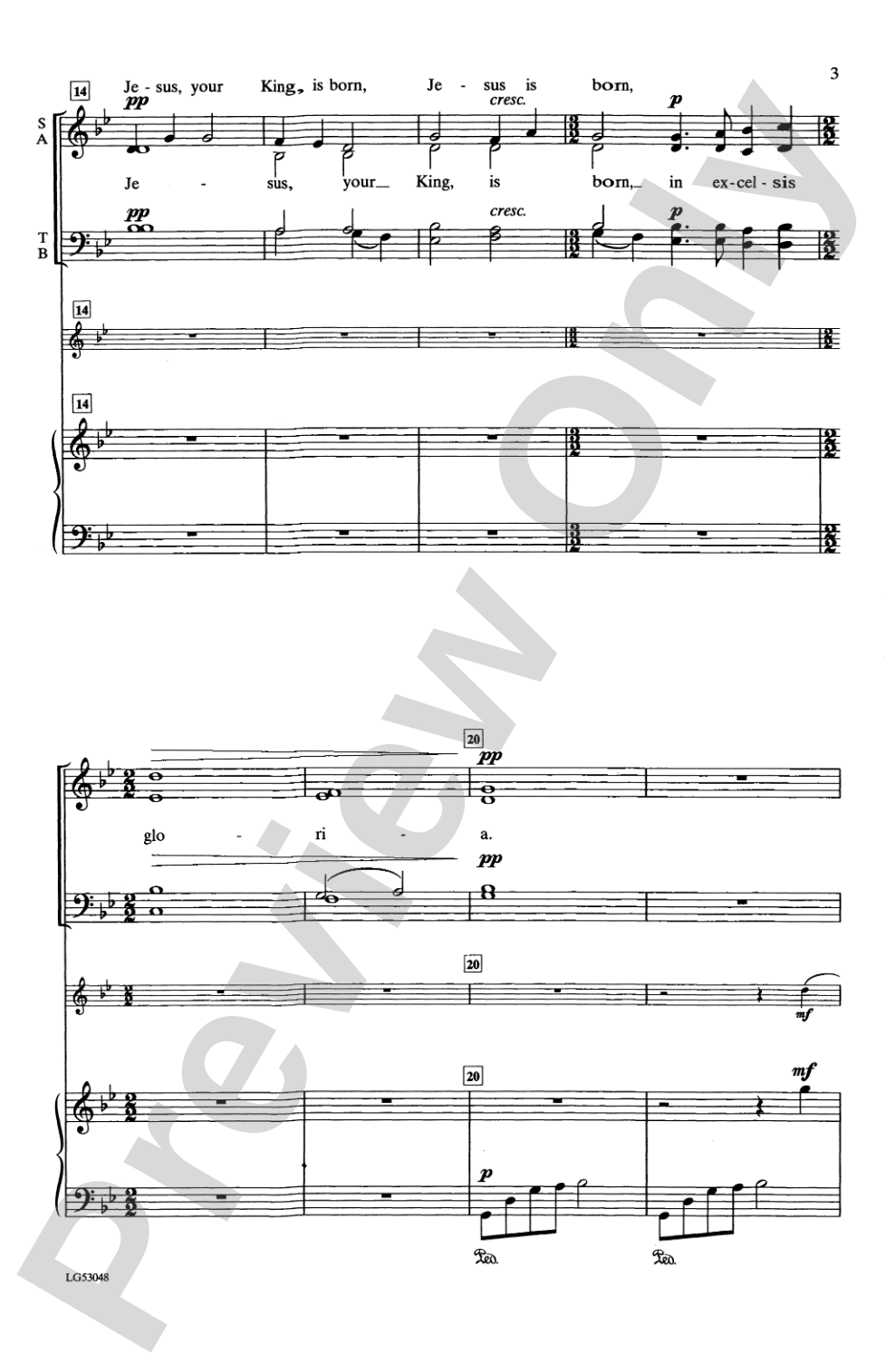
Featuring oboe and soprano solos, this new setting of the ever-popular "Huron Carol" is sure to be a program favorite for better choirs. Paul Aitken was a recent winner of the ACDA Hugh Brock Student Composition award.


Huron Carol: SATB and Soprano Solo Choral Octavo isn't in MakeMusic Cloud just yet...but it could be. Let us know you'd like to see it, and you'll help shape what comes next. In the meantime, start a free trial and dive into thousands of interactive titles your students can play along with today.
Request This Title
Tell us you want it.
Start Your Free Trial
Explore everything that's ready to play right now.
Sample Audio
No sample audio found.
Sample Video
No sample videos found.
Additional Details
Series:
Alfred Archive Edition: Lawson-Gould Music Publishers
Publisher:
Alfred Music
Page Count:
12
SKU:
00-PO-0002687
Instrumentation:
Piano and Oboe (or Flute)
More about this title
About the Arranger: Paul A. Aitken

Paul A. Aitken is a Canadian-born composer and conductor whose work has been recognized at the highest levels of choral music. He earned the inaugural ACDA Hugh Brock Student Composition Award and has since amassed a catalog of over 40 compositions spanning two decades. His credentials include degrees from the University of Western Ontario, Southern Illinois University at Carbondale, and the University of Oklahoma, along with a 2010 Carnegie Hall debut conducting his major work "And None Shall Be Afraid" with 200 singers and the New England Symphonic Ensemble.
Aitken currently serves as Director of Music and Worship Arts and Composer-in-Residence at the Cathedral of the Rockies in Boise, Idaho, where he oversees more than twenty ensembles across two campuses. Beyond composing, he is a sought-after conductor and clinician who has received commissions from the American Guild of Organists, the State of Idaho, and the Boise Philharmonic Master Chorale. He holds lifetime membership in ACDA and has contributed leadership at state, divisional, and national levels, including serving as National Chair of Music in Worship.
Why we love this
Aitken brings compositional sophistication to a beloved carol while keeping the arrangement accessible for Grade 3 choirs. The integration of oboe and soprano solo parts adds textural interest without overwhelming the ensemble, and the moderate difficulty level means your singers can focus on phrasing and tone quality rather than scrambling through complex rhythms. This is a fresh take on familiar material that feels substantial enough for a concert feature.
What to expect
This setting captures the contemplative beauty of the Huron Carol while adding a layer of refined, almost chamber-like sophistication through its oboe and soprano solo writing. The moderate texture creates space for singers to really listen to each other, encouraging ensemble cohesion and musical maturity without demanding technical virtuosity.
Who it's for
This arrangement suits choirs at the intermediate level who have developed secure tuning and the ability to support soprano soloists without doubling them. It works equally well in worship settings, concert programs, and educational contexts where choral singers benefit from a piece that challenges musicianship while remaining grounded in familiar melody.
How to get the most out of it
- Balance the soprano solo against the oboe part by asking the soloist to sing with a warm, intimate tone rather than projecting from the diaphragm; this allows the oboe to remain audible and creates a genuine duet texture.
- Work the piano accompaniment as a distinct voice, particularly in measures where it doubles the choir. Ensure the accompanist plays with clarity and follows the choir's phrase shape rather than driving ahead.
- Shape the harmonic progressions in the SATB sections by adjusting vowel color and breath placement; traditional carols reward this kind of vocal finesse more than pushing volume.
- If using flute as an alternative to oboe, brighten the articulation slightly to maintain presence in a higher register and preserve the timbral dialogue with the soprano.
How to use it
Place this thoughtfully in a holiday concert where it can stand as a centerpiece rather than part of a rapid-fire medley. It also serves well in Christmas Eve services or candlelight presentations where the intimacy of the soprano and oboe conversation adds contemplative depth to your program's arc.
Skills your students will build
- Blending soprano solo writing with four-part harmony
- Listening across ensemble parts to maintain harmonic balance
- Phrasing traditional melody with contemporary harmonic support
- Coordinating with instrumental soloists in a choral context
- Sustaining longer phrases within a moderate tempo framework