
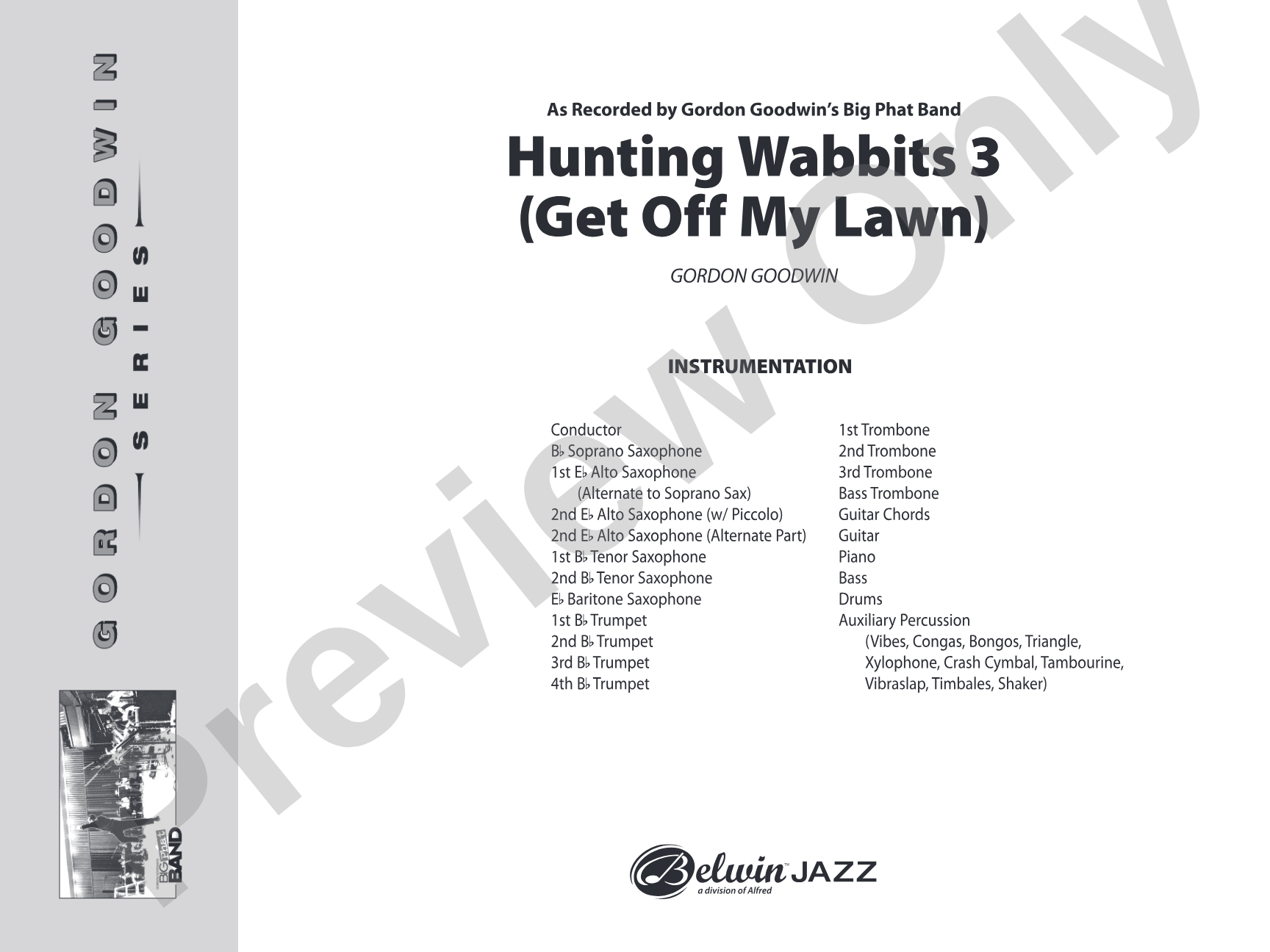
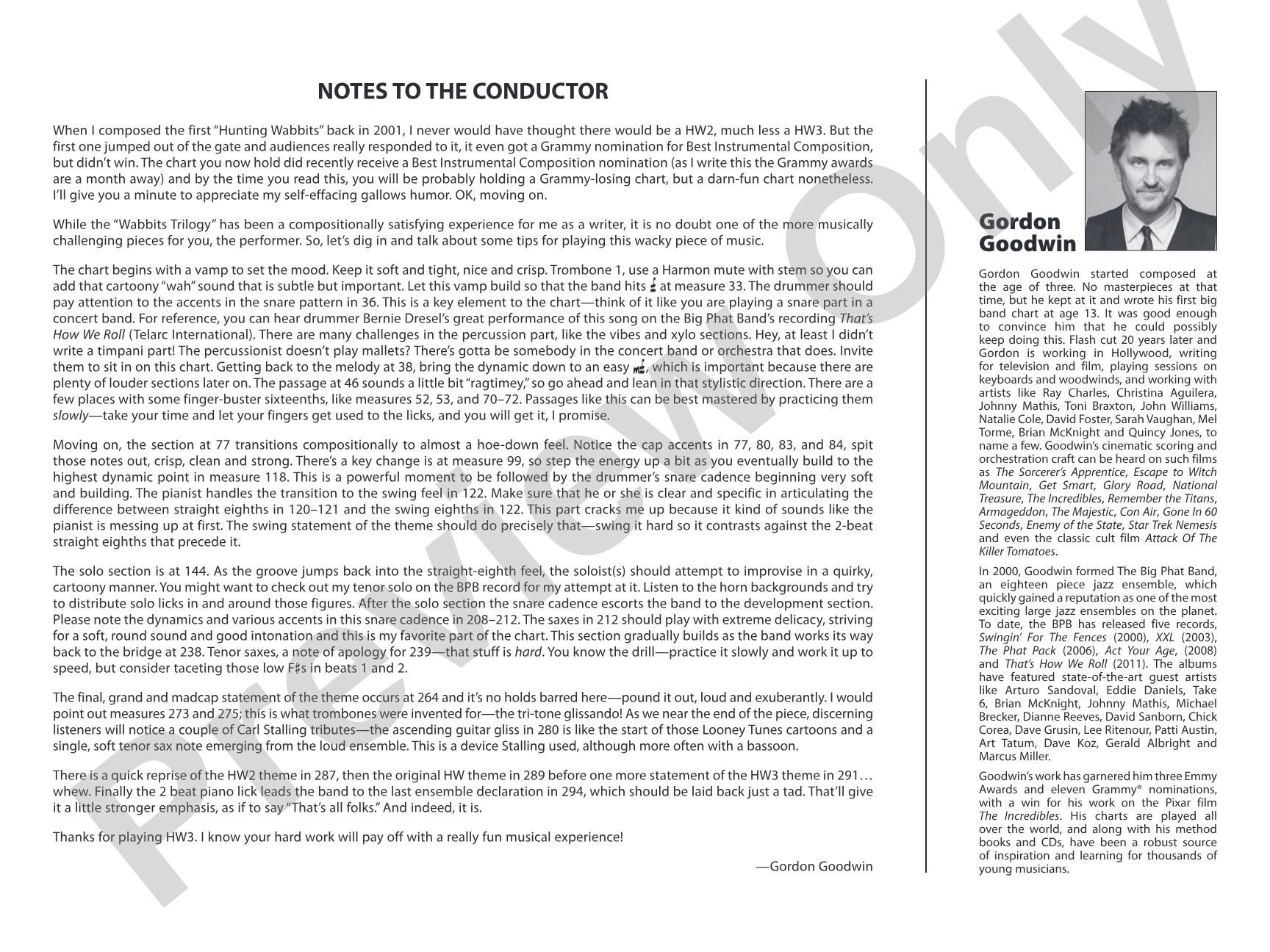
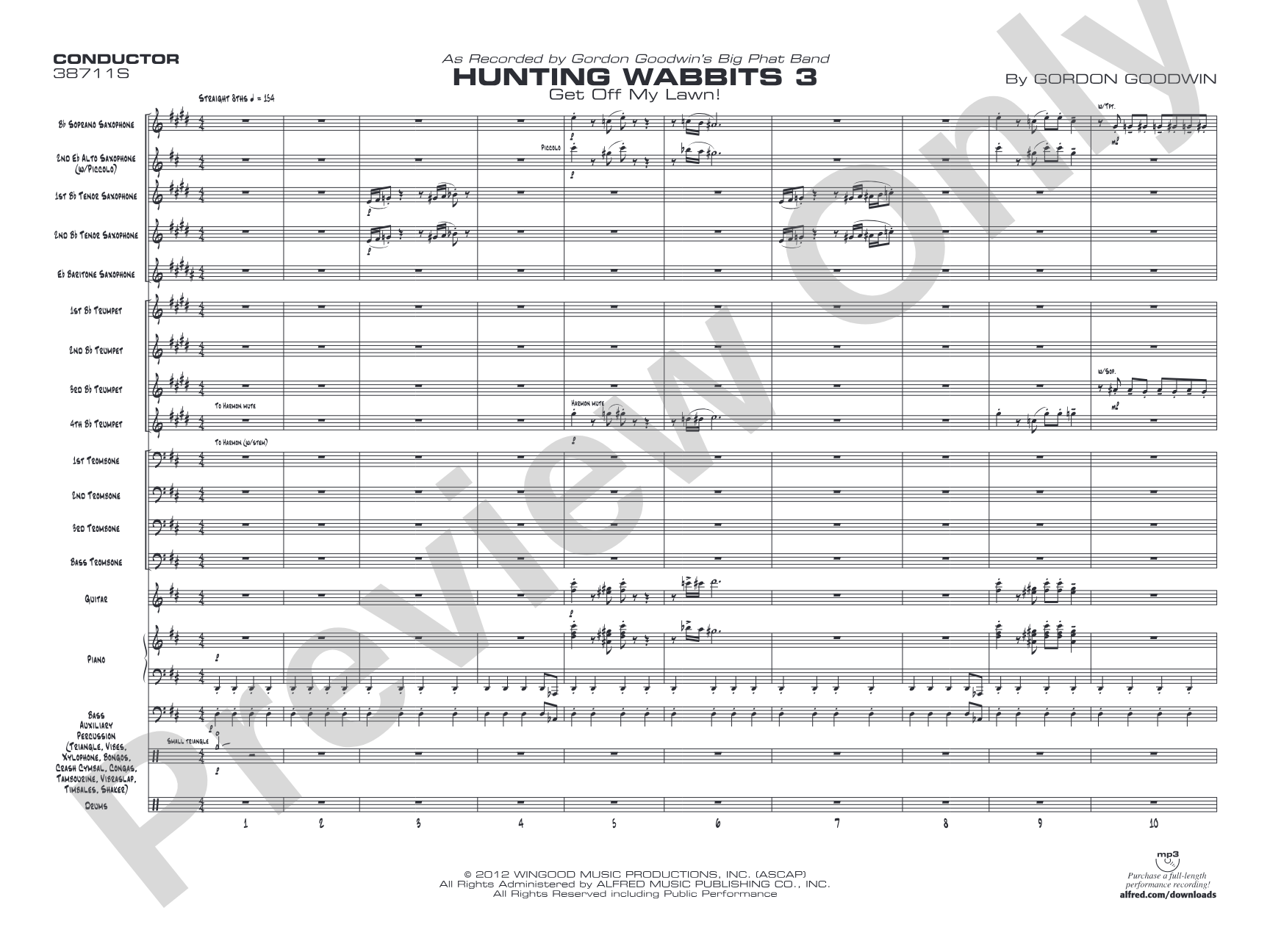
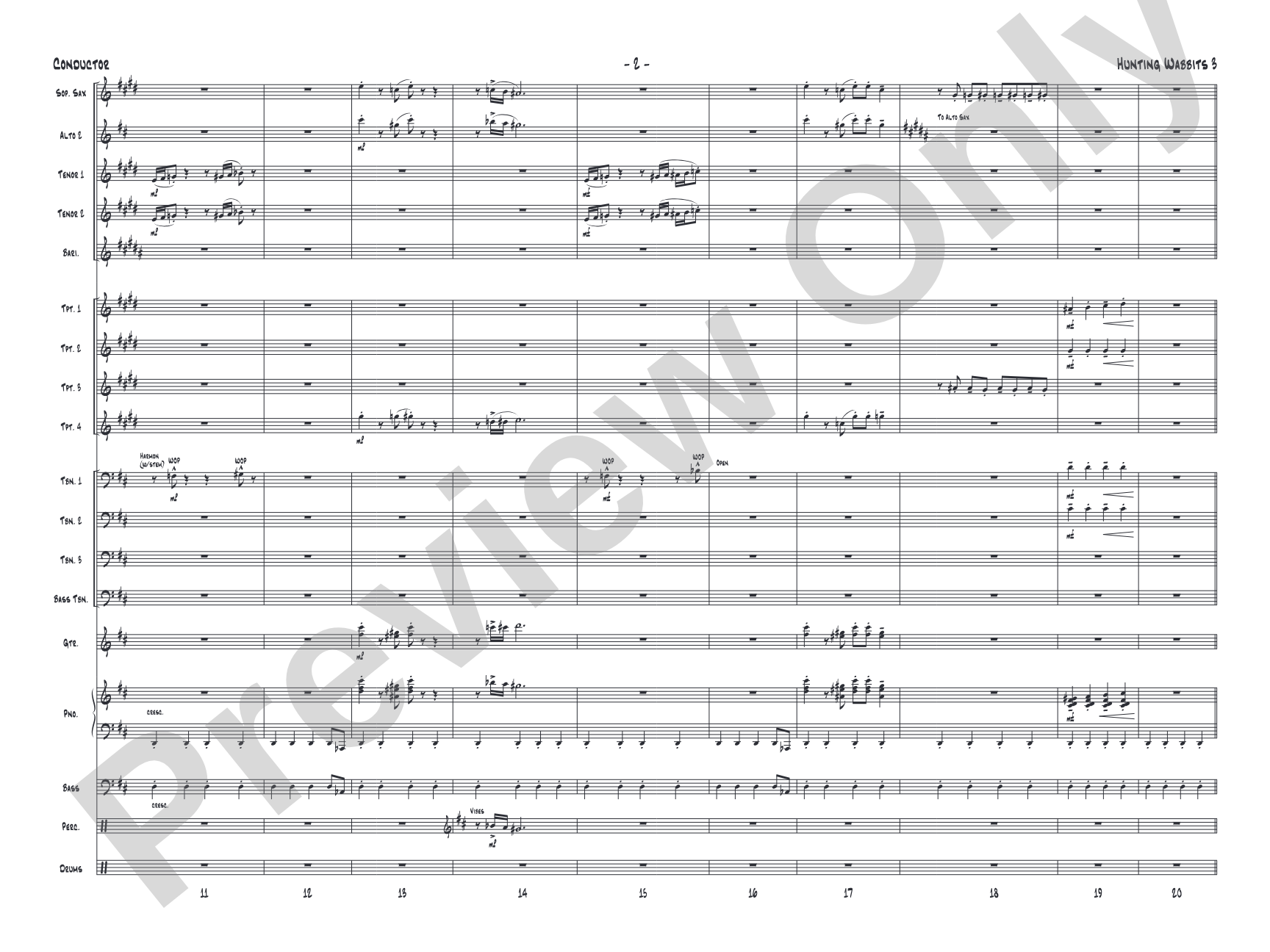
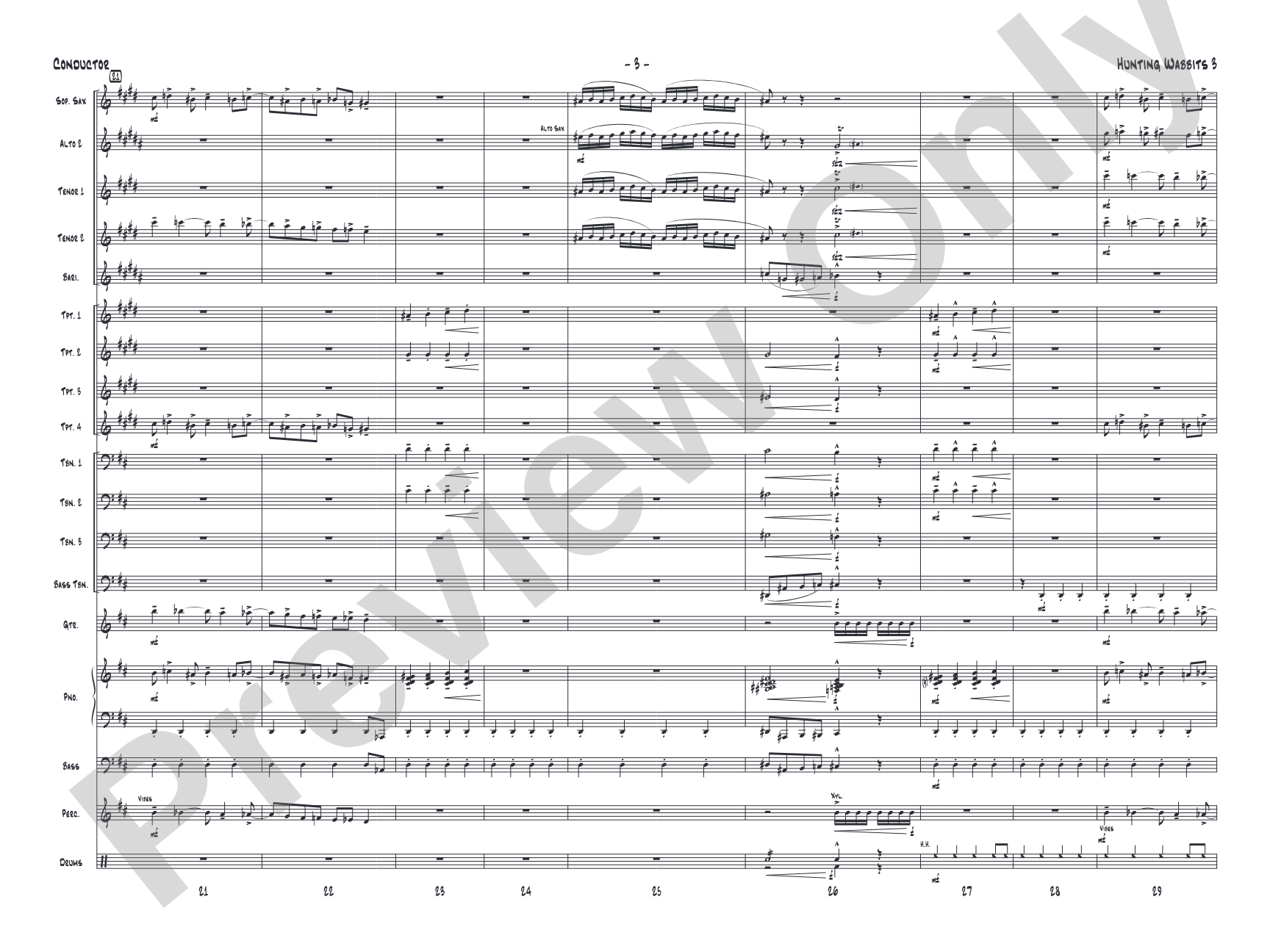
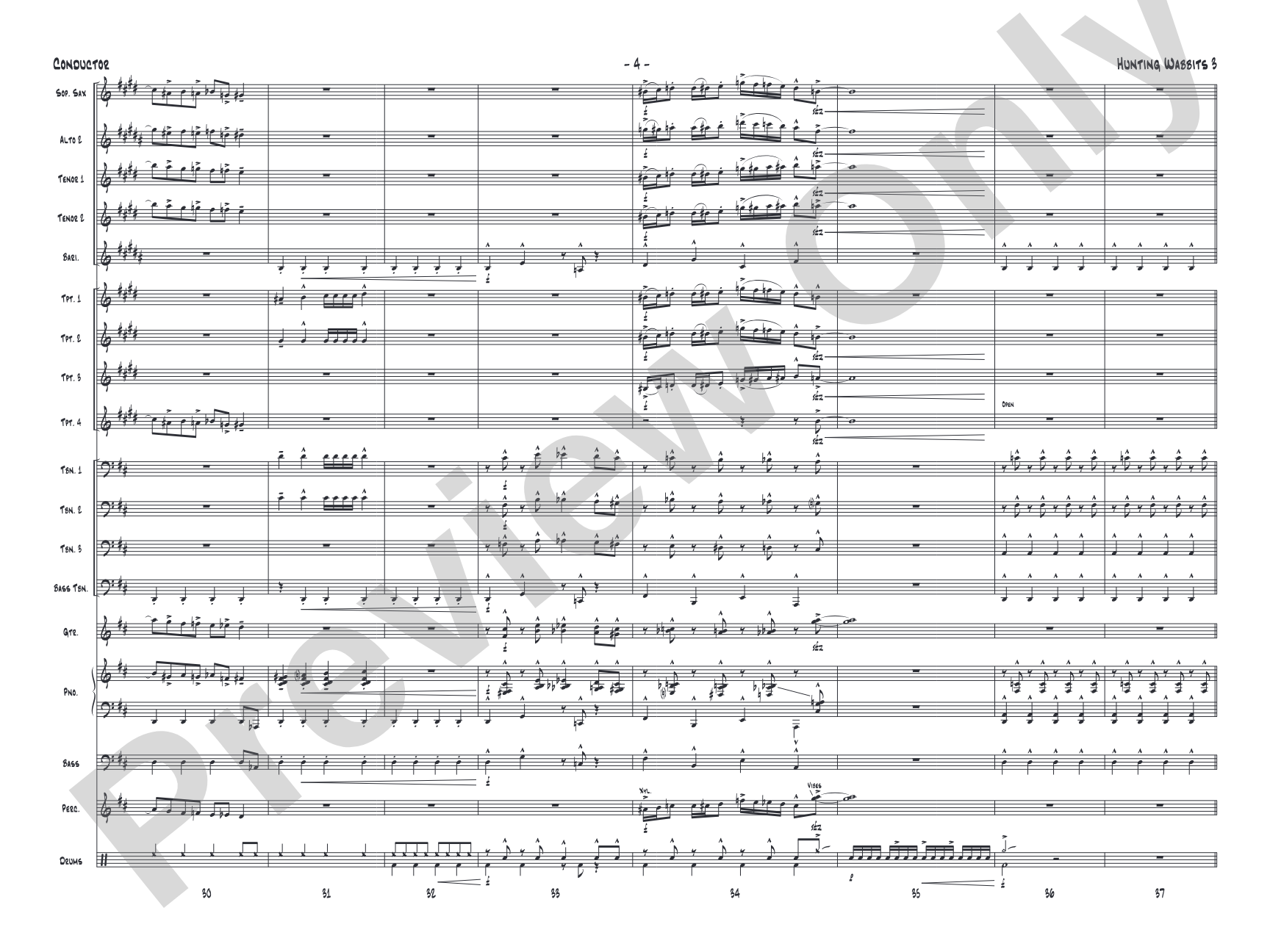
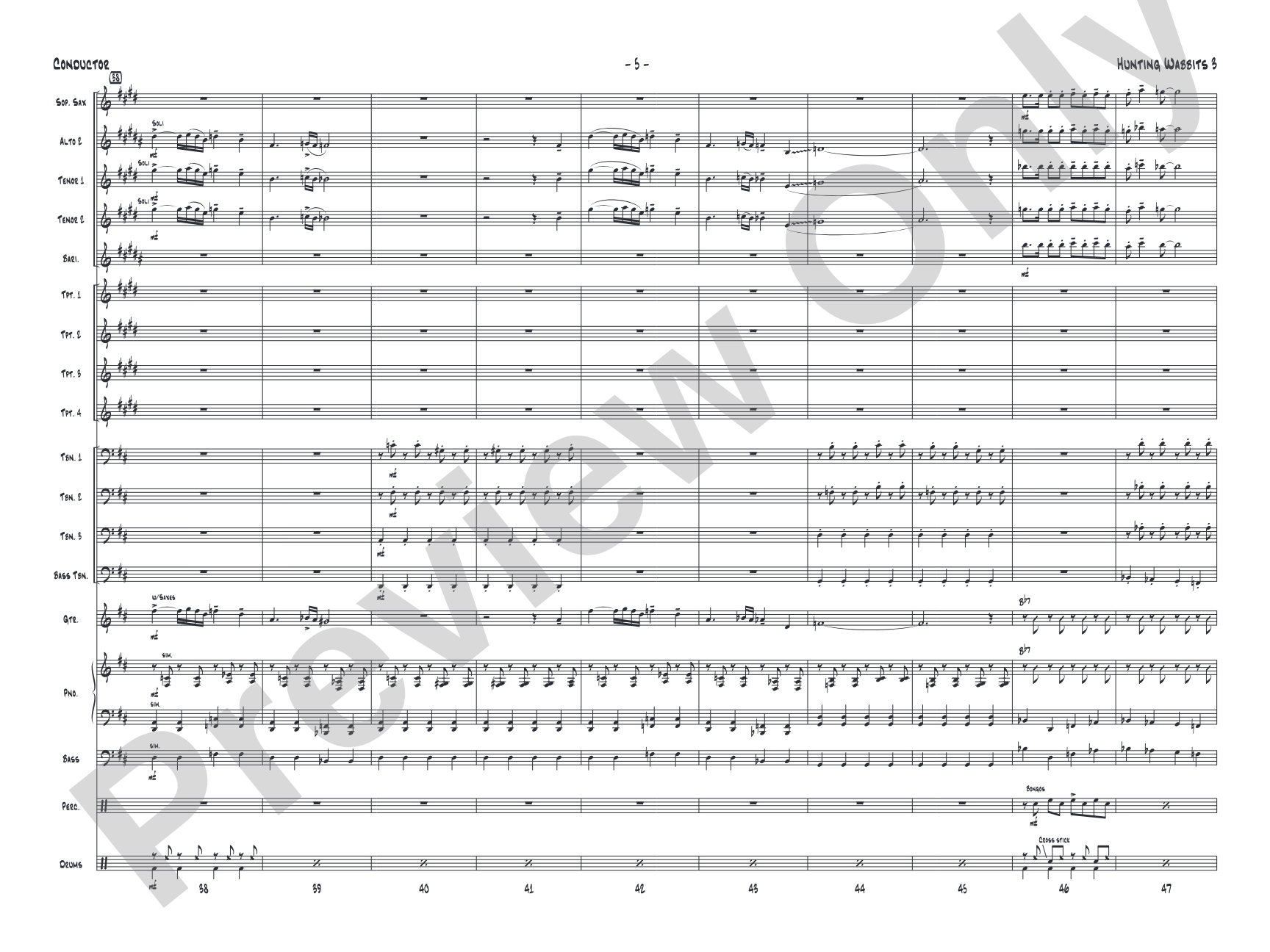
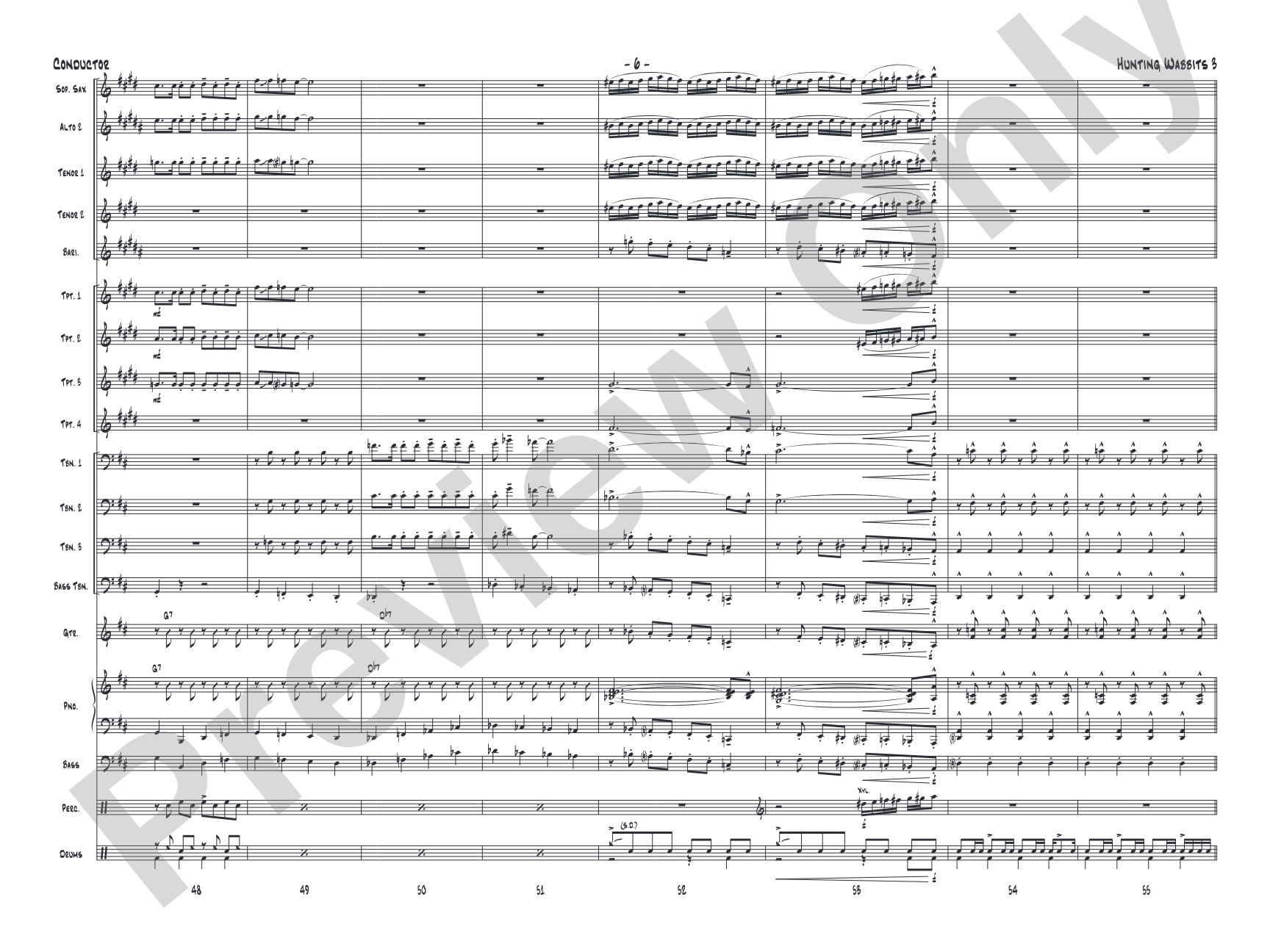
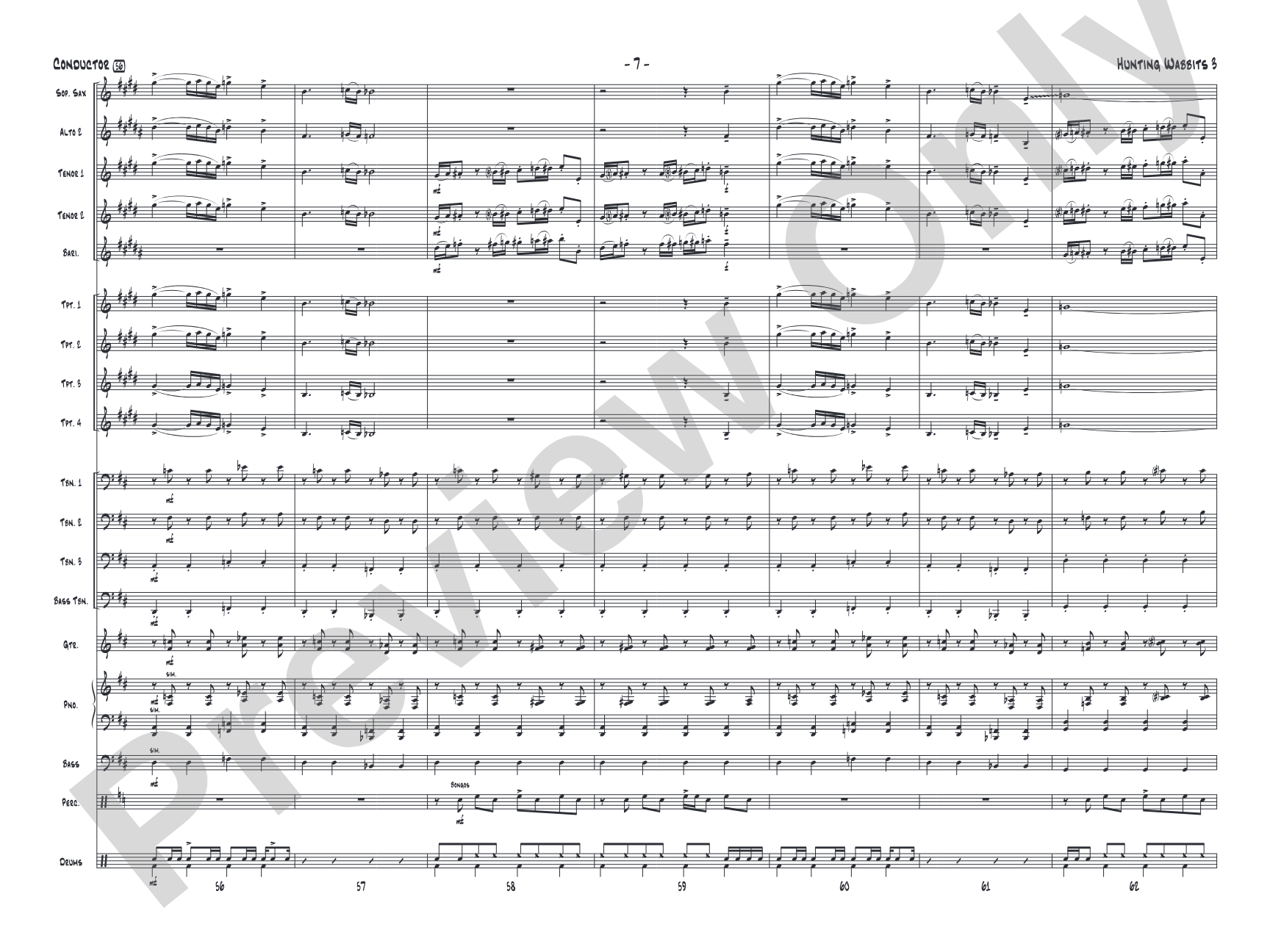
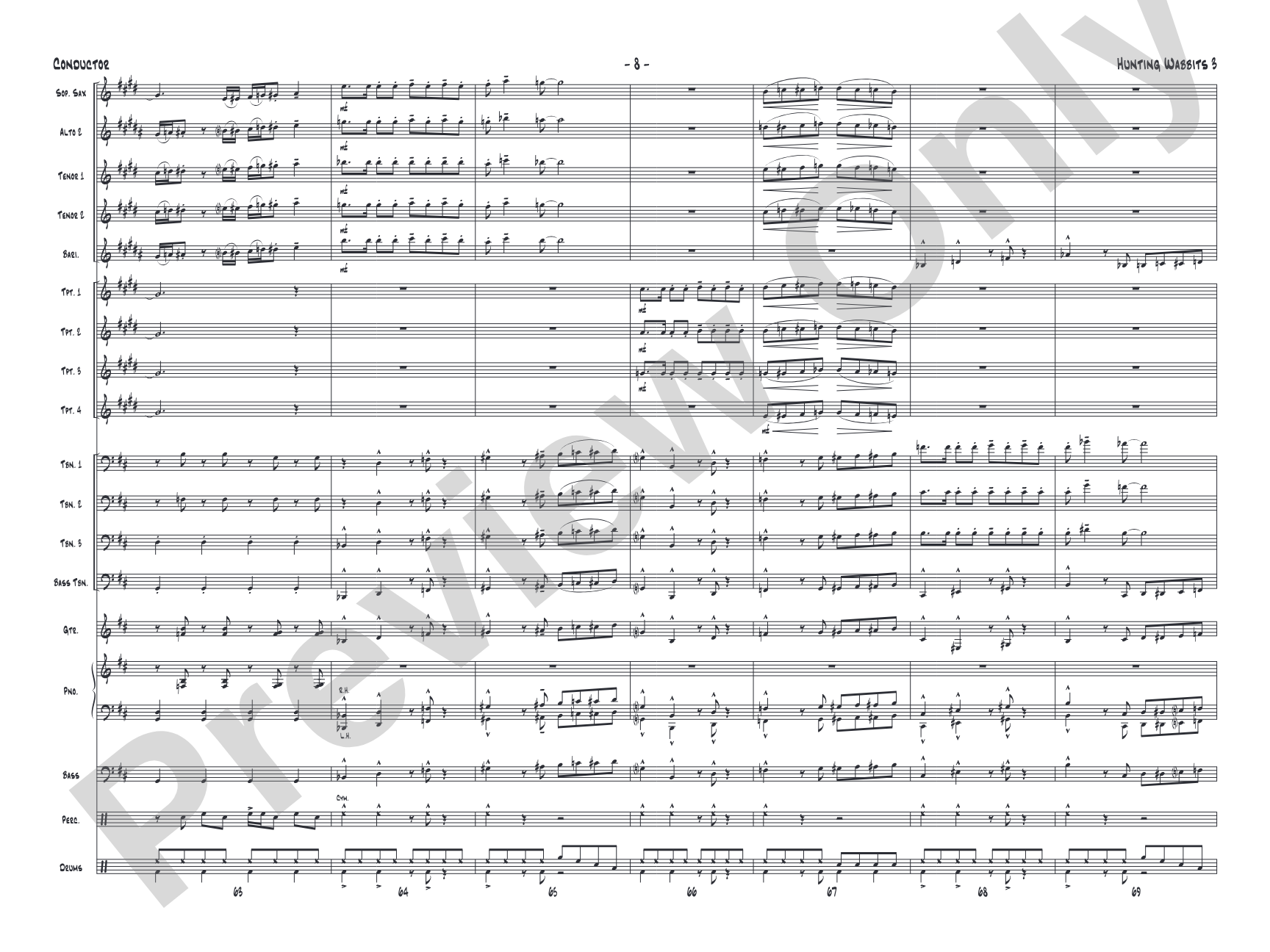
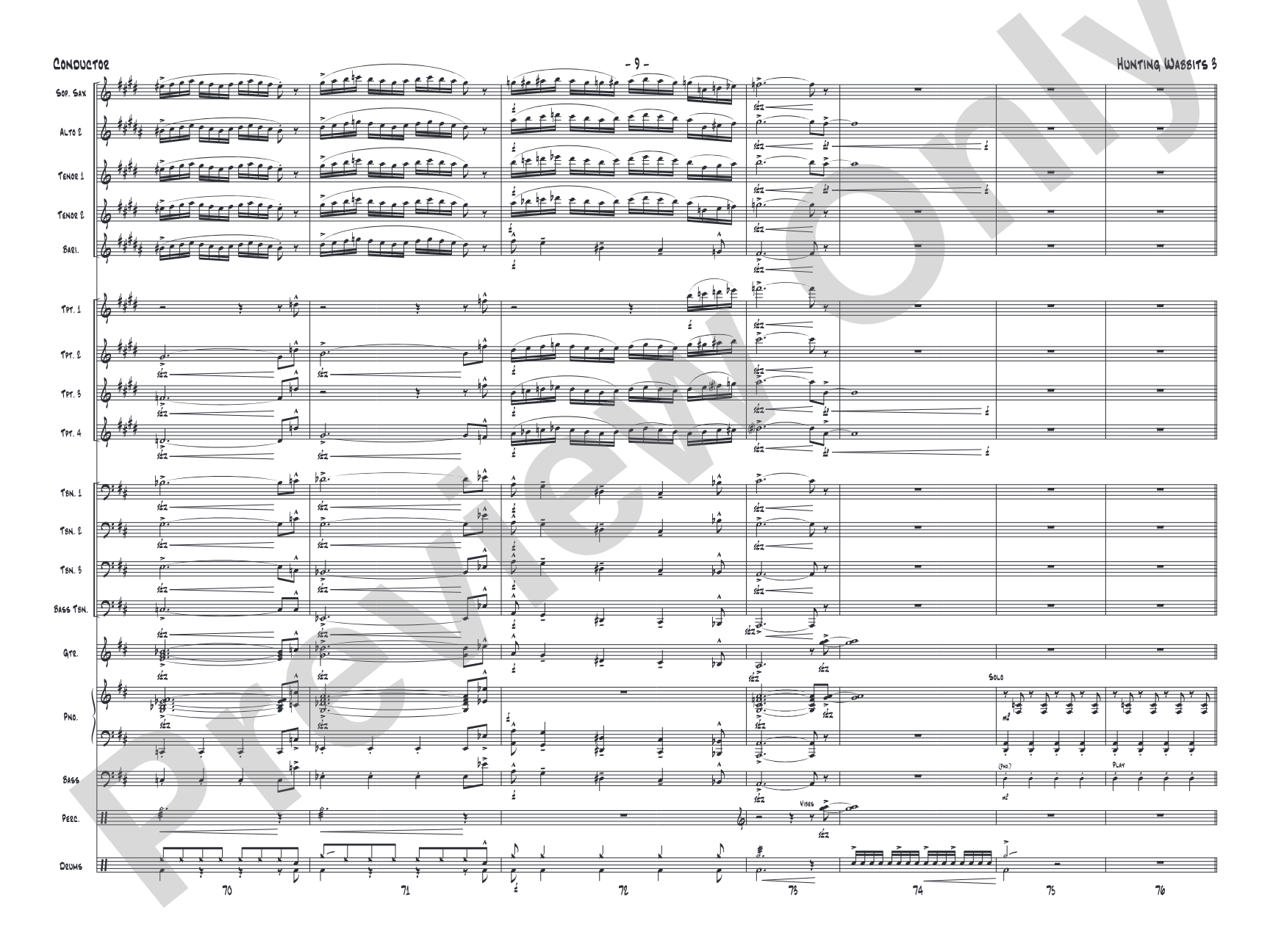
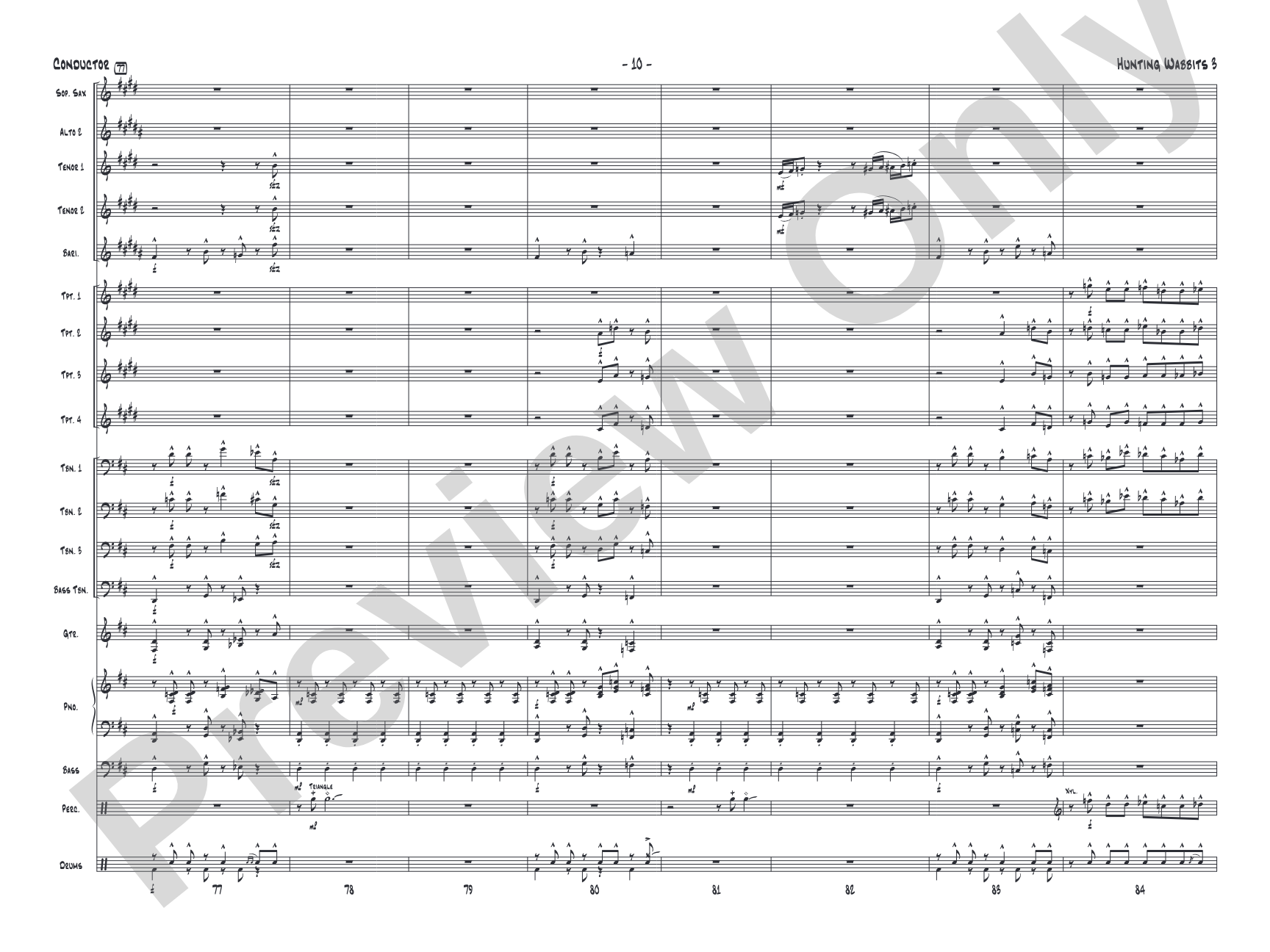
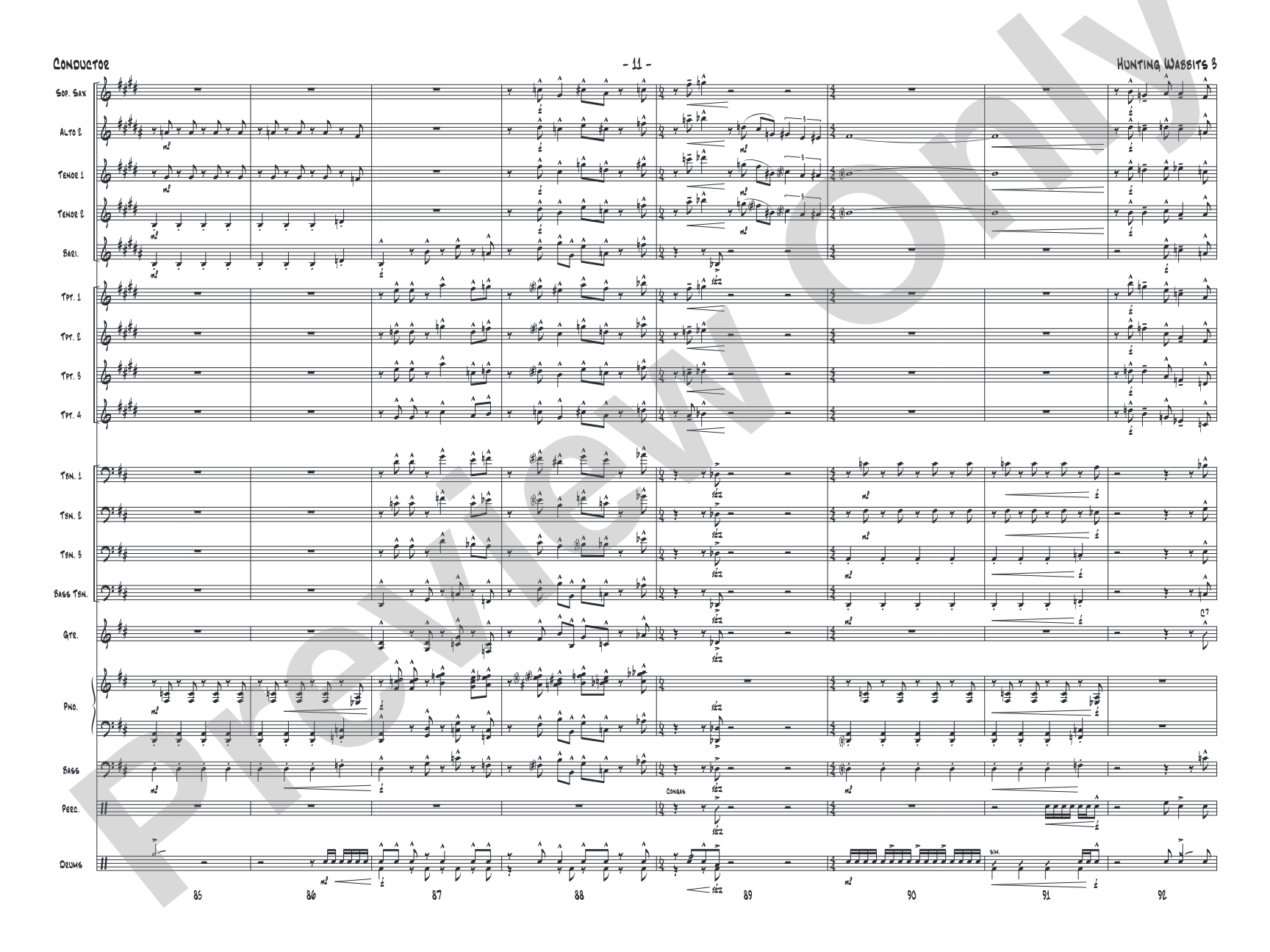
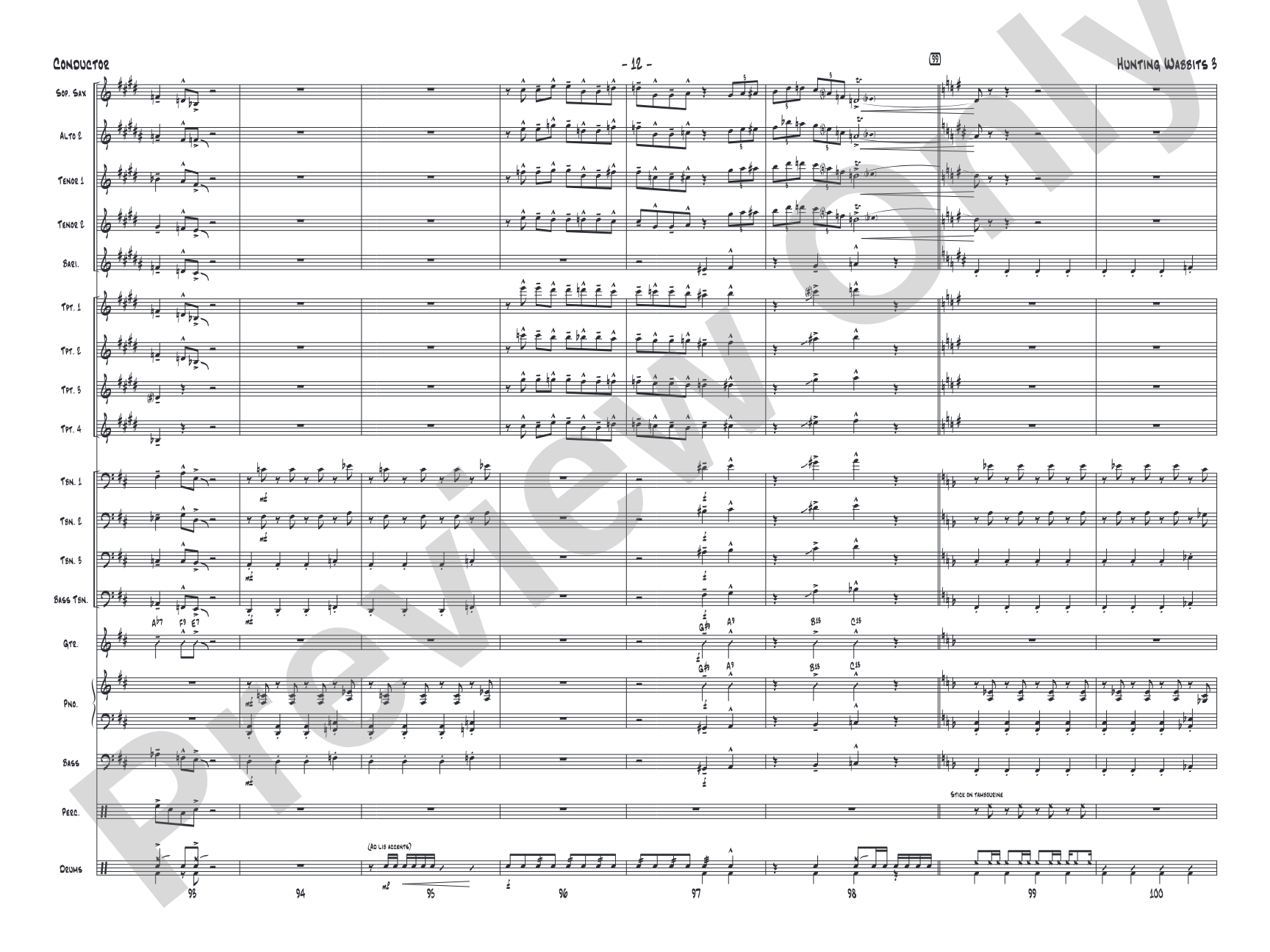
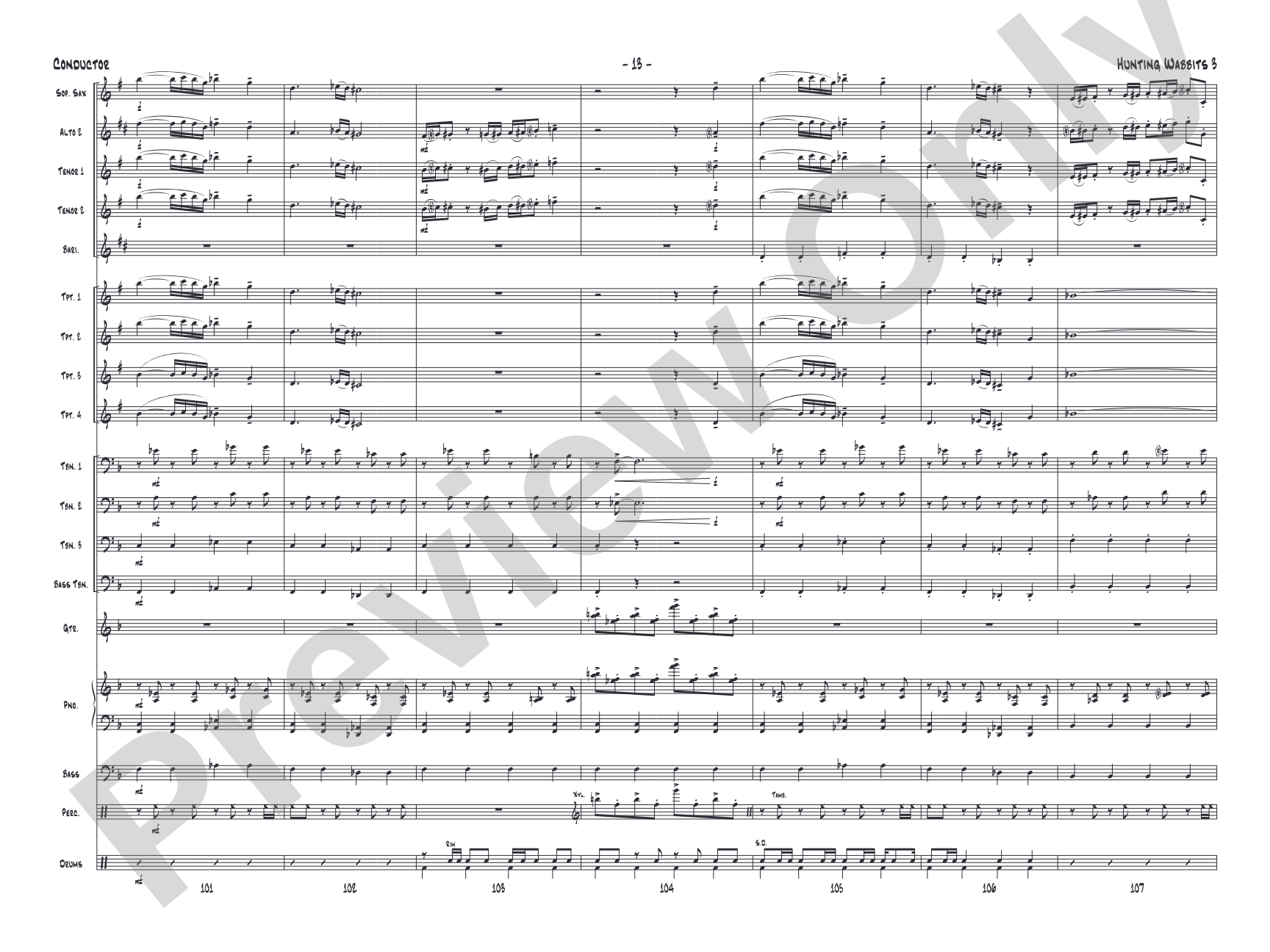
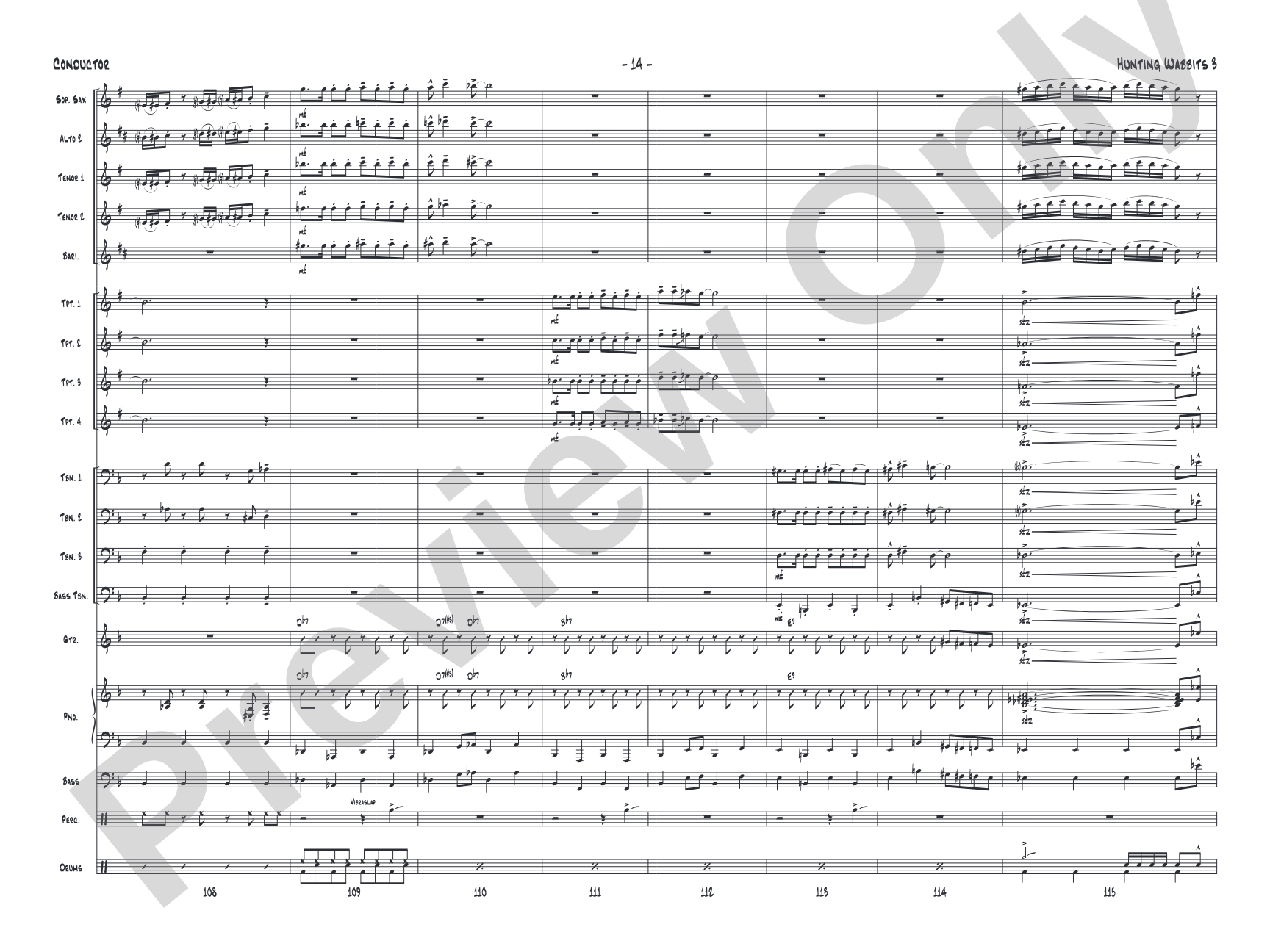
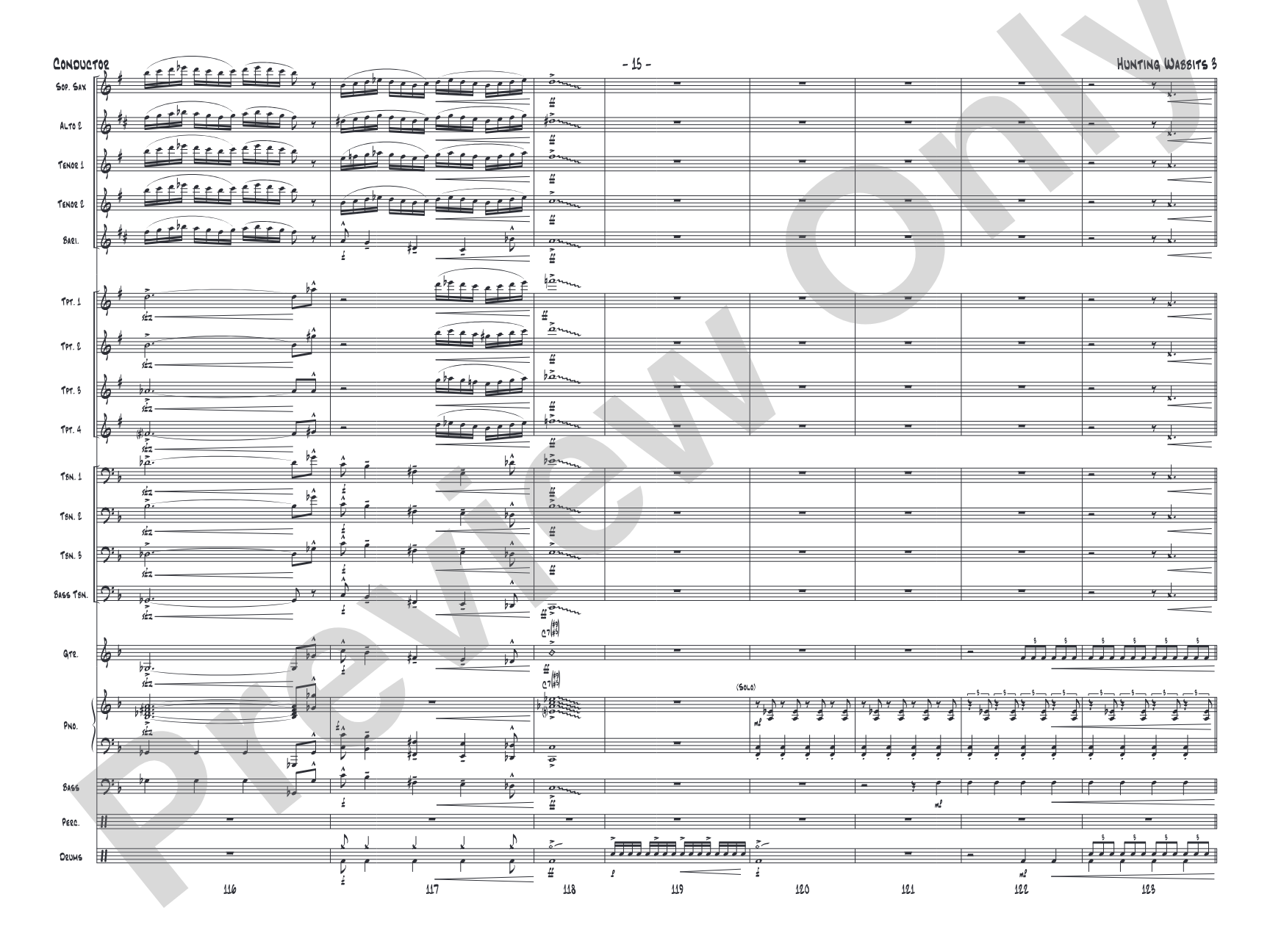
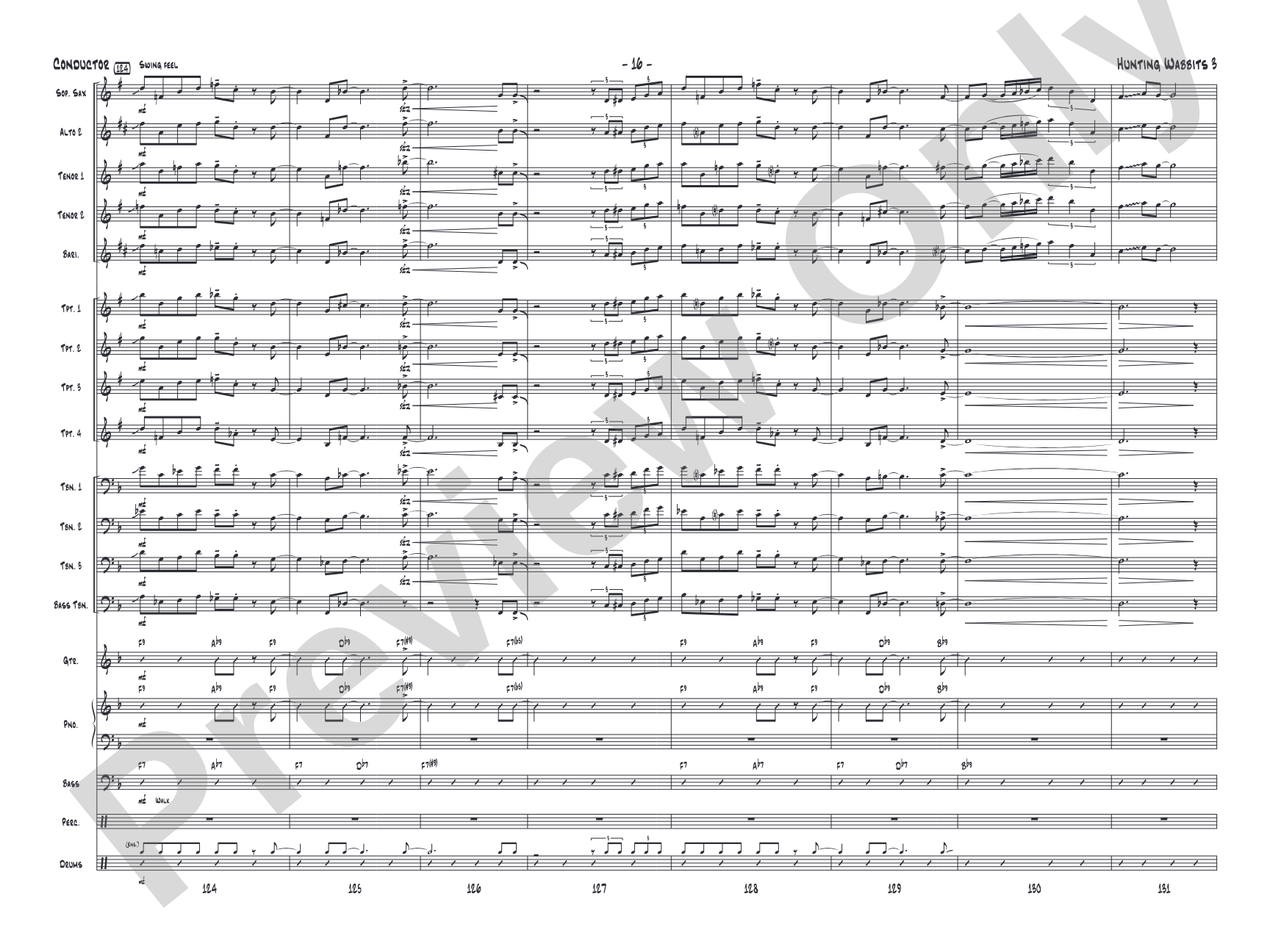
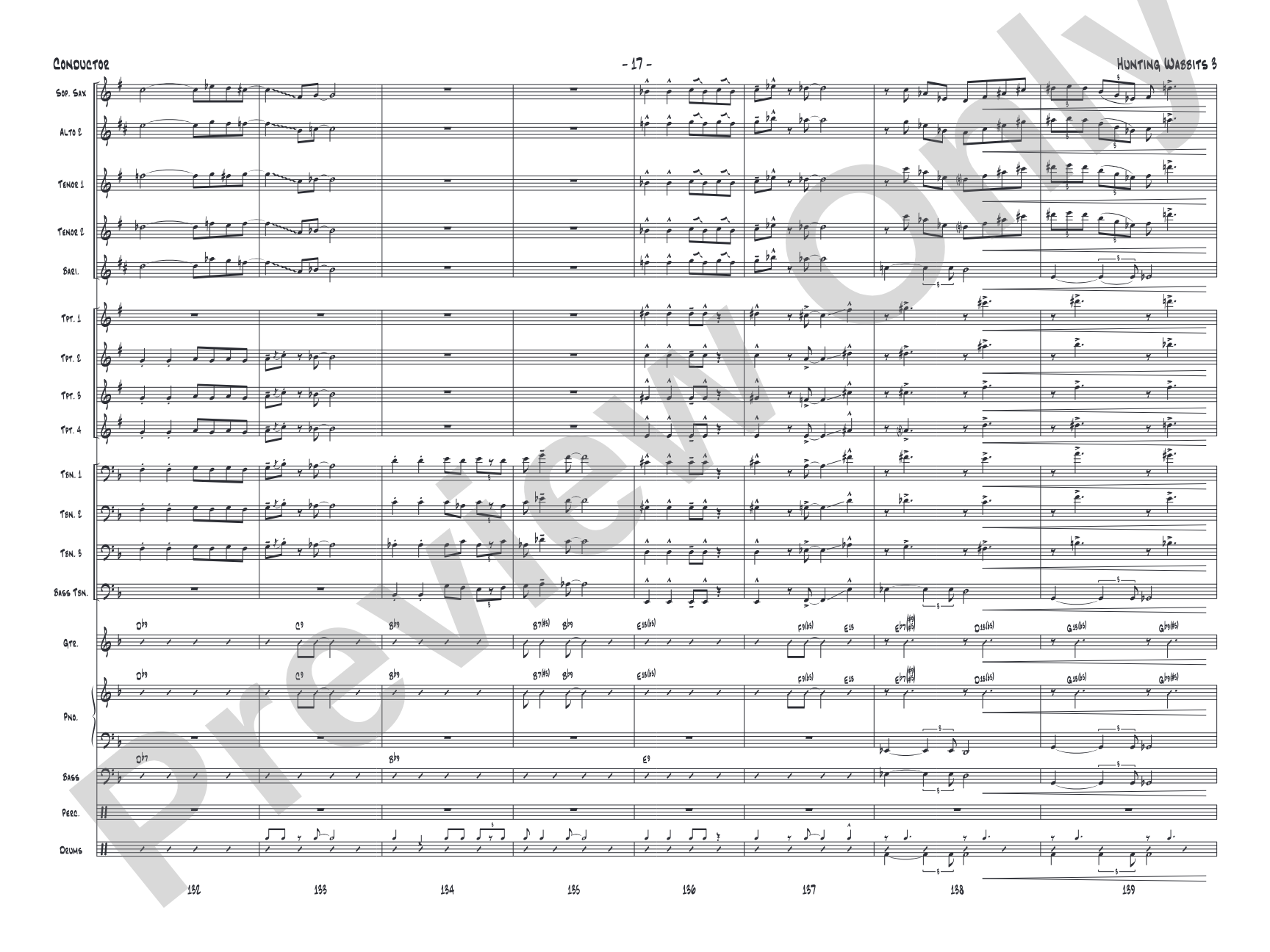
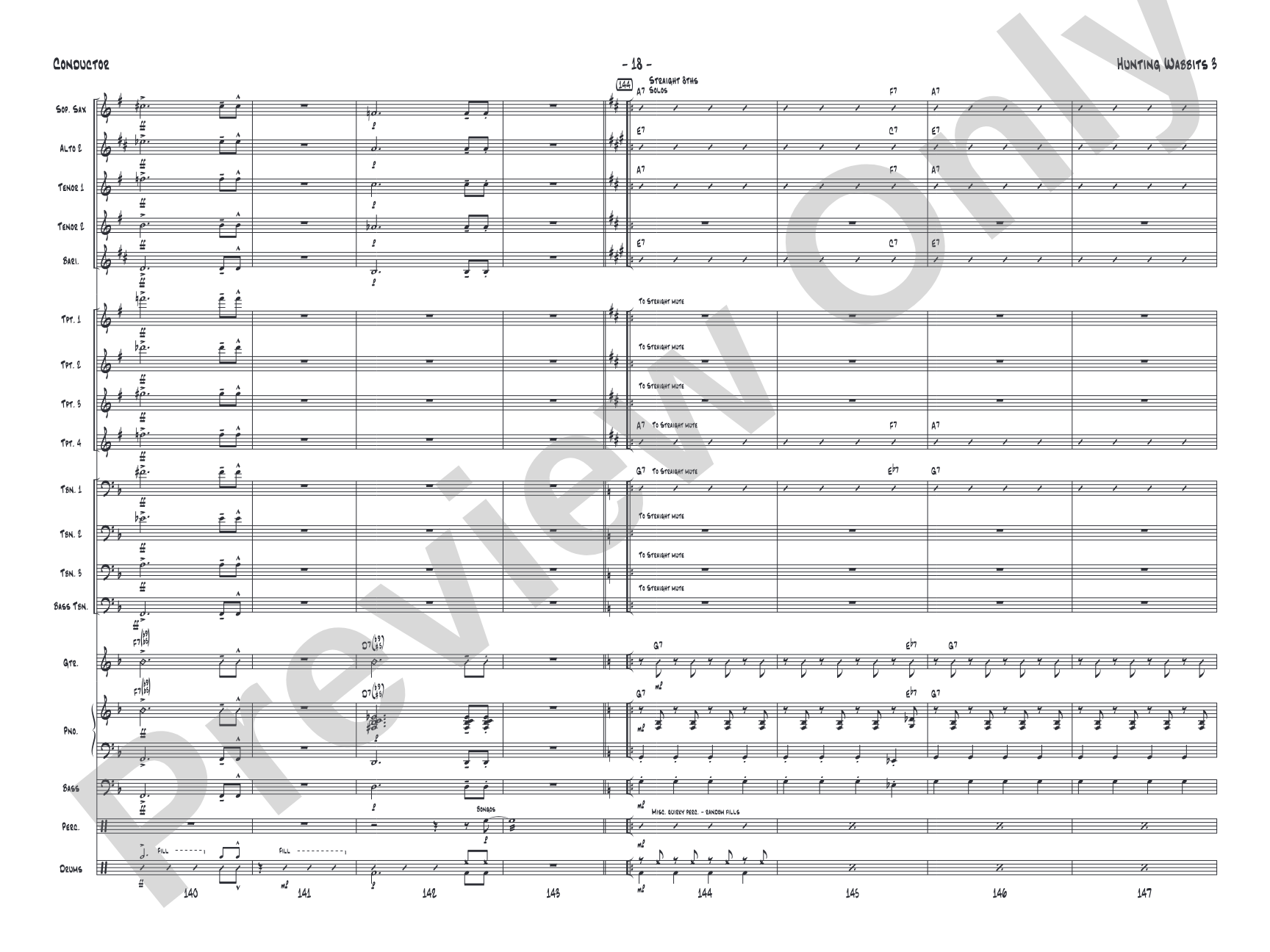
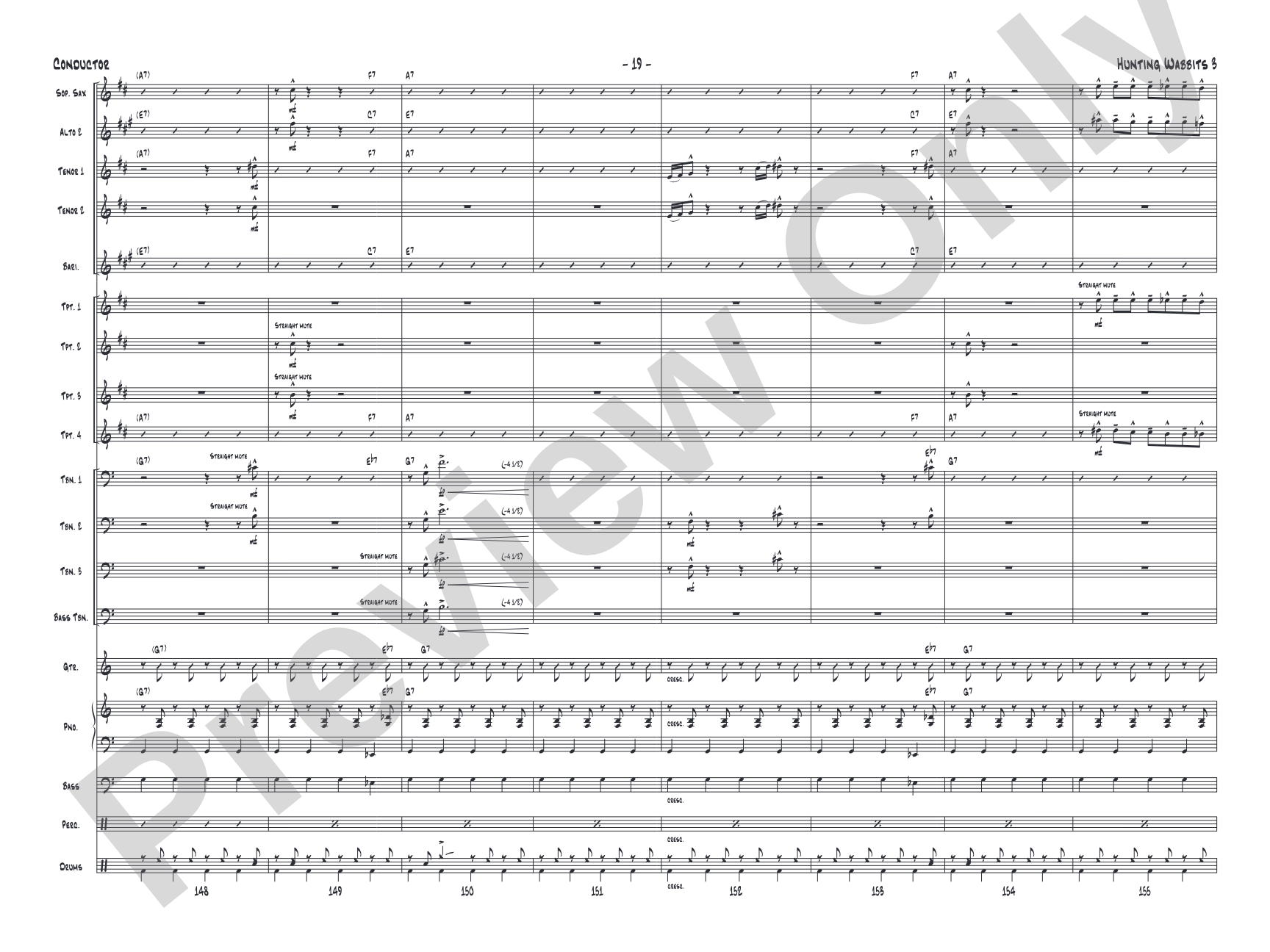
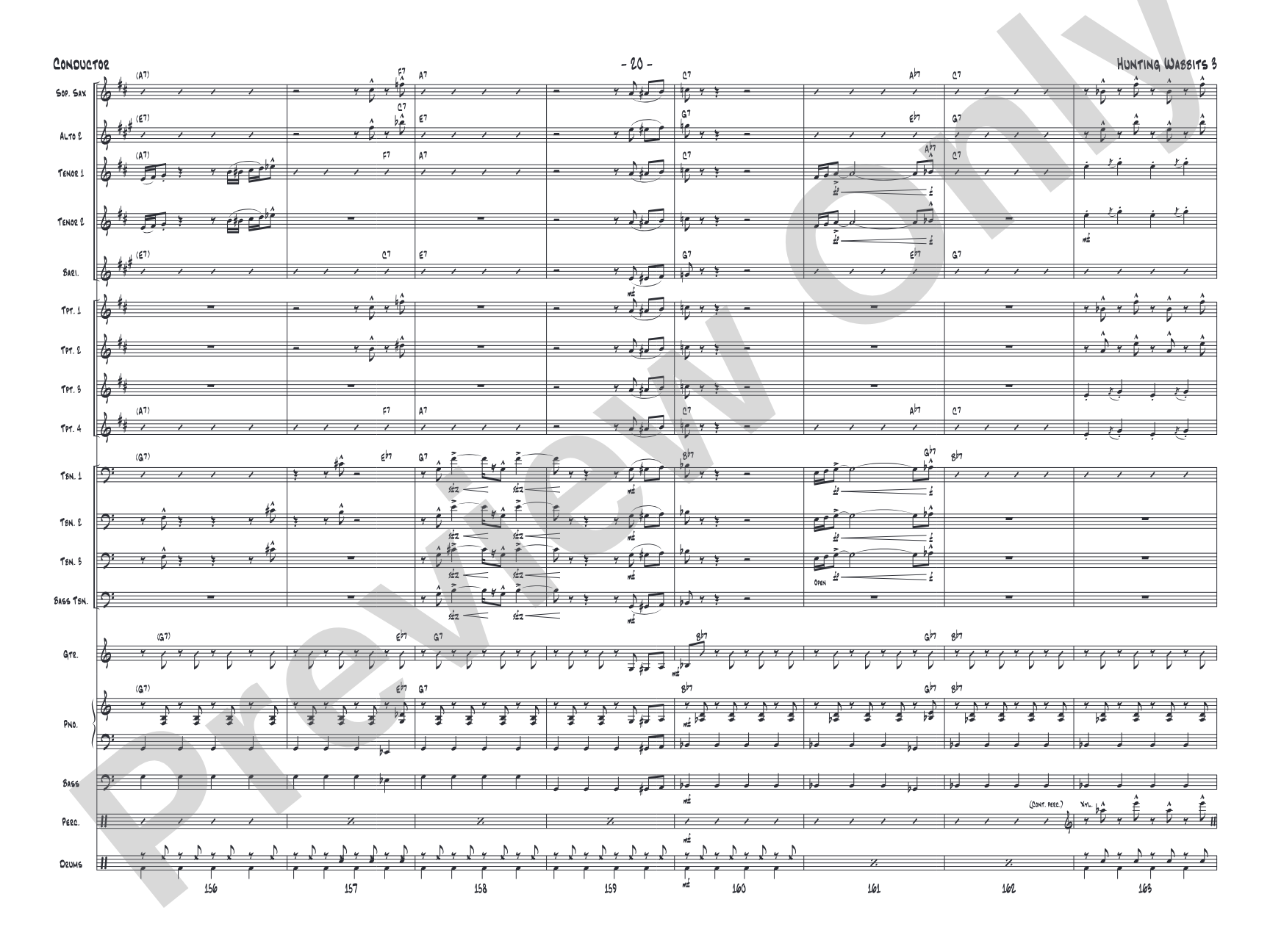
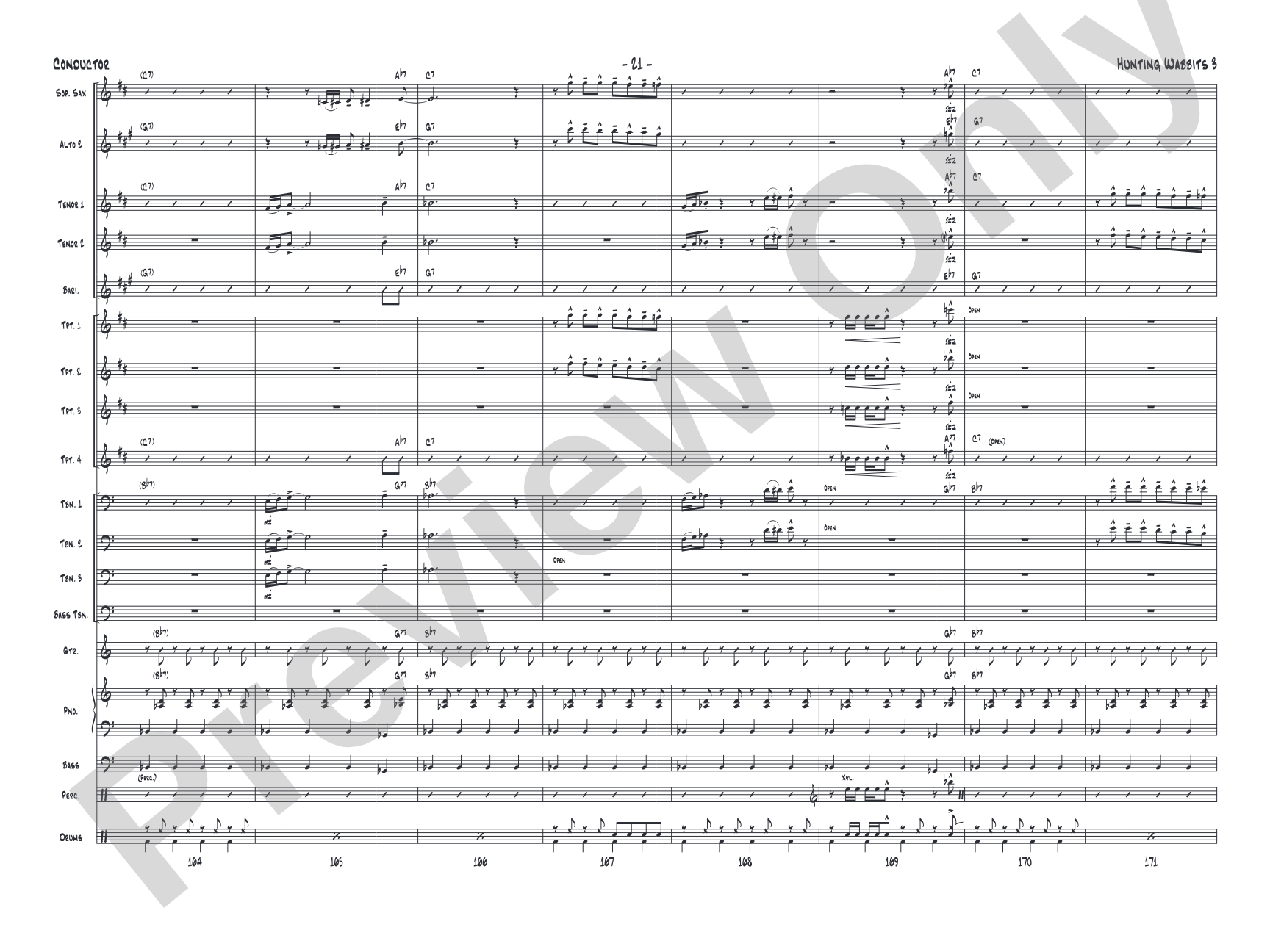
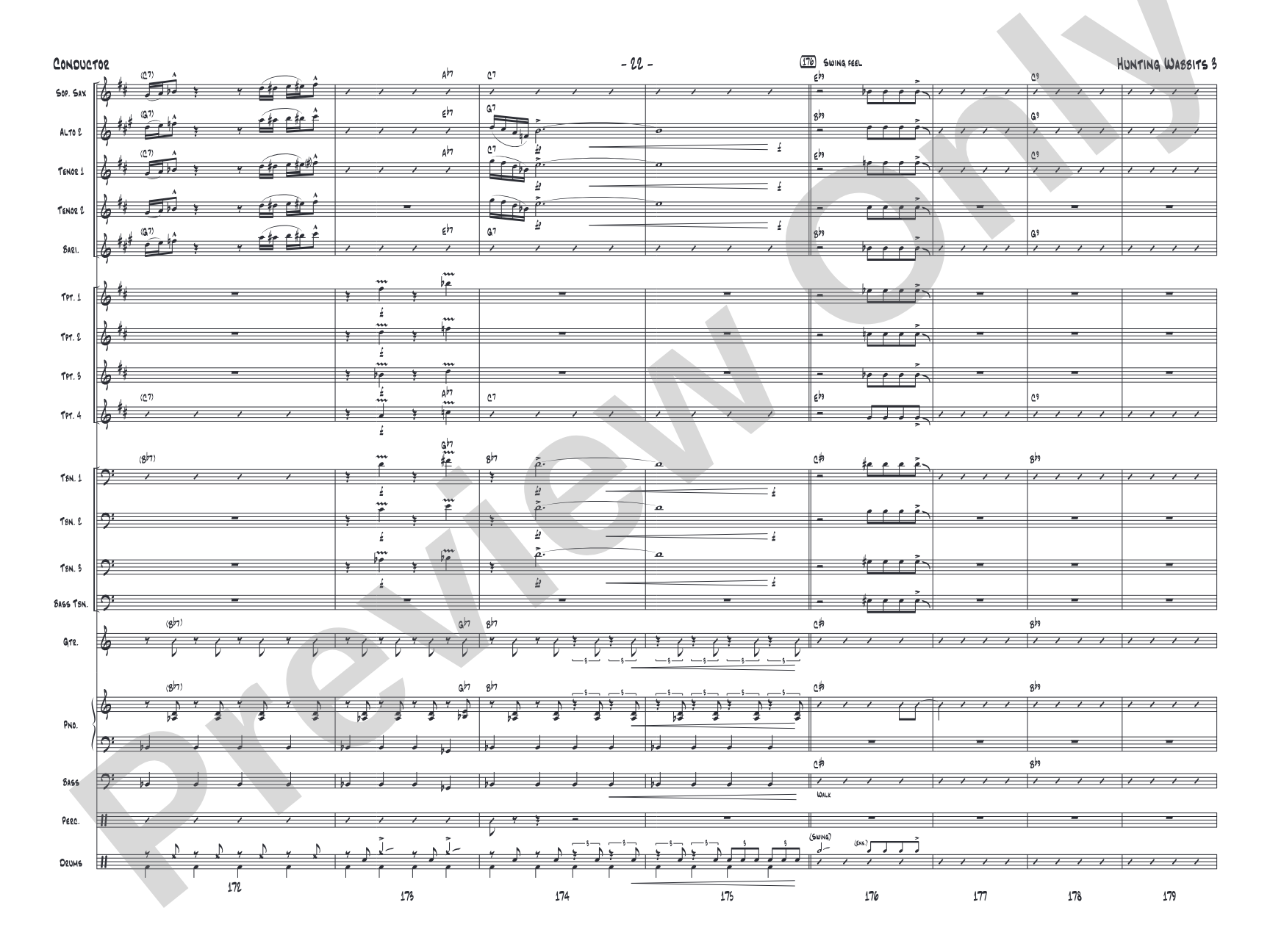
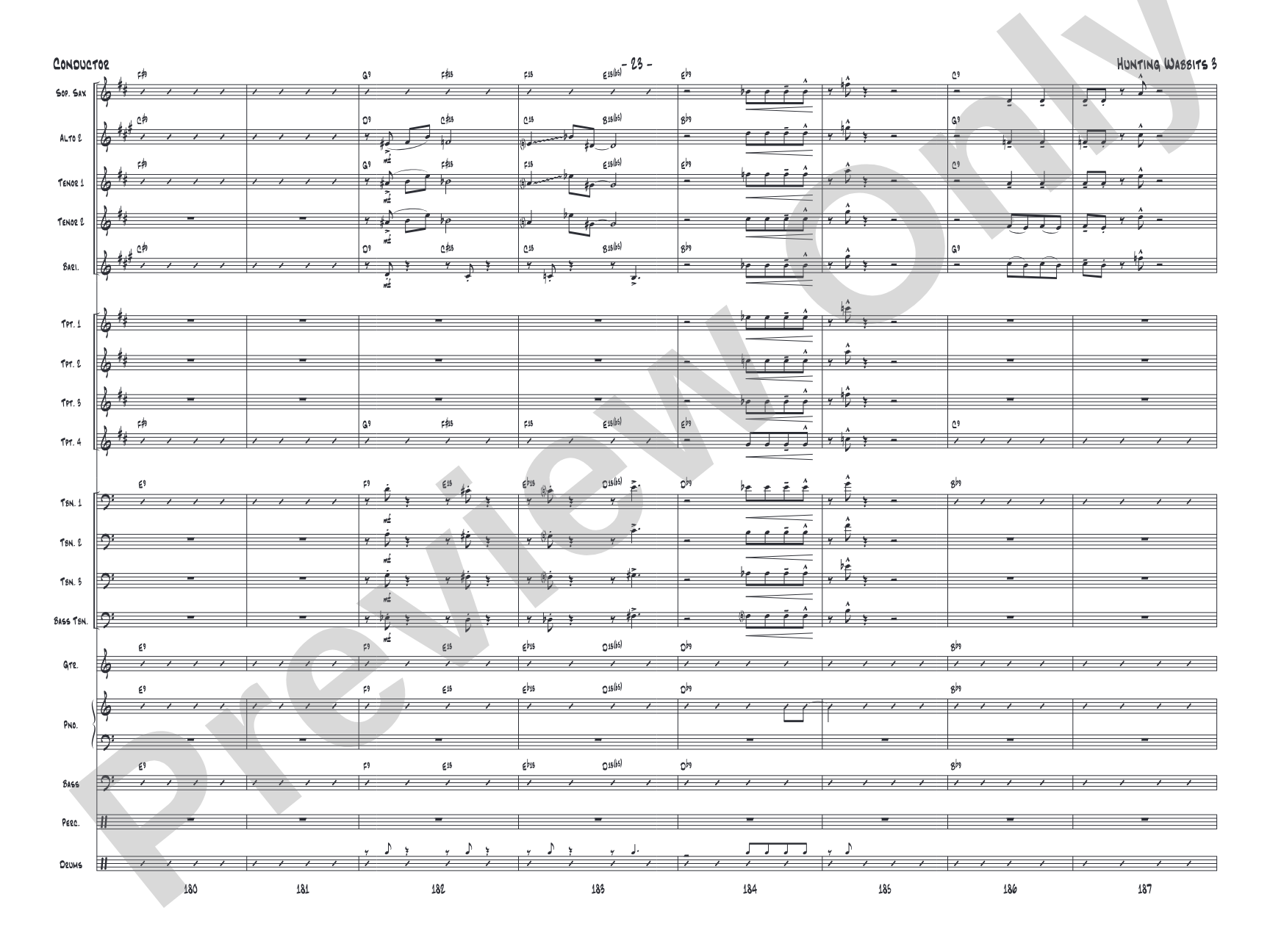
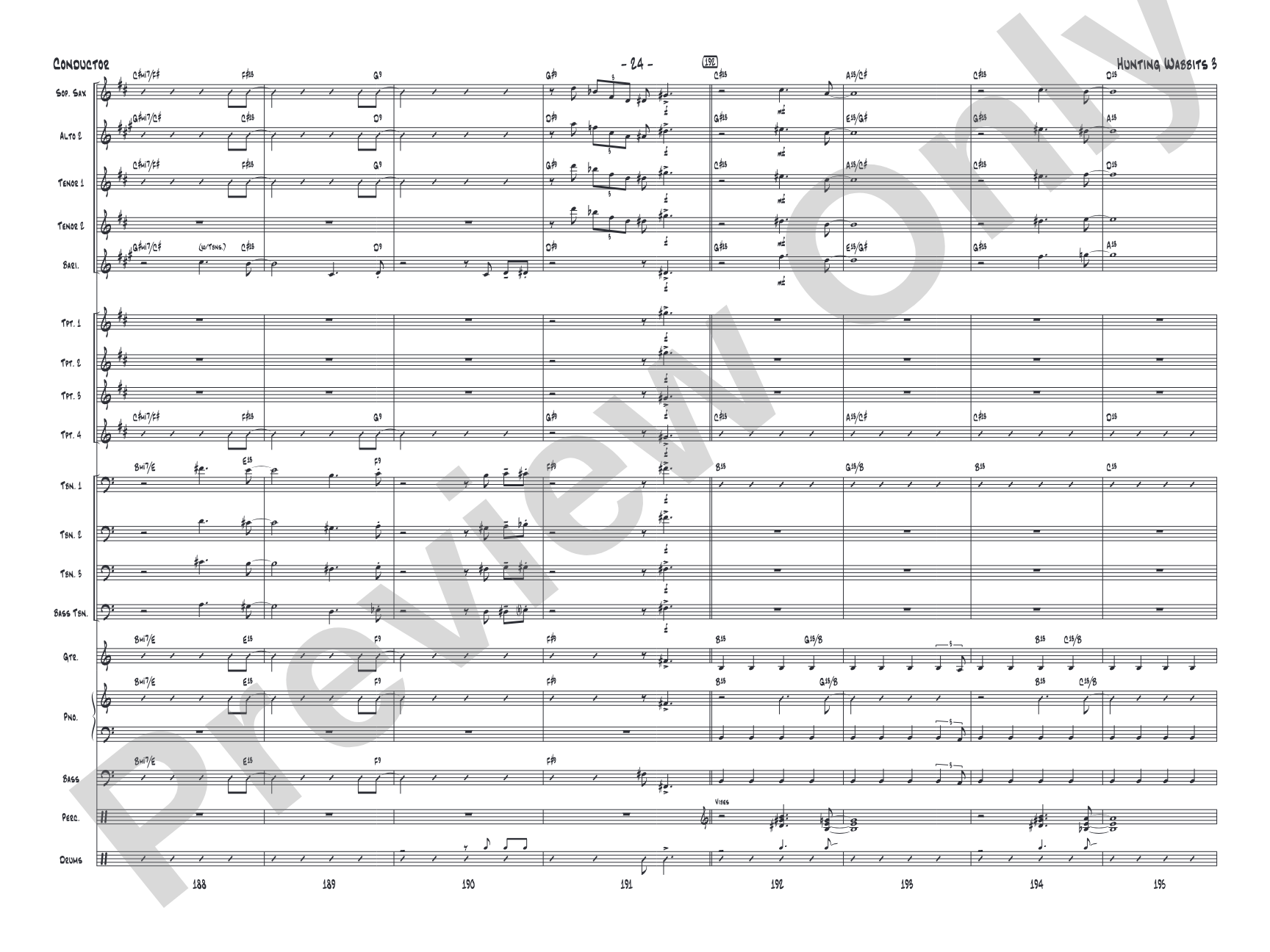
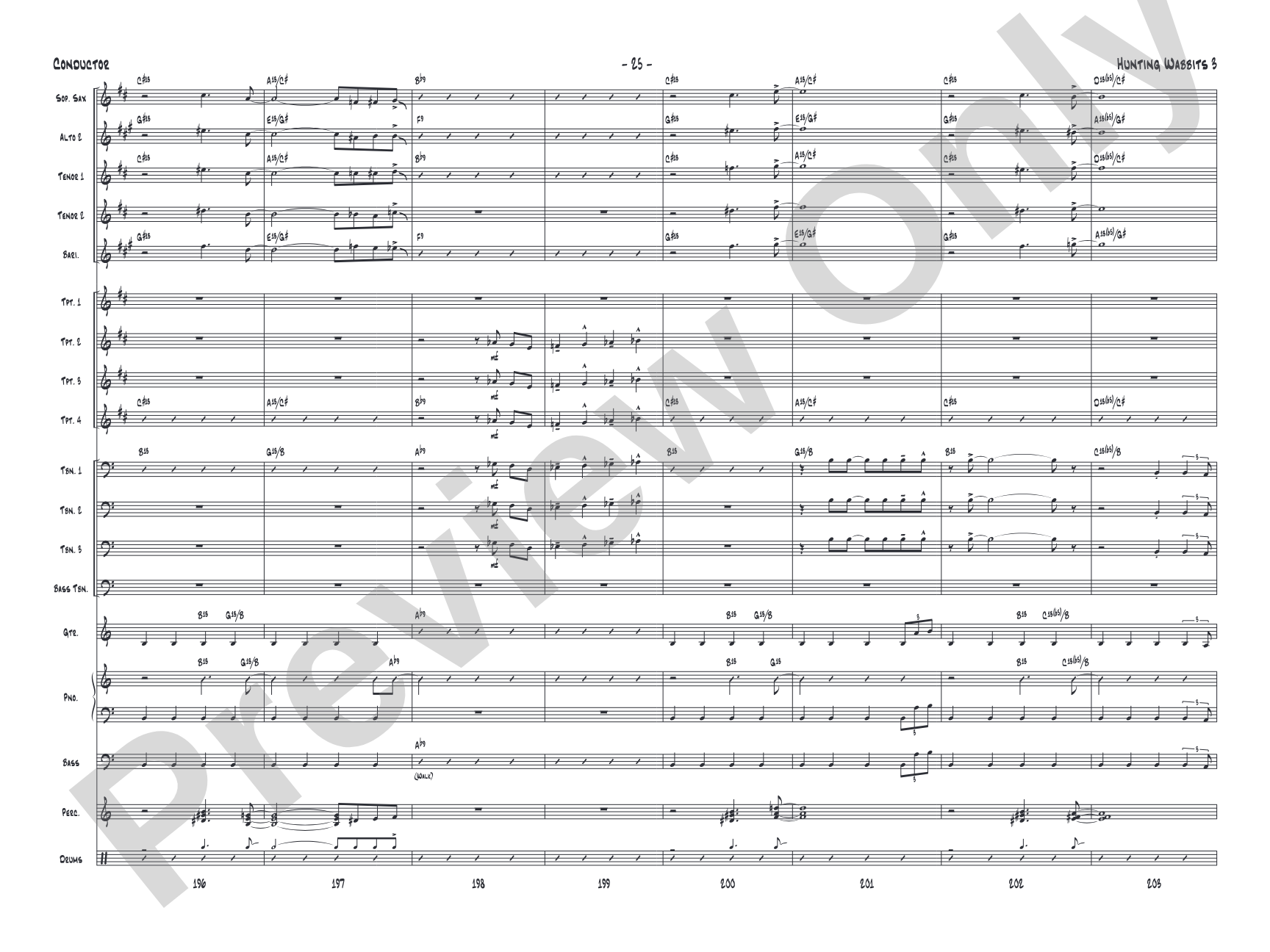
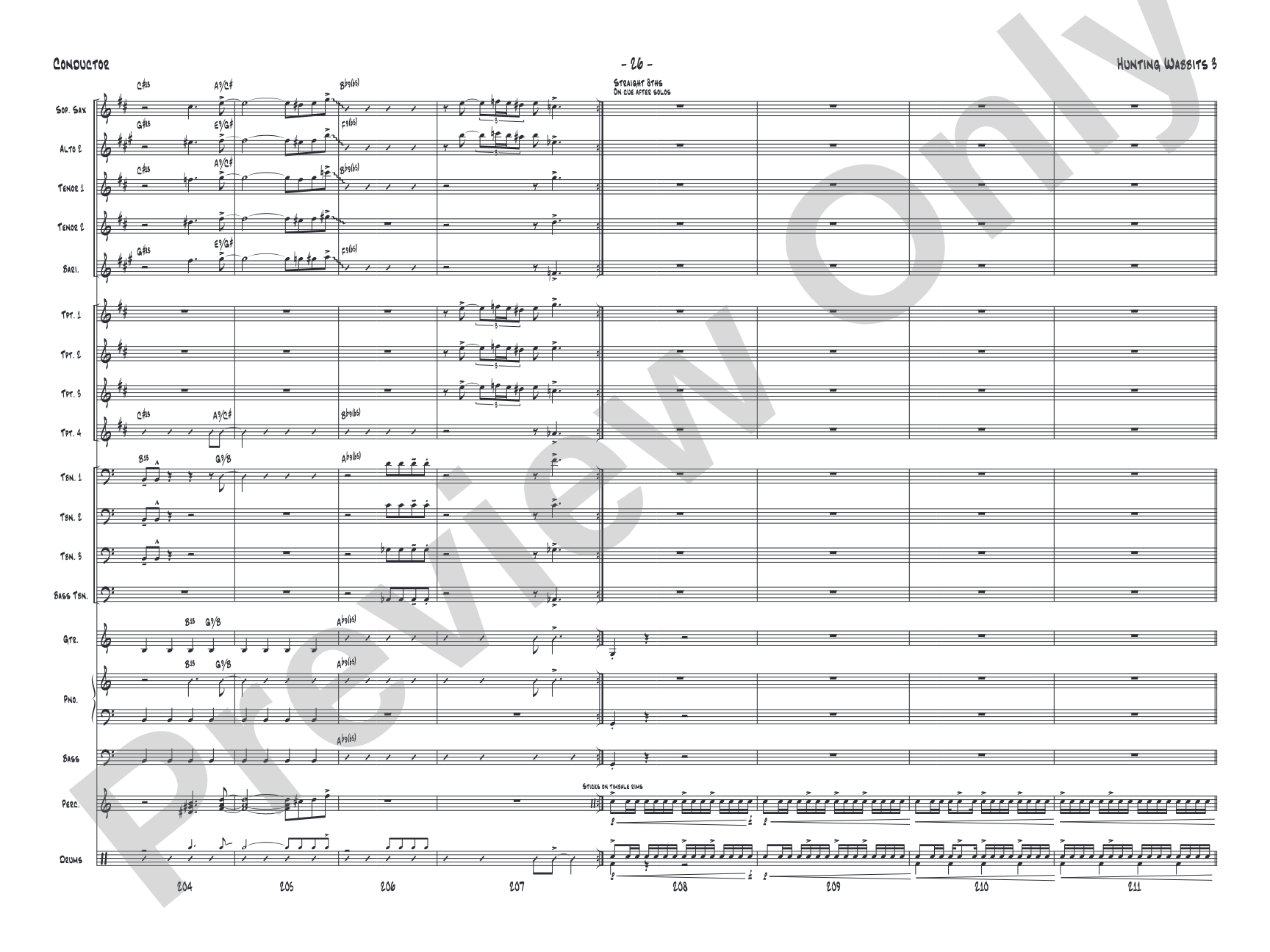
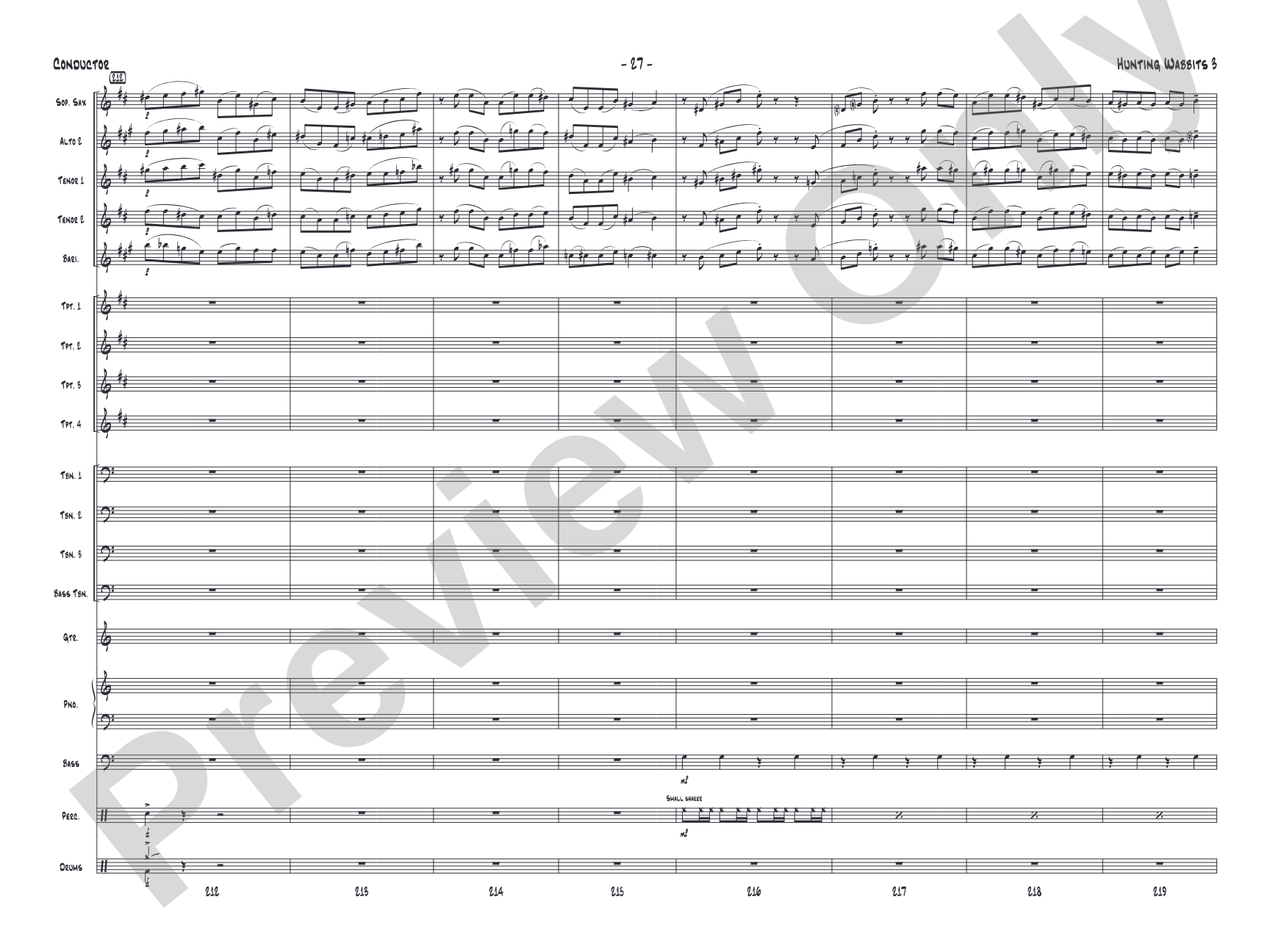
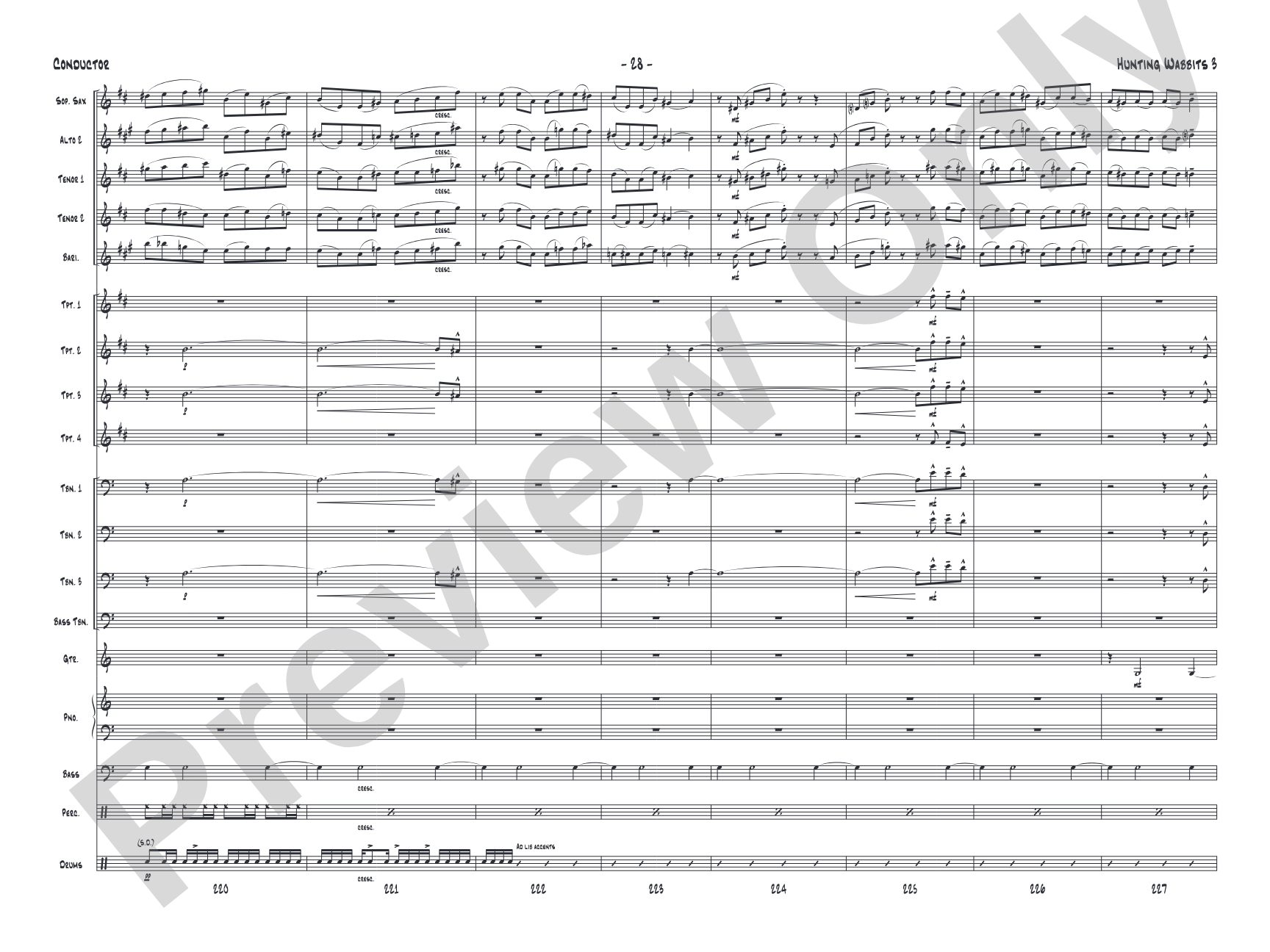
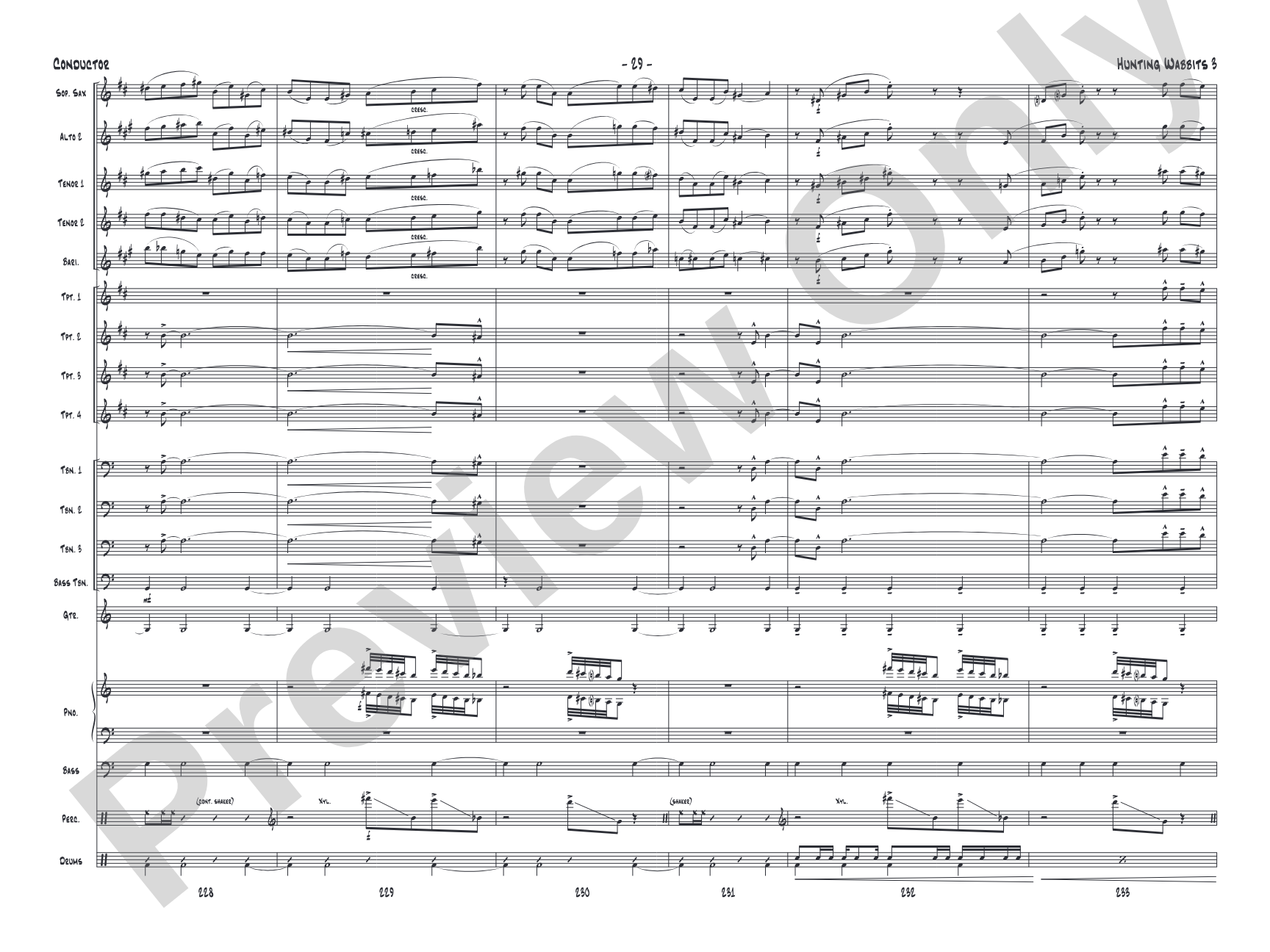
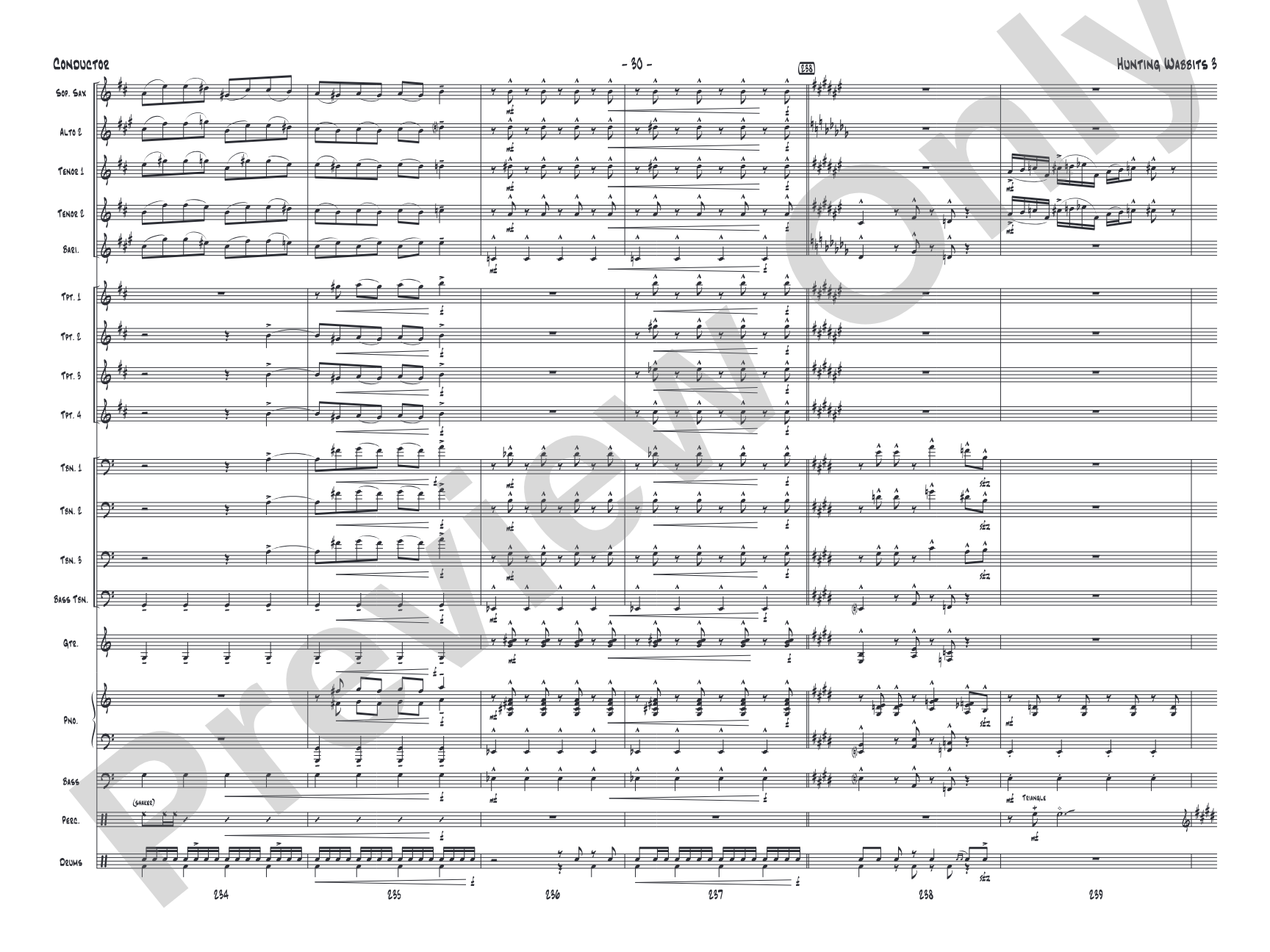
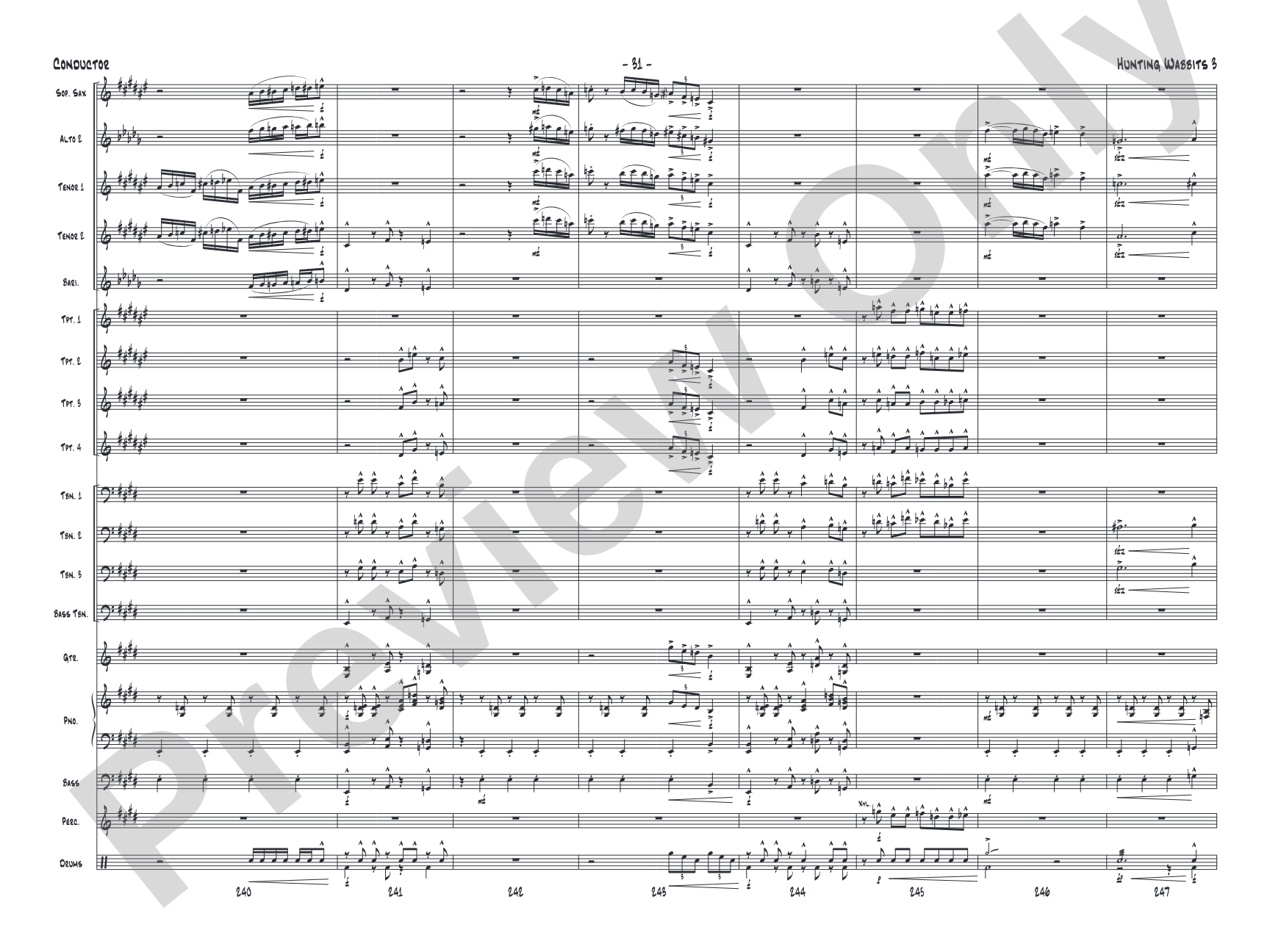
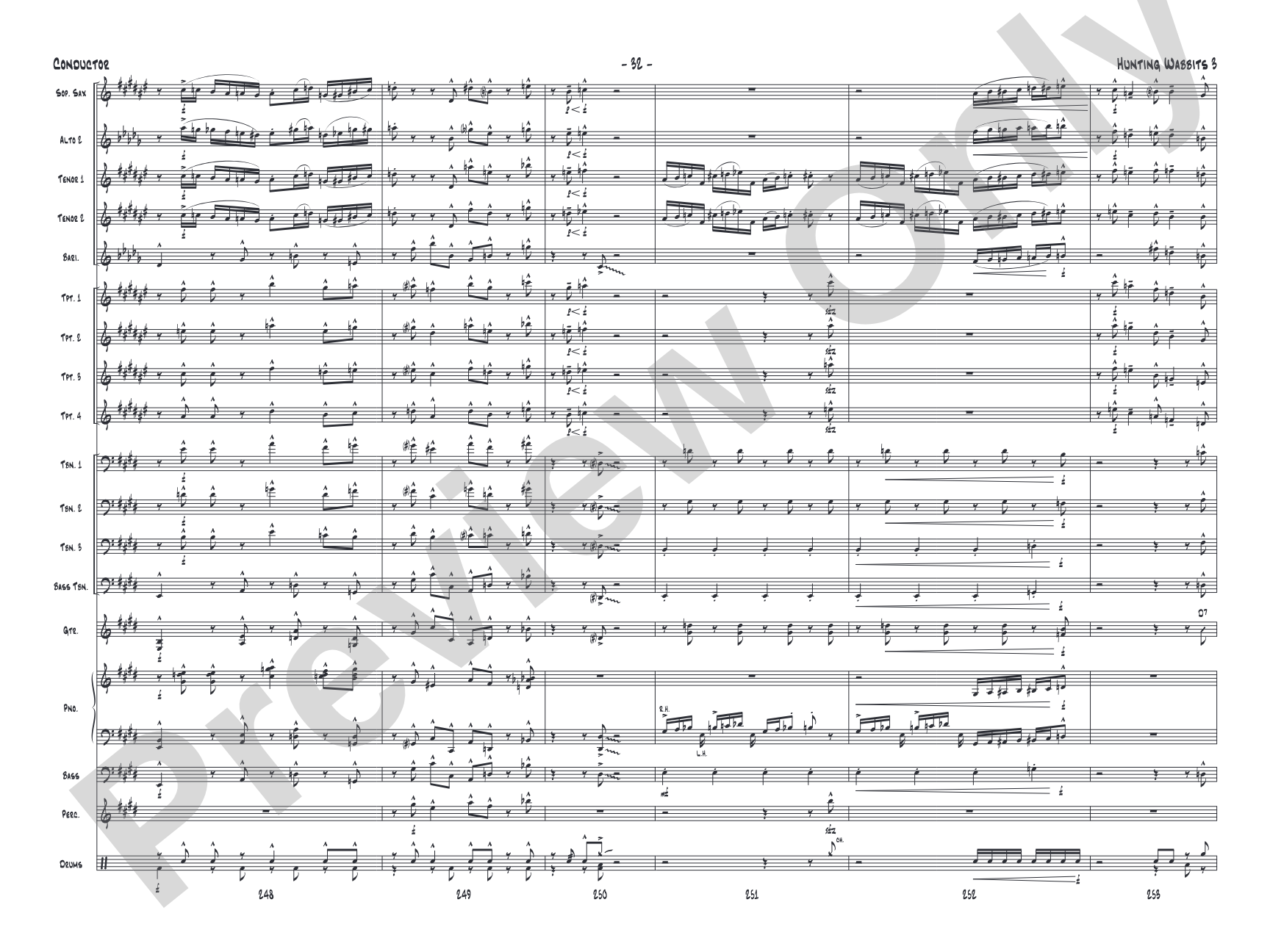
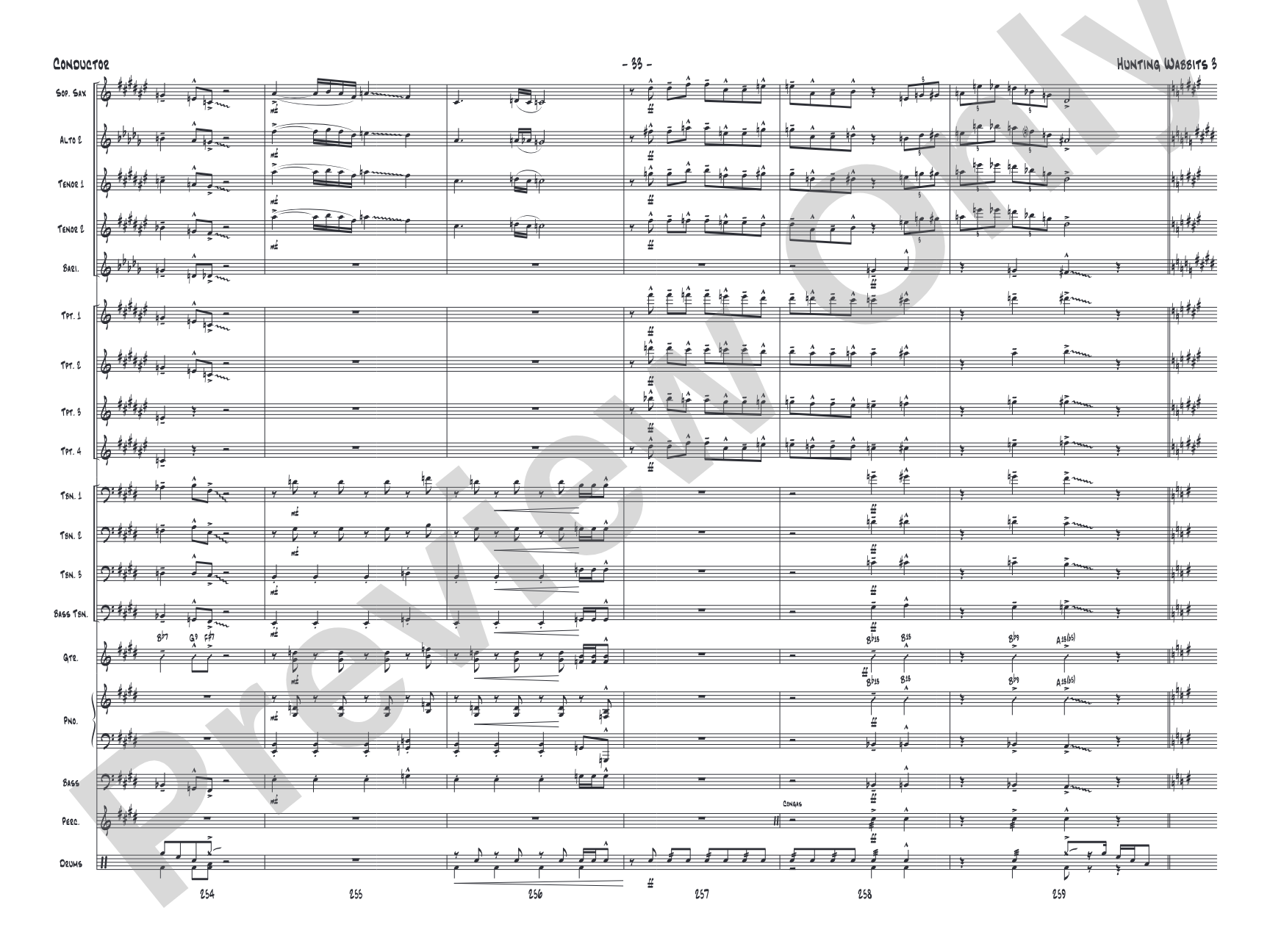
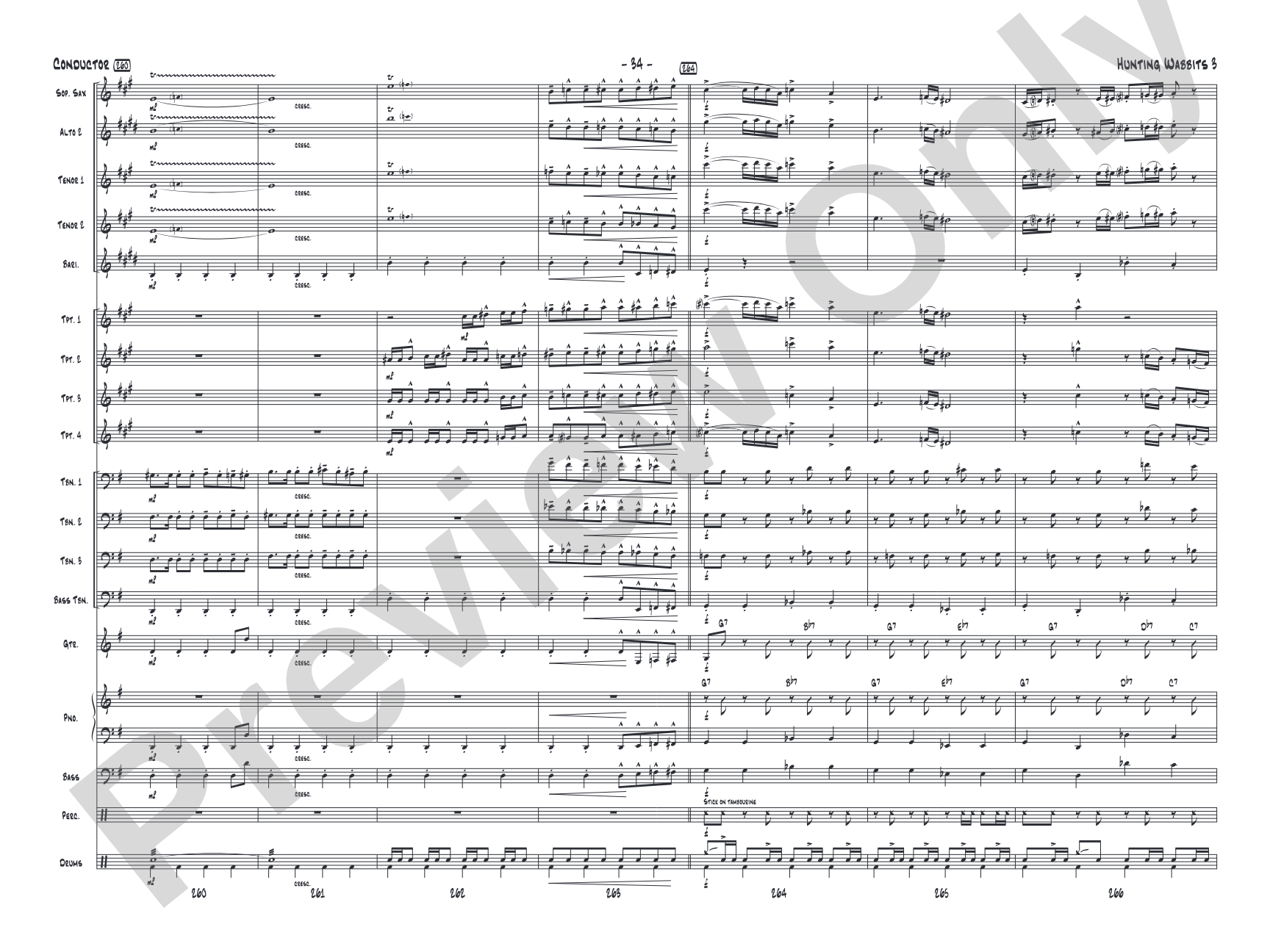
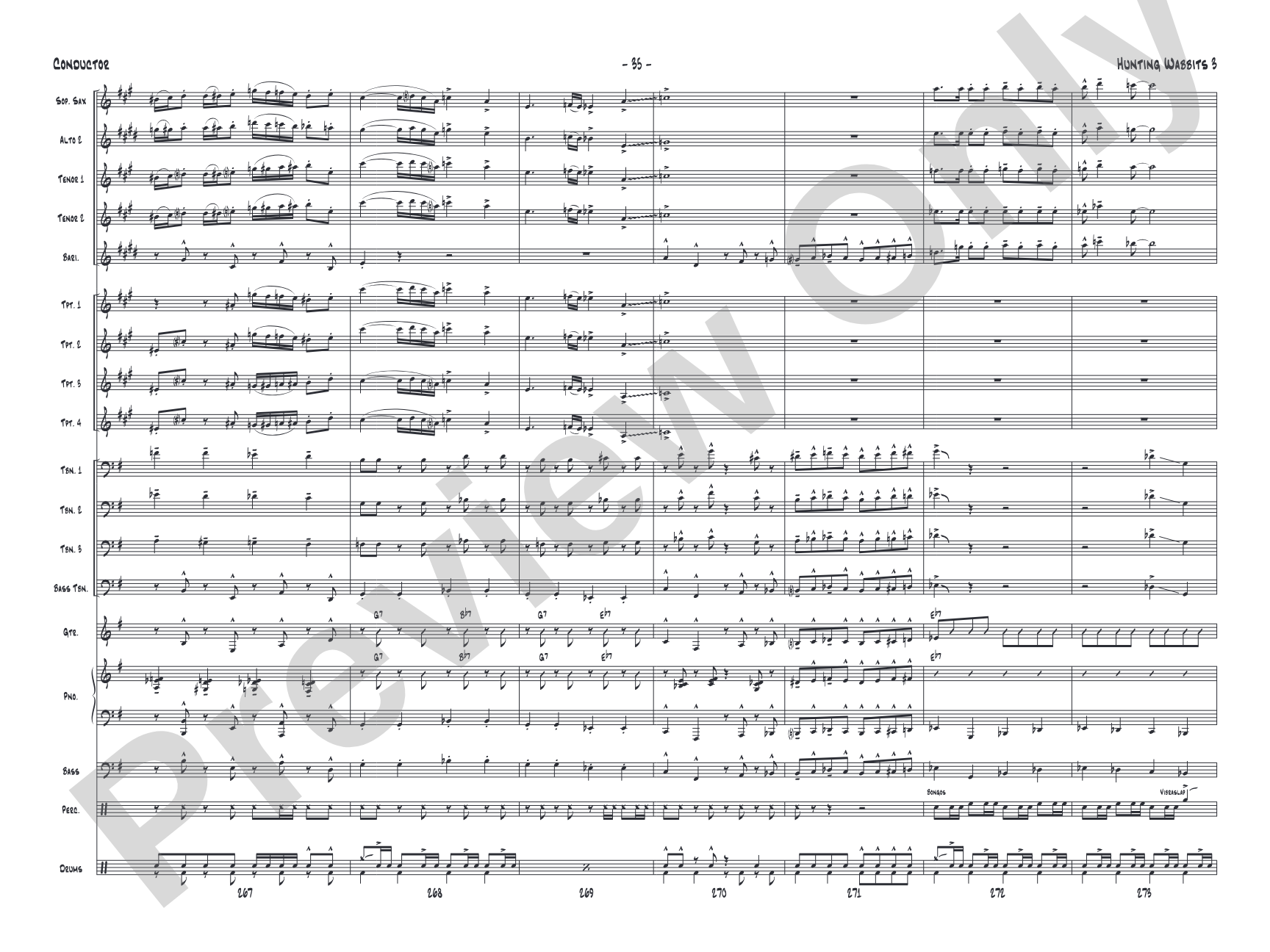
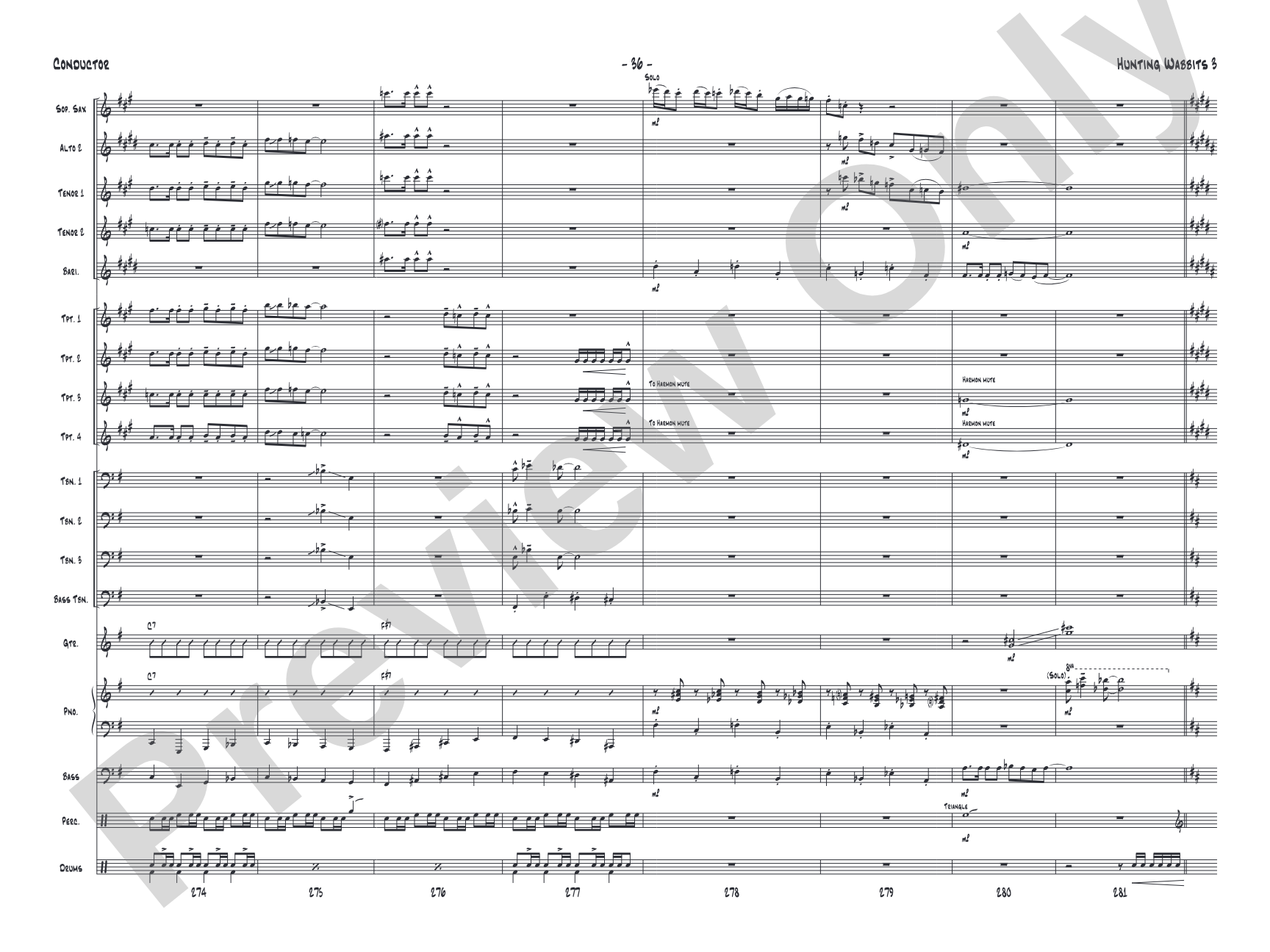
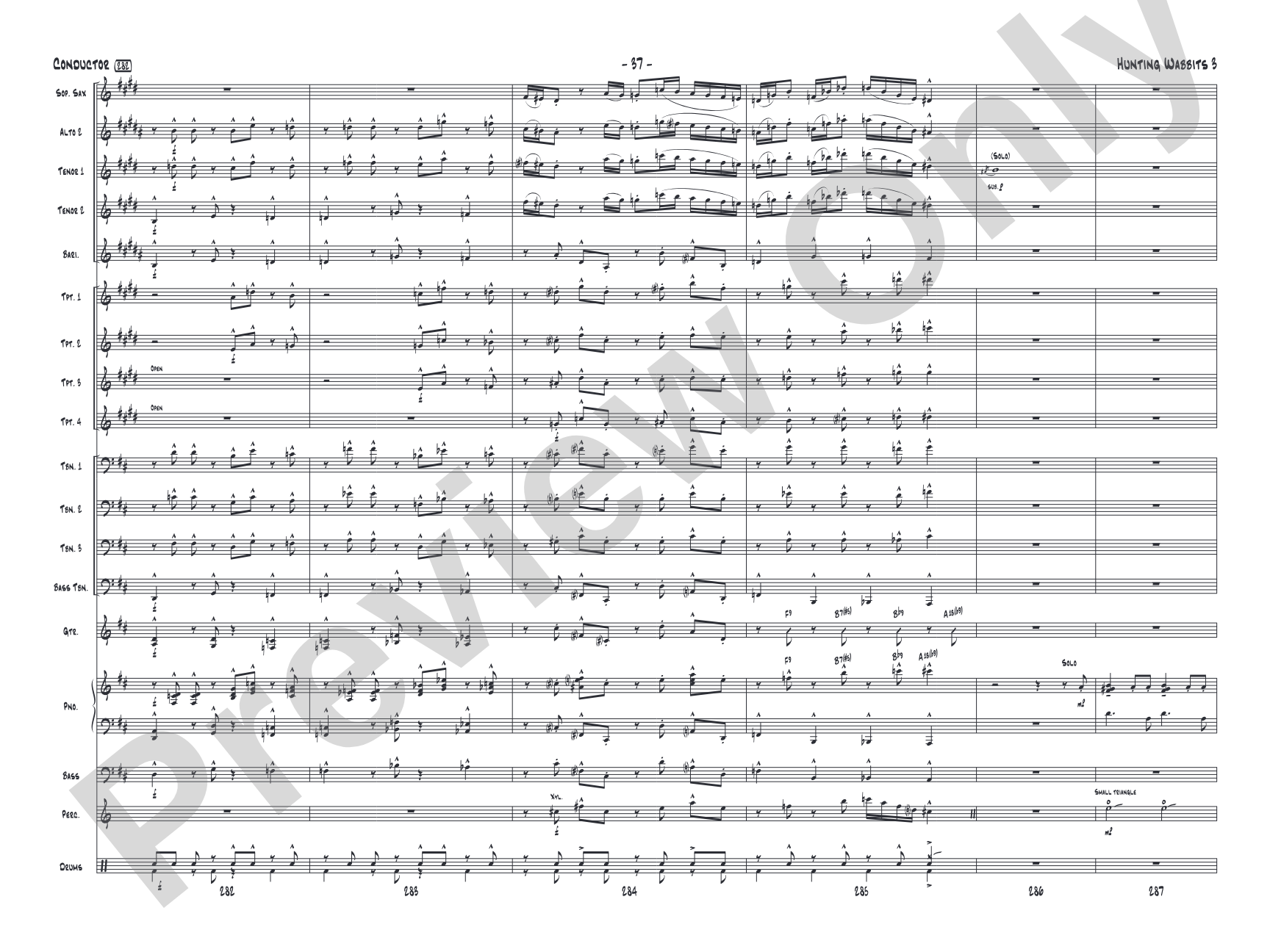
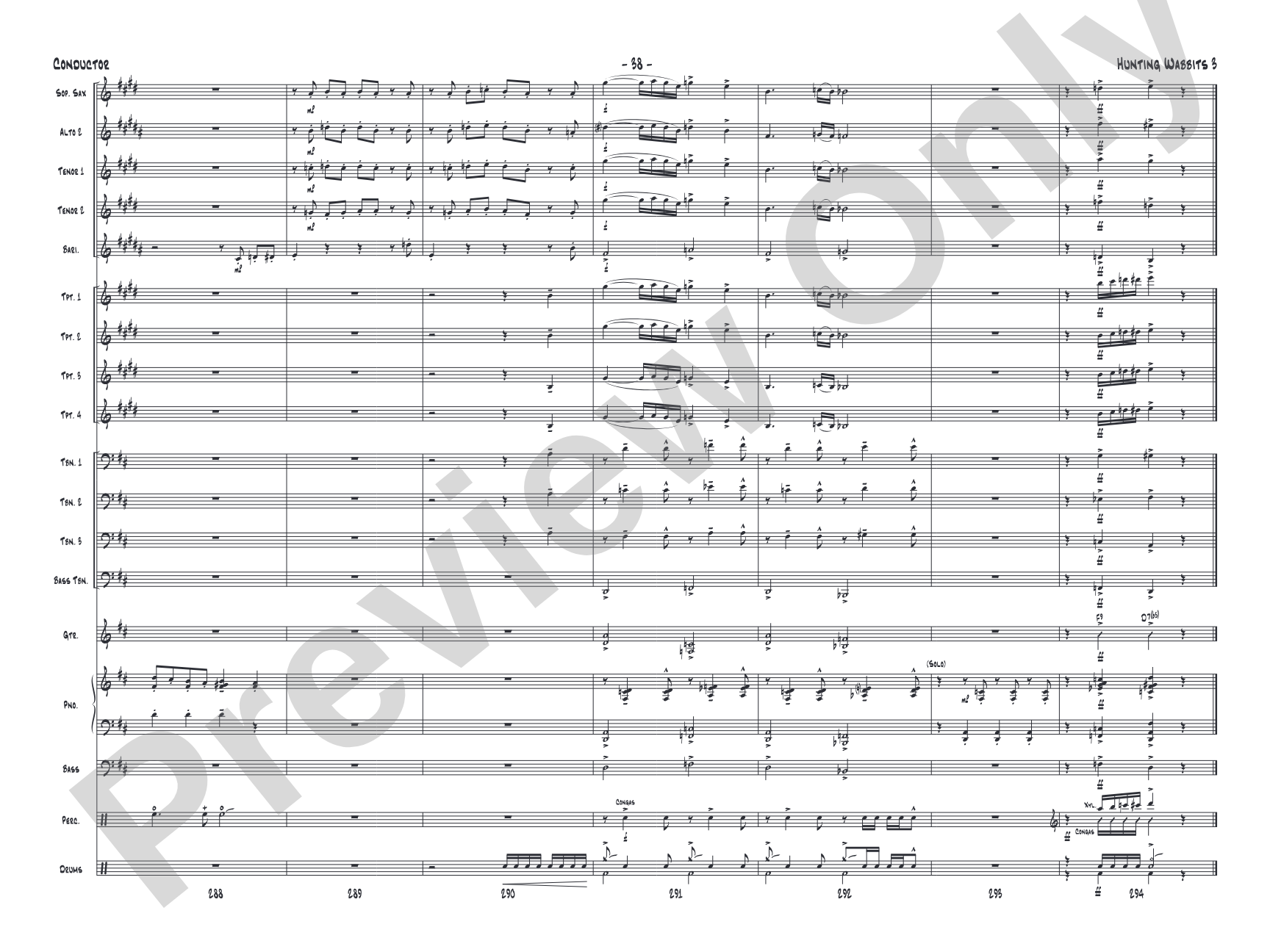

Hunting Wabbits 3 (Get Off My Lawn): Score
As Recorded by Gordon Goodwin's Big Phat Band
By Gordon Goodwin
Grade: 6 (Professional / Very Advanced)
Item: 00-PR-0005522
$11.00
Pickup currently not available
Description
Whoa, this is the next Hunting Wabbits chart in the "trilogy." As recorded by the Big Phat Band on the Goodwin CD That's How We Roll, this HW3 is fairly challenging, but well worth the effort. There are parts for soprano sax lead (alternate alto 1) and 2nd alto with piccolo (alternate 2nd alto sax-only) and solo space for soprano (alto), alto, tenor 1, trumpet 4, and trombone 1. Lead trumpet range is to written high F-sharp. This title is available in MakeMusic Cloud.


Don't just read it, hear it, play along with it, and watch your students grow with it. In MakeMusic Cloud, Hunting Wabbits 3 (Get Off My Lawn): Score comes alive with professional accompaniment, adjustable tempo, and built-in practice tools that turn solo practice into real progress.
Open in the Player
Jump straight in and assign it today.
Start Your Free Trial
Open this title and explore the full library in minutes.
Sample Audio
1
Audio File
--:--
0:00
0:00
Sample Video
No sample videos found.
Additional Details
Series:
Gordon Goodwin Series
Publisher:
Alfred Music
Page Count:
132
SKU:
00-PR-0005522
More about this title
About the Composer: Gordon Goodwin

Gordon Goodwin began composing full orchestrations in his head at age five, writing complete pieces rather than fragments. By thirteen, he had already written his first big band chart, Hang Loose, signaling the compositional sophistication that would define his career. His work spans film and television scoring (earning three Emmy Awards and Grammy nominations for projects including Bad Boys II, Con Air, and Remember the Titans) alongside collaborations with world-class vocalists and instrumentalists ranging from Quincy Jones to Christina Aguilera.
In 2000, Goodwin established Gordon Goodwin's Big Phat Band, a Los Angeles-based ensemble that has become a cornerstone of contemporary big band jazz. The band's recordings have pushed technical and creative boundaries, with their debut album making history as the first commercially available DVD audio release and earning multiple Grammy nominations. Goodwin continues to conduct major symphony orchestras internationally while maintaining his role as bandleader, arranger, and composer at the forefront of modern jazz.
Why we love this
Hunting Wabbits 3 arrives with an impressive pedigree: it's the third installment in a series audiences already know, recorded by one of the most accomplished large ensembles in contemporary jazz. Goodwin's writing balances accessibility with genuine sophistication, offering soloists meaningful space while keeping the ensemble texture energizing and playable. For advanced programs, this chart delivers the kind of professional-level material that validates the hours students invest in their craft.
What to expect
The Hunting Wabbits series brings a driving, contemporary big band swagger to the tradition. This installment maintains that high-energy character with Goodwin's signature blend of intricate arranging, generous solo space, and ensemble figures that require precision without sacrificing the groove's infectious momentum.
Who it's for
This chart is built for accomplished jazz ensembles with strong lead voices, confident soloists, and the rhythmic maturity to handle sophisticated syncopation and meter changes. Directors programming high-level jazz festivals, advanced studio bands, or competitive jazz showcase events will find material that challenges their best players without requiring a roster of professionals.
How to get the most out of it
- Lock the lead trumpet and soprano saxophonist into a unified sound during the opening section; their interplay sets the piece's character and requires rehearsal time focused on phrasing agreement rather than just intonation.
- Map out the solo section order early and establish clear ensemble punctuation cues so soloists feel the band's support without losing their improvisational freedom.
- Balance the piccolo voice (alternate 2nd alto) in context; it should articulate the texture without overwhelming the section, requiring careful voicing and dynamic control from your lead alto player.
- Work the rhythm section's time feel separately before full ensemble rehearsals; the groove foundation must be rock-solid before layers of solos and ensemble figures land properly.
How to use it
Program this as a centerpiece for a jazz concert dedicated to contemporary large ensemble writing, pairing it with other Goodwin works or similar-caliber charts to create a cohesive program. It also serves as the ideal closing number for festival competitions or concert finales, since the energy and polish leave audiences satisfied and your ensemble with a strong final impression.
Skills your students will build
- Reading and executing complex syncopation across multiple sections simultaneously
- Navigating solo space while maintaining ensemble awareness and section texture
- Balancing lead voice authority with section blend in a high-register trumpet section
- Responding to and supporting improvisation while executing arranged figures and transitions
- Managing articulation and dynamics in piccolo doubling within an alto section
- Sustaining ensemble precision during rhythmically dense passages and key modulations