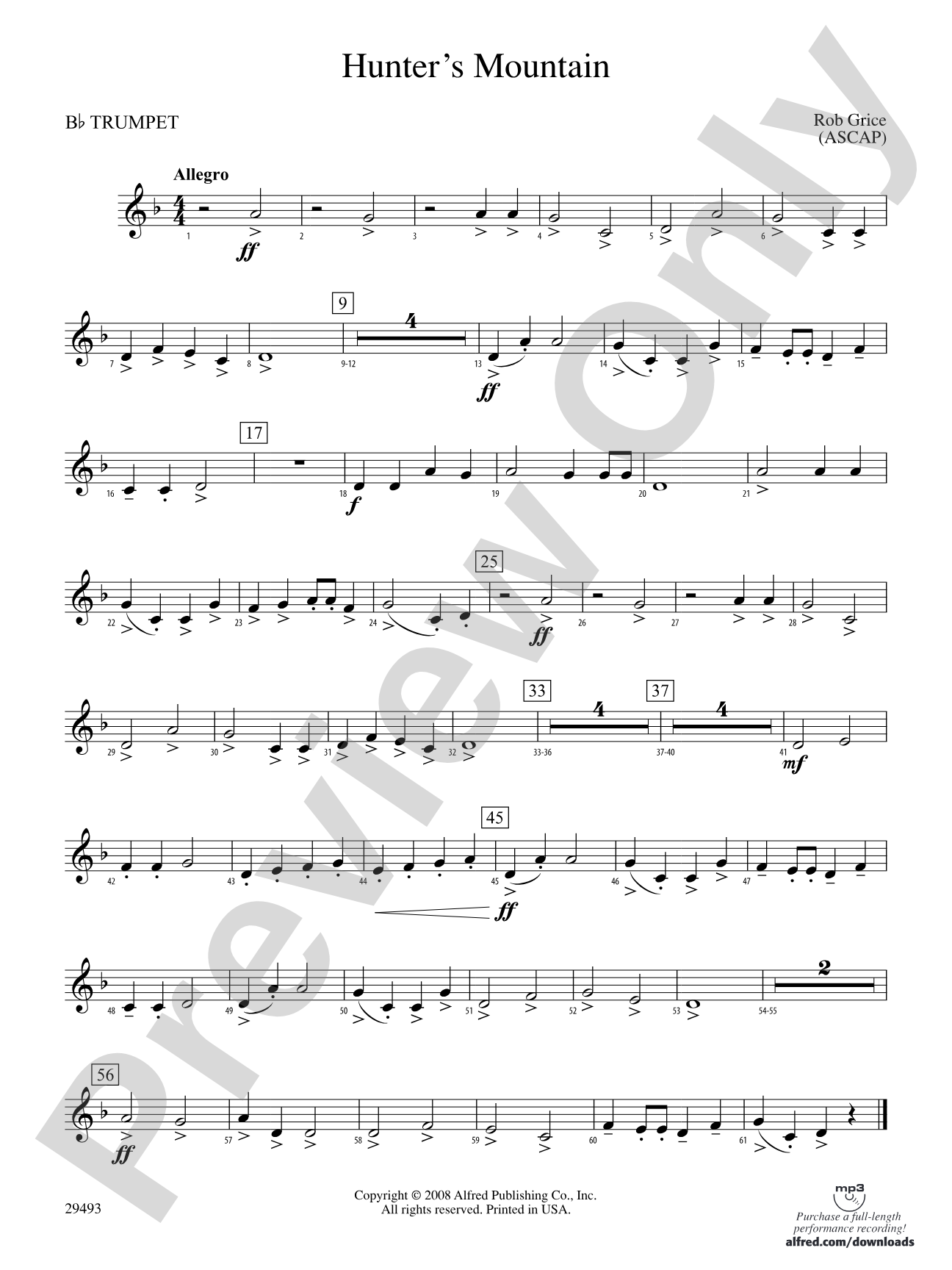
Hunter's Mountain: 1st B-flat Trumpet Sheet Music Preview

Hunter's Mountain: 1st B-flat Trumpet

By Rob Grice

Grade: 1 (Very Easy)

Item: 00-PC-0001448_T1

Digital Download
$3.00
Description
Hunter's Mountain is an aggressive beginning band composition that was written to capture the energy and imagination of young musicians. With very limited demands, this composition offers young players a chance to perform with success in their early stage of development! Only the first six notes of the B-flat concert scale are utilized. (1:45) This title is available in MakeMusic Cloud.

Don't just read it, hear it, play along with it, and watch your students grow with it. In MakeMusic Cloud, Hunter's Mountain: 1st B-flat Trumpet comes alive with professional accompaniment, adjustable tempo, and built-in practice tools that turn solo practice into real progress.

Sample Audio
0:00
0:00
Sample Video
Additional Details
Series: Alfred Debut Series
Publisher: Alfred Music
Page Count: 118
SKU: 00-PC-0001448_T1

More about this title

About the Composer: Rob Grice

Rob Grice

Rob Grice's compositions are performed regularly across North America, Europe, Australia, and Japan. His works have been featured at the Midwest Clinic, Carnegie Hall, the Society of Wind Instruments conference in Germany, and numerous state and regional music education conferences. His original compositions and arrangements appear frequently on state, national, and international contest lists.

Grice's strength in writing for young bands stems directly from his classroom experience at elementary, secondary, and community college levels. He was named Secondary Teacher of the Year by the Enterprise City School System in Alabama and received the Golden Apple Award from WDHN-TV18 for his contributions to music education. He remains active as a guest conductor, clinician, and adjudicator for concert bands and indoor percussion ensembles.

Why we love this

Grice understands exactly what young musicians need: immediate success without sacrificing musicality. The limitation to the first six notes of the B-flat concert scale removes technical anxiety and lets students focus entirely on ensemble balance, phrasing, and the joy of playing together. The piece moves with genuine energy and conviction, proving that pedagogical simplicity and artistic integrity aren't mutually exclusive.

What to expect

Hunter's Mountain rushes forward with purpose and confidence. The aggressive character captures the spirit of adventure and determination that young musicians bring to rehearsal, channeling that raw energy into focused ensemble playing. For listeners, it's a genuine concert piece that doesn't feel simplified, just direct.

Who it's for

First-year band students who need an early success experience with genuine concert repertoire. This piece works perfectly for groups still developing basic instrument control and ensemble awareness, yet it still makes a strong impression in a concert setting.

How to get the most out of it

  • Shape the dynamic contours deliberately rather than playing straight through. Young musicians respond well to clear peaks and valleys, which makes the piece feel intentional and exciting.
  • Establish a steady tempo before rehearsing the parts. Once students feel the pulse independently, sectional balance becomes easier to achieve.
  • Balance the melody between sections carefully. With limited note variety, the interest lives in orchestration and clarity of each voice's role.
  • Keep the aggressive character crisp and controlled. Encourage articulation that's sharp without becoming muddy or rushed.

How to use it

Open a concert with this piece to establish momentum and confidence immediately. The brief duration (1:45) makes it ideal as a companion to a more substantial work later in the program, or use it as a festival entry where straightforward, energetic playing makes a memorable impression on adjudicators.

Skills your students will build

  • Reading and playing the first six pitches of the B-flat concert scale with accuracy
  • Ensemble balance and blend across wind sections
  • Responding to dynamic shaping and phrase direction
  • Maintaining steady tempo during rhythmic figures
  • Articulation clarity and control

You May Also Like