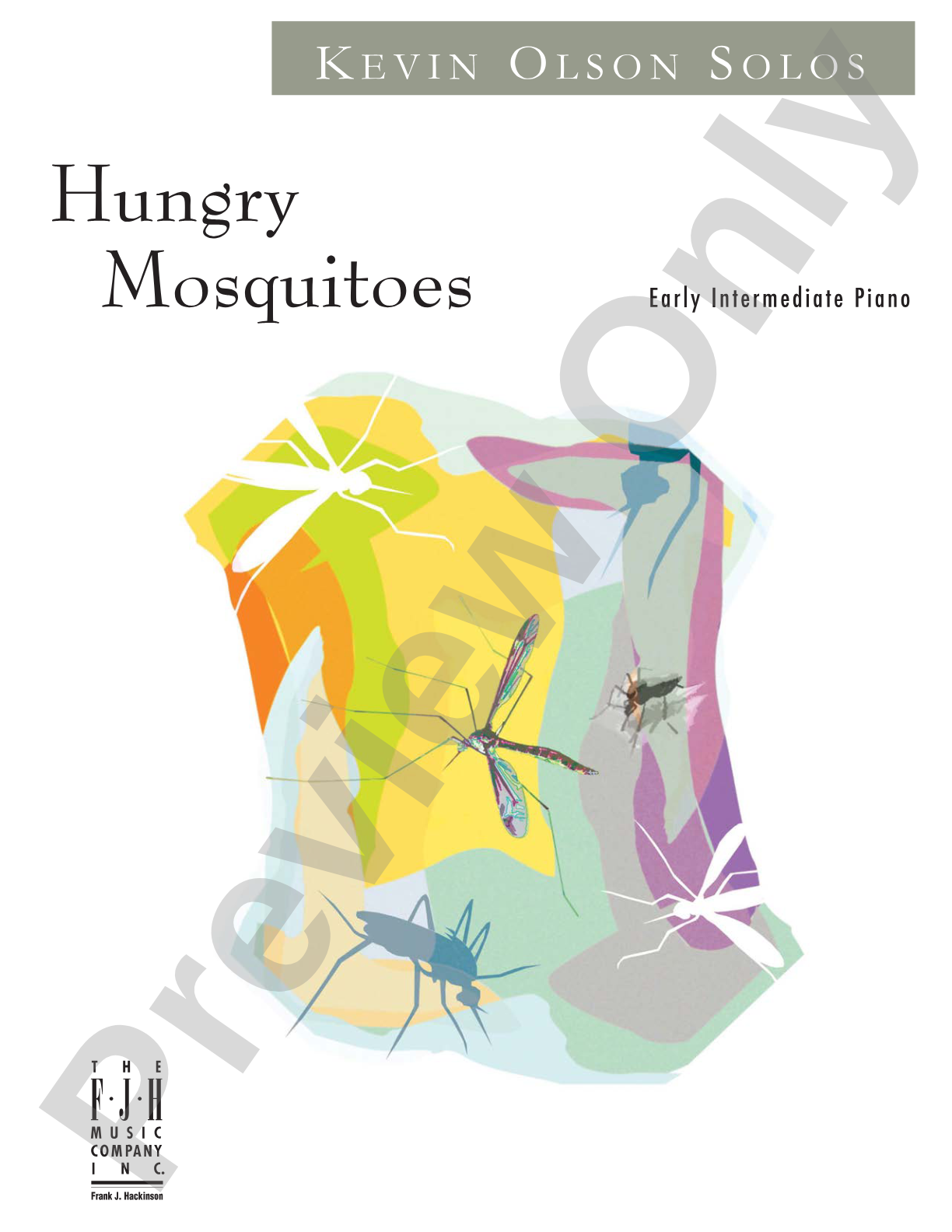
Hungry Mosquitoes embraces a clever use of contemporary sounds to convey the insistent buzzing sounds of mosquitoes. This composition consists mostly of rapid staccato eighth notes played in succession producing patterns that are easy to grasp, while being extremely pianistic. A great little toccata!
Discover MakeMusic Cloud: thousands of interactive titles your students can play along with today.
Kevin Olson captures something genuinely fun here without resorting to cheap effects or gimmicks. The staccato figuration actually teaches pianistic control, and students get to hear how contemporary compositional ideas make musical sense on the instrument rather than feeling like a novelty.
What to expect
Relentless and hyperactive in the best way. The rapid staccato figures create an almost hypnotic buzzing quality that captures the insistence of mosquitoes without ever becoming annoying to listen to. There's humor here, but also real musicality in how the composer deploys repetition and texture.
Who it's for
Intermediate pianists who are ready to explore contemporary compositional language and want a piece that's genuinely engaging to perform without requiring advanced virtuosity. This works well for students who respond to program music and enjoy character pieces with a clear musical idea.
How to get the most out of it
Keep the staccato eighth-note patterns absolutely even and precise. Mosquitoes don't rush or drag, so lock in with a metronome and resist the urge to speed up during repeated figures.
Voice the piece carefully if there are multiple lines at once. The buzzing should remain the focal point; any accompanying material stays transparent and subordinate.
Shape the rapid figures musically rather than letting them become mechanical. Subtle dynamic swells within patterns and careful voicing of registral shifts keep the listener engaged through the repetition.
Listen closely to balance between hands. The insistent character works only when both hands contribute equally to the texture without either hand overwhelming the other.
How to use it
This lands perfectly in a recital that needs energy and lightness after more serious repertoire. It also pairs naturally with other character pieces or contemporary works in a student recital; audiences respond to the descriptive clarity and pianistic cleverness.
Skills your students will build
Precise articulation and control of rapid staccato passages
Evenness and consistency in repeated figurational patterns
Contemporary notation and compositional vocabulary
Balance between hands in fast, texturally complex material
Musical interpretation of programmatic content
You May Also Like
Scan to Complete Your Purchase
Use your phone's camera to scan the code below
You'll log in on your phone and the order will be added to your account