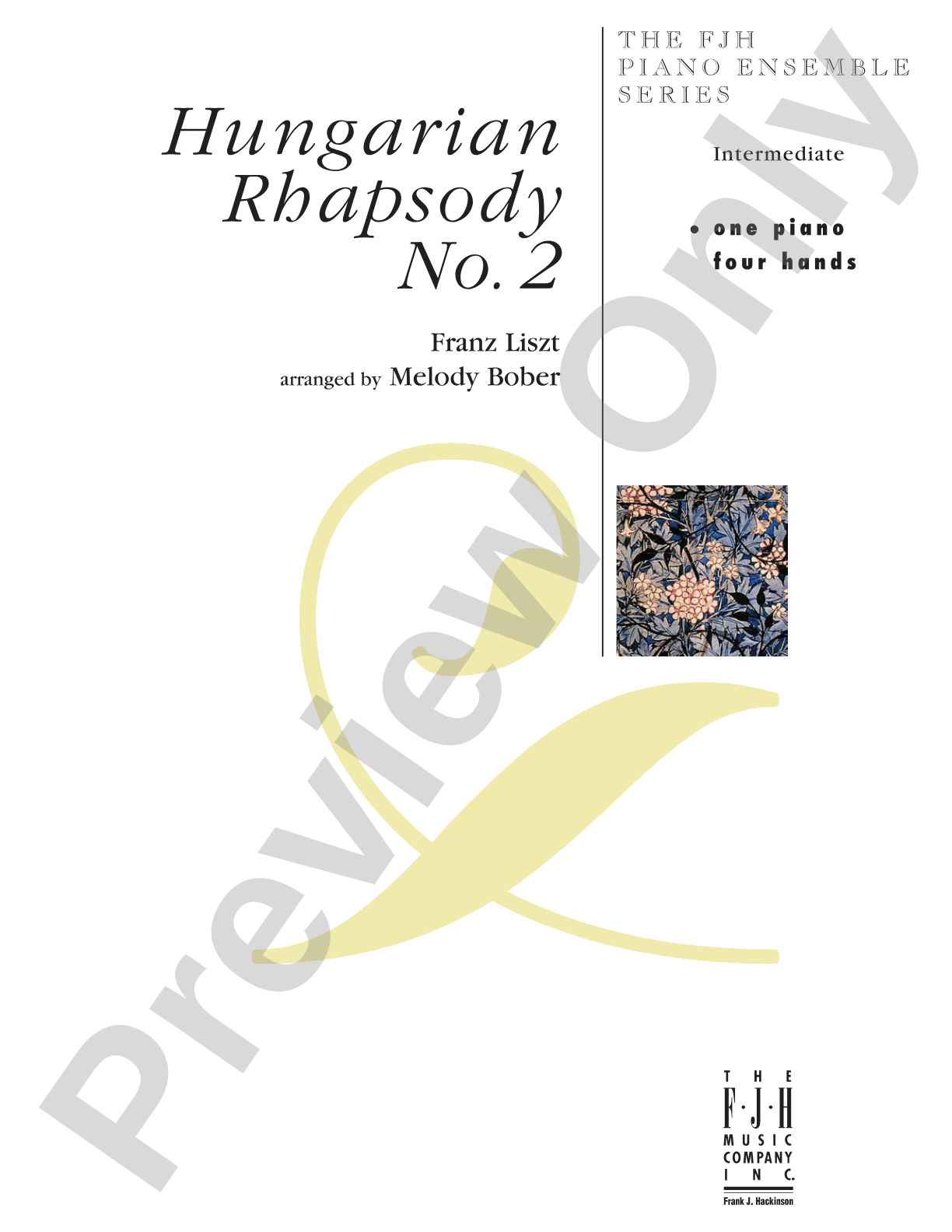
Hungarian Rhapsody No. 2: Piano
By Franz Liszt / arr. Melody Bober
Item: 98-DE1034
Pickup currently not available
Related Items
Hungarian Rhapsody No. 2: Intermediate Piano Sheet |
$4.95
|
View |
Description
Hungarian Rhapsody No. 2: Piano isn't in MakeMusic Cloud just yet...but it could be. Let us know you'd like to see it, and you'll help shape what comes next. In the meantime, start a free trial and dive into thousands of interactive titles your students can play along with today.
Tell us you want it.
Explore everything that's ready to play right now.
Sample Audio
Sample Video
Additional Details
More about this title
About the Composer: Franz Liszt
Franz Liszt (1811-1886) was a Hungarian pianist and composer who redefined what the instrument could do. His virtuosic keyboard writing pushed pianists to new technical heights, and his Hungarian Rhapsodies remain among the most recognizable and ambitious works in the piano repertoire. Liszt's influence extended far beyond performance; he championed other composers' work, conducted orchestras, and took minor orders in the Catholic Church late in life, all while continuing to compose until his death.
For music educators, Liszt's legacy matters because his music captures the Romantic era's theatrical ambition and emotional directness. The Hungarian Rhapsodies especially embody national character and technical brilliance in equal measure, making them touchstones for students eager to understand how composers use the piano as an expressive instrument.
Why we love this
Melody Bober's arrangement makes one of piano literature's most intimidating works genuinely playable for intermediate duet players without sacrificing the sweeping drama and virtuosic character of Liszt's original. Both players get musical material that feels substantial and rewarding rather than relegated to accompaniment, so ensemble pride stays high. This is the kind of arrangement that lets students experience authentic Romantic grandeur while building the confidence to tackle more complex literature later.
What to expect
This duet crackles with passion and swagger. The Hungarian Rhapsody's famous zigzagging runs and sudden lyrical turns feel theatrical and alive, the kind of music that makes audiences lean forward. Playing it together creates an energy that's greater than the sum of two intermediate players; the duet format lets you share the technical demands and build momentum as an ensemble.
Who it's for
Intermediate piano duet players and teachers looking for orchestral grandeur in a two-player format. This works equally well for studio recitals where two students shine together, or for classroom ensembles where you want students to experience the thrill of Romantic repertoire without years of solo preparation. Pianists attracted to flashy, emotionally direct music will gravitate to this arrangement naturally.
How to get the most out of it
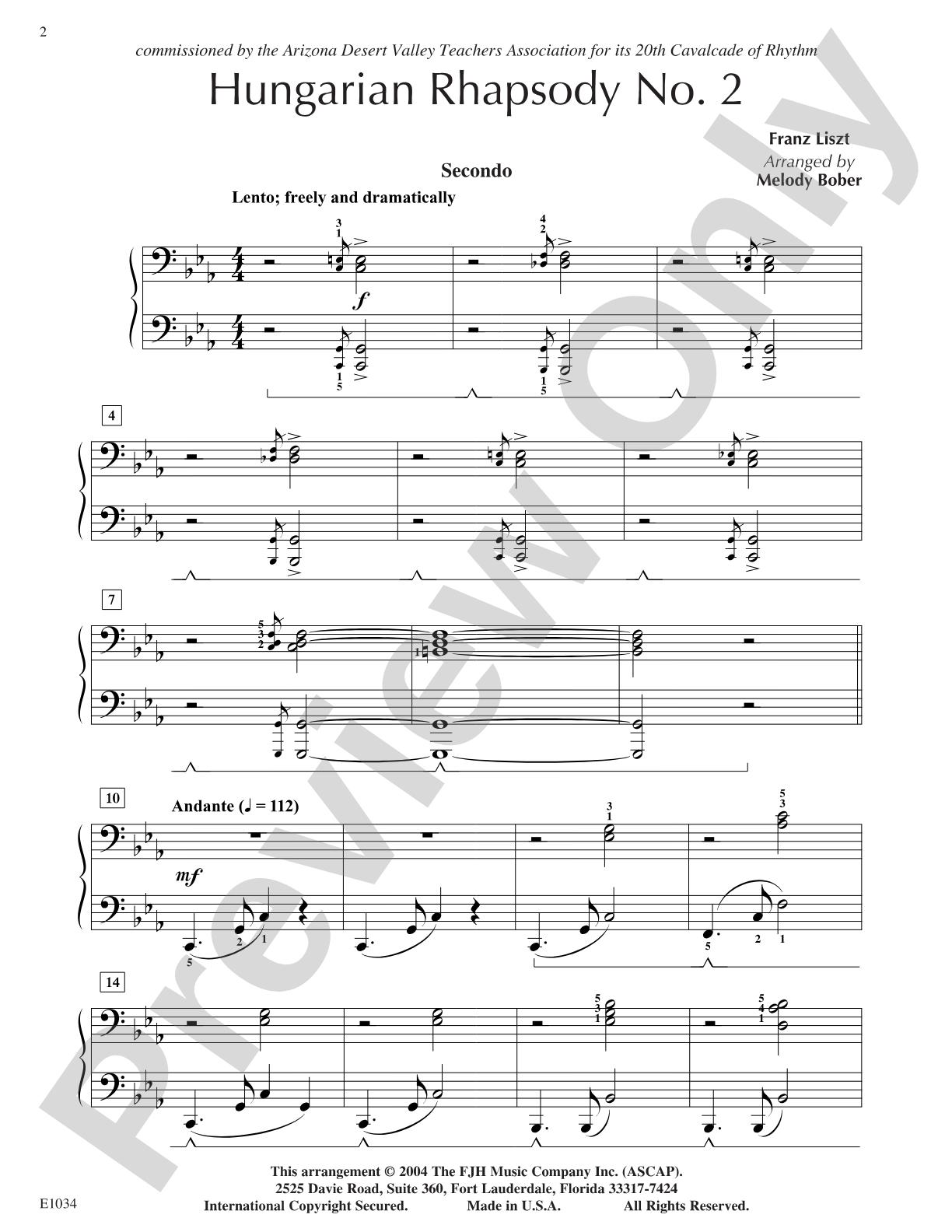
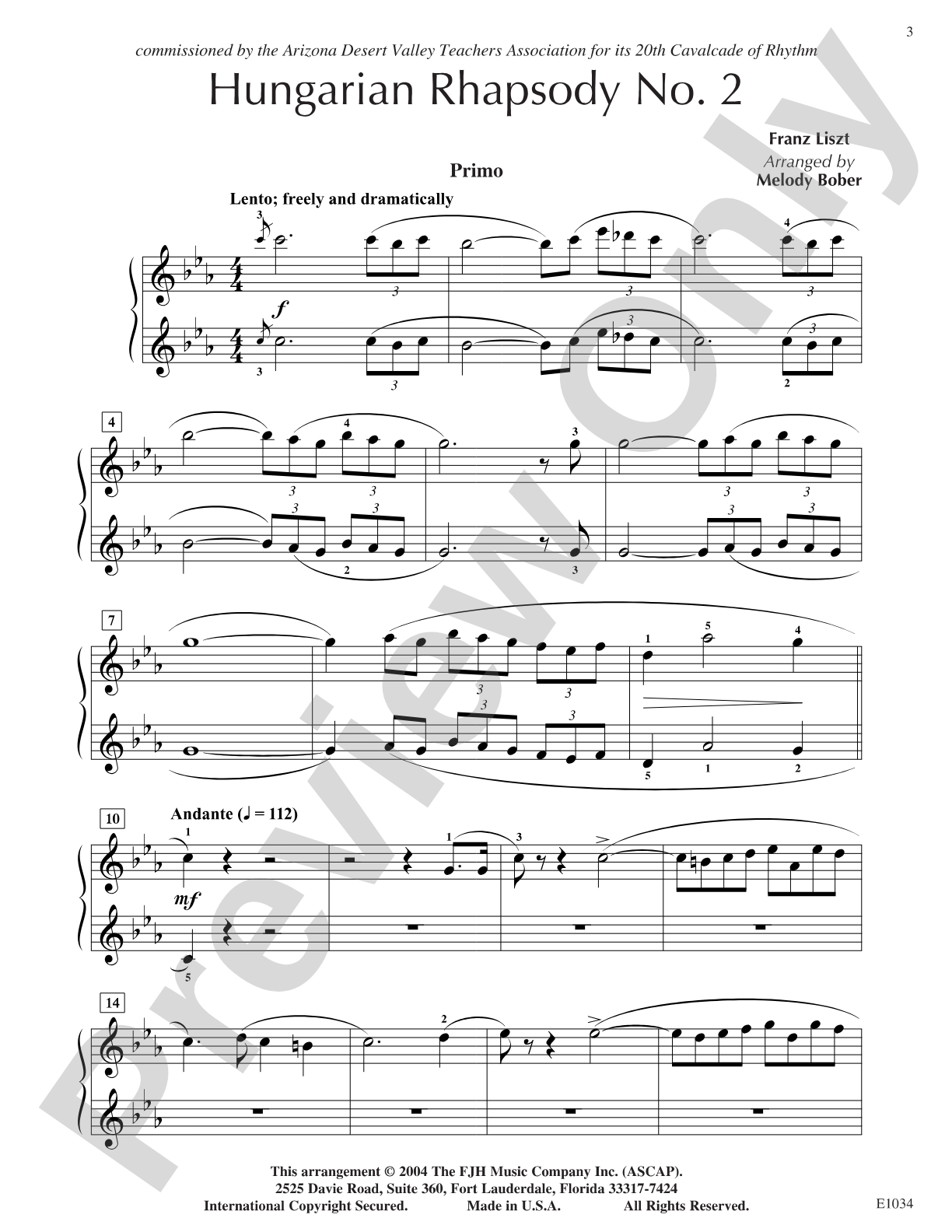
- Balance the primo and secondo equally. Because both parts carry expressive weight, neither player should fade into the background; think of it as two voices in conversation rather than soloist plus accompaniment.
- Shape the rubato together. Liszt's Hungarian Rhapsody thrives on rhythmic flexibility and sudden tempo shifts. Rehearse passages where one player leads slightly, then the other, so the push and pull feels intentional, not accidental.
- Highlight the contrasts between virtuosic passages and lyrical sections. The drama lives in that variety, so don't smooth over the shifts from rapid figuration to cantabile melody.
- Synchronize hand positions and pedal changes. In a duet where both players share the piano, clear communication about when to move, when to stretch for reach, and when to lift the pedal keeps the performance seamless.
How to use it
Program this as a duet showstopper on a studio recital or school concert where you want to bridge intermediate students and Romantic-era repertoire. It pairs well alongside other ensemble pieces that emphasize collaborative musicianship, or as the climax of a piano recital if you're highlighting duet work. The piece also serves as an accessible entry point for students studying Liszt or the Hungarian Rhapsodies in musicology units.
Skills your students will build
- Coordinating tempo and rubato with a partner across shared harmonic space
- Reading and executing Romantic-era expressive markings (rubato, sudden dynamic shifts, tempo variations)
- Managing hand position and reach planning in a duet setting
- Recognizing and executing the idiomatic figurations and sectional contrasts in Hungarian Rhapsody style
- Building stylistic understanding of virtuosic keyboard writing and national character music