Hungarian Dance No. 5 Sheet Music Preview

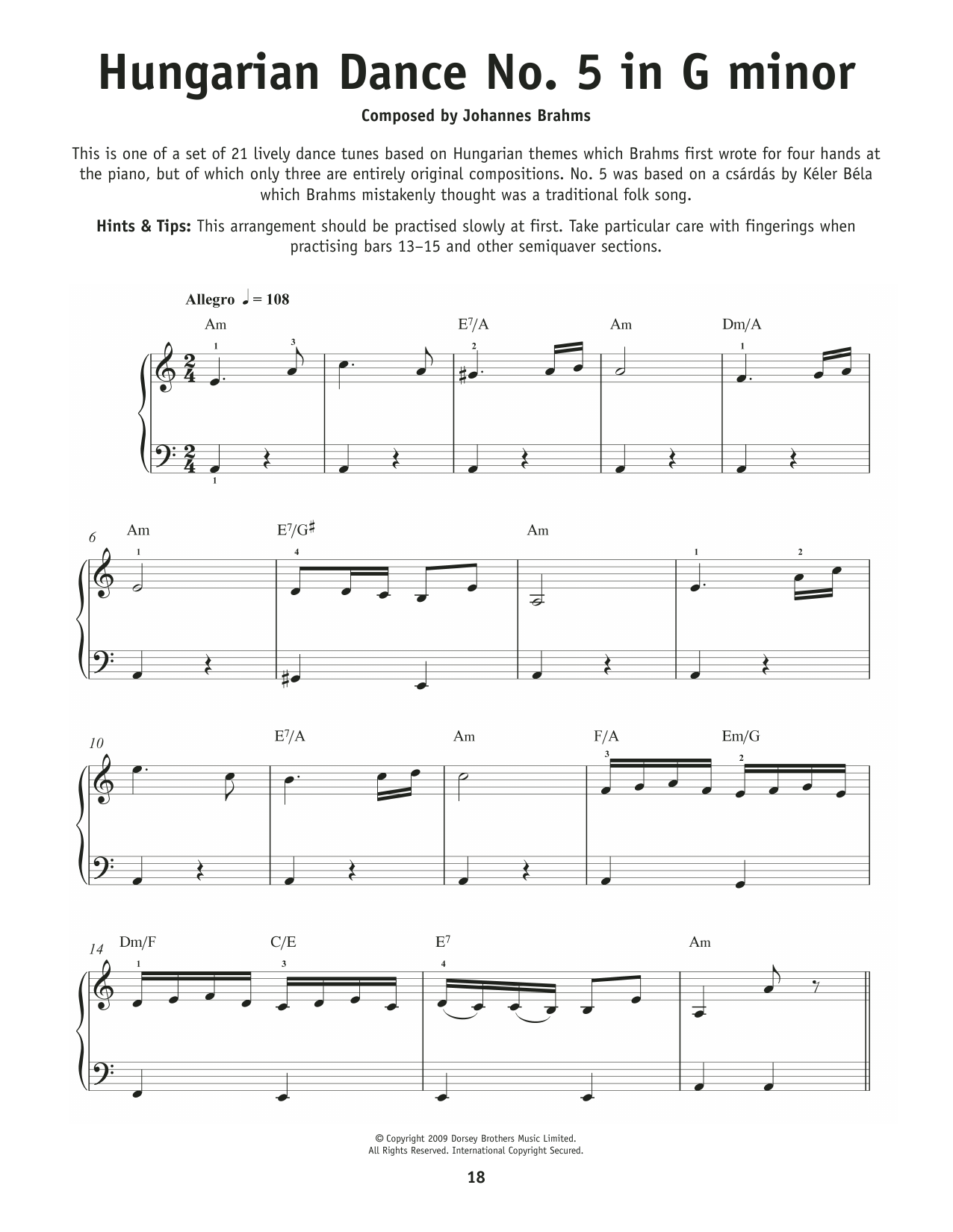
Hungarian Dance No. 5: Really Easy Piano

As performed by Johannes Brahms

Item: 35-DS01588712

Digital Download
$4.99
Description

Discover MakeMusic Cloud: thousands of interactive titles your students can play along with today.

Sample Audio
No sample audio found.
Sample Video
Additional Details
Publisher: Hal Leonard
Page Count: 2
SKU: 35-DS01588712

More about this title

About the Artist: Johannes Brahms

Johannes Brahms (1833–1897) was a German composer whose mastery of form and orchestration shaped the Romantic era. He drew inspiration from folk traditions across Europe, particularly Hungarian and Slavic music, which he encountered through performers and colleagues. His Hungarian Dances, written in the 1860s, represent his most accessible and frequently performed works, blending scholarly craftsmanship with infectious rhythmic vitality.

Why we love this

Hungarian Dance No. 5 offers students and performers an entry point into Brahms without the technical demands of his symphonic works. The piece's compact length and driving energy make it memorable for audiences while remaining gratifying to execute, and its relentless rhythmic momentum keeps rehearsals focused and energized.

What to expect

Hungarian Dance No. 5 pulses with urgency and joy. The opening melody establishes a sultry, almost defiant character before the piece accelerates into irresistible forward motion, populated by spiraling figures and sharp articulations that capture the exuberance of a village celebration.

Who it's for

This edition works well for intermediate to advanced musicians seeking repertoire that demonstrates technical facility and cultural awareness without requiring years of specialized study. Wind ensembles, string orchestras, and mixed chamber groups all find it accessible yet impressive.

How to get the most out of it

  • Establish the csárdás character early by anchoring the opening rhythm with confidence. This dance tradition thrives on rhythmic clarity, so lock the feel before adding expressive layers.
  • Balance passion with precision in the faster passages. Brahms's excitement for Hungarian folk idioms shows in dense ornamentation, but clarity matters more than speed.
  • Shape the dynamic arc across both pages to avoid fatigue. The piece builds steadily, so find moments of slight relaxation within phrases to sustain energy through the conclusion.
  • Check intonation in rapid string passage work where sustained pitches support faster figurations. Rhythmic confidence sometimes overshadows tuning concerns in lively tempos.

How to use it

Place this between a heavier classical work and a contemporary piece to provide audience relief and momentum. Its two pages mean you can program it as a concert opener or as part of a Brahms retrospective alongside symphonic movements or other Hungarian Dances.

Skills your students will build

  • Rhythmic precision in csárdás meter and syncopated figurations
  • Quick, clean articulation in rapid passagework
  • Sustaining dynamic intensity across a build-to-climax structure
  • Balancing melodic line prominence with accompaniment clarity
  • Managing tempo flexibility within strict rhythmic framework

You May Also Like