Hungarian Dance No. 5: Piano Digital Sheet Music

Hungarian Dance No. 5: Piano Digital Sheet Music

Johannes Brahms

Item: 00-PS-0004186

Digital Download
$3.99
Description

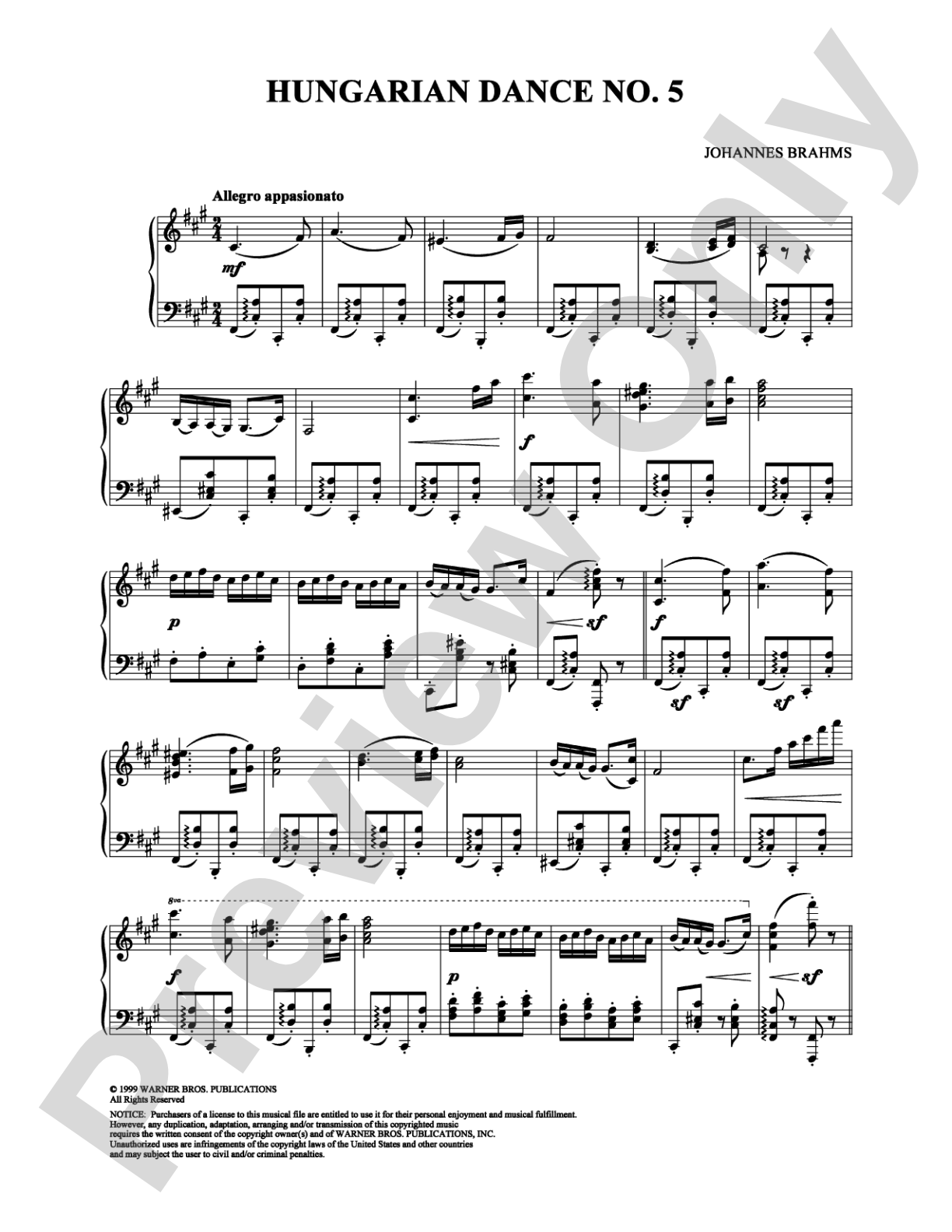
Hungarian Dance No. 5: Piano Digital Sheet Music isn't in MakeMusic Cloud just yet...but it could be. Let us know you'd like to see it, and you'll help shape what comes next. In the meantime, start a free trial and dive into thousands of interactive titles your students can play along with today.

Sample Audio
No sample audio found.
Sample Video
Additional Details
SKU: 00-PS-0004186

More about this title

About the Creator: Johannes Brahms

Johannes Brahms composed Hungarian Dance No. 5 in 1869 as part of a set of 21 Hungarian dances that became wildly popular across Europe. Brahms drew on the folk idioms and rhythmic vitality of Hungarian music, though he was not Hungarian himself; his fascination with these melodies came from his deep study of musical traditions beyond the classical canon. The piece stands as one of his most performed works, beloved equally in concert halls and teaching studios for its infectious energy and brilliant orchestral color, even in its piano reduction.

Why we love this

This is the Hungarian Dance that pianists actually want to play. The famous melody is instantly recognizable, the rhythmic drive never lets up, and the technical demands feel achievable rather than punitive. It's a crowd-pleaser that builds real technique in a student's hands without feeling like an etude.

What to expect

This dance pulses with the swagger of a Hungarian café in the 1860s. The opening melody is sultry and yearning, the rhythm underneath restless; when the piece accelerates, it becomes breathless and exhilarating, as if you've been swept into a folk celebration that won't slow down. The final sections demand both passion and precision.

Who it's for

Intermediate to advanced pianists who have solid command of hand independence and aren't intimidated by shifting between lyrical and virtuosic sections. It works well for students aiming to build repertoire for auditions, competitions, or recitals where a recognizable showpiece makes an impact.

How to get the most out of it

  • Shape the opening melody with a slight lean on the first beat of each measure; let the accompaniment sit just underneath rather than matching the tune's weight.
  • Keep the tempo steady through the syncopated sections. These rhythmic anticipations sound chaotic if you rush them; trust the structure.
  • Find the sweet spot in dynamics between the lyrical passages and the fiery moments. The contrast is dramatic, but both extremes need room to breathe.
  • Bring out the left-hand Gypsy-inflected harmonies when they appear; they're not just accompaniment, they're part of the character.

How to use it

Pair this with other Brahms or Romantic-era character pieces for a recital focused on 19th-century nationalism in music. It also works beautifully as a concert opener or closer, depending on what comes before and after. Because it's so recognizable, it's an excellent choice for a benefit concert or community performance where you want to engage listeners who might not attend classical music regularly.

Skills your students will build

  • Hand independence between lyrical melody and accompanying rhythmic patterns
  • Precision in syncopated rhythms and Hungarian rhythmic idioms
  • Dynamic contrast and shaping of character between contrasting sections
  • Sustained legato in the melody line while maintaining rhythmic clarity underneath
  • Tempo flexibility and control during accelerations and dramatic moments

You May Also Like