
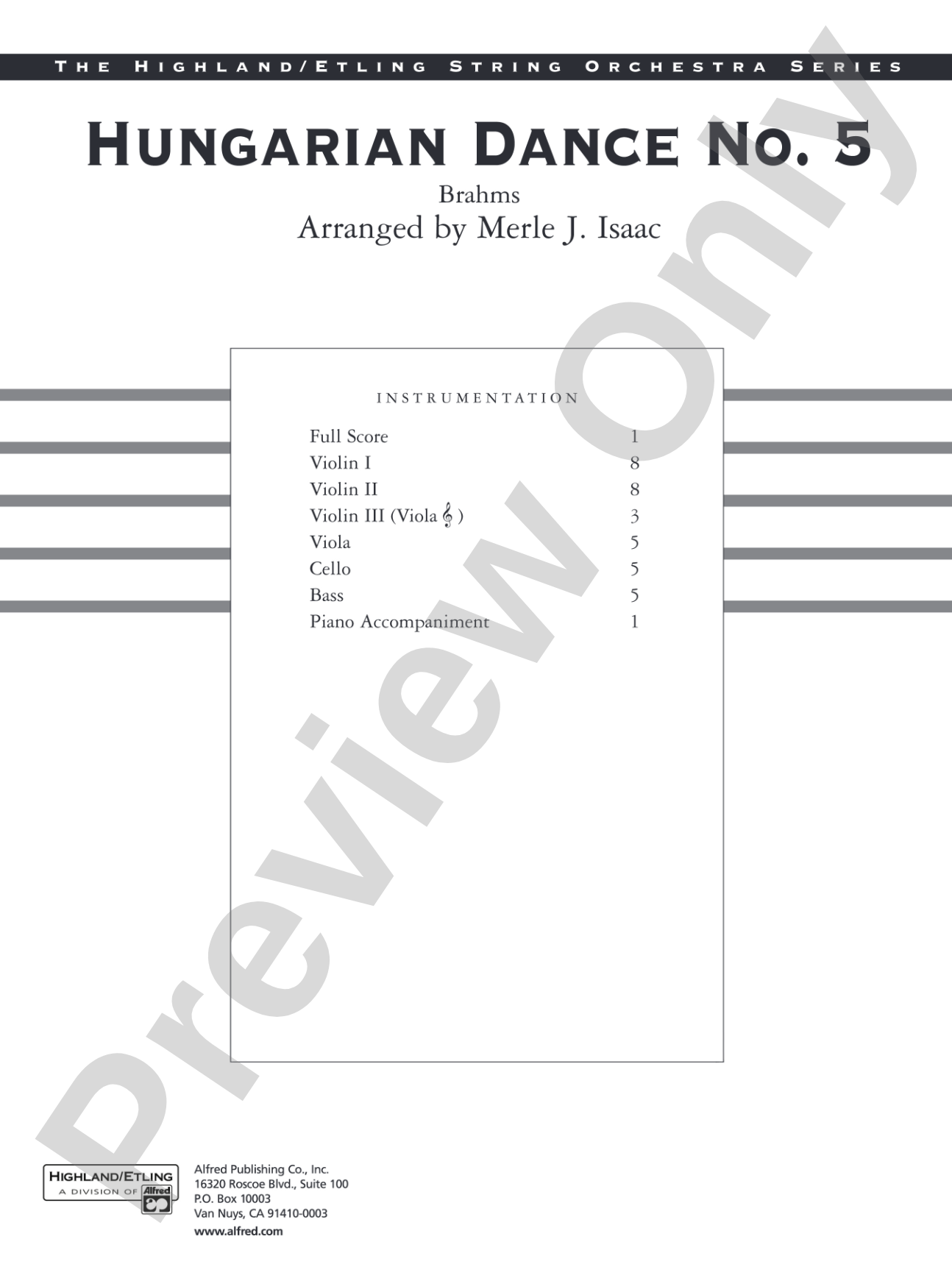
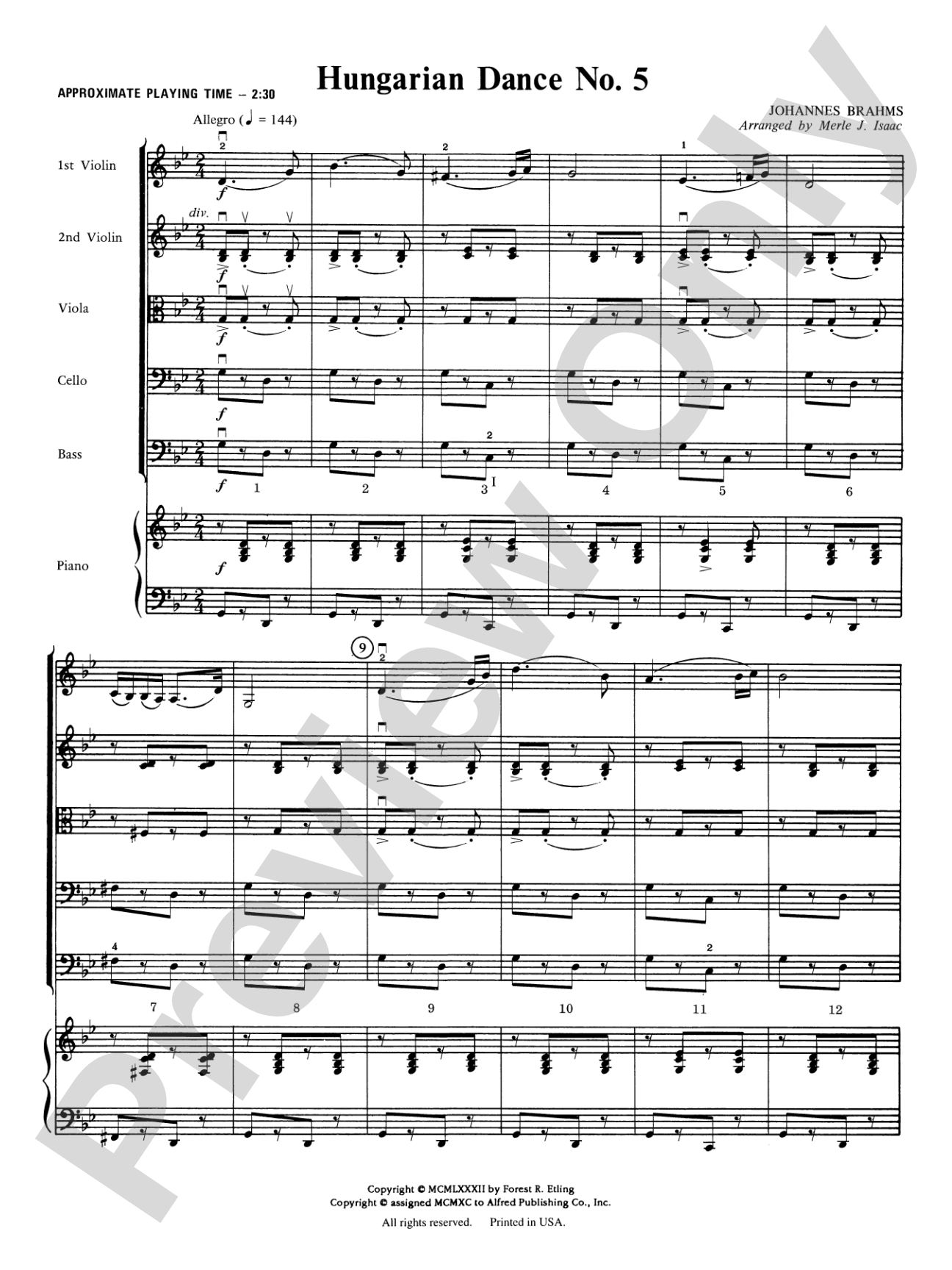
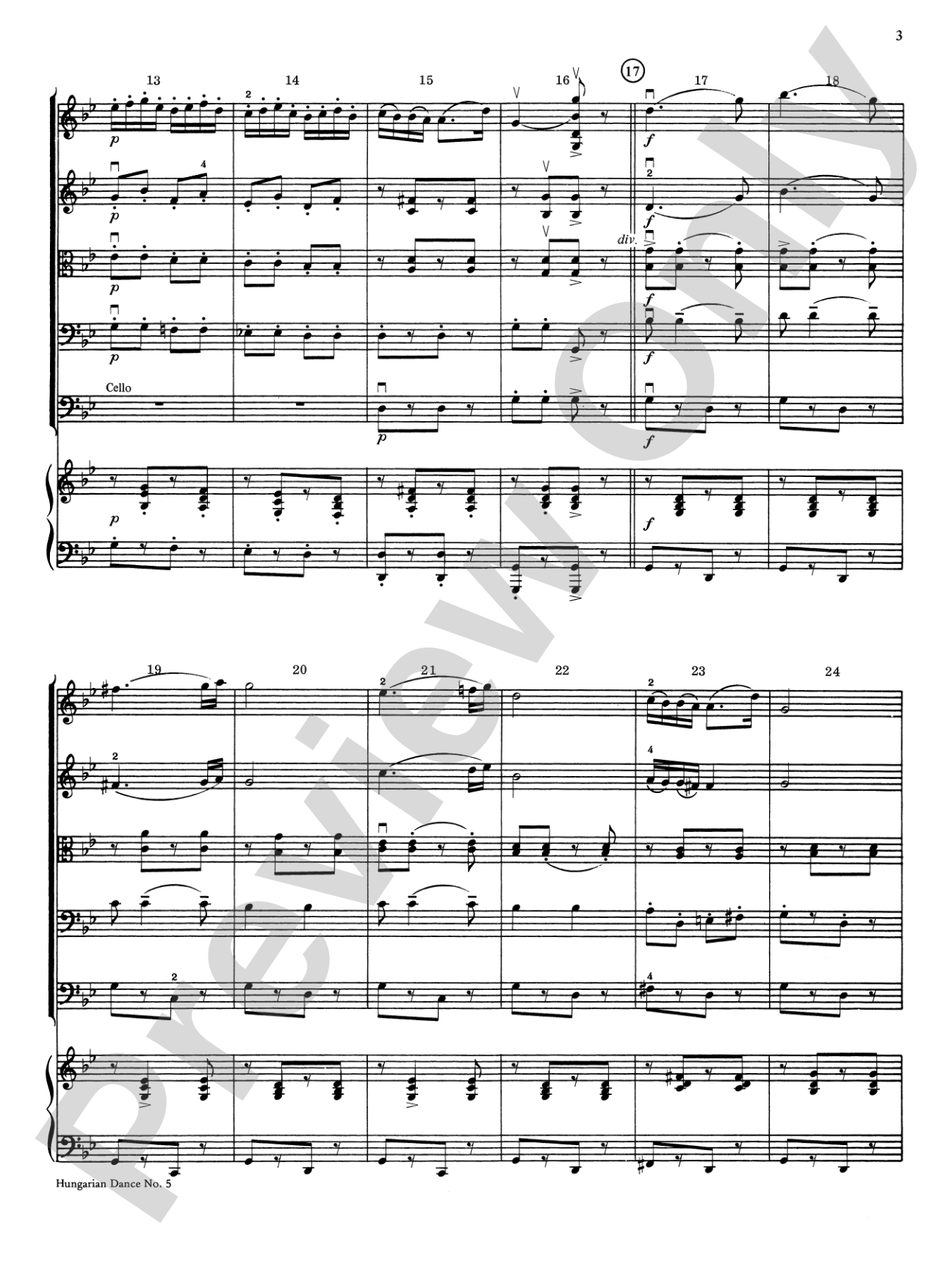
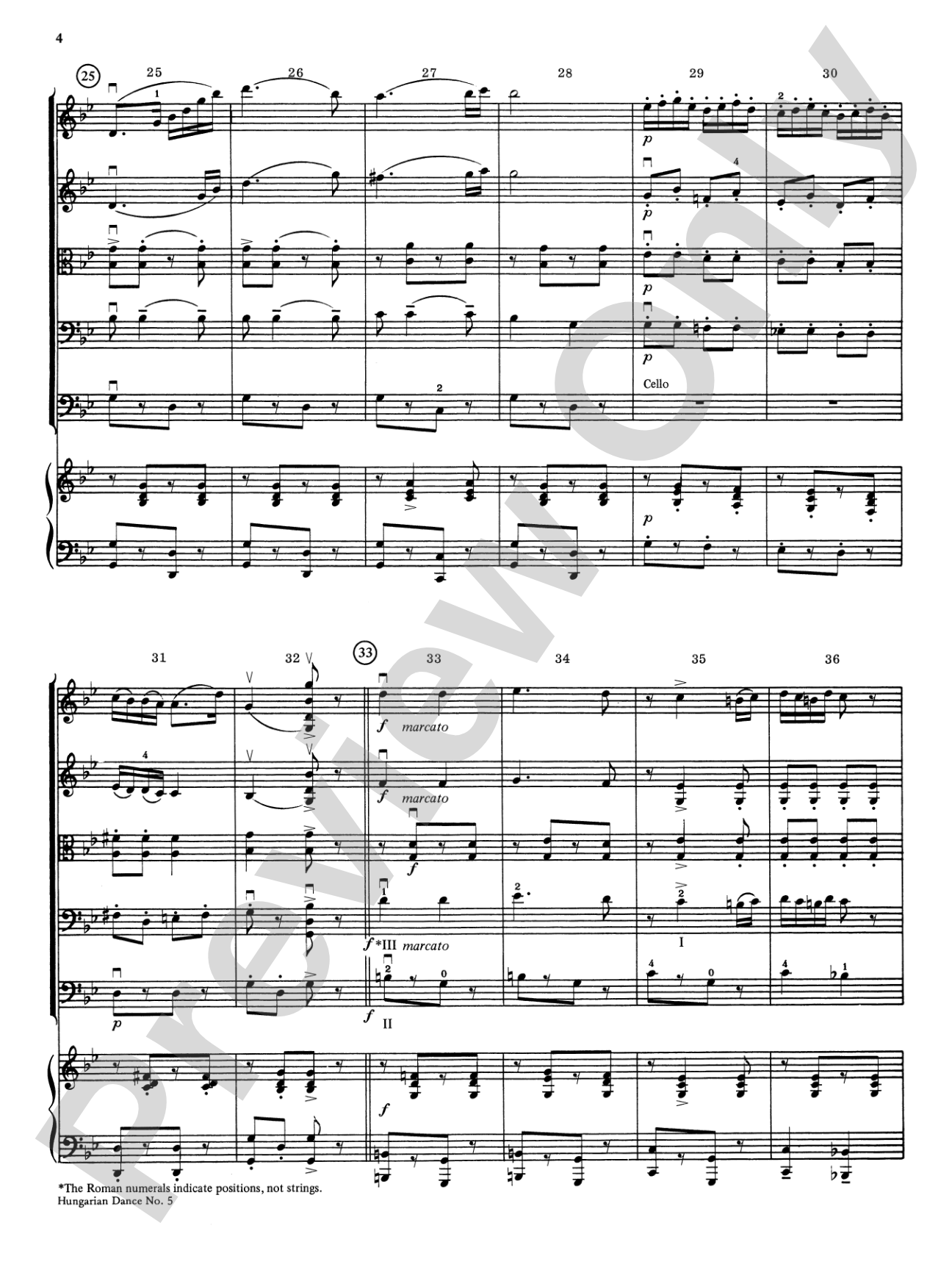
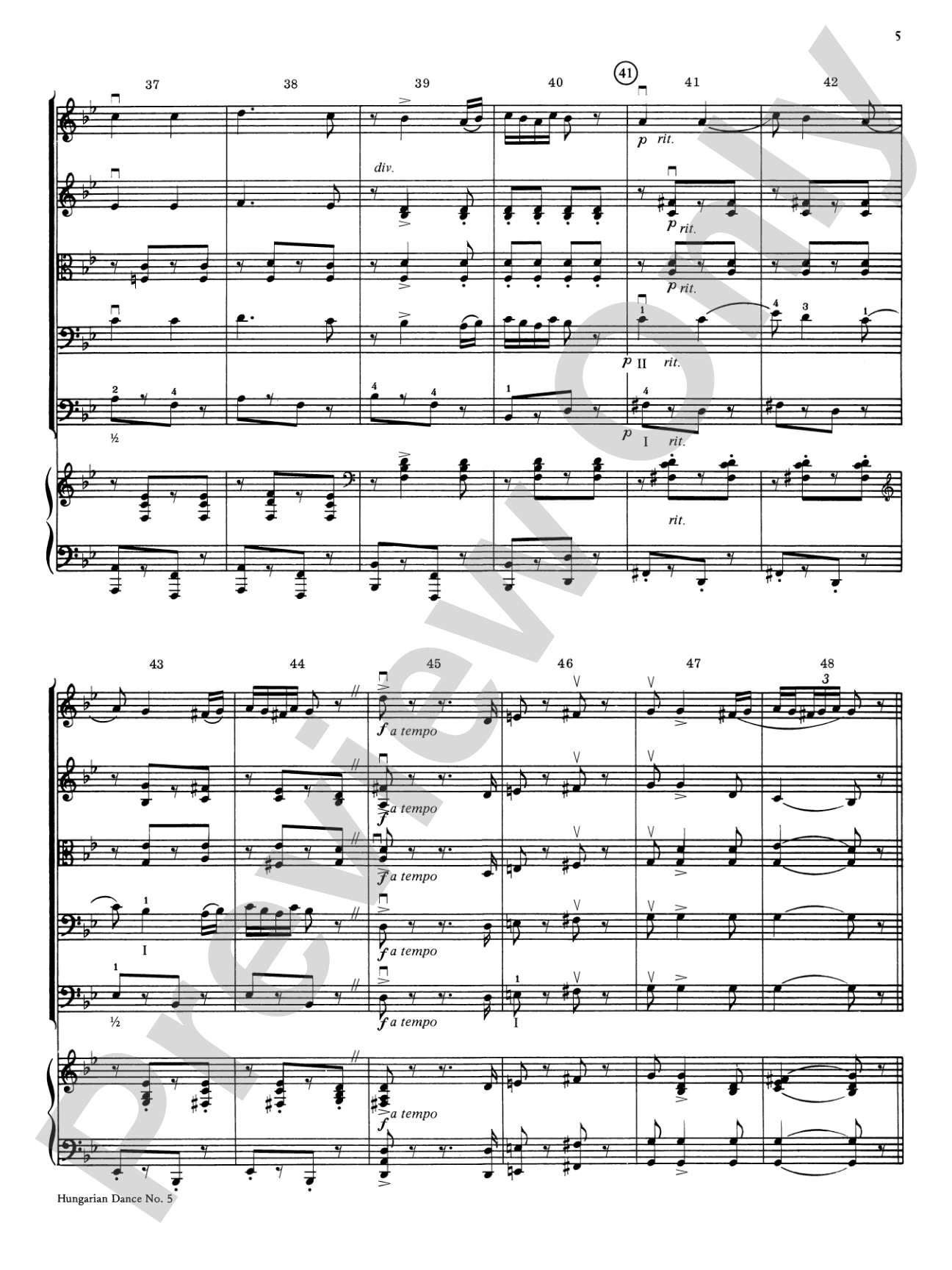
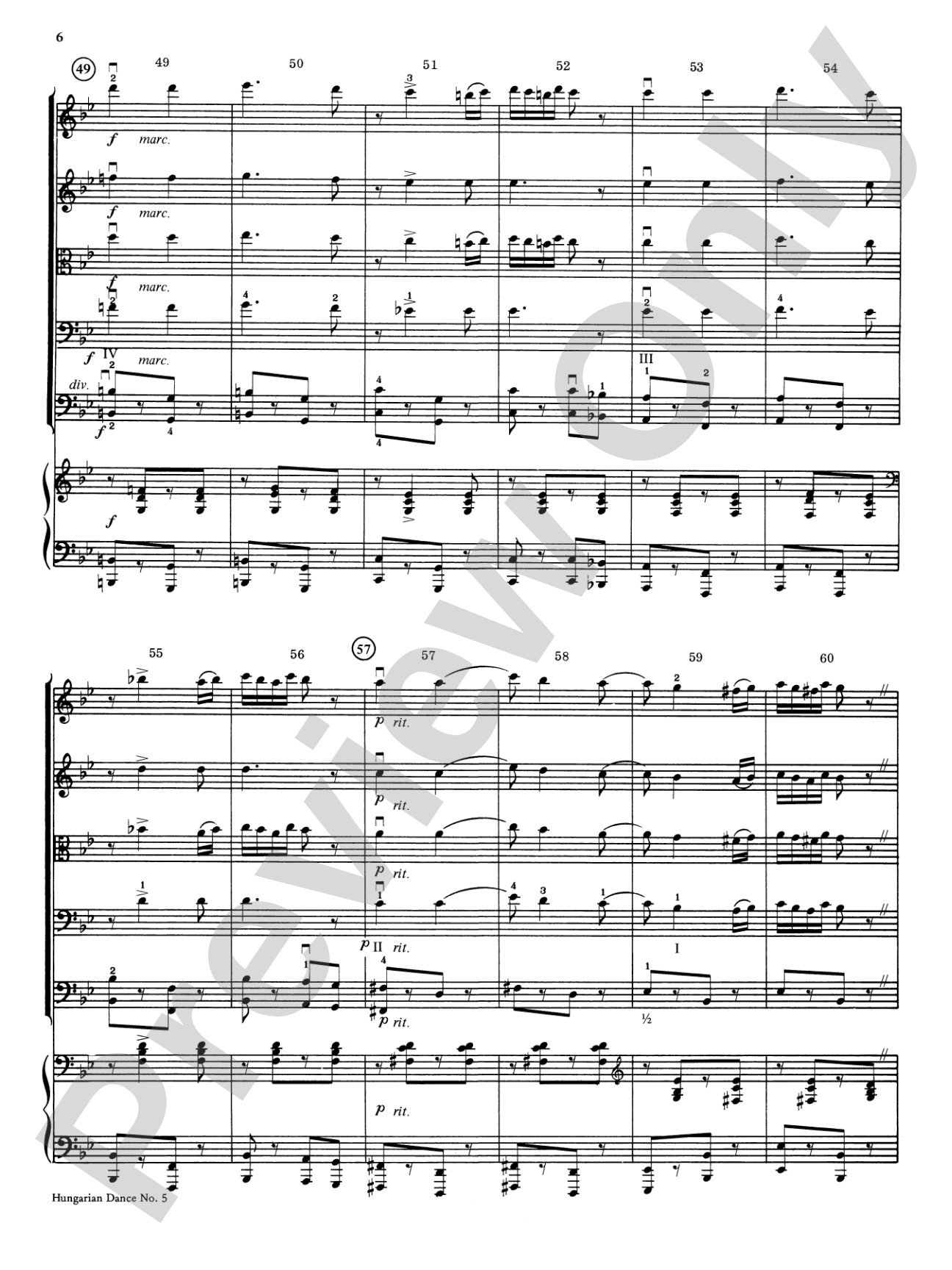
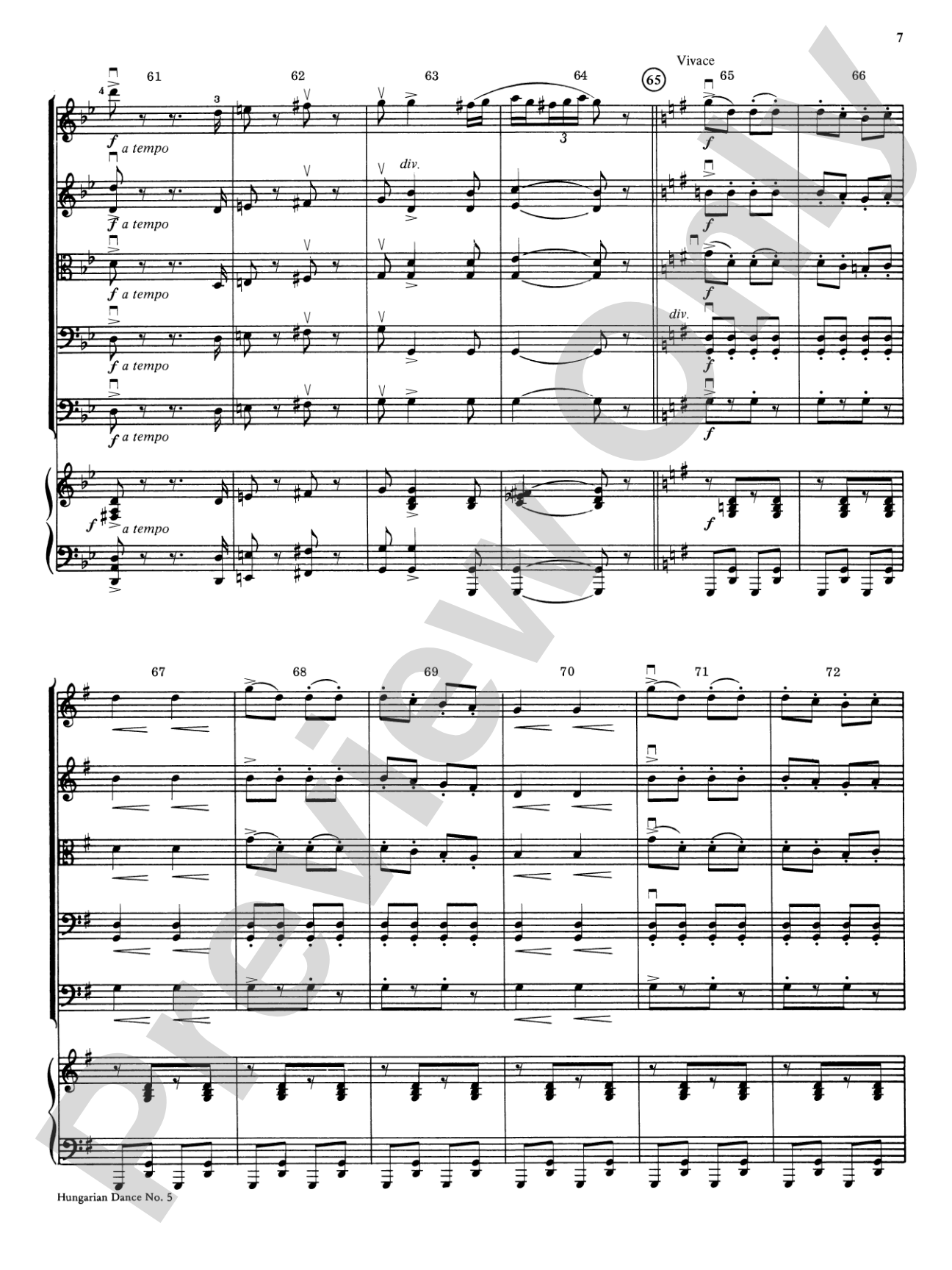
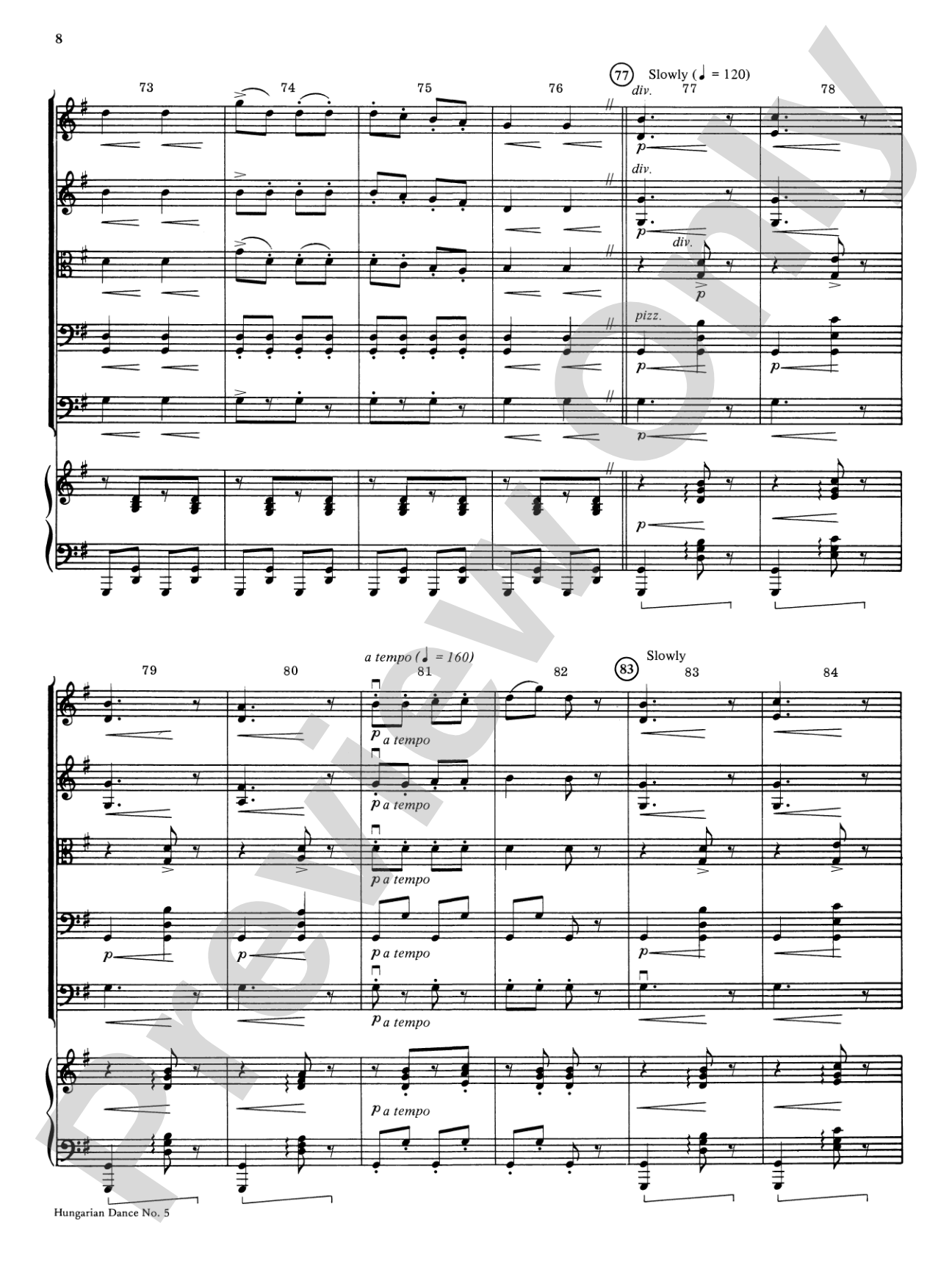
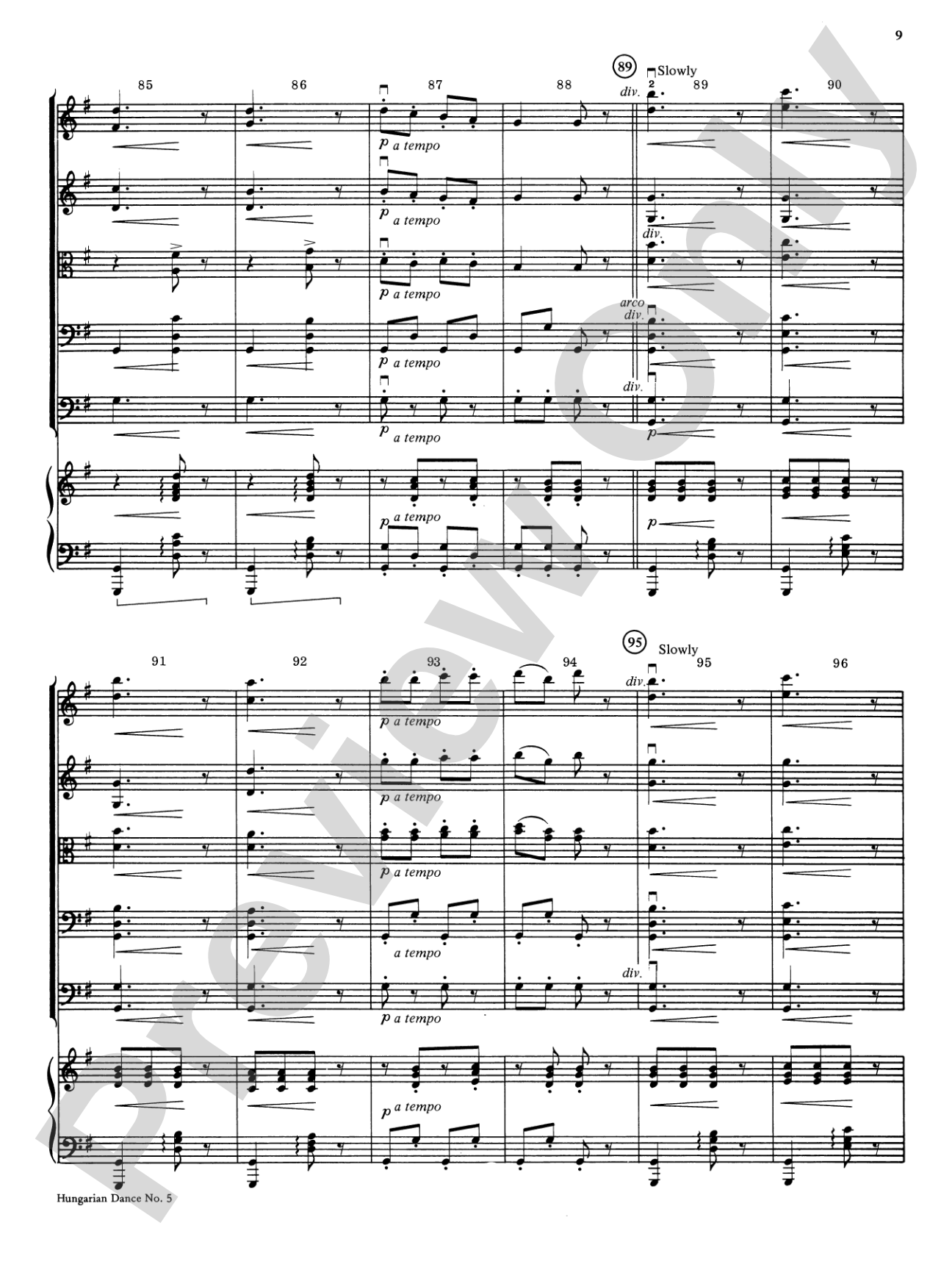
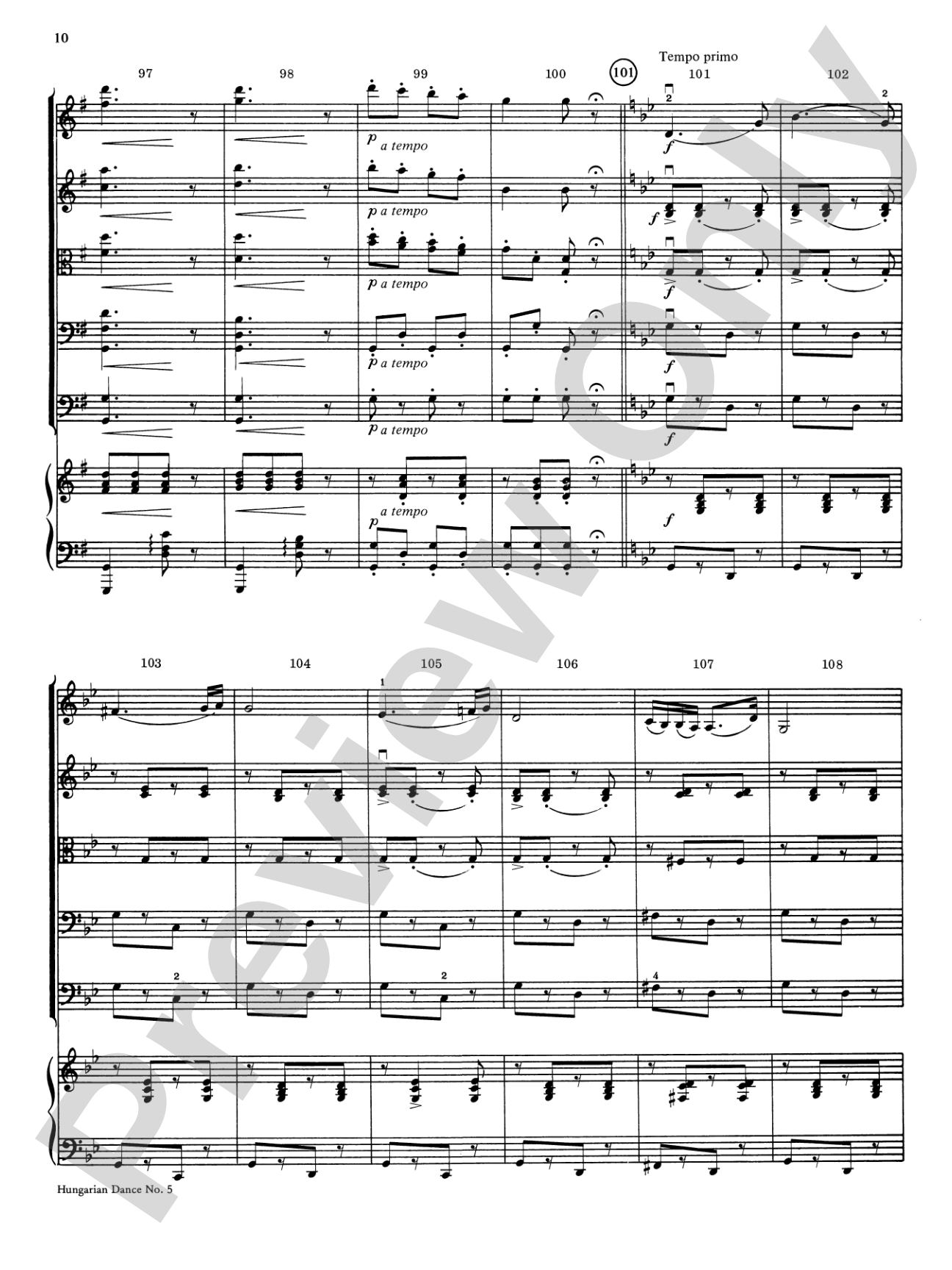
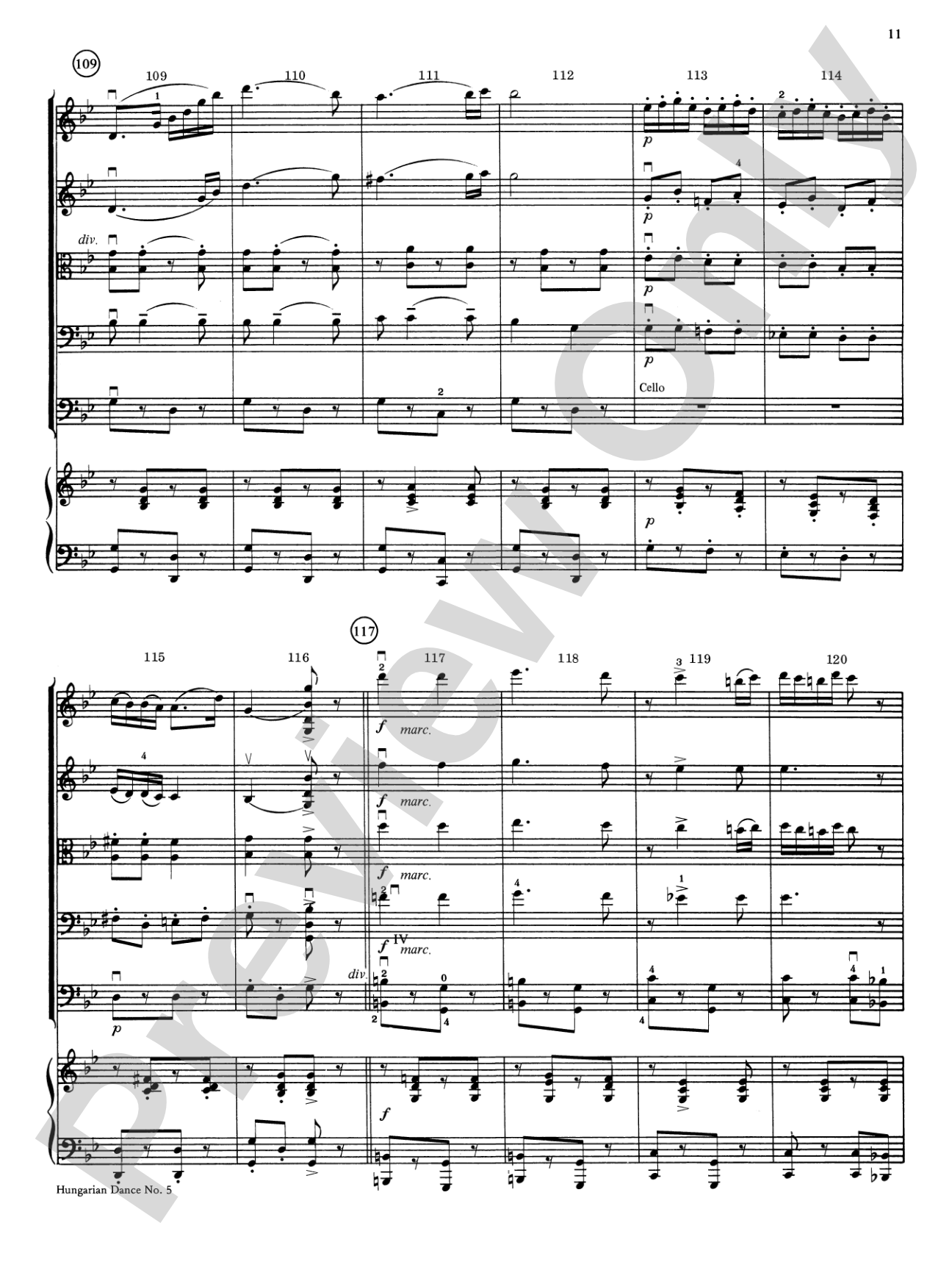
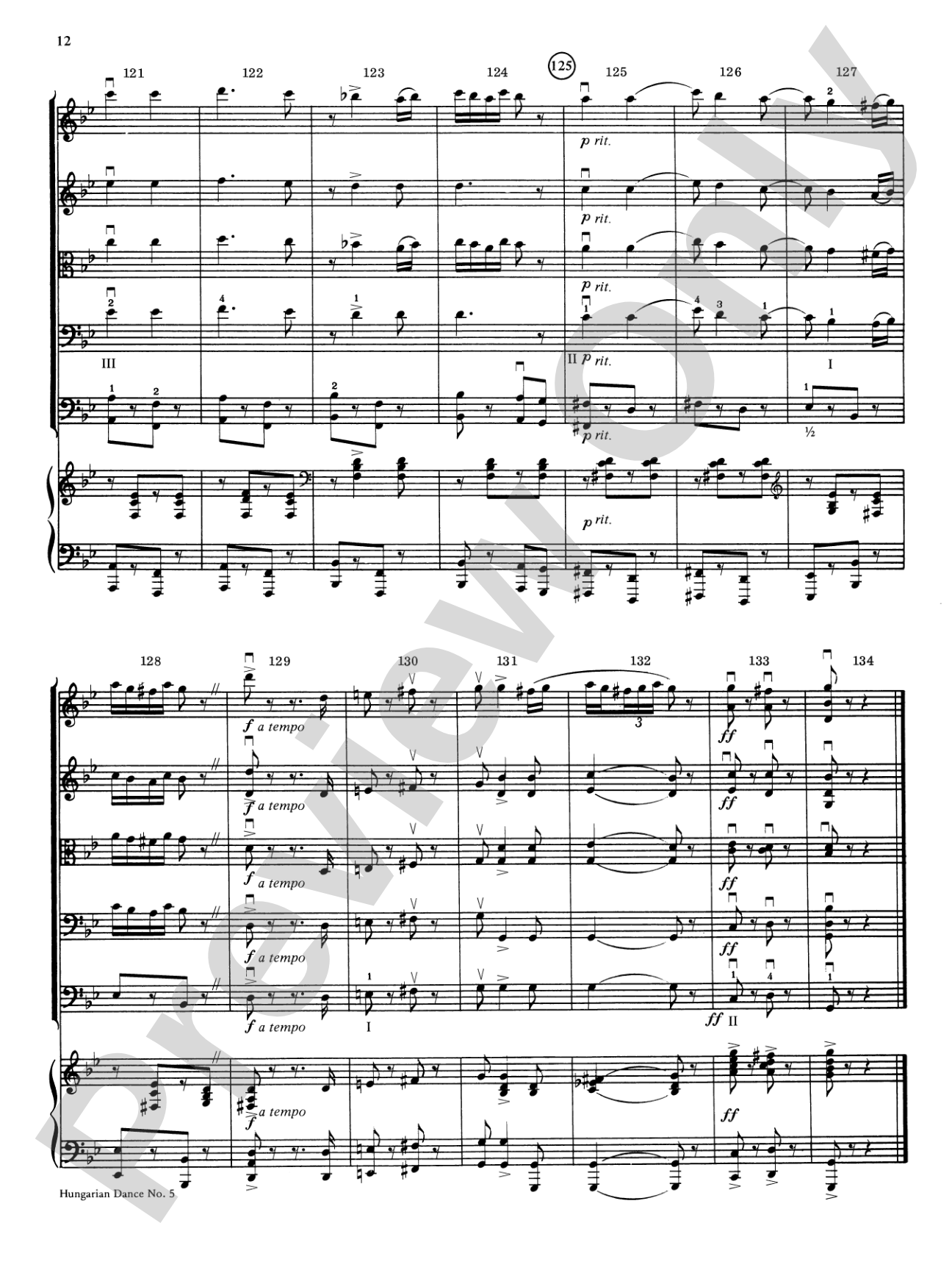

Hungarian Dance No. 5: String Orchestra Conductor Score & Parts
By Johannes Brahms / arr. Merle J. Isaac
Grade: 3
Item: 00-PK-0000109

$65.00
Pickup currently not available
Buy Extra Parts (Digital PDF Download)
| Product | Price | Quantity |
|---|---|---|
| Hungarian Dance No. 5: Score | $9.00 | |
| Hungarian Dance No. 5: 1st Violin | $5.99 | |
| Hungarian Dance No. 5: 2nd Violin | $5.99 | |
| Hungarian Dance No. 5: 3rd Violin (Viola [TC]) | $5.99 | |
| Hungarian Dance No. 5: Viola | $5.99 | |
| Hungarian Dance No. 5: Cello | $5.99 | |
| Hungarian Dance No. 5: String Bass | $5.99 | |
| Hungarian Dance No. 5: Piano Accompaniment | $5.99 |
Parts Added to Cart!
Description
Hungarian Dance No. 5 arranged by Merle J. Isaac is an instantly recognizable work and is the perfect way to start or finish your concert. Masterfully arranged for string orchestra, this classic arrangement will be one your students will be excited to rehearse and practice as they bring the music to life. (2:30)


Don't just read it, hear it, play along with it, and watch your students grow with it. In MakeMusic Cloud, Hungarian Dance No. 5: String Orchestra Conductor Score & Parts comes alive with professional accompaniment, adjustable tempo, and built-in practice tools that turn solo practice into real progress.
Open in the Player
Jump straight in and assign it today.
Start Your Free Trial
Open this title and explore the full library in minutes.
Sample Audio
1
Audio File
--:--
0:00
0:00
Sample Video
Additional Details
Series:
Highland/Etling String Orchestra
Publisher:
Alfred Music
Page Count:
144
SKU:
00-PK-0000109
More about this title
About the Composer: Johannes Brahms
Johannes Brahms stands as one of the nineteenth century's most consequential composers, bridging Romantic expression with Classical architecture. His deep understanding of orchestration and mastery of form made him a model for generations of music educators and arrangers seeking to balance technical rigor with emotional directness.
Why we love this
Merle Isaac's string orchestration captures the wild energy and structural clarity of Brahms's original without losing a note of its character. Your students will recognize this tune immediately, which means they can focus entirely on ensemble precision, rhythmic tightness, and the sweeping dynamic arc that makes this dance unforgettable. At Grade 3, it's genuinely approachable yet undeniably impressive.
What to expect
Spirited and rhythmically infectious, with the swagger of a traditional Hungarian celebration. The arrangement maintains Brahms's knack for taking a simple melodic gesture and spinning it into something irresistible through clever orchestration and harmonic support.
Who it's for
String orchestras working at Grade 3 who want a piece that sounds accomplished and immediately gratifying. Directors preparing for contests or festivals will find this both pedagogically sound and programmatically smart.
How to get the most out of it
- Shape the opening unison line with a clear narrative arc. This first statement sets the audience's expectation for the whole piece, so commit to the phrase direction even when playing simply.
- Lock the violin and viola rhythms during the syncopated passages in the B section. These two voices carry the pulse when it matters most.
- Push the tempo slightly into the final statements without rushing. Brahms wants momentum here, and your ensemble will feel the lift even at a modest allegro marking.
How to use it
Open your concert with this if you want immediate engagement and energy. Alternatively, close the first half with it to send the audience back to their seats buzzing. It pairs well alongside lighter Romantic repertoire and contrasts beautifully with slower, more introspective pieces.
Skills your students will build
- Syncopated rhythm reading and execution
- Dynamic contrast and phrasing at a single tempo
- Sustained unison intonation across the full section
- Articulation consistency within melodic passages
- Balancing between harmonic accompaniment and thematic support