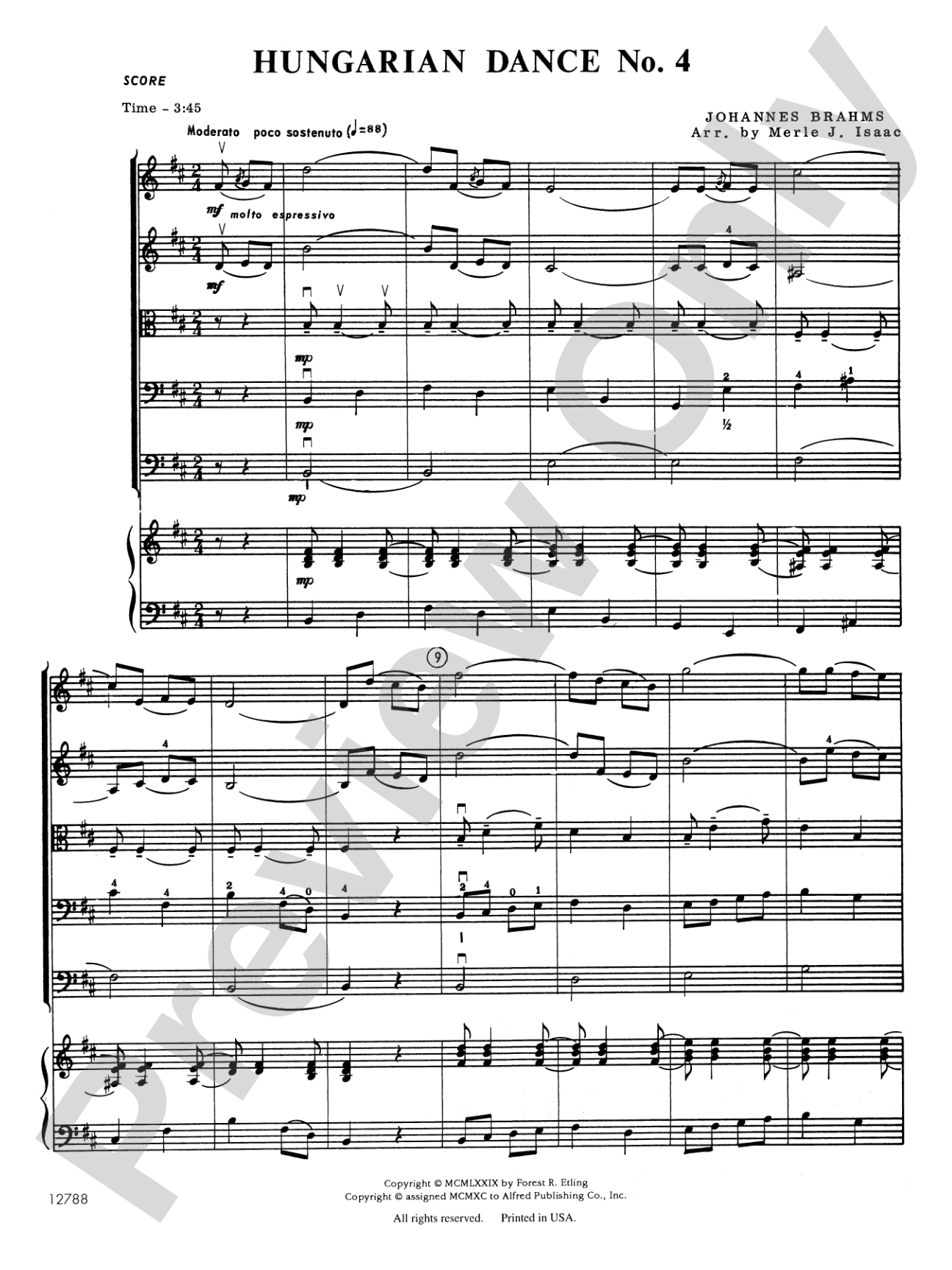
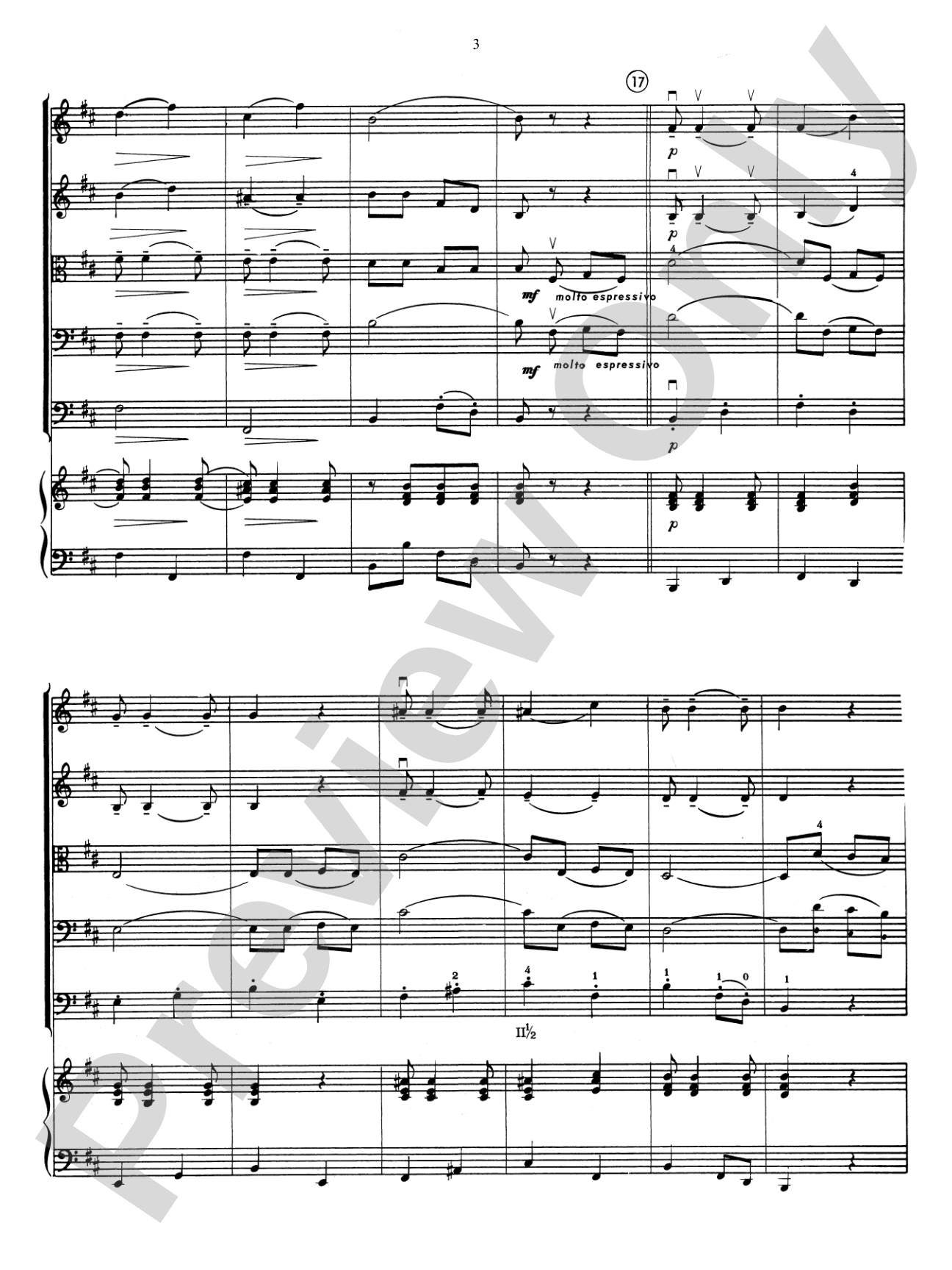
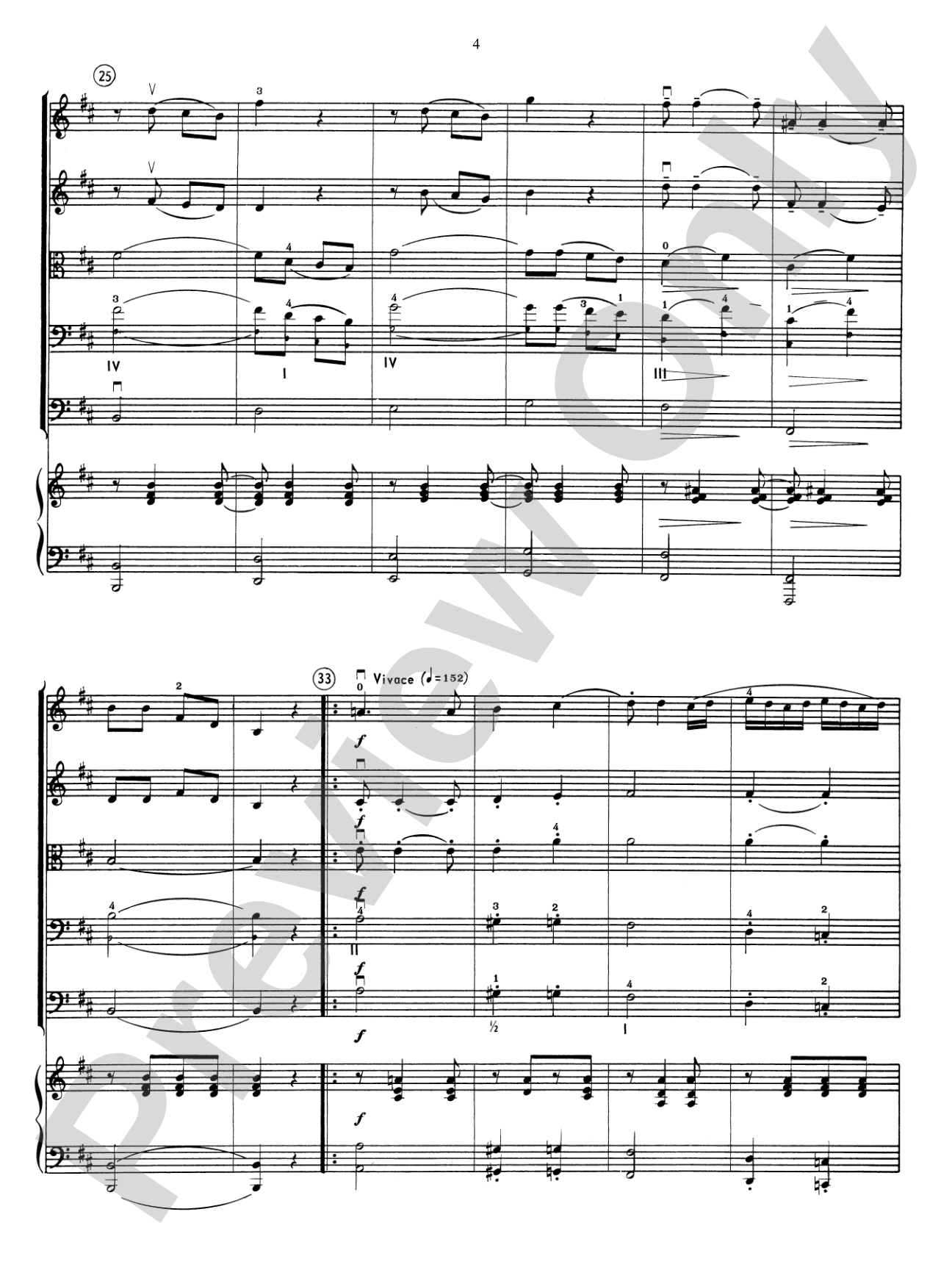
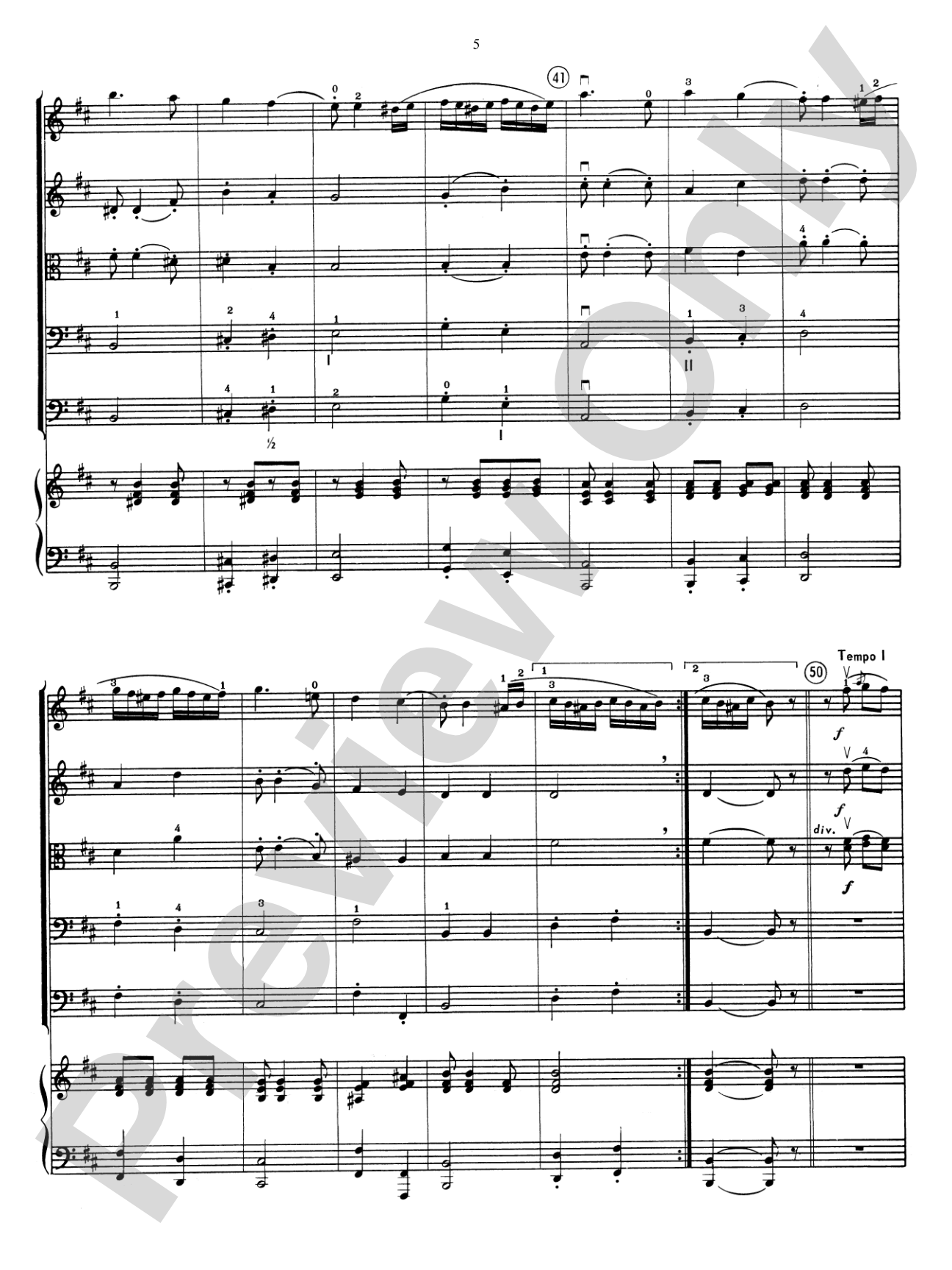
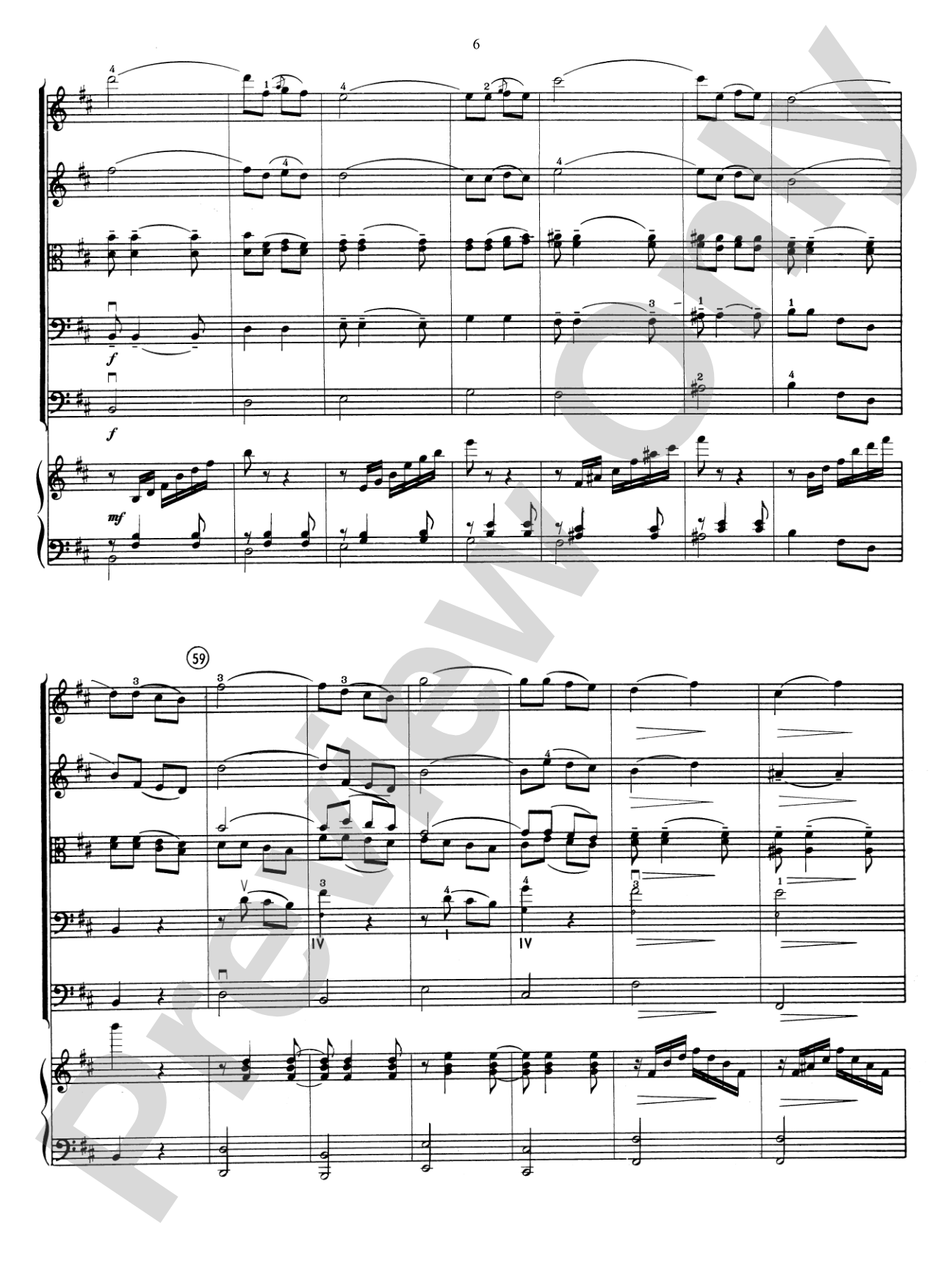
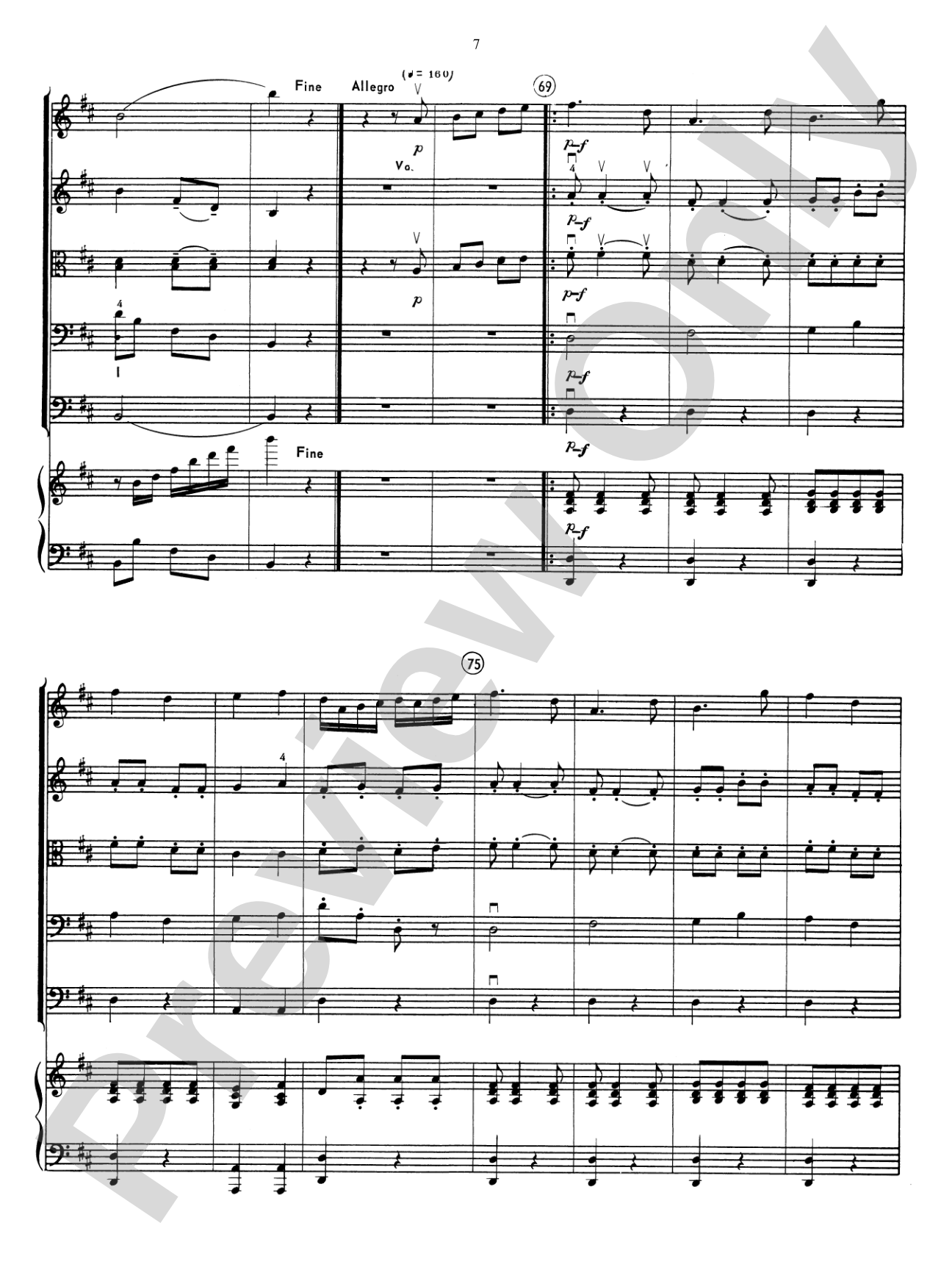
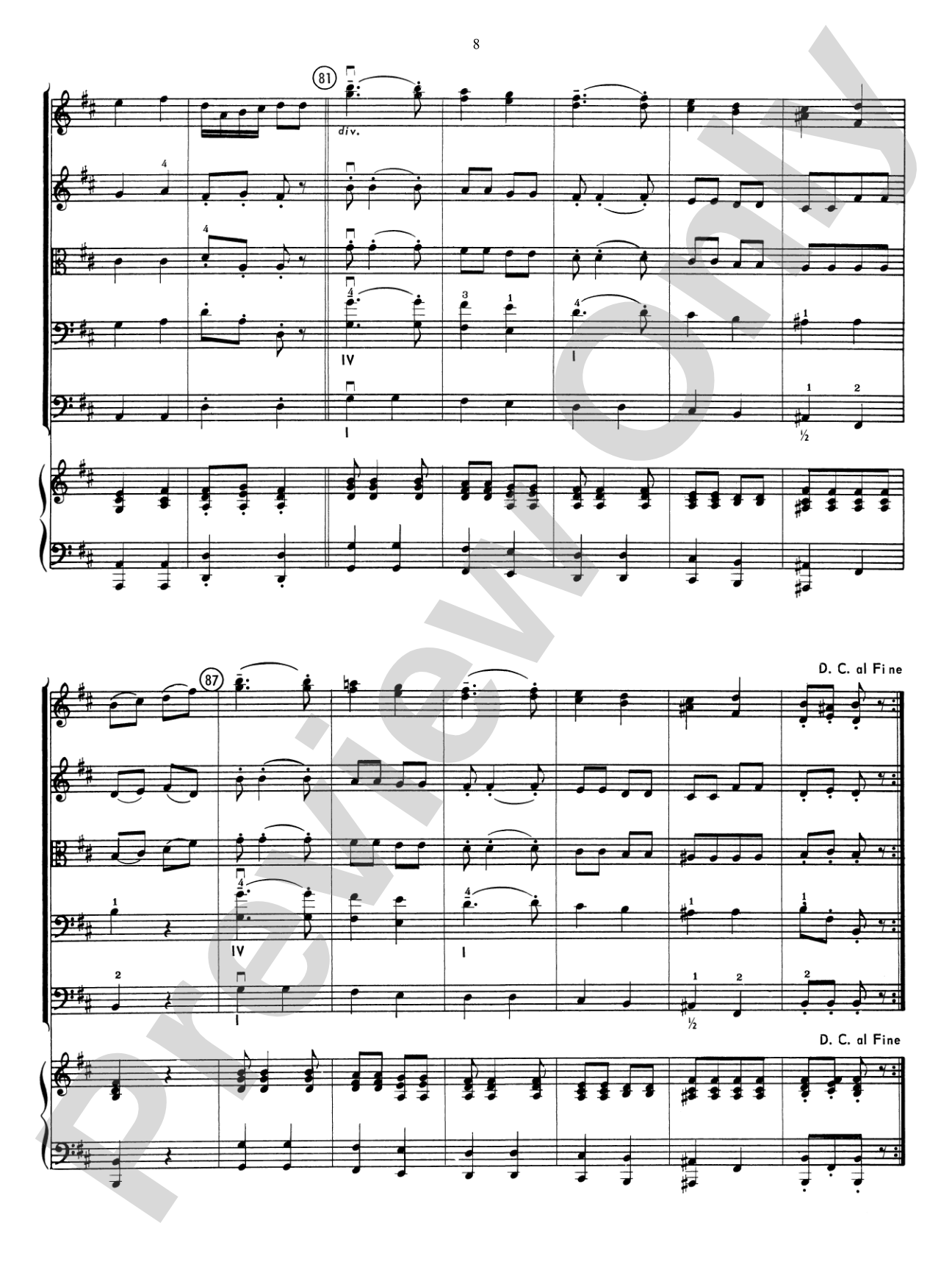
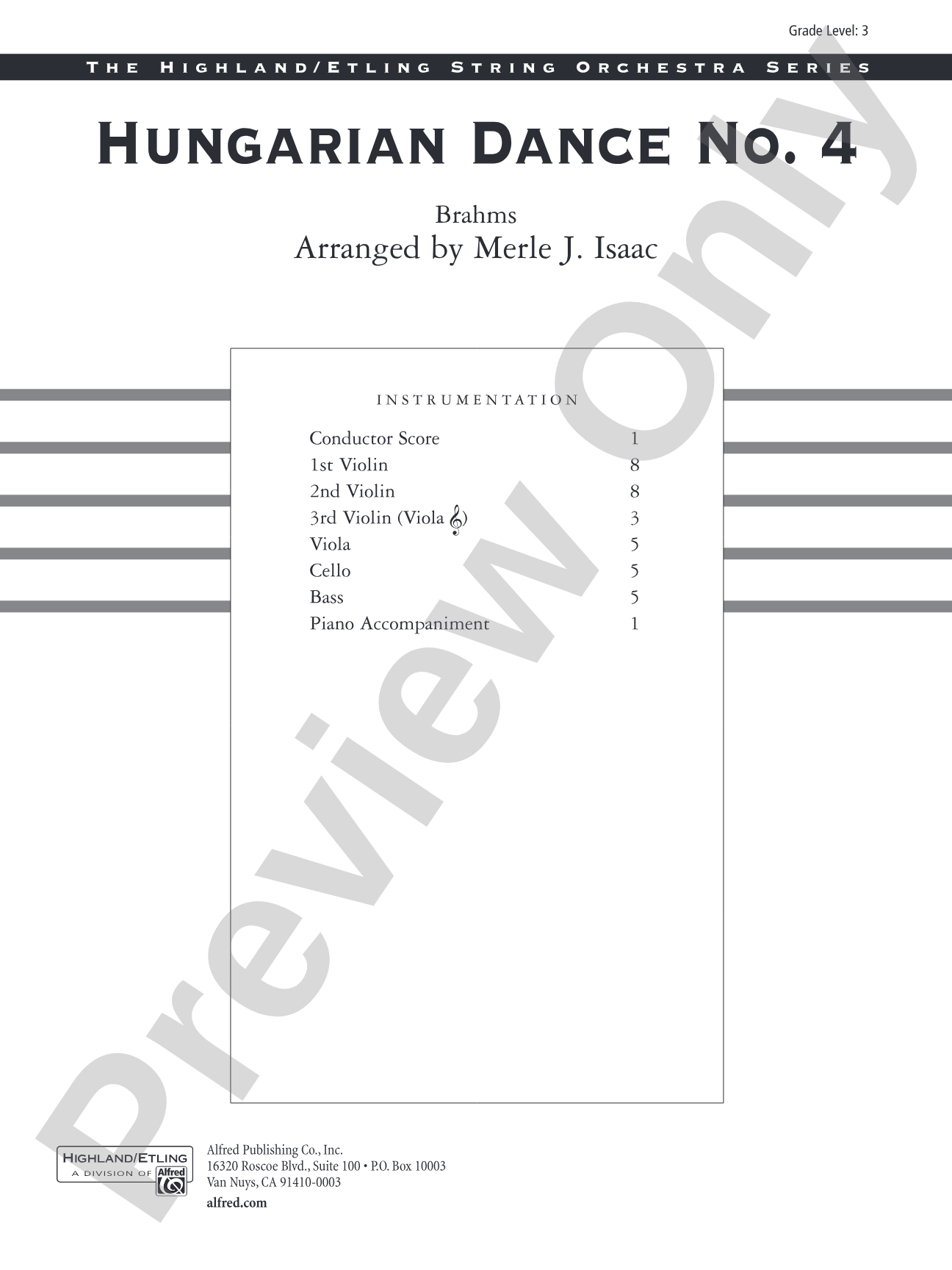
Hungarian Dance No. 4: Score Sheet Music Preview

Hungarian Dance No. 4: Score

By Johannes Brahms / arr. Merle J. Isaac

Grade: 3

Item: 00-PR-0000101

Digital Download
$9.00
Description

Don't just read it, hear it, play along with it, and watch your students grow with it. In MakeMusic Cloud, Hungarian Dance No. 4: Score comes alive with professional accompaniment, adjustable tempo, and built-in practice tools that turn solo practice into real progress.

Sample Audio
No sample audio found.
Sample Video
Additional Details
Series: Highland/Etling String Orchestra
Publisher: Alfred Music
Page Count: 140
SKU: 00-PR-0000101

More about this title

About the Composer: Johannes Brahms

Johannes Brahms (1833-1897) stands as one of the most influential composers of the Romantic era, bridging the classical traditions of Beethoven with the expressive innovations of his own time. His Hungarian Dances, written in the 1860s, remain among his most performed works, beloved for their infectious rhythmic vitality and rich harmonic language. These pieces showcase Brahms's gift for writing music that is both formally sophisticated and immediately engaging to audiences of all levels.

Why we love this

Merle Isaac's arrangement captures the fire and swagger of Brahms's original piano version while crafting parts that sit beautifully across the string section at a Grade 3 level. Directors value this for its concert appeal: it's a piece that audiences recognize and audiences love, making it ideal for building program momentum or closing a concert with energy. The orchestration demands musicality and rhythmic precision without overwhelming young players, and it works equally well as a festival showpiece or community concert highlight.

What to expect

Spirited and propulsive, with a character that swings between moments of passionate assertiveness and delicate grace. The music captures the energy of Hungarian folk idioms through brilliant string writing, with rhythmic vitality that keeps both players and listeners engaged from opening to close.

Who it's for

String orchestra directors seeking a concert piece with immediate appeal and proven programming value at the intermediate level. Players benefit from encountering authentic Brahms in an accessible arrangement that respects the original's character while remaining manageable in rehearsal.

How to get the most out of it

  • Anchor the rhythm section (cellos and basses) with a clear, buoyant pulse; this piece thrives on forward momentum, and any hesitation in the lower voices will flatten the character.
  • Balance the lyrical passages that emerge between the main themes by letting melody voices sing through with tone and shape, resisting the temptation to rush when the texture thickens.
  • Shape the sforzandi and accents with confidence and consistency across the ensemble; they define much of the piece's Hungarian character and drive.
  • Work the main theme gradually into its full dynamic statement, building from the first entrance rather than playing it at full volume from the start.

How to use it

Program this as a concert closer or as a building block in a Romantic-era set that might include lighter orchestral works. Its length and high-energy character make it an excellent choice for festival competitions, and it pairs well with other masterwork arrangements at similar difficulty levels.

Skills your students will build

  • Rhythmic precision in syncopated and dance-derived figures
  • Dynamic contrast and orchestral balance across string sections
  • Intonation and tone consistency during extended passage work
  • Stylistic interpretation of Romantic-era idioms and phrasing

You May Also Like