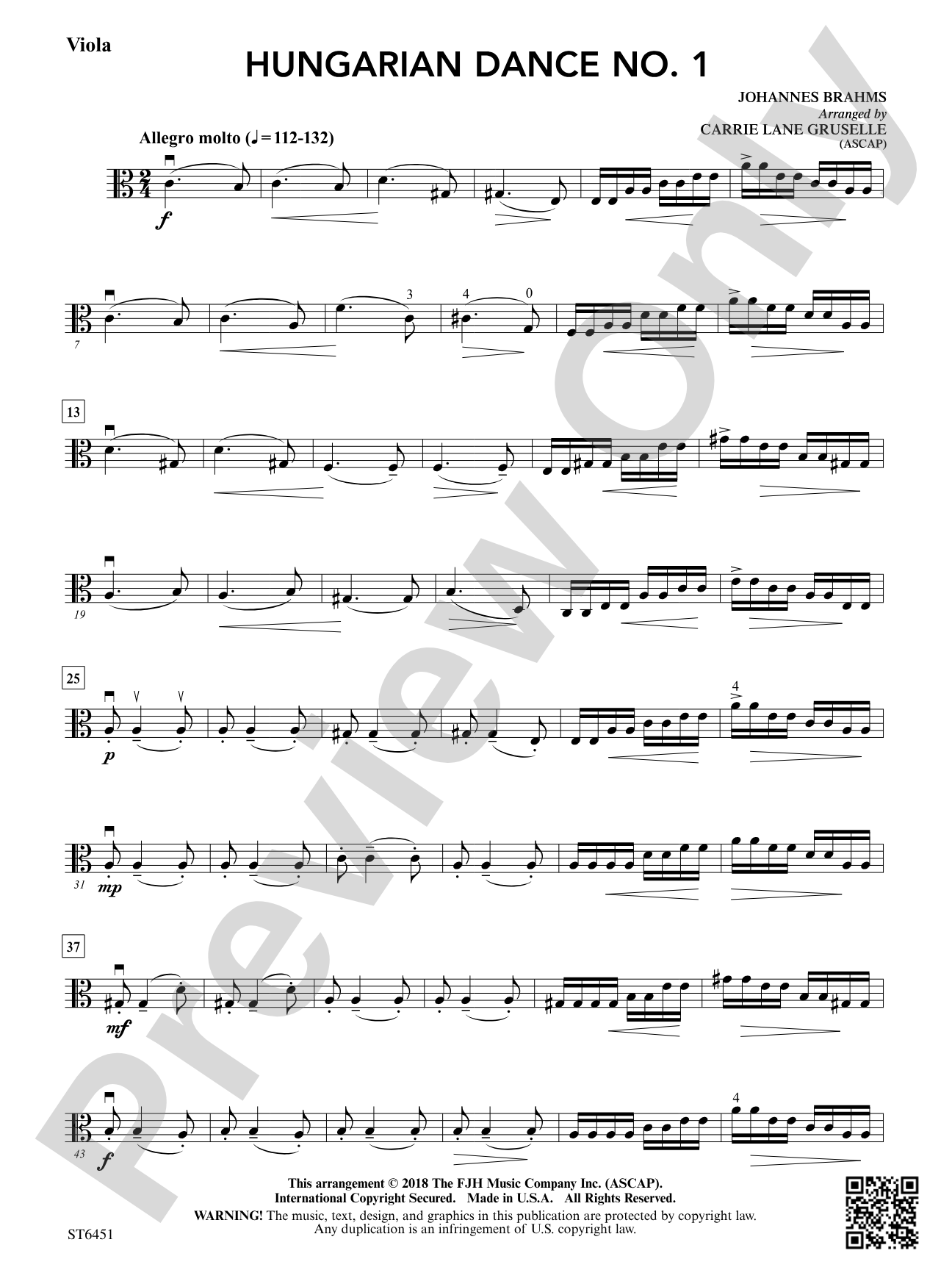
Hungarian Dance No. 1: Viola Sheet Music Preview

Hungarian Dance No. 1: Viola

By Johannes Brahms / arr. Carrie Lane Gruselle

Grade: 3.5

Item: 98-PC-DST6451_VA1

Digital Download
$7.00
Description
Brahms captures the fire and passion of the Roma culture in these folk songs set to dance styles. Intensity and drama is created with dynamic exaggeration, abrupt tempo changes and contrasting bow styles. An excellent way to forge the relationship between student and conductor as they learn to engage all of the wonderfully rich sections of the piece.

Don't just read it, hear it, play along with it, and watch your students grow with it. In MakeMusic Cloud, Hungarian Dance No. 1: Viola comes alive with professional accompaniment, adjustable tempo, and built-in practice tools that turn solo practice into real progress.

Sample Audio
0:00
0:00
Sample Video
Additional Details
Series: FJH String Orchestra
Publisher: The FJH Music Company, Inc.
SKU: 98-PC-DST6451_VA1

More about this title

About the Composer: Johannes Brahms

Johannes Brahms (1833-1897) was a German composer who deeply studied European folk traditions, particularly the music of Hungary and the Balkans. His Hungarian Dances remain among his most performed works, celebrated for their ability to capture the energy and character of Roma musical traditions while maintaining the sophisticated harmonic language that defined his compositional voice.

Why we love this

Carrie Lane Gruselle's arrangement preserves the dramatic arc and structural brilliance of Brahms's original while making the conducting challenges accessible to developing ensembles. The piece demands genuine musicianship from every section—dynamic contrast, rhythmic precision, and responsiveness to the conductor's interpretive choices—making it an ideal vehicle for teaching orchestral communication and ensemble cohesion.

What to expect

Hungarian Dance No. 1 pulses with restless energy and sensual drama. The piece sweeps between moments of fierce intensity and sultry restraint, demanding that players inhabit the character of a traditional folk dance while maintaining the precision of classical technique. It feels alive in the hands of an ensemble that commits fully to its emotional range.

Who it's for

String orchestra directors working with Grade 3.5 ensembles who want to develop student conducting independence and section awareness. This arrangement suits programs seeking multicultural repertoire that doesn't compromise musical depth or technical interest.

How to get the most out of it

  • Shape the dynamic contrasts with intention; the abrupt shifts between forte and piano are essential to the character, so practice clear hand signals that telegraph the changes ahead of time.
  • Establish the tempo relationships carefully before rehearsal begins. Mark exactly where tempo changes occur and have a conversation with your ensemble about how each transition serves the narrative of the dance.
  • Differentiate bow styles between sections. Assign specific articulation to pizzicato passages, detached bowing, and legato lines so each section knows its sonic role in the overall texture.
  • Record a rehearsal and listen back with the ensemble. Hearing how individual sections track the conductor's intentions often clarifies what adjustments are needed in real time.

How to use it

Position this as a centerpiece on a concert featuring world music or as a contrasting work opposite a classical-era piece. It works equally well as a season opener that energizes an audience or as part of a thematic concert exploring dance forms across cultures and centuries.

Skills your students will build

  • Following dynamic changes and responding to conductor gesture without lag
  • Differentiating articulation styles (pizzicato, staccato, legato) within a single piece
  • Maintaining rhythmic precision during abrupt tempo transitions
  • Balancing ensemble sound across distributed melodic lines
  • Interpreting folk dance idioms through orchestral arrangement

You May Also Like