
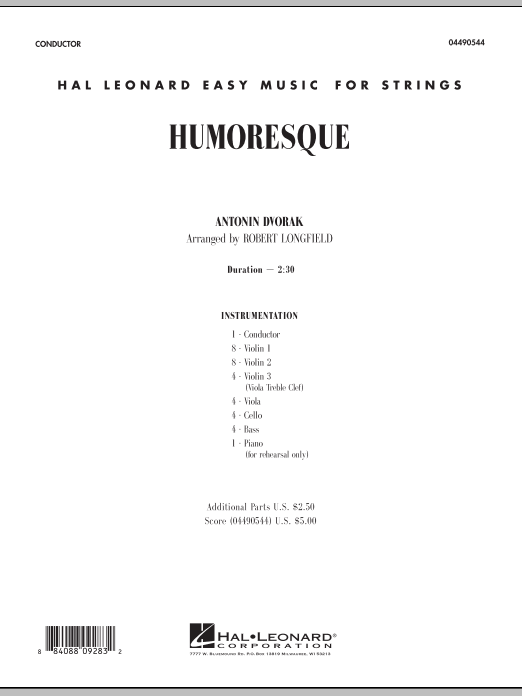

Humoresque: String Orchestra Conductor Score & Parts
By Anton Dvorak / Arranged by Robert Longfield
Grade: 2-3
Item: 35-PK00143435
$45.00
Pickup currently not available
Buy Extra Parts (Digital PDF Download)
| Product | Price | Quantity |
|---|---|---|
| Humoresque - Full Score | $6.00 | |
| Humoresque - Violin 1 | $7.00 | |
| Humoresque - Violin 2 | $7.00 | |
| Humoresque - Violin 3 (Viola T.C.) | $7.00 | |
| Humoresque - Viola | $7.00 | |
| Humoresque - Cello | $7.00 | |
| Humoresque - Bass | $7.00 | |
| Humoresque - Piano | $7.00 |
Parts Added to Cart!
Description
Here's a instantly recognizable tune from the classical repertoire that provides a teaching moment for the troublesome dotted 8th-16th note figure. Dur: 2:30


Humoresque: String Orchestra Conductor Score & Parts isn't in MakeMusic Cloud just yet...but it could be. Let us know you'd like to see it, and you'll help shape what comes next. In the meantime, start a free trial and dive into thousands of interactive titles your students can play along with today.
Request This Title
Tell us you want it.
Start Your Free Trial
Explore everything that's ready to play right now.
Sample Audio
No sample audio found.
Sample Video
No sample videos found.
Additional Details
Publisher:
Hal Leonard
SKU:
35-PK00143435
More about this title
About the Composer: Anton Dvorak
Anton Dvorák stands among the most performed composers of the Romantic era, bringing fresh compositional approaches to symphonic and chamber works throughout his career. His gift for melody and orchestration shaped music education worldwide, making his pieces staples in classrooms and concert halls for generations.
Why we love this
Dvorák's melodic gift shines through immediately in this arrangement, giving your students music they'll recognize and actually want to play. The dotted eighth-sixteenth rhythm that frames the tune feels slightly uncomfortable at first, then clicks into place, making it a satisfying technical hurdle for Grade 2-3 players.
What to expect
Warm and gently witty, with a playful lilt that comes from Dvorák's Eastern European heritage. The piece dances along with enough bounce to keep players engaged without demanding heroic virtuosity.
Who it's for
String orchestras working at the Grade 2-3 level who want accessible repertoire that teaches a specific rhythmic challenge without sacrificing musicality. This works equally well for intermediate high school ensembles seeking straightforward classics or community orchestras building confidence.
How to get the most out of it
- Isolate the dotted eighth-sixteenth figure in rehearsal before tackling it in tempo. Have violins and violas tap it out rhythmically while cellos and basses anchor the beat.
- Shape the melody with long bows on the opening phrase; this counters any tendency for students to rush through the dotted rhythms.
- Balance the first violins just enough to carry the tune without overwhelming the inner voices that support the harmony.
How to use it
Open a concert with this familiar tune to settle an audience into the evening, or use it mid-program as a palate cleanser between weightier works. Its short duration and approachable difficulty make it ideal for student soloists or a sectional spotlight performance.
Skills your students will build
- Dotted eighth-sixteenth note figures at moderate tempo
- Sustained bowing on longer melodic lines
- Balance between principal and supporting voices in a four-part texture
- Stylistic control in late Romantic melodic writing