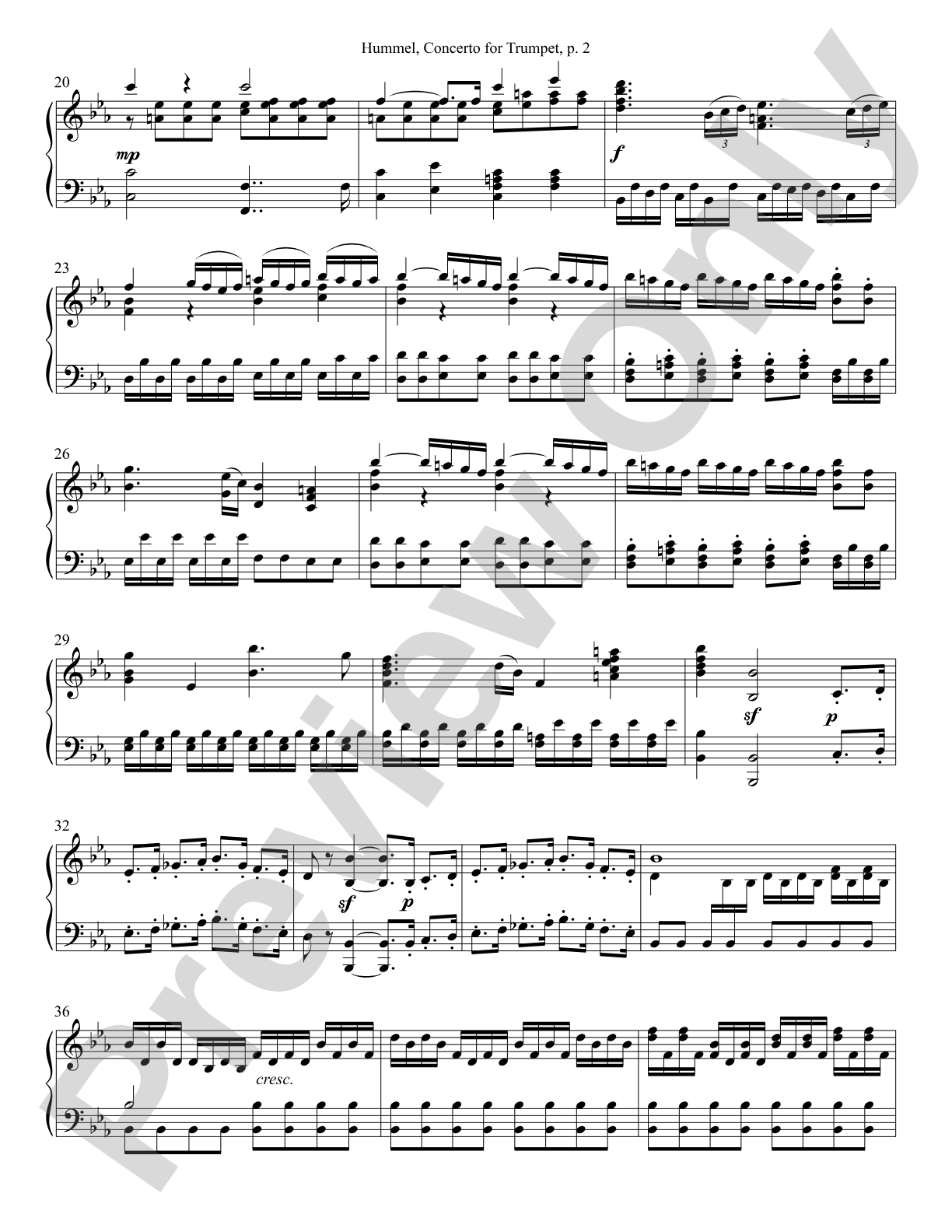
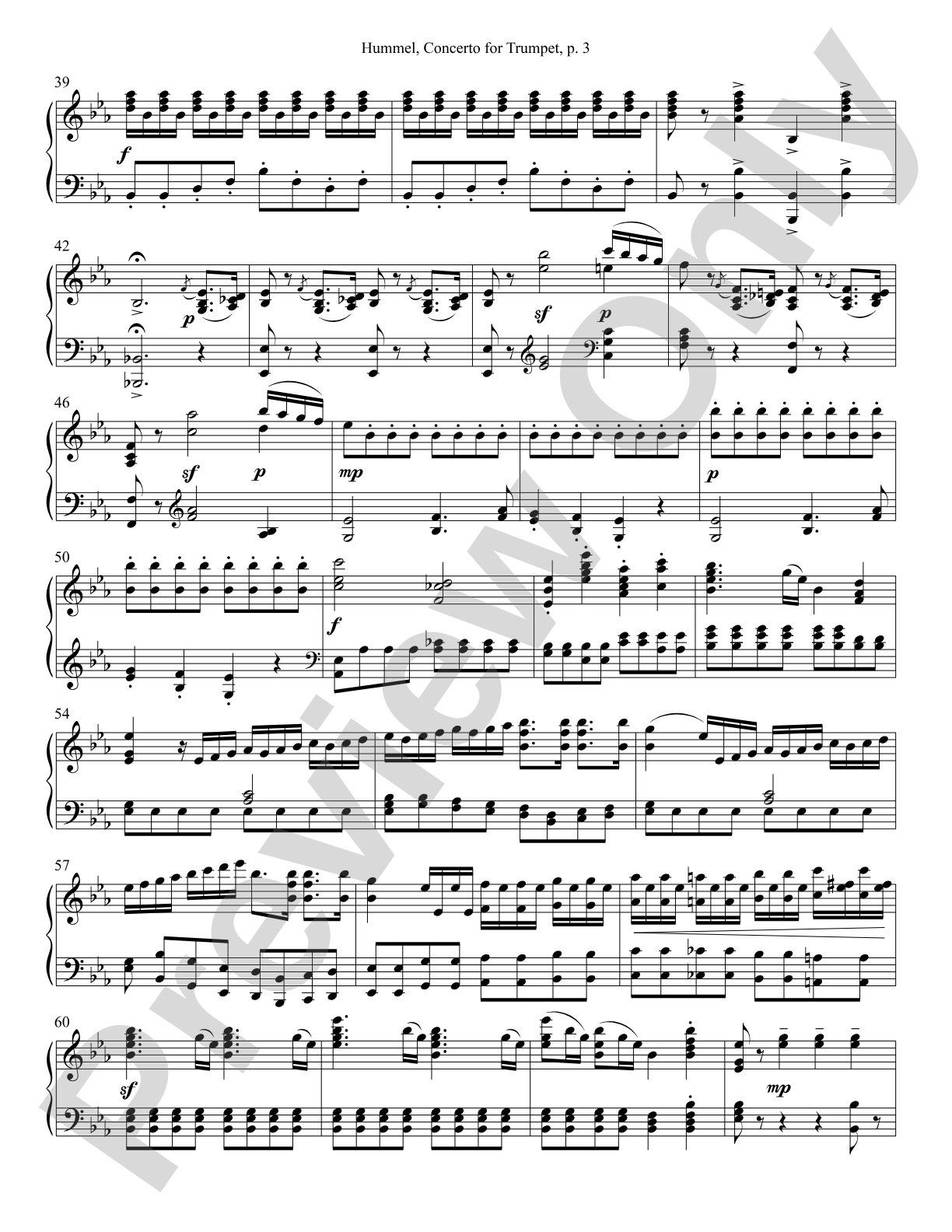
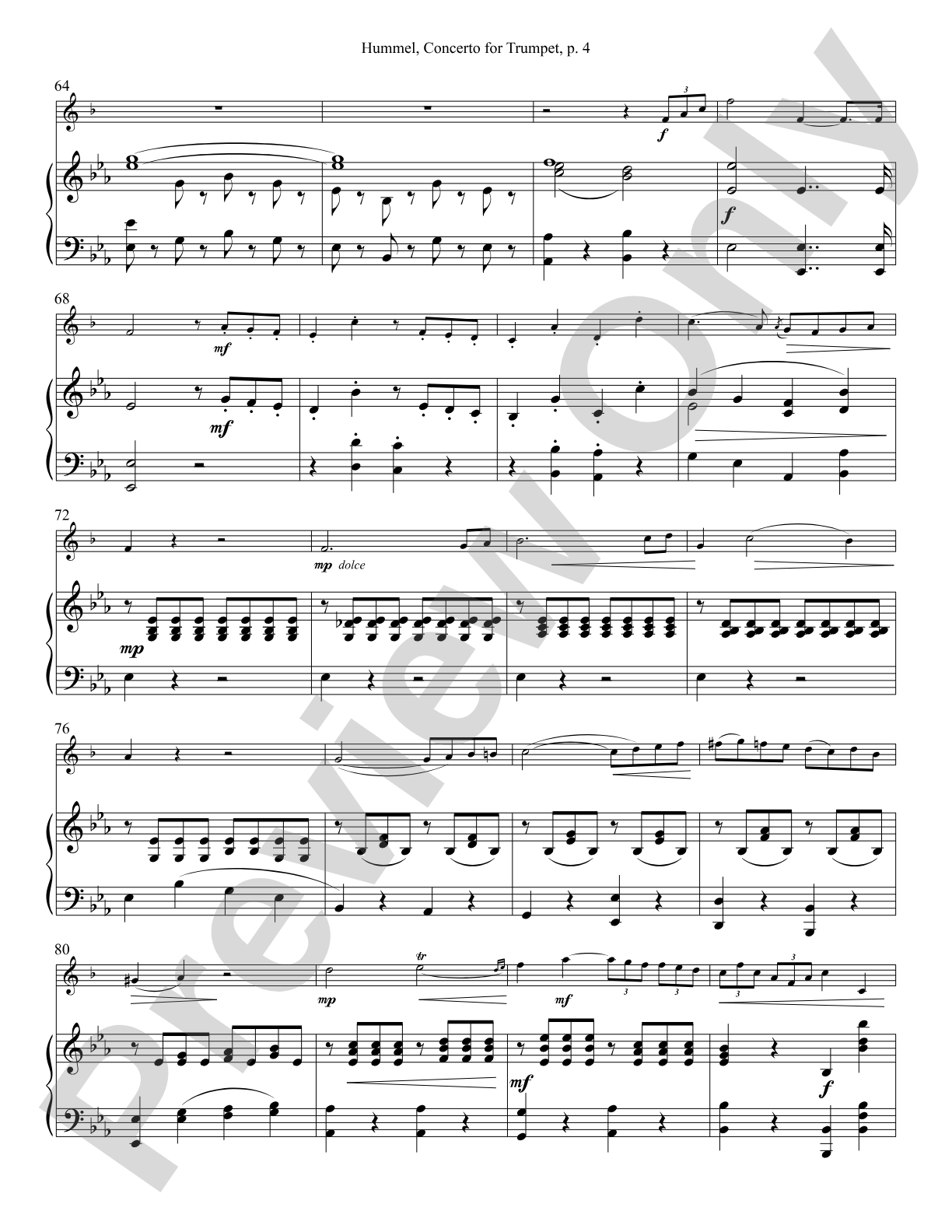
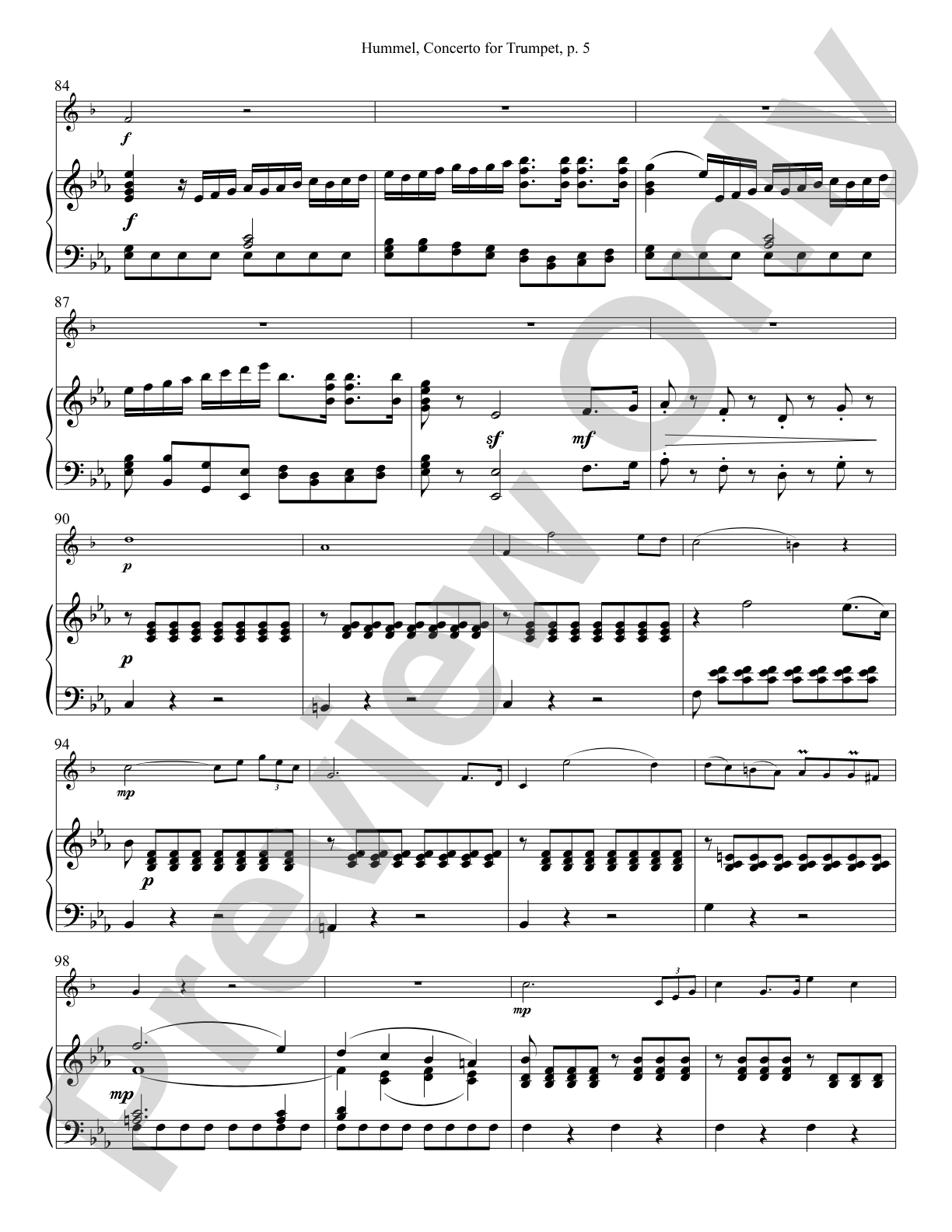
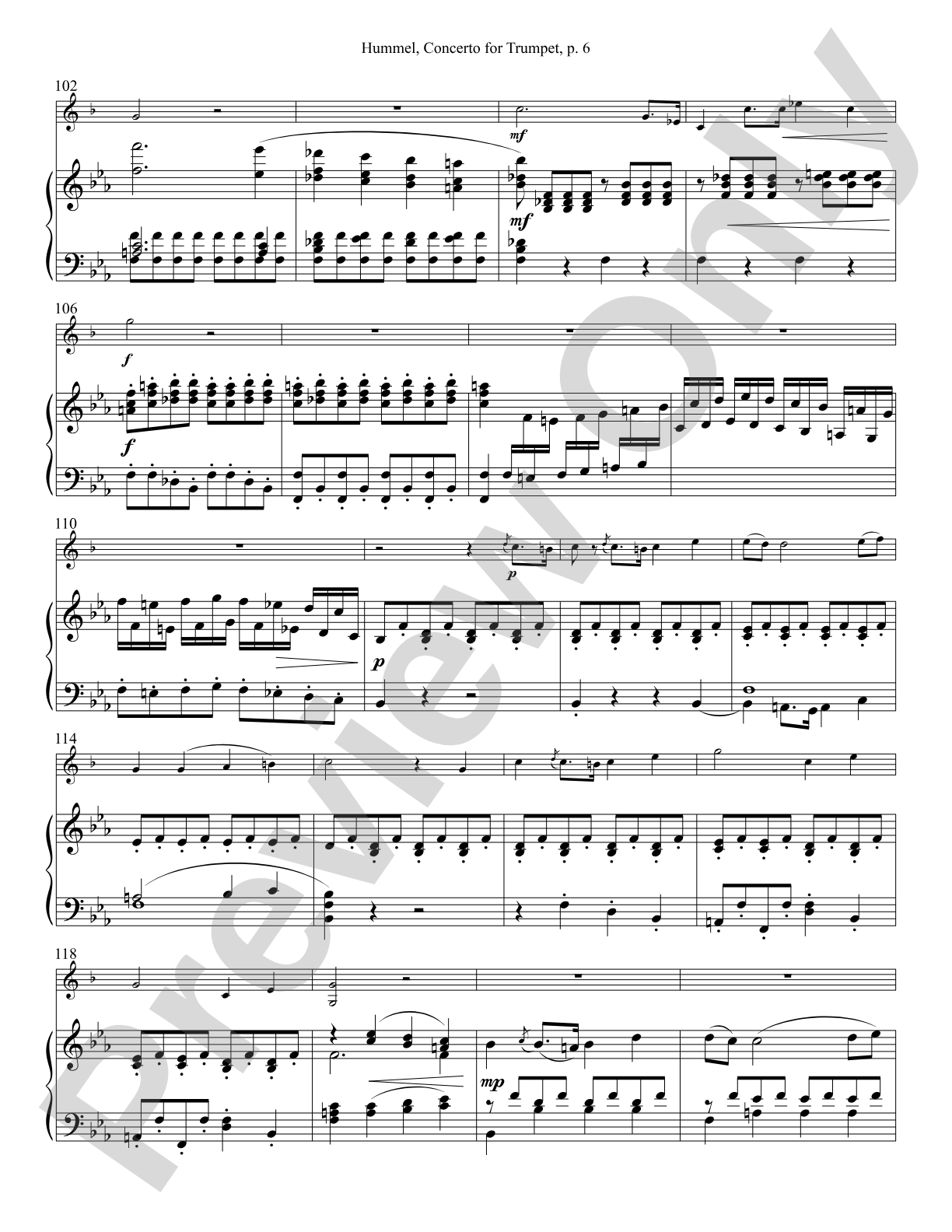
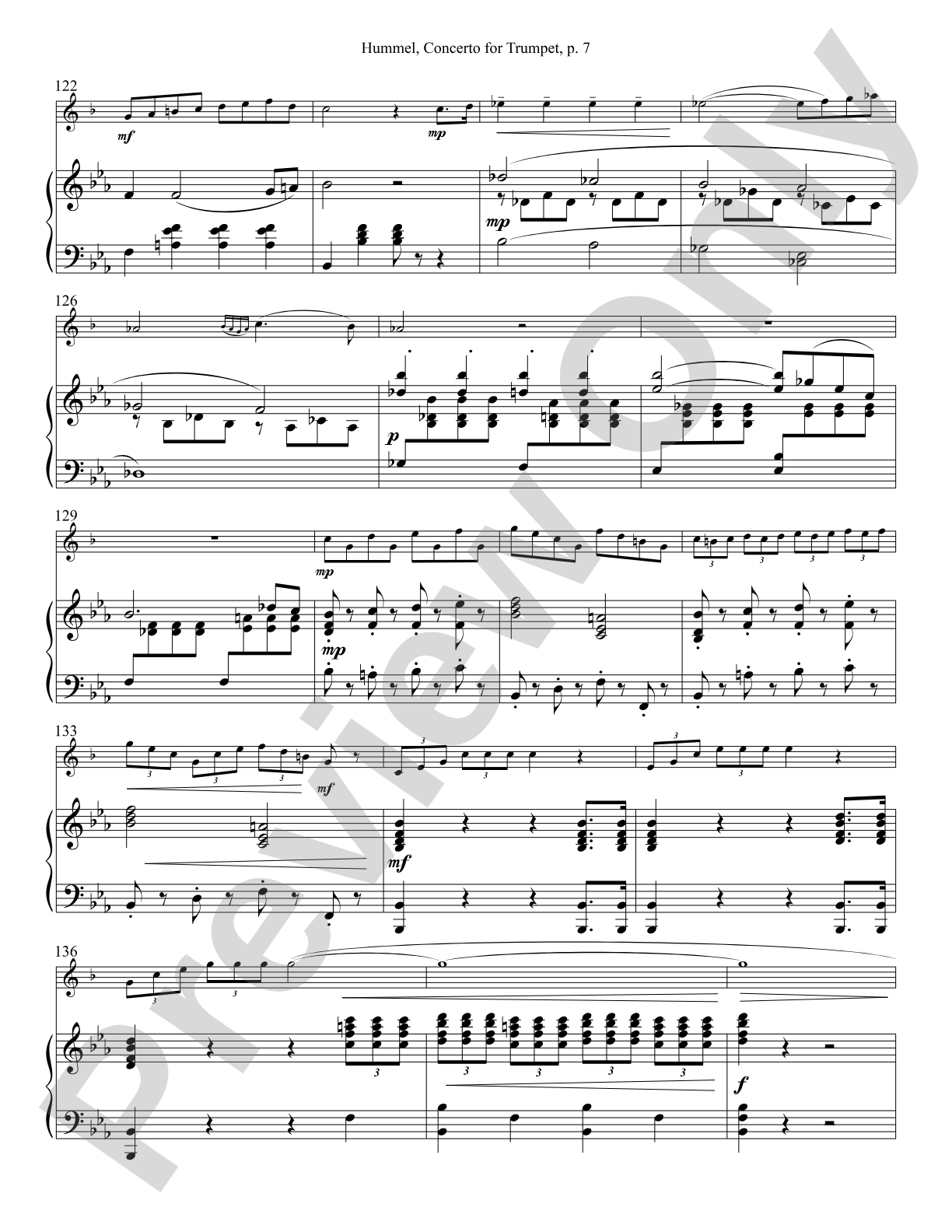
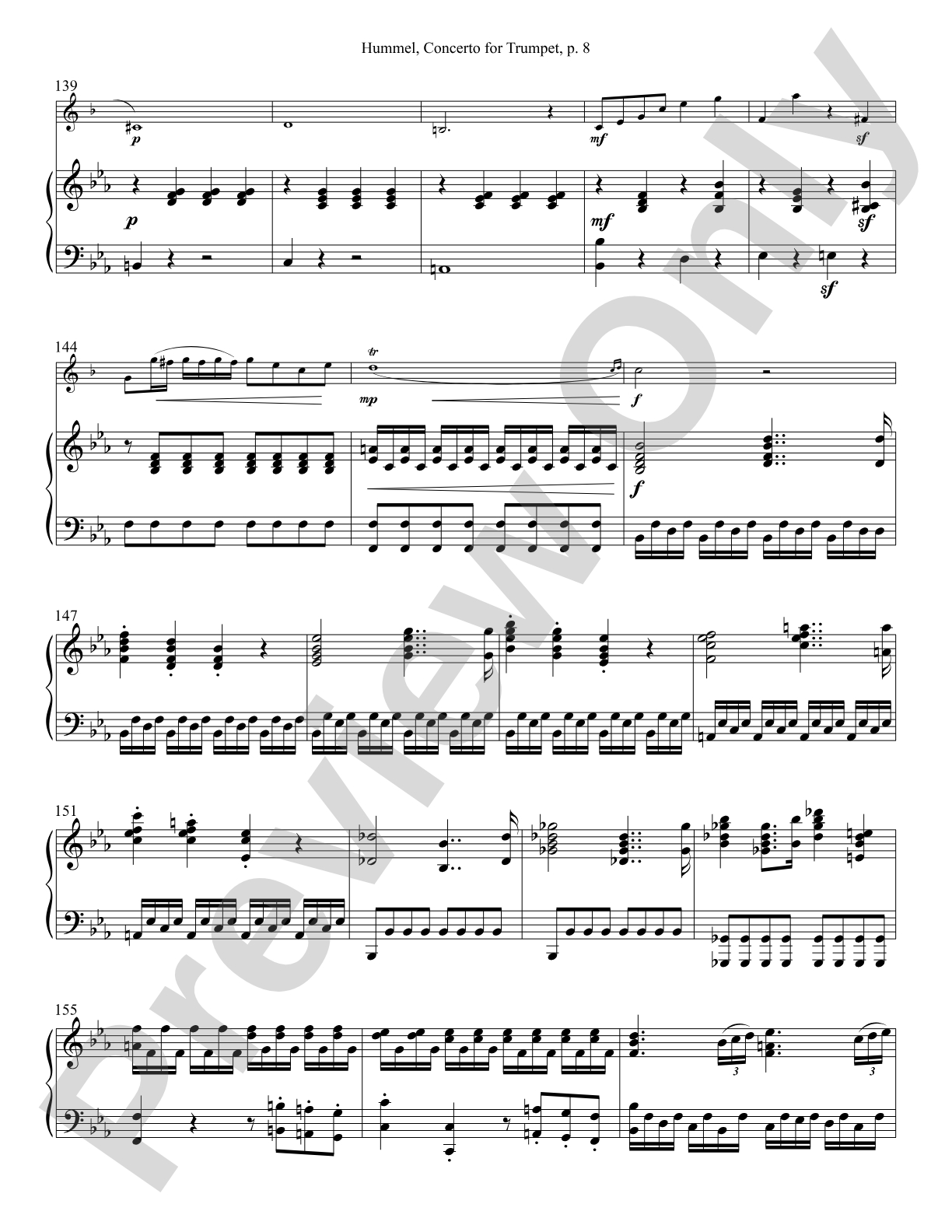
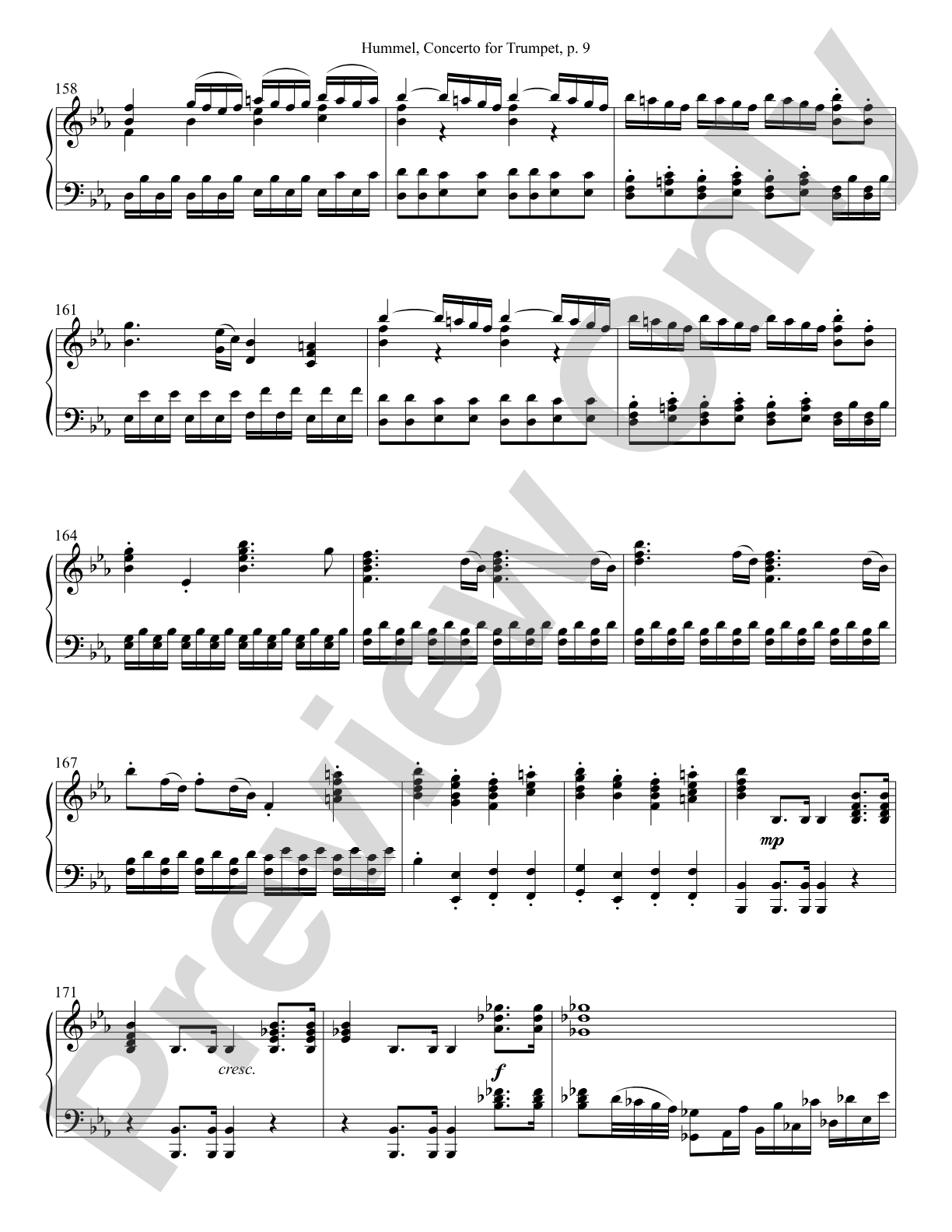
Hummel Concerto in B-flat Major for Trumpet and Piano Sheet Music Preview

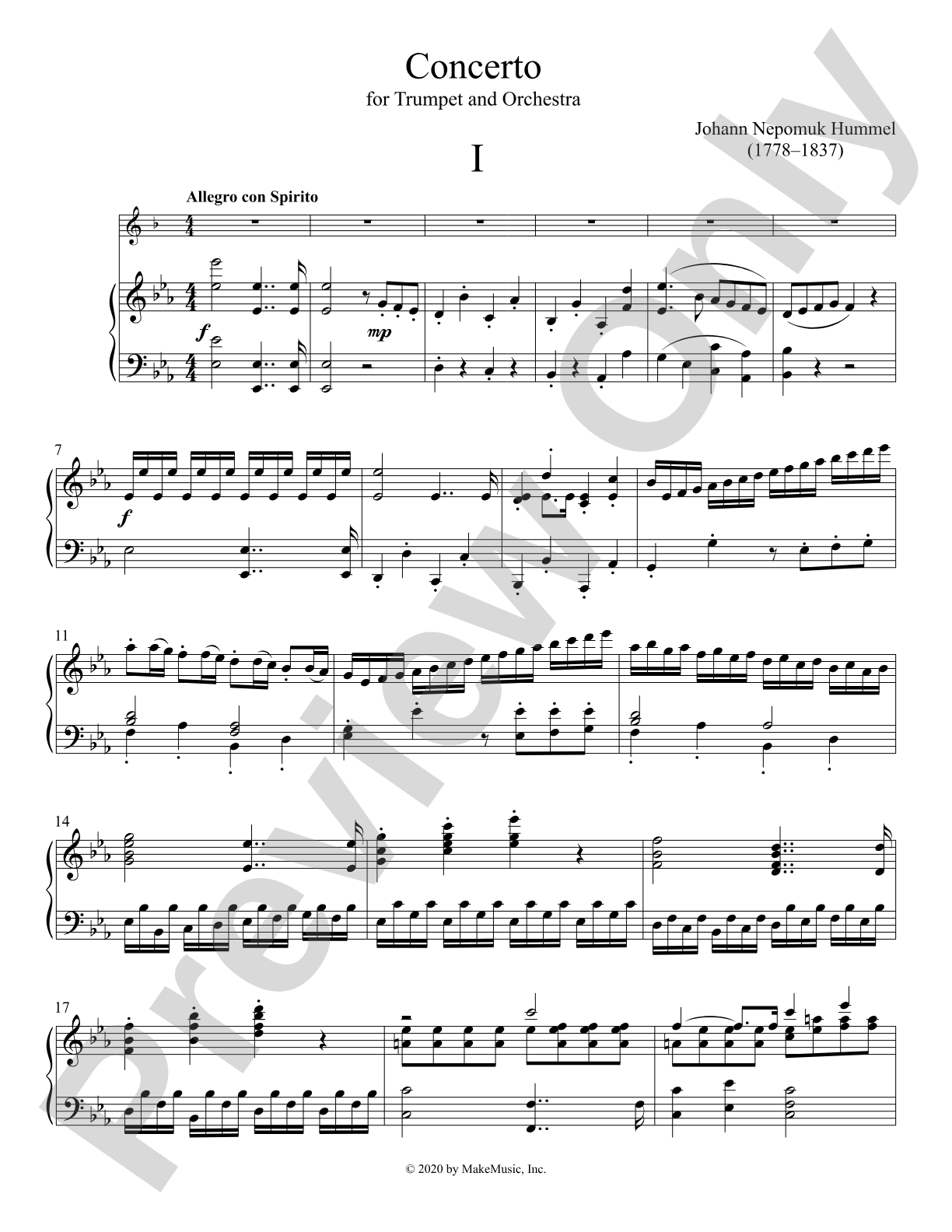
Hummel Concerto in B-flat Major for Trumpet and Piano: Solo & Small Ensemble

Johann Nepomuk Hummel

Item: 00-PS-0016146

Digital Download
$5.99
Description
Written in 1803, Hummel's trumpet concerto has become one of the cornerstones of the trumpet solo repertoire. Included in this newly edited version are parts for both E-flat and B-flat trumpet.

Hummel Concerto in B-flat Major for Trumpet and Piano: Solo & Small Ensemble isn't in MakeMusic Cloud just yet...but it could be. Let us know you'd like to see it, and you'll help shape what comes next. In the meantime, start a free trial and dive into thousands of interactive titles your students can play along with today.

Sample Audio
No sample audio found.
Sample Video
Additional Details
SKU: 00-PS-0016146

More about this title

About the Composer: Johann Nepomuk Hummel

Johann Nepomuk Hummel (1778–1837) was an Austrian composer and pianist whose keyboard works and concertos bridged the Classical and early Romantic periods. A student of Mozart and Salieri, Hummel composed prolifically across genres and held prestigious posts as kapellmeister in Weimar and Stuttgart, where he shaped the musical tastes of an entire generation. His trumpet concerto remains one of the most performed works in the brass canon, prized for its lyrical elegance and technical demands.

Hummel's writing for trumpet reflects the instrument's capabilities during the early 19th century, when composers were increasingly exploring the trumpet beyond its traditional military and orchestral roles. His concerto showcases the lyrical potential of the instrument while maintaining the sophisticated harmonic language expected of Classical chamber music.

Why we love this

This concerto strikes a perfect balance between lyricism and virtuosity. The opening movement presents a singing melody that challenges players to phrase with vocal elegance, while the closing rondo demands precision and control without sacrificing musical substance. The newly edited version with both E-flat and B-flat parts makes this standard contest piece accessible to players at different stages of development.

What to expect

Elegant and singing, with a Classical restraint that never becomes dull. The opening theme has an almost operatic quality, lyrical and sustained, while the faster sections sparkle with rhythmic precision and light ornamentation. There's a refinement throughout that reflects Hummel's grounding in both Mozart's elegance and the emerging expressive possibilities of the Romantic era.

Who it's for

Advanced high school trumpet players and college-level soloists preparing for competitions, auditions, and recitals. This work is standard repertoire for trumpet contests and appeals to musicians ready to take on the lyrical and technical demands of early 19th-century brass writing.

How to get the most out of it

  • Shape the primary theme with long, connected phrasing; this melody rewards singers as much as it does brilliance-focused players.
  • Balance the accompaniment so the piano provides harmonic support without drowning the trumpet line, particularly in the lyrical passages of the first movement.
  • Approach the rapid passagework in the rondo with clarity and articulation rather than speed alone; Hummel's writing is precise and benefits from clean tonguing.
  • Use the cadenza (if included in this edition) as an opportunity to showcase control across the full range of the trumpet rather than as a technical display piece.

How to use it

Program this as a centerpiece recital or competition entry, or pair it with another Classical concerto for a program exploring the development of wind writing during the late 18th and early 19th centuries. It works equally well as a featured solo in a chamber concert or as a standalone contest piece.

Skills your students will build

  • Extended lyrical phrasing and vocal tone production across a wide range
  • Rapid passagework with clarity and precision in the rondo
  • Musical interpretation of Classical form within the context of a solo concerto
  • Technical flexibility switching between E-flat and B-flat trumpet capabilities

You May Also Like