
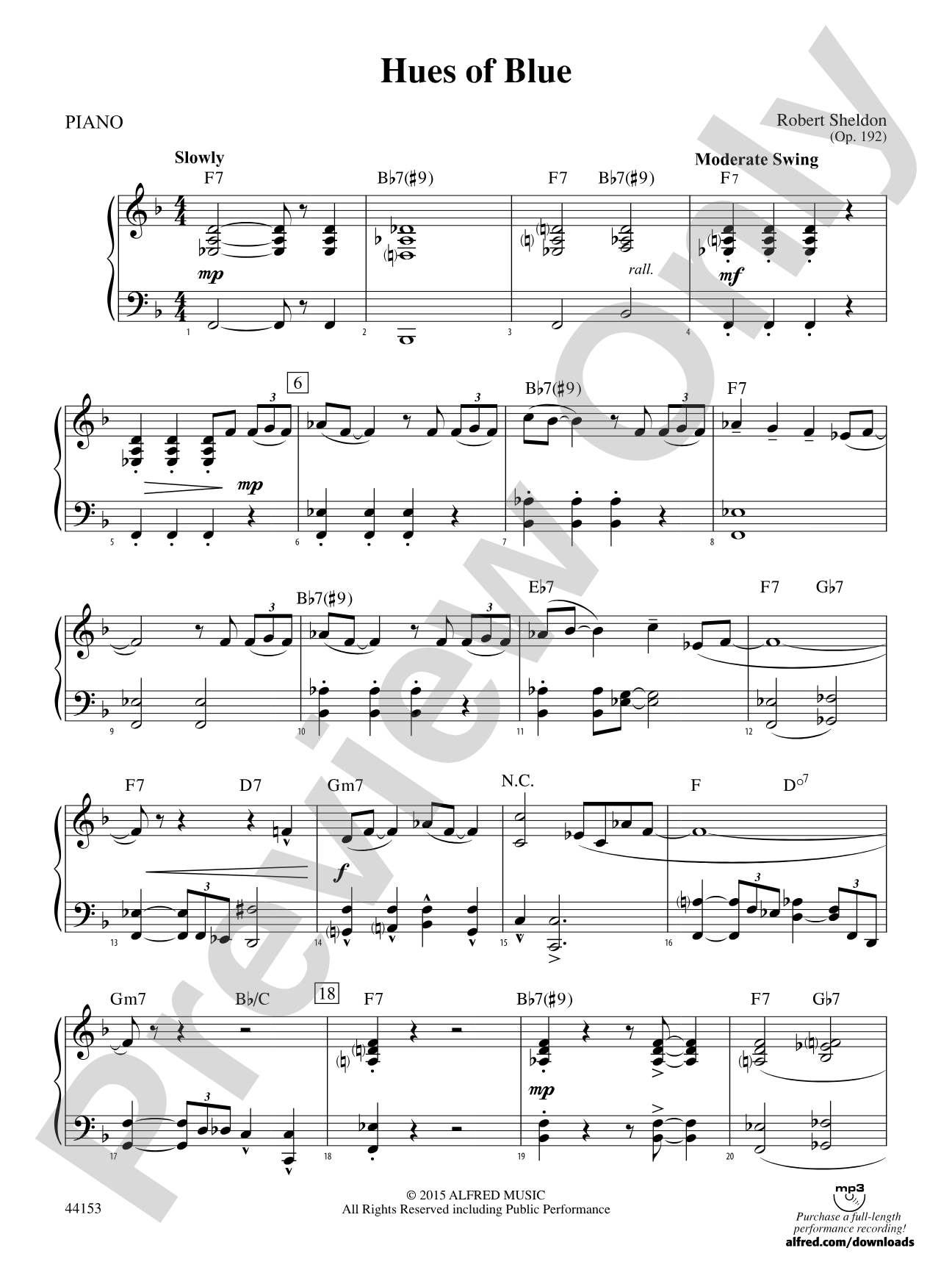

Hues of Blue: Piano Accompaniment
By Robert Sheldon
Grade: 2 (Medium Easy)
Item: 00-PC-0017003_K
$3.00
Pickup currently not available
Description
Treat your ensemble and audience to sophisticated-sounding, yet quite playable blues for young band. Jazz-voiced chords and a cool bluesy groove give this piece a very appealing sound. Add in some soloists trading fours and a shout chorus, and this might be the tune that brings the house down! (2:30) Correlates to Book 2, level 2.


Don't just read it, hear it, play along with it, and watch your students grow with it. In MakeMusic Cloud, Hues of Blue: Piano Accompaniment comes alive with professional accompaniment, adjustable tempo, and built-in practice tools that turn solo practice into real progress.
Open in the Player
Jump straight in and assign it today.
Start Your Free Trial
Open this title and explore the full library in minutes.
Sample Audio
1
Audio File
--:--
0:00
0:00
Sample Video
No sample videos found.
Additional Details
Series:
Sound Innovations for Concert Band
Publisher:
Alfred Music
Page Count:
128
SKU:
00-PC-0017003_K
More about this title
About the Composer: Robert Sheldon

Robert Sheldon stands among the most frequently performed composers writing for wind bands today. His extensive catalog appears on concert and contest programs worldwide, and his work has been performed at Carnegie Hall, the Kennedy Center, and the Sydney Opera House. Beyond composing, Sheldon serves as lead author of Sound Innovations for Concert Band and maintains an active schedule as guest conductor for honor bands and clinician at universities and state music education conferences across the United States and internationally.
Sheldon's output reflects deep understanding of what ensembles need at every level. He has received honors from the American School Band Director's Association, Phi Beta Mu, and ASCAP, and holds a honorary doctorate from VanderCook College of Music. His commissions and annual publications demonstrate his ongoing commitment to enriching the wind band repertoire with music that balances accessibility with genuine artistic expression.
Why we love this
Sheldon captures authentic jazz vocabulary without overwhelming young players. The trading fours between soloists and ensemble, paired with a shout chorus, create genuine ensemble moments that feel like real musicians responding to each other, not just playing through changes. Grade 2 bands gain confidence and style playing something that sounds genuinely cool.
What to expect
Sophisticated and laid-back at once. The jazz voicings and bluesy groove create an urban, contemporary sound that pulls the audience in immediately, while the playable ranges and straightforward rhythmic foundation keep the ensemble relaxed enough to execute the style with confidence. There's real swag in this piece.
Who it's for
Young concert bands ready to explore jazz vocabulary and style within an accessible framework. This works for ensembles in their second year of organized band study who can handle chord changes and rubato playing without losing ensemble cohesion.
How to get the most out of it
- Balance the jazz-voiced chords so they sit as a cohesive harmonic backdrop. Individual sections may need to check intonation in thirds and sevenths, which read differently than traditional concert harmonies.
- Let soloists hear the rhythm section clearly during trading fours. A clean, steady groove from percussion and low brass gives improvisers something solid to anchor against.
- Shape the shout chorus with dynamic contrast and articulation clarity. The piece gains energy when sections punch together, so conduct this section with conviction and specificity.
- Use the recorded accompaniment to rehearse solo passages individually before integrating them into full rehearsals. This allows soloists to lock in their phrasing and intonation without ensemble density.
How to use it
Program this as a concert highlight that bridges classical and contemporary contexts. It works especially well in a set that includes one or two traditional concert pieces, offering audience members and students a refreshing tonal palate shift. The 2:30 length makes it ideal for a spring concert closer or a jazz-focused program segment.
Skills your students will build
- Recognizing and voicing jazz harmonies (seventh chords, altered extensions)
- Playing with swing feel and rubato within ensemble context
- Trading fours and responding to ensemble cues as a soloist
- Balancing stylistic demands (clarity and punch) with traditional concert band balance