How the Grinch Stole Christmas: 1st F Horn Sheet Music Preview

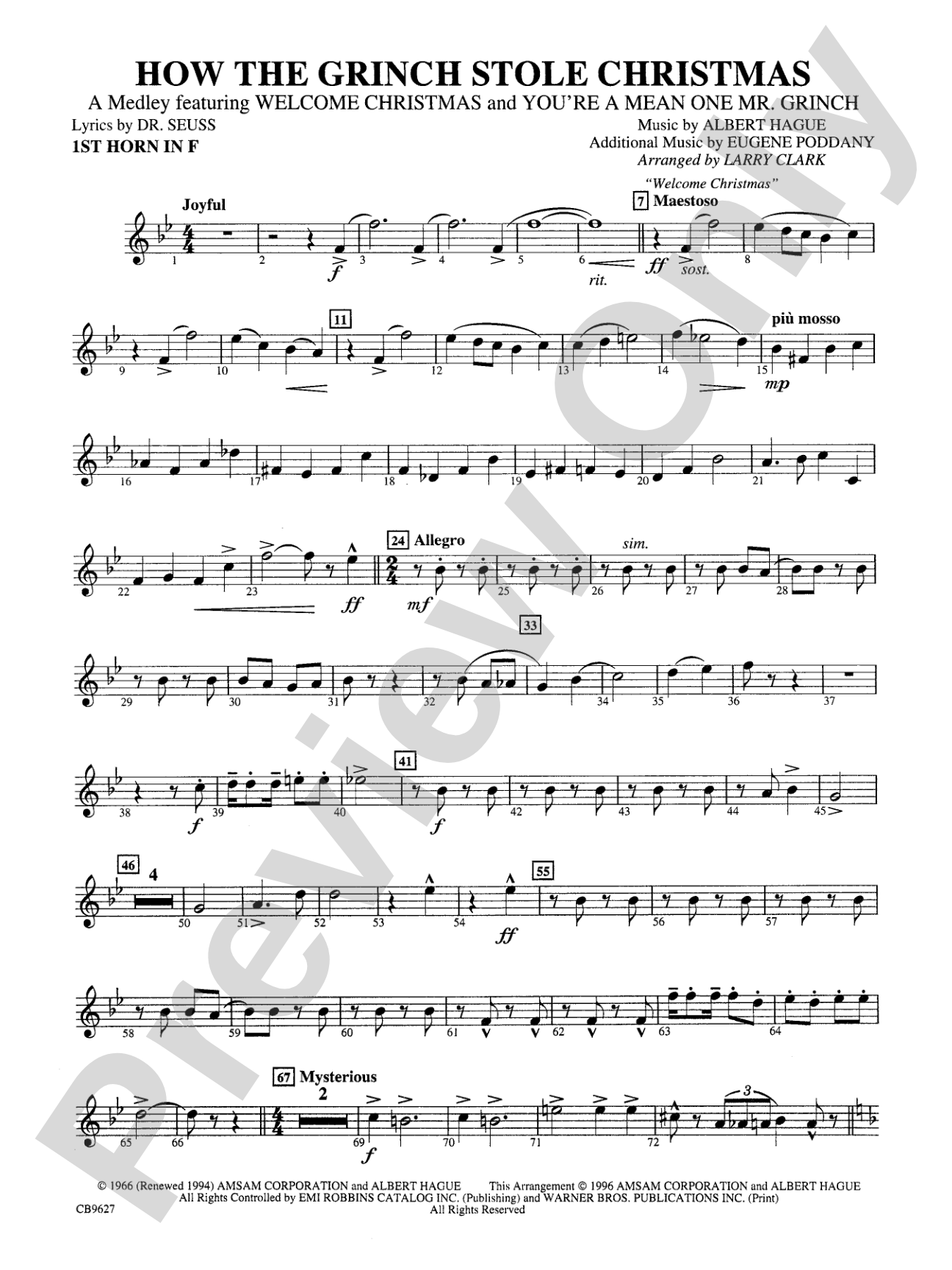
How the Grinch Stole Christmas: 1st F Horn

Featuring: Welcome Christmas / You're a Mean One, Mr. Grinch

By Dr. Seuss, Albert Hague and Eugene Poddany / arr. Larry Clark

Grade: 3 (Medium)

Item: 00-PC-0016061_H1

Digital Download
$3.00
Description
Of all the Dr. Seuss stories, possibly none is more delightfully charming than the take on that mean old man who disliked Christmas so much that he stole all the presents, the toys and the Christmas trees. As should befall any villain, he is transformed and his heart "grew three times its size." This is a superior holiday medley with two great songs and wonderful incidental music. Seasonally spectacular! (duration 5:01)

Don't just read it, hear it, play along with it, and watch your students grow with it. In MakeMusic Cloud, How the Grinch Stole Christmas: 1st F Horn comes alive with professional accompaniment, adjustable tempo, and built-in practice tools that turn solo practice into real progress.

Sample Audio
No sample audio found.
Sample Video
Additional Details
Series: Pop Symphonic Band
Publisher: Alfred Music
Page Count: 262
SKU: 00-PC-0016061_H1

More about this title

About the Composer: Dr. Seuss

Dr. Seuss (Theodor Geisel, 1904-1991) revolutionized children's literature through rhythmic text, imaginative wordplay, and moral clarity. His stories have sold hundreds of millions of copies worldwide and spawned beloved adaptations across stage, screen, and music. How the Grinch Stole Christmas stands as one of his most enduring works, adapted into multiple musical versions that preserve the warmth and humor of his original vision.

Albert Hague (1920-2007) composed the original score for the 1966 television special, creating music that perfectly captured the whimsy and heart of Seuss's narrative. Hague's melodies became iconic, instantly recognizable to generations of listeners, and his orchestrations set the musical standard for this beloved holiday story.

Why we love this

This arrangement brings genuine theatrical storytelling to the concert band medium without sacrificing instrumental musicianship. Larry Clark has crafted a medley that moves with purpose and charm, giving your band moments of comedic writing, genuine pathos, and triumphant orchestration that keeps audiences engaged from the Grinch's scheming to his heart-swelling transformation.

What to expect

Mischievous at first, with a theatrical flair that suggests scheming and villainy rendered in comic terms. The music gradually opens the heart, moving from snark to sincerity, and lands in genuine warmth and triumph. There's a buoyancy throughout that captures the spirit of the story while allowing for moments of genuine musical beauty.

Who it's for

Concert bands at grades 3-4 seeking a holiday selection with real substance and audience appeal. Directors who want to program something recognizable and joyful without sacrificing musical integrity or ensemble growth.

How to get the most out of it

  • Shape the character music around the Grinch's emotional arc. The opening passages should feel mischievous and sly, then gradually warm as the arrangement approaches his redemption.
  • Balance the two primary songs carefully so that neither overwhelms the incidental connective material. The medley works best when transitions feel organic rather than abrupt.
  • Use articulation and dynamic contrast to highlight moments of comedy and pathos. Precise attacks in the woodwinds and light staccato in the brass help the storytelling breathe.
  • Give conductors and players time to absorb the harmonic language, which is accessible but occasionally unexpected. Rehearse sectionally to lock the chord changes before full ensemble work.

How to use it

Ideal as a centerpiece for a winter or holiday concert, especially one that mixes pops and classical selections. This works equally well as a closing festive opener that sets a celebratory tone for the rest of your program. Consider pairing it with other seasonal fare or mixing it into a concert that celebrates musical storytelling across styles.

Skills your students will build

  • Narrative pacing and character-driven interpretation in instrumental music
  • Stylistic flexibility between comic and sincere musical passages
  • Ensemble blend and sectional balance in medley form
  • Dynamic range and articulation clarity for storytelling and musical definition

You May Also Like