
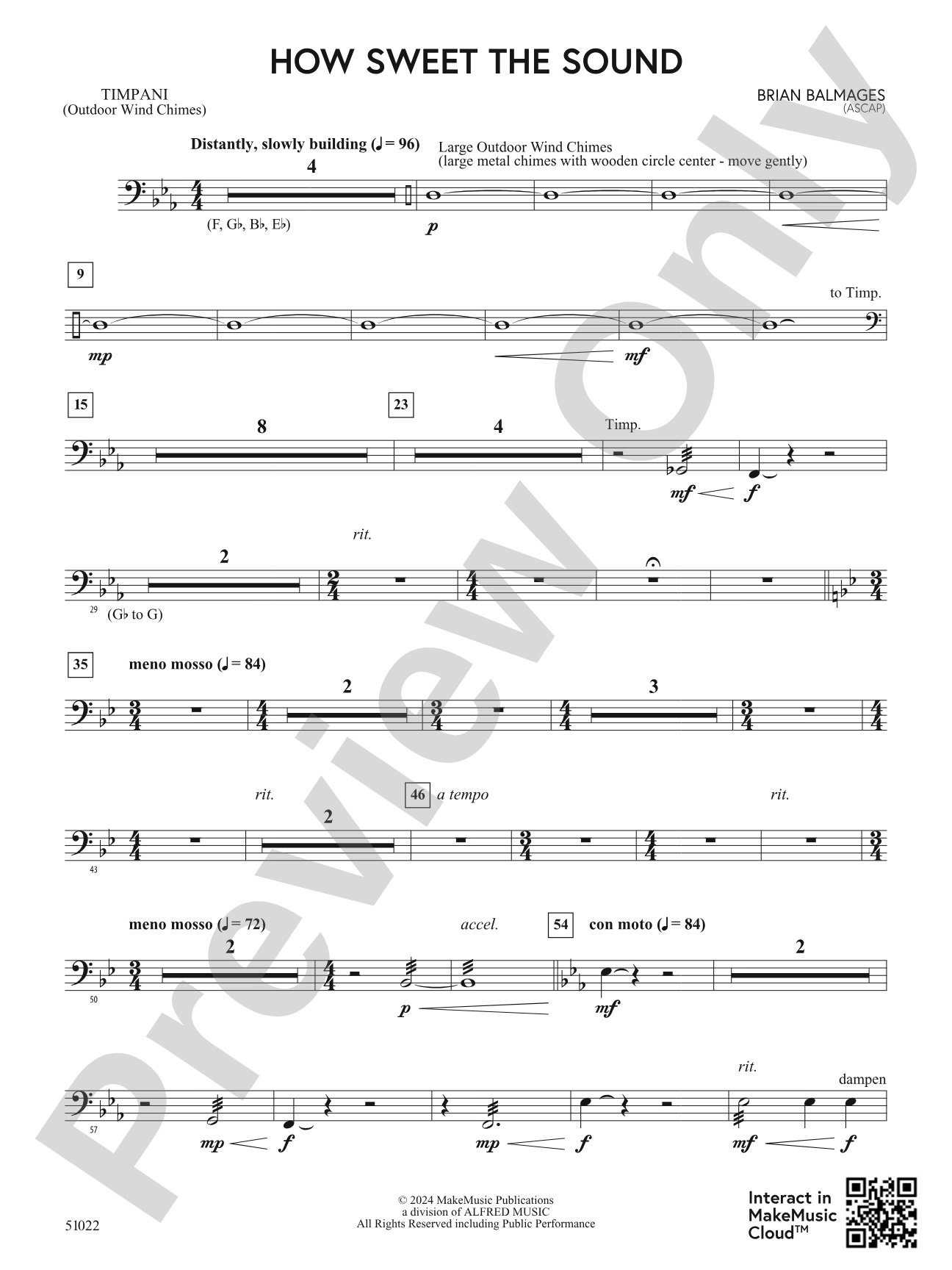

How Sweet the Sound: Timpani
By Brian Balmages
Grade: 3
Item: 00-PC-0019233_TMP
$5.99
Pickup currently not available
Description
How Sweet the Sound, a powerful work by Brian Balmages, explores a multitude of soundscapes and styles as the lyrical melody to "Amazing Grace" slowly unfolds. Largely original, the music draws heavily on gospel styles interspersed with contemporary harmonies, soaring fanfares, and a wash of beautiful colors. The ending will take your breath away. Stunning. (6:20)


Don't just read it, hear it, play along with it, and watch your students grow with it. In MakeMusic Cloud, How Sweet the Sound: Timpani comes alive with professional accompaniment, adjustable tempo, and built-in practice tools that turn solo practice into real progress.
Open in the Player
Jump straight in and assign it today.
Start Your Free Trial
Open this title and explore the full library in minutes.
Sample Audio
1
Audio File
--:--
0:00
0:00
Sample Video
Additional Details
Series:
MakeMusic Symphonic Band
Publisher:
MakeMusic Publications
SKU:
00-PC-0019233_TMP
More about this title
About the Composer: Brian Balmages

Brian Balmages has established himself as a composer and conductor of international stature, commanding equal facility across orchestral, band, and chamber idioms. His works have premiered in landmark venues including Carnegie Hall, the Kennedy Center, and the Sydney Opera House, performed by ensembles spanning from professional orchestras to school groups. He is a recipient of the A. Austin Harding Award from the American School Band Directors Association, won the 2020 NBA William D. Revelli Composition Contest, and holds membership in the American Bandmasters Association.
Balmages serves as Director of MakeMusic Publications and Digital Education for Alfred and MakeMusic. His music was performed during the 2013 Presidential Inaugural Prayer Service, and he has received commissions from major institutions including the University of Miami for its presidential inauguration. As a guest conductor, he regularly appears at the Midwest Clinic, College Band Directors Conference, and ensembles worldwide.
Why we love this
Balmages crafts a sophisticated transformation of a beloved hymn that respects its lyrical core while surrounding it with gospel textures, contemporary harmonies, and orchestral colors that keep audiences engaged throughout. The work strikes an ideal balance for Grade 3 bands: musically substantial enough to challenge and reward your ensemble, yet accessible enough that students feel genuine ownership of the piece. That final section truly lives up to its reputation—it's the kind of ending that reminds everyone why they rehearsed so hard.
What to expect
The piece unfolds like a meditation that gradually opens outward, beginning with quiet reverence and moving through waves of warmth, joy, and exultation. Gospel harmonies and driving rhythms eventually give way to soaring fanfares and cascading orchestral colors that feel both triumphant and transcendent. The final moments shimmer with light and affirmation, leaving performers and audience alike breathless.
Who it's for
Grade 3 concert bands seeking repertoire that honors sacred tradition while exploring contemporary musical language. This work suits ensembles ready to engage with gospel idioms, layered textures, and dramatic dynamic contrasts, and directors programming festivals or concert events that welcome both spiritual depth and musical sophistication.
How to get the most out of it
- Balance the soloistic unfurling of the melody against the textural layers beneath it; resist the urge to let accompaniment figures overshadow the hymn's inherent dignity.
- Lean into the gospel inflections with rhythmic elasticity and warmth, particularly in the syncopated passages, without losing structural clarity.
- Shape the dynamic arc toward the climax deliberately and gradually; this is not a piece that should peak early.
- Pay close attention to voicing in the fanfare sections to ensure brightness without shrillness, and let the final wash of sound bloom fully with controlled abandon.
How to use it
Feature this as a centerpiece on a concert program exploring sacred music across styles and eras, pairing it with a traditional hymn arrangement and a contemporary spiritual work. Its emotional arc and broad appeal make it especially fitting for festival competitions or spring concerts where you want to showcase both technical growth and musical maturity. At just over six minutes, it commands full attention without dominating a balanced concert.
Skills your students will build
- Phrasing and shaping of lyrical melody lines within complex harmonic contexts
- Gospel rhythmic inflection and syncopated articulation
- Dynamic control and ensemble balance across layered textures
- Sectional independence while maintaining unified musical intent
- Interpretation of contemporary harmonic language alongside traditional hymnody