
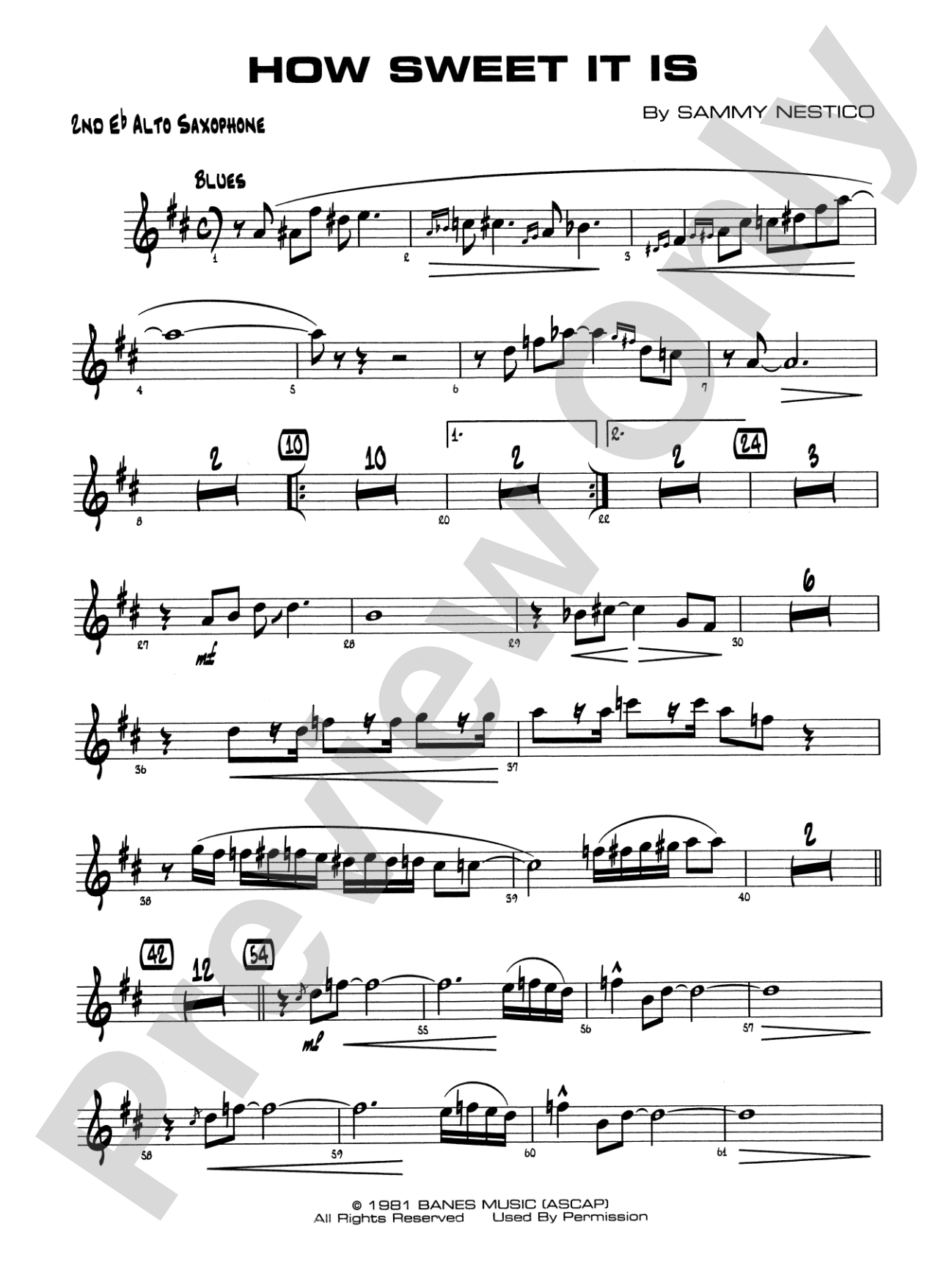

How Sweet It Is: 2nd E-flat Alto Saxophone
By Sammy Nestico
Grade: 4.5 (Medium Advanced / Difficult)
Item: 00-PC-0002435_AX2
$3.00
Pickup currently not available
Description
A medium groove swing tune that fits like an old shoe---so comfortable and everything works just right. Composed and arranged by the legendary Sammy Nestico for the late Harry "Sweets" Edison, this chart screams Count Basie. And speaking of swinging, there is a glorious ensemble section that brings it all together so sweetly! Sammy includes solo space for trumpet, piano, second alto sax, tenor sax, and trombone. This chart is not technically difficult, but dynamics and cohesive ensemble playing are a must. A wonderful chart that belongs in every jazz library!


Don't just read it, hear it, play along with it, and watch your students grow with it. In MakeMusic Cloud, How Sweet It Is: 2nd E-flat Alto Saxophone comes alive with professional accompaniment, adjustable tempo, and built-in practice tools that turn solo practice into real progress.
Open in the Player
Jump straight in and assign it today.
Start Your Free Trial
Open this title and explore the full library in minutes.
Sample Audio
1
Audio File
--:--
0:00
0:00
Sample Video
No sample videos found.
Additional Details
Series:
Quincy Jones & Sammy Nestico Premier Jazz
Publisher:
Alfred Music
Page Count:
63
SKU:
00-PC-0002435_AX2
More about this title
About the Composer: Sammy Nestico
Sammy Nestico stands as one of the most prolific and respected big band arrangers in jazz history. His work with the Count Basie Orchestra, the Woody Herman band, and countless other ensembles shaped the sound of modern jazz writing for over six decades. Known for his clarity of voice leading, his ability to balance accessibility with sophistication, and his genuine gift for bringing out the best in ensemble sections, Nestico composed and arranged hundreds of charts that remain central to jazz repertoire.
Nestico's genius lies in writing that swings hard without requiring virtuosic technical facility from every player. His orchestrations are singularly efficient: every note serves the overall sound, dynamics and balance fall naturally into place when the fundamentals are solid, and soloists are given room to breathe within contexts that enhance rather than overshadow them. He has been a mentor to generations of jazz musicians and a trusted voice in jazz education.
Why we love this
Nestico's touch is unmistakable here: a chart that grooves with the ease and confidence of a Basie standard, yet remains genuinely playable by high school ensembles when the section work is solid. The solo opportunities span the front line and rhythm section intelligently, and that ensemble section truly delivers the payoff. This is writing that rewards clean fundamentals and collective listening rather than raw technique.
What to expect
The tune settles into a medium swing groove that feels lived-in from the first measure, like putting on a favorite jacket. That Basie influence runs through the DNA of the voicings and rhythmic sensibility, and when the ensemble locks in on those tutti sections, there's an unmistakable warmth and inevitability to the sound. This is deeply comfortable, deeply swinging music.
Who it's for
Jazz ensembles at the advanced high school level and beyond will find this chart sits in the sweet spot between musicality and playability. Directors programming a mature ensemble looking for a groove-based vehicle that teaches ensemble balance and swing phrasing without requiring lead players to stretch into unsafe ranges will return to this one repeatedly.
How to get the most out of it
- Lock the section heads and punches first, before soloists enter their improvisations. A tight ensemble foundation makes every solo sound better.
- Balance the ensemble swells dynamically so no single voice overwhelms; Nestico scored these blend passages to sing as a unified statement, not as competing lines.
- Give soloists space to breathe during their statements, but keep the rhythm section locked and energized underneath. The groove carries everything.
- Shape the tune's phrasing in phrases, not measure-by-measure. This music thinks in four-bar and eight-bar units, so conduct accordingly.
How to use it
Pair this with other Nestico arrangements or classic big band repertoire to anchor a concert around the Basie tradition and the lineage of straight-ahead swinging jazz. It's equally at home in a casual jazz night as it is in a more formal concert setting. Consider programming it mid-set when your ensemble is thoroughly warmed up and ready to settle into serious groove work.
Skills your students will build
- Reading and executing precise dynamic control within ensemble voicings
- Playing behind the beat for authentic swing feel
- Responding to section-mate tuning and balance without a conductor's guidance
- Supporting soloists with rhythmic stability and groove consistency
- Phrasing swing articulations with long lines rather than note-by-note attacks