

How Merrily We Live: SSA Choral Octavo
Music by Michael East / arr. Russell Robinson
Item: 00-PO-0006516
$2.25
Minimum order quantity: 20 copies
Pickup currently not available
Description
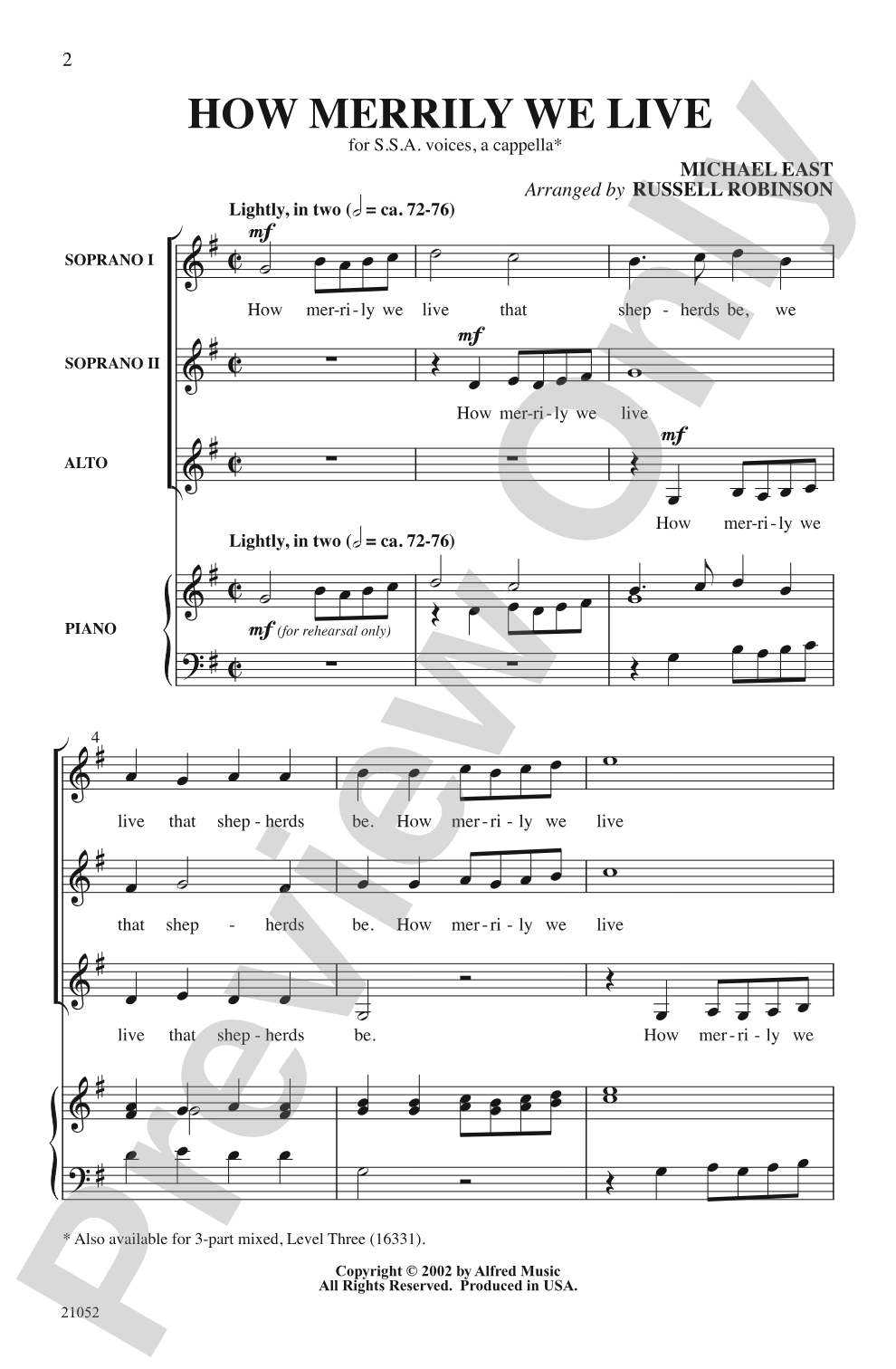
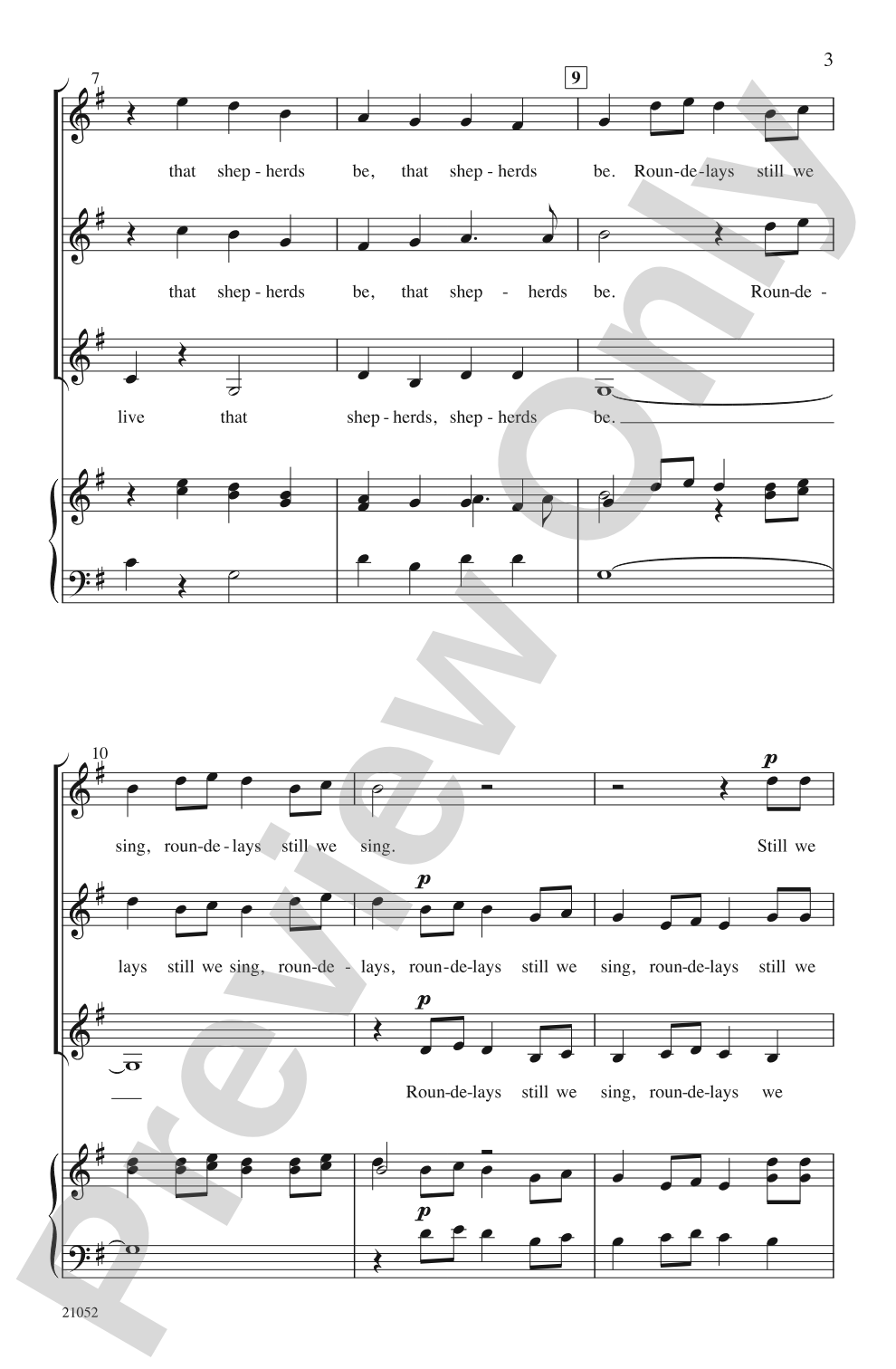
Another well-edited arrangement by Russell Robinson of a light and spirited work from the madrigal repertoire. It's the perfect choice for any SSA or 3-part mixed choir, with or without experience in madrigal singing. May be performed a cappella or with piano doubling the voices. Perfect for developing part singing in today's treble and mixed choirs.


How Merrily We Live: SSA Choral Octavo isn't in MakeMusic Cloud just yet...but it could be. Let us know you'd like to see it, and you'll help shape what comes next. In the meantime, start a free trial and dive into thousands of interactive titles your students can play along with today.
Request This Title
Tell us you want it.
Start Your Free Trial
Explore everything that's ready to play right now.
Sample Audio
1
Audio File
--:--
0:00
0:00
Sample Video
No sample videos found.
Additional Details
Series:
Alfred Archive Edition: Alfred Choral Designs
Publisher:
Alfred Music
Page Count:
8
SKU:
00-PO-0006516
More about this title
About the Composer: Michael East
Michael East (1580-1648) was an English composer and organist whose prolific output shaped the development of the English madrigal and sacred music during the late Tudor and Stuart periods. His secular vocal works are celebrated for their melodic charm, rhythmic vitality, and accessibility, making them enduring favorites in choral education. East's gift for writing singable lines that accommodate both skilled and developing singers has kept his madrigals in active use for centuries.
Why we love this
Russell Robinson's arrangement captures the infectious joy of East's original without oversimplifying the voice leading, giving your singers genuine part-singing challenges while keeping the text and melody front and center. The piece works beautifully both a cappella and with piano support, so you can choose based on your ensemble's readiness and rehearsal time. It's a workhorse selection that develops musicianship while actually sounding fun to perform.
What to expect
Bright, playful, and inviting, this madrigal bubbles with the lighthearted humor characteristic of the genre. The spirited text and flowing vocal lines create an immediate sense of joy and forward motion that engages audiences and singers alike.
Who it's for
This octavo works for SSA or 3-part mixed ensembles at any level, from high school choirs new to madrigal singing to experienced groups looking for a lighter repertoire choice. Its moderate difficulty and energetic character make it especially valuable for directors developing part-singing skills in treble and mixed voice choirs.
How to get the most out of it
- Balance the parts carefully during rehearsal by having each voice part sustain pitches while others sing the text; this trains ears and prevents any single line from dominating.
- If performing a cappella, establish a clear pitch and tempo in the first few measures before the choir enters, and consider adding a brief unaccompanied passage near the end to showcase independent singing.
- Emphasize the natural speech rhythms of the text to help singers avoid stiffness; madrigals thrive on conversational phrasing even within strict meter.
- When using piano doubling, keep the accompaniment transparent so singers can still hear each other's parts rather than relying on harmonic support.
How to use it
Program this piece on a concert of madrigals or lighter secular works to showcase your choir's range and versatility, or use it mid-season as a morale booster during intensive rehearsal blocks. Its eight pages make it manageable alongside more demanding material, and the a cappella option gives you flexibility in concert planning.
Skills your students will build
- Independent part singing and voice independence
- Reading and performing authentic madrigal style and text expression
- Ensemble blend and balance across three voice parts
- A cappella intonation and sustained pitch control