
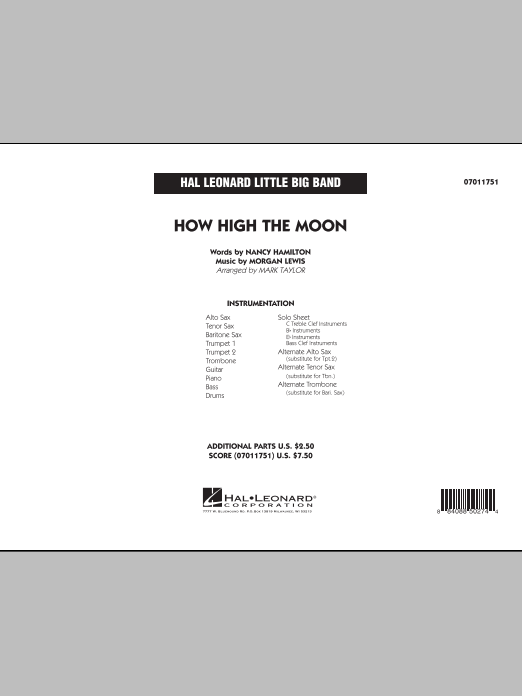

How High The Moon: Jazz Ensemble Conductor Score & Parts
By Morgan Lewis / By Nancy Hamilton / Arranged by Mark Taylor
Grade: 4
Item: 35-PK00158673
$50.00
Pickup currently not available
Buy Extra Parts (Digital PDF Download)
| Product | Price | Quantity |
|---|---|---|
| How High The Moon - Conductor Score (Full Score) | $7.50 | |
| How High The Moon - Alto Sax | $6.00 | |
| How High The Moon - Tenor Sax | $6.00 | |
| How High The Moon - Baritone Sax | $6.00 | |
| How High The Moon - Trumpet 1 | $6.00 | |
| How High The Moon - Trumpet 2 | $6.00 | |
| How High The Moon - Trombone | $6.00 | |
| How High The Moon - Guitar | $6.00 | |
| How High The Moon - Piano | $6.00 | |
| How High The Moon - Bass | $6.00 | |
| How High The Moon - Drums | $6.00 | |
| How High The Moon - C Solo Sheet | $6.00 | |
| How High The Moon - Bb Solo Sheet | $6.00 | |
| How High The Moon - Eb Solo Sheet | $6.00 | |
| How High The Moon - Bass Clef Solo Sheet | $6.00 | |
| How High The Moon - Alternate Alto Sax | $6.00 | |
| How High The Moon - Alternate Tenor Sax | $6.00 | |
| How High The Moon - Alternate Trombone | $6.00 |
Parts Added to Cart!
Description
Using a wide variety of scoring styles, this great-sounding arrangement takes full advantage of the six-horn format. There is solo space for tenor and trumpet along with nicely scored full ensemble passages. A terrific rendition of this classic tune. (Grade 4)


How High The Moon: Jazz Ensemble Conductor Score & Parts isn't in MakeMusic Cloud just yet...but it could be. Let us know you'd like to see it, and you'll help shape what comes next. In the meantime, start a free trial and dive into thousands of interactive titles your students can play along with today.
Request This Title
Tell us you want it.
Start Your Free Trial
Explore everything that's ready to play right now.
Sample Audio
No sample audio found.
Sample Video
No sample videos found.
Additional Details
Publisher:
Hal Leonard
SKU:
35-PK00158673
More about this title
About the Composer: Morgan Lewis
Morgan Lewis composed "How High the Moon" in 1940, collaborating with lyricist Nancy Hamilton for this standard that would become a jazz repertoire cornerstone. His gift for writing singable, accessible melodies with harmonic sophistication made him a fixture in American musical theater and popular music. Generations of jazz musicians have found his compositions ideal vehicles for both straight renditions and creative exploration.
Why we love this
Mark Taylor's arrangement respects the tune's melodic integrity while giving every section meaningful work. The six-horn voicing opens up textural possibilities that keep the ensemble engaged throughout, and the distributed solo opportunities for tenor and trumpet mean your soloists have genuine moments to shine without overshadowing the ensemble sound.
What to expect
Bright and buoyant, with the kind of melodic charm that makes listeners smile. The arrangement bounces between intimate solo moments and driving full-ensemble swing, creating a performance that feels both polished and full of life.
Who it's for
Jazz ensemble directors looking for a Grade 4 chart that combines accessibility with genuine musical interest. Your musicians will find clear parts to read and rewarding ensemble writing; your audience will hear a recognizable standard played with craft and clarity.
How to get the most out of it
- Balance the tenor and trumpet solos so they project clearly but sit naturally within the ensemble texture. These aren't showpieces designed to dominate; they're conversations with the band.
- Shape the full ensemble passages with attention to the voicing colors. Taylor's arranging uses horns in complementary combinations, and letting those blend qualities come through makes the arrangement sound richer than the parts might suggest on first read.
- Nail your tempo and keep it steady through the form. This tune lives in grooved swing, and rubato or fluctuation will disrupt the pocket your rhythm section establishes.
How to use it
Open a jazz concert with this one. Its recognizable melody draws in listeners who may not attend jazz regularly, and it sets an upbeat tone without eating up valuable rehearsal time on technical obstacles. You could also pair it with other standard arrangements to showcase how different composers voice the same form.
Skills your students will build
- Reading and executing idiomatic jazz phrasing across horn section voicings
- Trading solo space responsibly within an ensemble context
- Maintaining groove and pocket in swing style
- Balancing solo projection with ensemble blend