
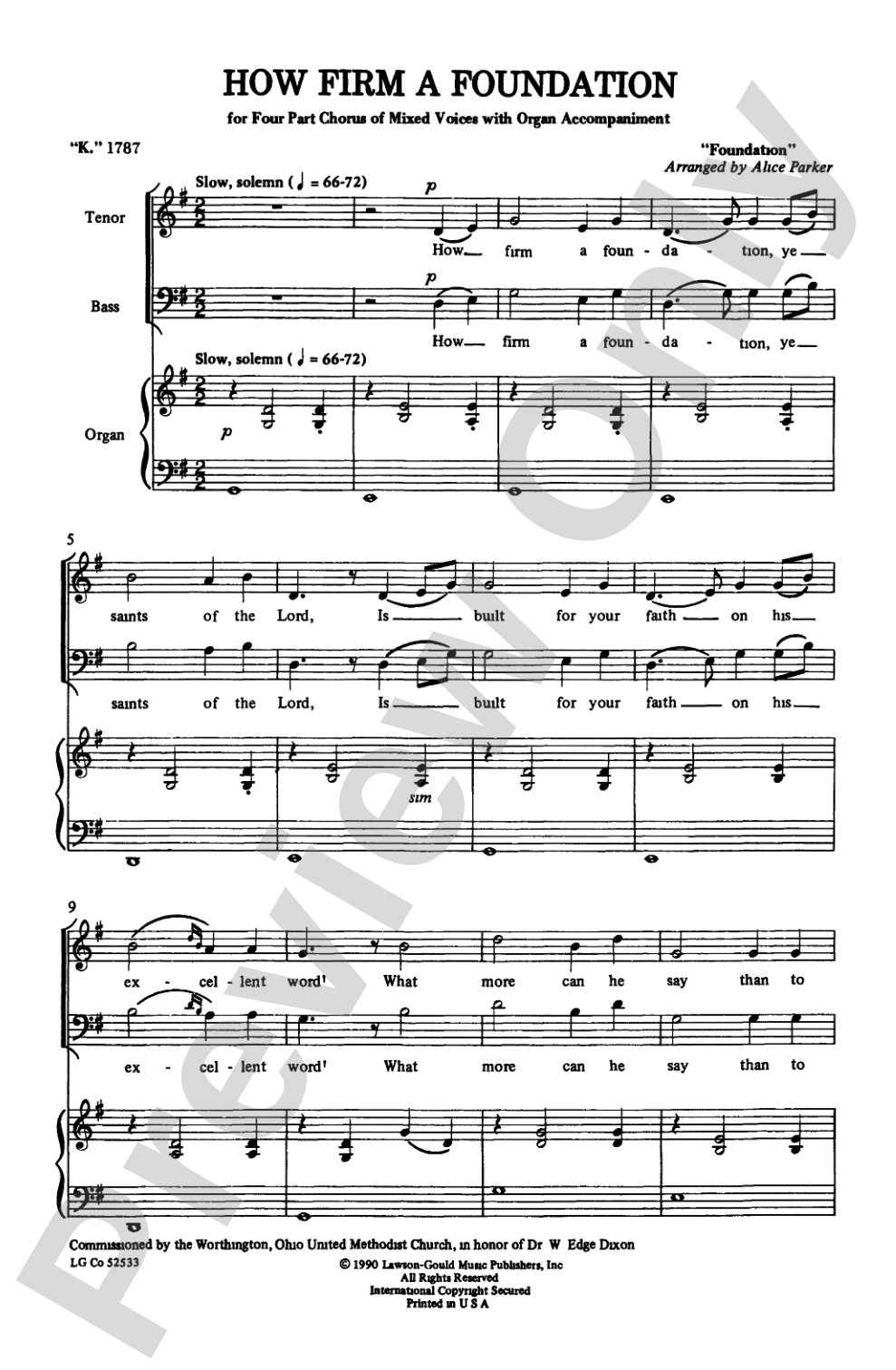
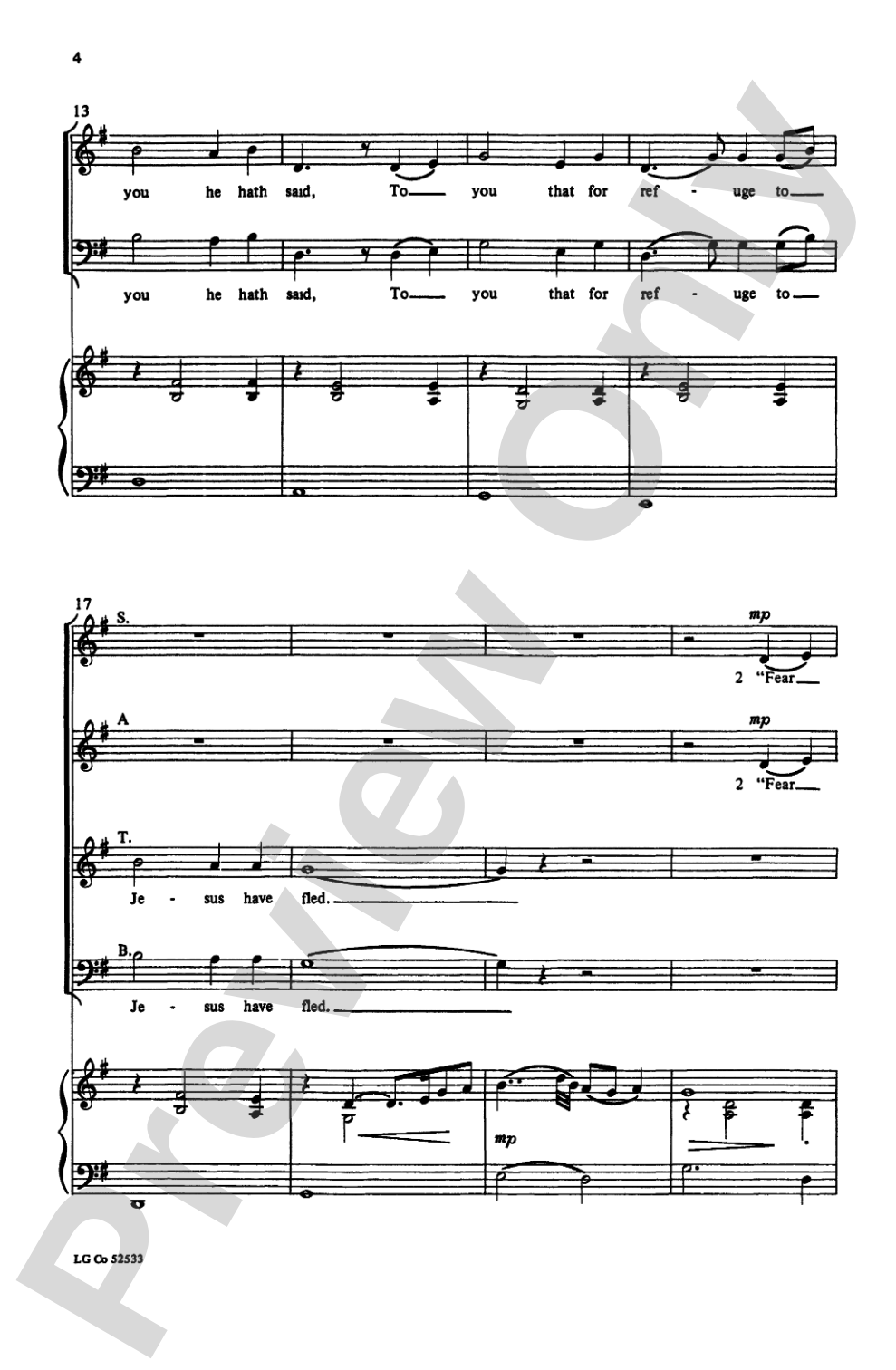
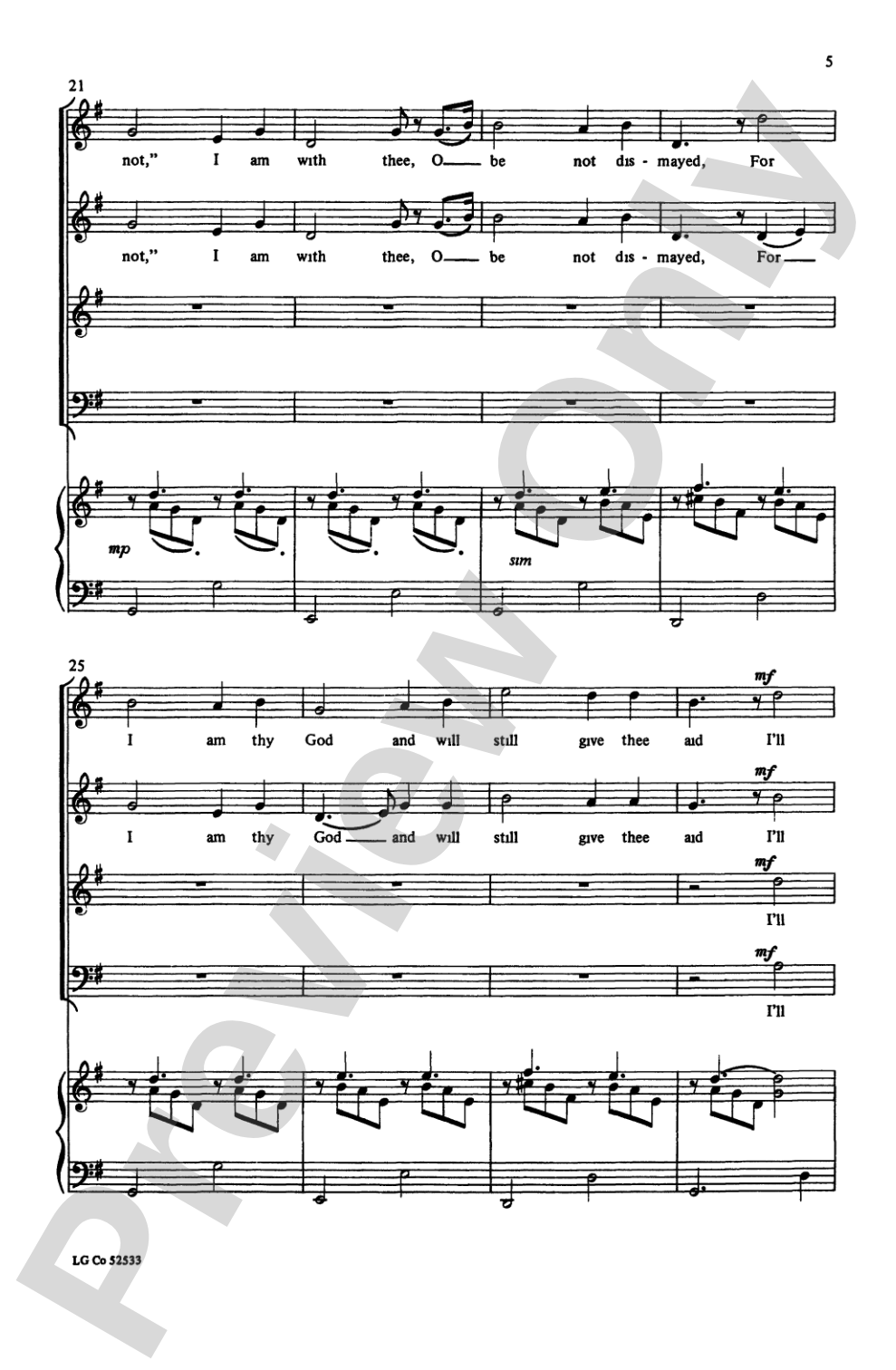

How Firm a Foundation: SATB Choral Octavo
Arr. Alice Parker
Item: 00-PO-0005067
$2.95
Minimum order quantity: 20 copies
Pickup currently not available
Description


How Firm a Foundation: SATB Choral Octavo isn't in MakeMusic Cloud just yet...but it could be. Let us know you'd like to see it, and you'll help shape what comes next. In the meantime, start a free trial and dive into thousands of interactive titles your students can play along with today.
Request This Title
Tell us you want it.
Start Your Free Trial
Explore everything that's ready to play right now.
Sample Audio
No sample audio found.
Sample Video
No sample videos found.
Additional Details
Series:
Alfred Archive Edition: Alice Parker Choral Series
Publisher:
Alfred Music
Page Count:
16
SKU:
00-PO-0005067
More about this title
About the Arranger: Alice Parker

Alice Parker's career bridged composition, conducting, and pedagogy with a singular focus on the human voice. She studied at Smith College and Juilliard, where her partnership with Robert Shaw led to dozens of collaborative settings of American folksongs, hymns, and spirituals that remain core repertoire for choirs everywhere. Over five hundred published works showcase her range, from opera to cantata to individual anthem, but her deepest commitment was always to melody itself.
In 1985, Parker founded Melodious Accord, Inc., an organization dedicated to exploring how melody shapes congregational singing and choral expression. She authored influential texts on melodic style, choral improvisation, and church music practice, including revised editions of her essays on song leading. Her honors include the Robert Shaw Award from the American Choral Directors Association, the Harvard Glee Club Foundation Medal, and six honorary doctorates. Parker's work with the Hymn Society of the United States and Canada, the American Guild of Organists, and Chorus America (where she served as the first Director Laureate) established her as a thought leader in how choirs sing together.
Why we love this
Parker's settings of American sacred hymns carry the distinctive melodic clarity and harmonic sophistication that defined her partnership with Robert Shaw. This arrangement brings both reverence and singability to a beloved tune, making it accessible for community choirs while offering enough textural interest to satisfy more advanced ensembles. Directors appreciate how her voicings honor the melody while creating space for genuine four-part singing.
What to expect
This arrangement settles the listener into quiet reverence while honoring the steadfast character of the hymn text. Parker's harmonies feel both timeless and freshly voiced, creating an intimate moment within worship without demanding virtuosity from singers or listeners.
Who it's for
Church choirs of all skill levels, from community ensembles to university and professional singers, will find this setting rewarding. It works equally well as a standalone anthem or as part of a larger worship service. Conductors leading SATB groups in sacred contexts will appreciate music that respects both the hymn tradition and contemporary choral artistry.
How to get the most out of it
- Let the melody breathe in the soprano line; avoid over-singing harmonies that compete with the tune.
- Shape phrases according to the text's natural punctuation rather than musical bar lines, allowing breath points that match the hymn's devotional character.
- Balance the lower three parts carefully so they support rather than anchor the piece; clarity matters more than volume.
- Consider how this works in a service context: this octavo pairs naturally with congregational singing or as a choral meditation within liturgy.
How to use it
Position this as a reflective moment in a service of worship, either as an introit, offertory, or closing anthem. It pairs naturally with congregational hymnody or with other Parker settings of American sacred song. For concert settings, group it with other choral hymn arrangements to explore the breadth of American sacred tradition.
Skills your students will build
- Singing sustained phrases without breathiness or tension
- Balancing harmony parts to support rather than compete with melody
- Shaping text-driven phrasing in hymn settings
- Understanding how SATB voicings can honor a familiar tune while adding harmonic color
- Connecting musical interpretation to liturgical or devotional context