
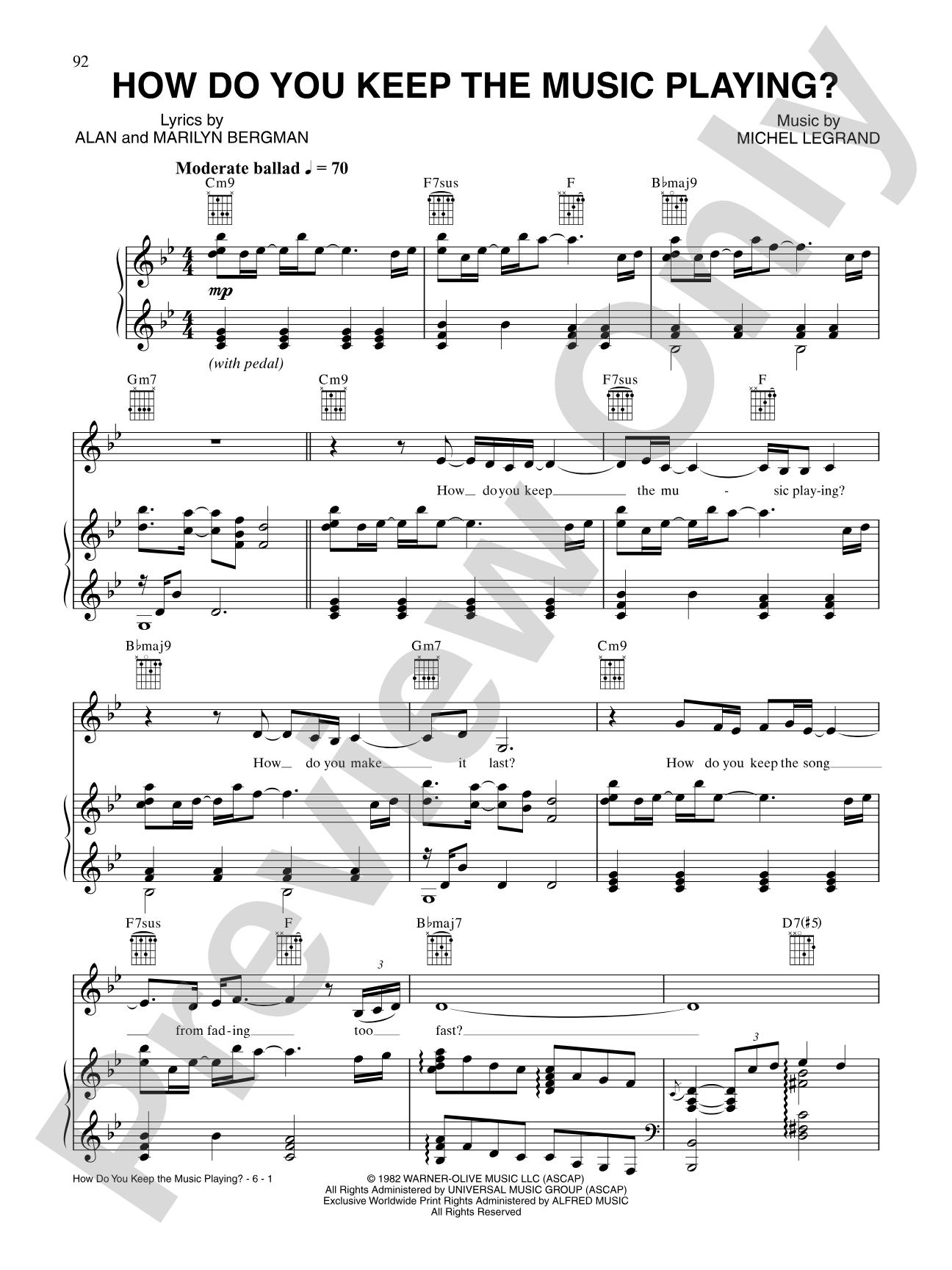
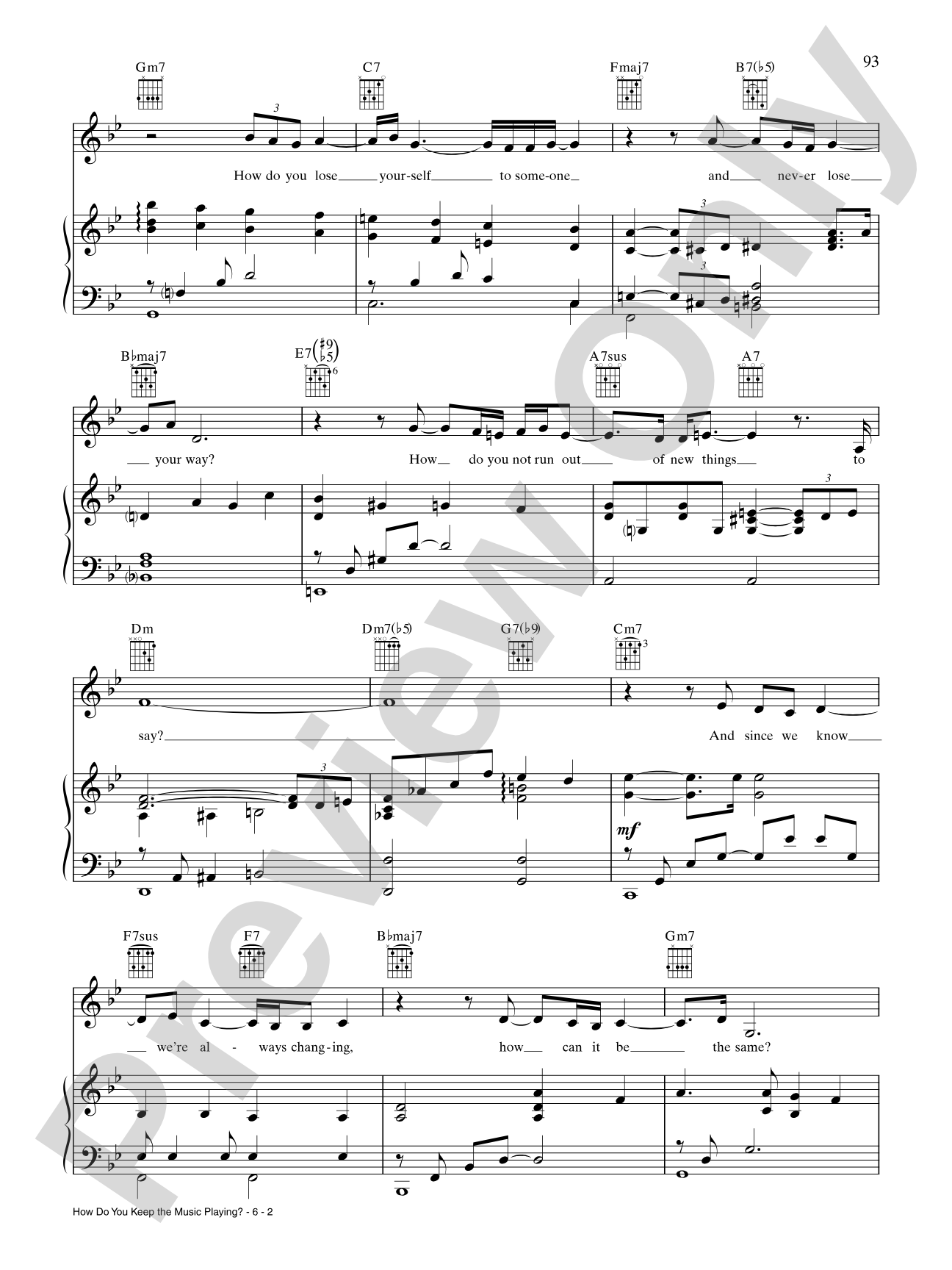

How Do You Keep the Music Playing?: Piano/Vocal/Chords
Celine Dion
Item: 00-PS-0015790
$5.99
Pickup currently not available
Description
Award-winning musical icon Celine Dion has returned with her eleventh English-speaking album, Loved Me Back to Life. Featuring lush memorable arrangements that compliment Dion's famous voice, the album is a true return to form. The album has been painstakingly transcribed for piano and voice so fans can recreate these fabulous songs. Titles: Loved Me Back to Life * Somebody Loves Somebody * Incredible (Duet with Ne-Yo) * Water and a Flame * Breakaway * Save Your Soul * Didn't Know Love * Thank You * Overjoyed (Duet with Stevie Wonder) * Thankful * At Seventeen * Always Be Your Girl * Unfinished Songs * How Do You Keep the Music Playing * Lullabye (Goodnight, My Angel).


How Do You Keep the Music Playing?: Piano/Vocal/Chords isn't in MakeMusic Cloud just yet...but it could be. Let us know you'd like to see it, and you'll help shape what comes next. In the meantime, start a free trial and dive into thousands of interactive titles your students can play along with today.
Request This Title
Tell us you want it.
Start Your Free Trial
Explore everything that's ready to play right now.
Sample Audio
No sample audio found.
Sample Video
No sample videos found.
Additional Details
Publisher:
Alfred Music
Page Count:
108
SKU:
00-PS-0015790
More about this title
About the Composer: Michel Legrand
Michel Legrand (1932-2019) was a French composer and pianist whose gift for melody defined the sound of film and popular music across five decades. His work earned three Academy Awards and countless international honors, yet his true legacy lies in his accessibility: Legrand wrote music that feels effortless to listen to but demands genuine craft from the musicians who perform it.
His songs for singers like Barbra Streisand, Celine Dion, and Stevie Wonder showcase his understanding of the human voice. Legrand knew how to frame a vocalist's strengths through lush harmonic writing and strategic vocal range, making his compositions a masterclass in singer-centered arrangement. For pianists and vocalists, his work offers the rare combination of immediate appeal and harmonic depth.
Why we love this
This collection captures Legrand's signature blend of sophisticated harmonic language and accessible melody, giving singers and pianists material that sounds polished from the start while revealing new interpretive layers with each rehearsal. The piano arrangements support rather than overshadow the vocalist, creating genuine partnership between voice and keyboard that rewards careful listening and intentional collaboration.
What to expect
These songs unfold with warmth and emotional directness. Legrand's melodic lines feel inevitable, never forced, while his harmonies add subtle color and dimension; you hear both simplicity and sophistication at once. Performing this music creates an intimate space between singer and listener, inviting the audience into something personal rather than showy.
Who it's for
Singers preparing recital repertoire, vocal coaches, and accomplished amateur pianists will find this collection immediately performable and musically rewarding. It serves pianists who want substantial popular repertoire with genuine harmonic interest, and vocalists seeking sophisticated songs that sit well for diverse voice types.
How to get the most out of it
- Balance the vocal line against the piano accompaniment by treating the keyboard as a harmonic foundation rather than a competing melodic voice; let Legrand's arrangements breathe around the singer's phrasing.
- Approach the chord symbols as suggestions for voicing rather than rules; recompose your left hand to match your range and the room's acoustics, keeping the harmonic integrity intact.
- Lean into the lush seventh and ninth chords that define Legrand's sound; these extensions carry emotional weight, so voice them clearly rather than rushing through them.
- Mark your breath points and phrase endings in advance, then find piano moments that allow the singer to land each phrase without collision; this requires communication between performer and accompanist.
How to use it
Feature these songs in a recital or concert focused on contemporary popular standards, pairing them with other singer-centered repertoire from the last fifty years. A single song or small cluster of Legrand compositions works well as a transition between classical and modern material, or as an accessible opener that builds rapport with a general audience.
Skills your students will build
- Reading and interpreting chord symbols in a jazz-influenced popular context
- Balancing vocal and instrumental lines in small ensemble settings
- Understanding how harmonic extensions (sevenths, ninths, altered chords) serve emotional expression
- Sustaining legit singing technique through lyrical, speech-like melodies
- Adapting pre-written arrangements to fit individual vocal range and accompanist capability