
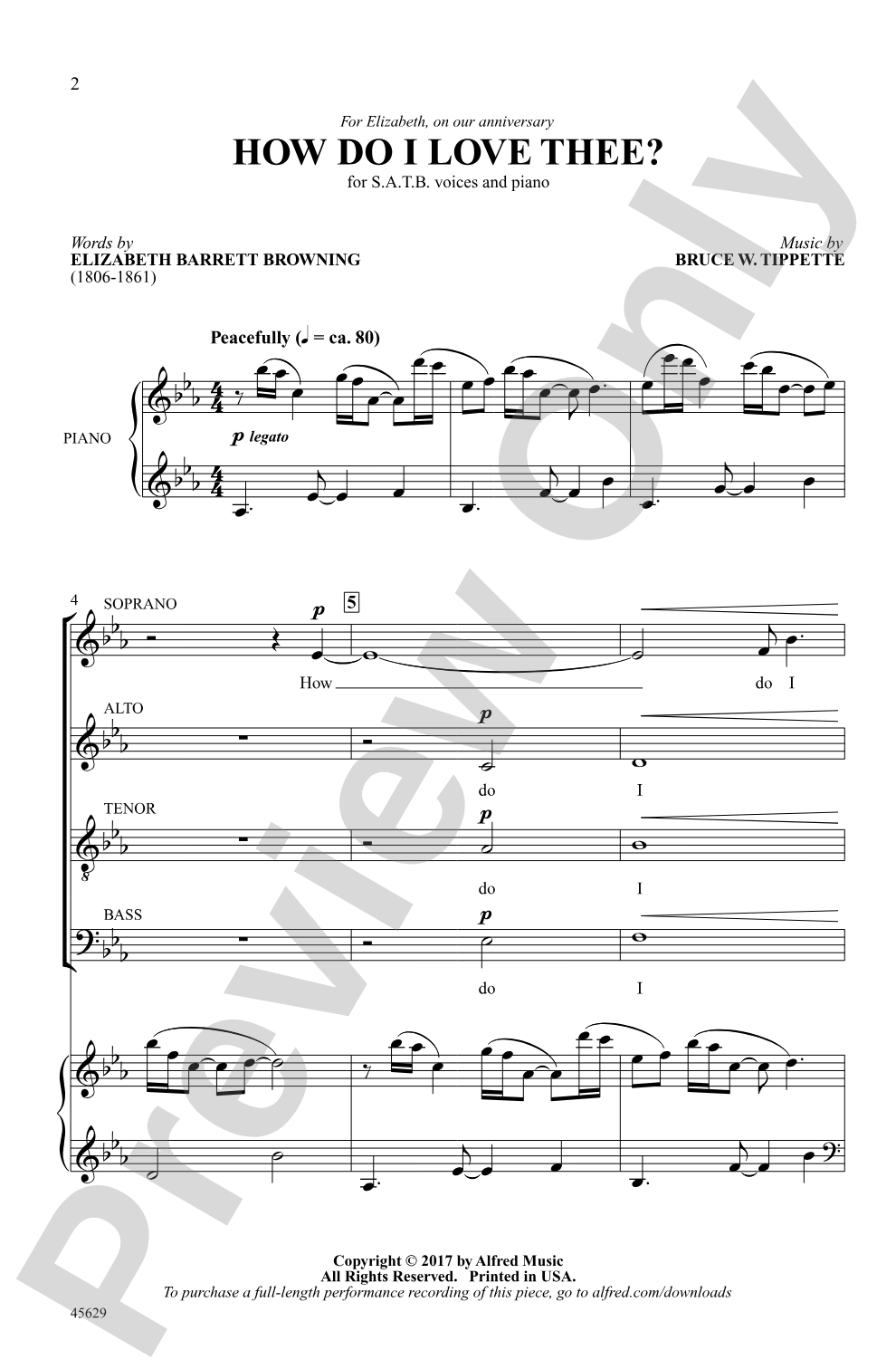
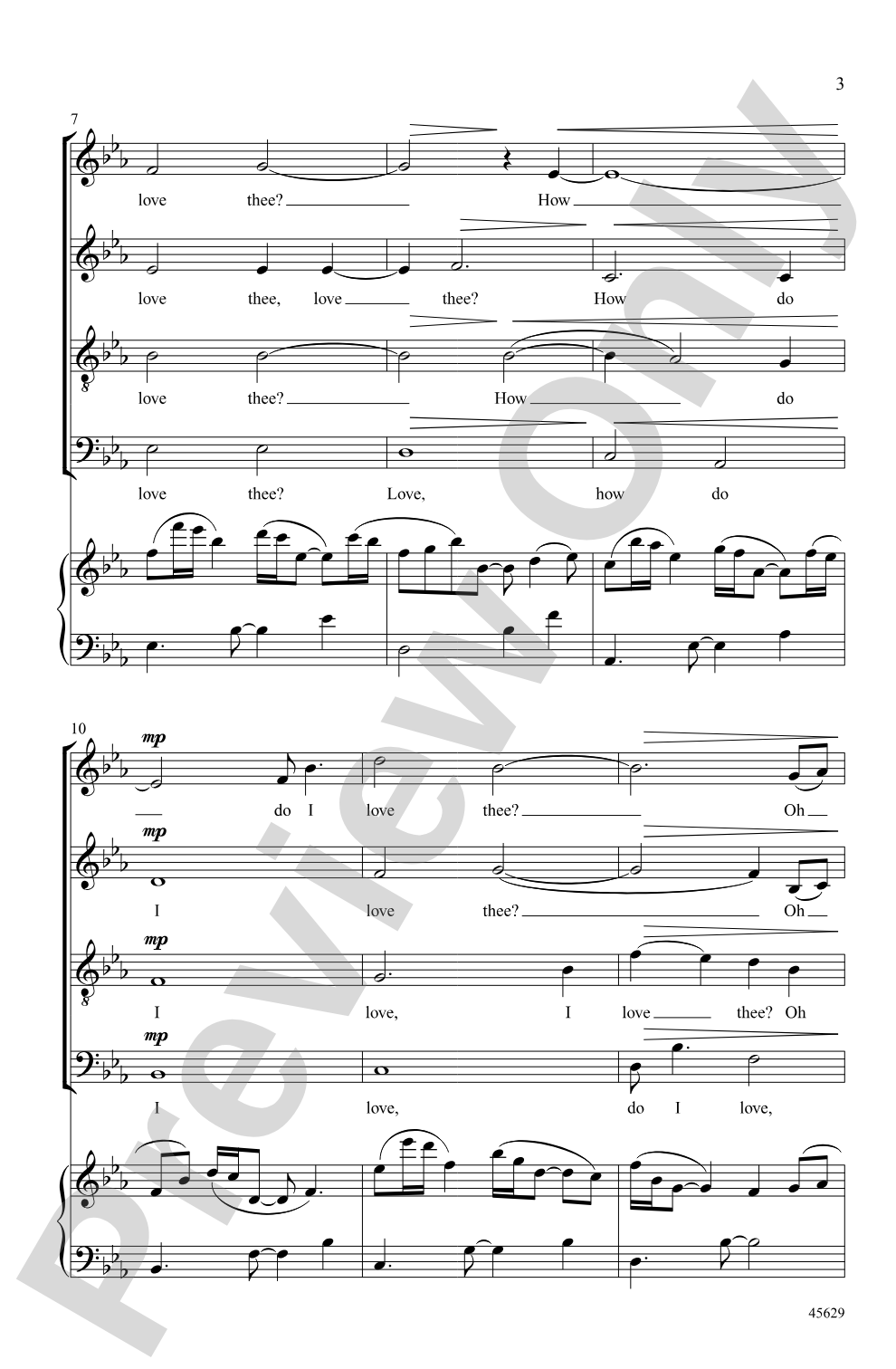
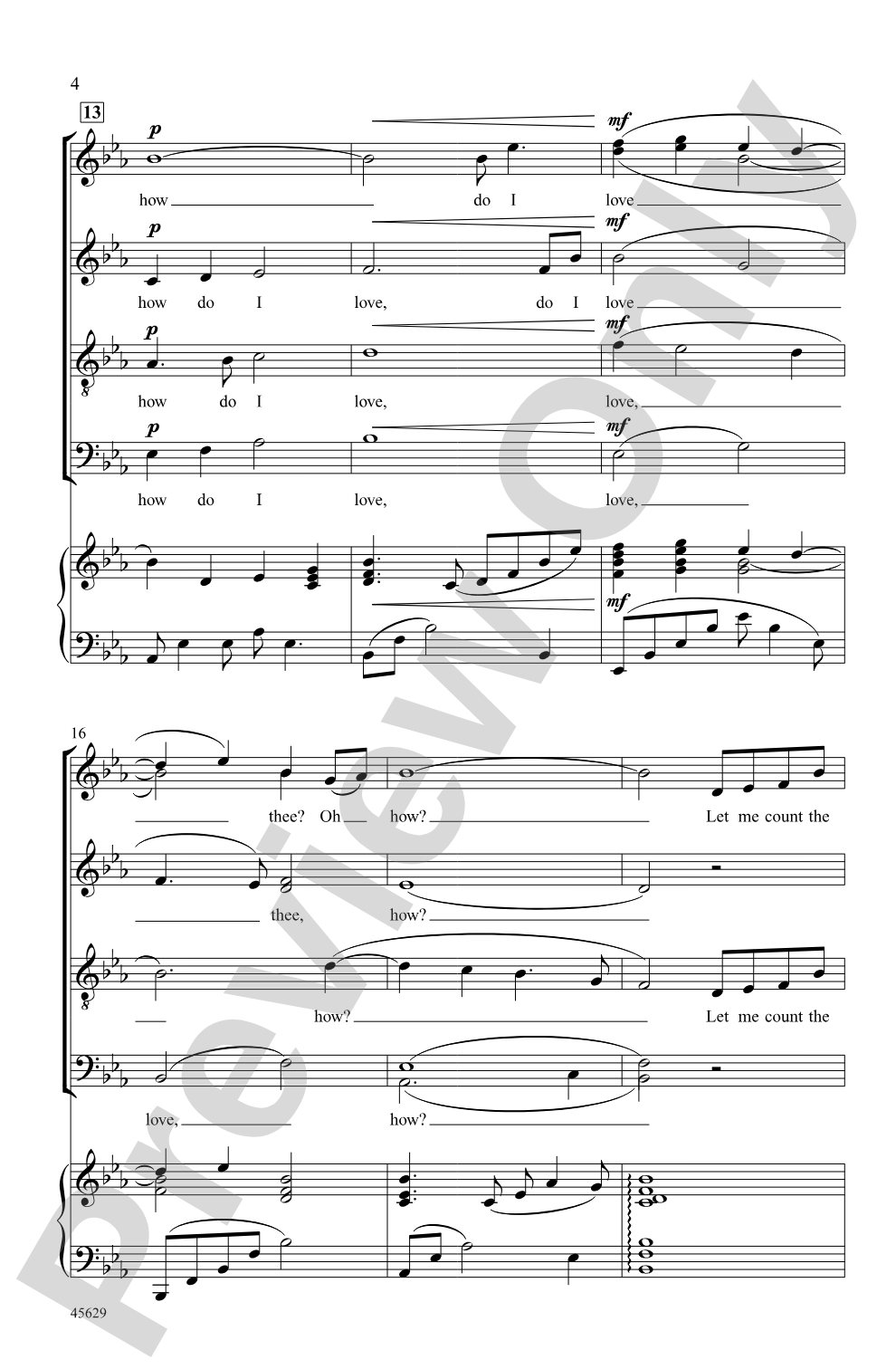

How Do I Love Thee?: SATB Choral Octavo
Words by Elizabeth Barrett Browning, music by Bruce W. Tippette
Item: 00-PO-0005516
$2.00
Minimum order quantity: 20 copies
Pickup currently not available
Related Items
How Do I Love Thee?: SATB Choral Octavo |
$2.00
|
View |
Description
This artistic setting of the classic Elizabeth Barrett Browning poem is well suited for both concert and contest use. Sensitive and sincere.


How Do I Love Thee?: SATB Choral Octavo isn't in MakeMusic Cloud just yet...but it could be. Let us know you'd like to see it, and you'll help shape what comes next. In the meantime, start a free trial and dive into thousands of interactive titles your students can play along with today.
Request This Title
Tell us you want it.
Start Your Free Trial
Explore everything that's ready to play right now.
Sample Audio
1
Audio File
--:--
0:00
0:00
Sample Video
Additional Details
Series:
Lawson-Gould
Publisher:
Alfred Music
Page Count:
16
SKU:
00-PO-0005516
More about this title
About the Composer: Bruce W. Tippette

Bruce W. Tippette combines composition, performance, and teaching across multiple genres and contexts. He earned his Master of Music in composition from the University of North Carolina School of the Arts and his Bachelor of Music in composition/theory and music education from Appalachian State University. His works have received international performances and commissions from both choral and instrumental ensembles, and he has composed for choreography, film, and theater productions including a children's musical.
Tippette's compositional achievements include winning the 2012 Mary Starling Composition Competition for his orchestral work Unconquered, which the Winston-Salem Symphony subsequently performed multiple times. He was selected in 2012, 2013, and 2014 to compose new works as part of an experimental collaboration between Cirque du Soleil and UNCSA. Currently, he teaches music composition, theory, piano, and voice at the Community Music School of UNCSA, serves as Youth Music and Handbell Director at Augsburg Lutheran Church, and works as a collaborative pianist and freelance music engraver.
Why we love this
Tippette brings genuine lyrical sensitivity to Browning's beloved poem without overshadowing the text. The setting respects the intimacy of the words while offering enough harmonic interest and voice leading to sustain a choir's engagement throughout. This balance between restraint and artistry makes it equally compelling in concert and festival settings.
What to expect
This setting captures the tenderness and conviction of Browning's meditation on love. The music unfolds with quiet dignity, allowing the poem's vulnerability to emerge naturally through careful harmonic choices and thoughtful voice leading rather than dramatic gestures.
Who it's for
This octavo serves choirs at the high school and college levels seeking a sincere, poetically grounded piece that works equally well in concert and competitive festival contexts. The writing is accessible without sacrificing musical substance, making it suitable for both experienced ensembles and those building their repertoire with meaningful secular literature.
How to get the most out of it
- Shape the phrase contours through dynamic refinement rather than broad tempo changes; let the text's emotional arc guide your pacing and intensity.
- Balance the SATB texture to ensure the soprano line remains connected to the harmonic foundation rather than sitting isolated above the other voices.
- Work toward clarity in the middle voices, as they often carry the harmonic color that gives this setting its artistic depth.
- Allow moments of silence or space to breathe naturally; resist the urge to push through phrases that benefit from reflective pauses.
How to use it
Program this alongside other settings of literary texts to create a thematic concert focused on poetry and song. Its emotional sincerity and moderate length make it an ideal centerpiece for a program that opens with lighter fare and builds toward more introspective work. It also pairs well in festival rotation with other contemporary secular octavos of similar difficulty.
Skills your students will build
- Sustaining lyrical phrasing across longer lines without losing textual clarity
- Balancing SATB texture with attention to inner voice independence
- Interpreting a secular text that requires emotional sincerity and restraint
- Reading and performing contemporary choral writing with harmonic sophistication