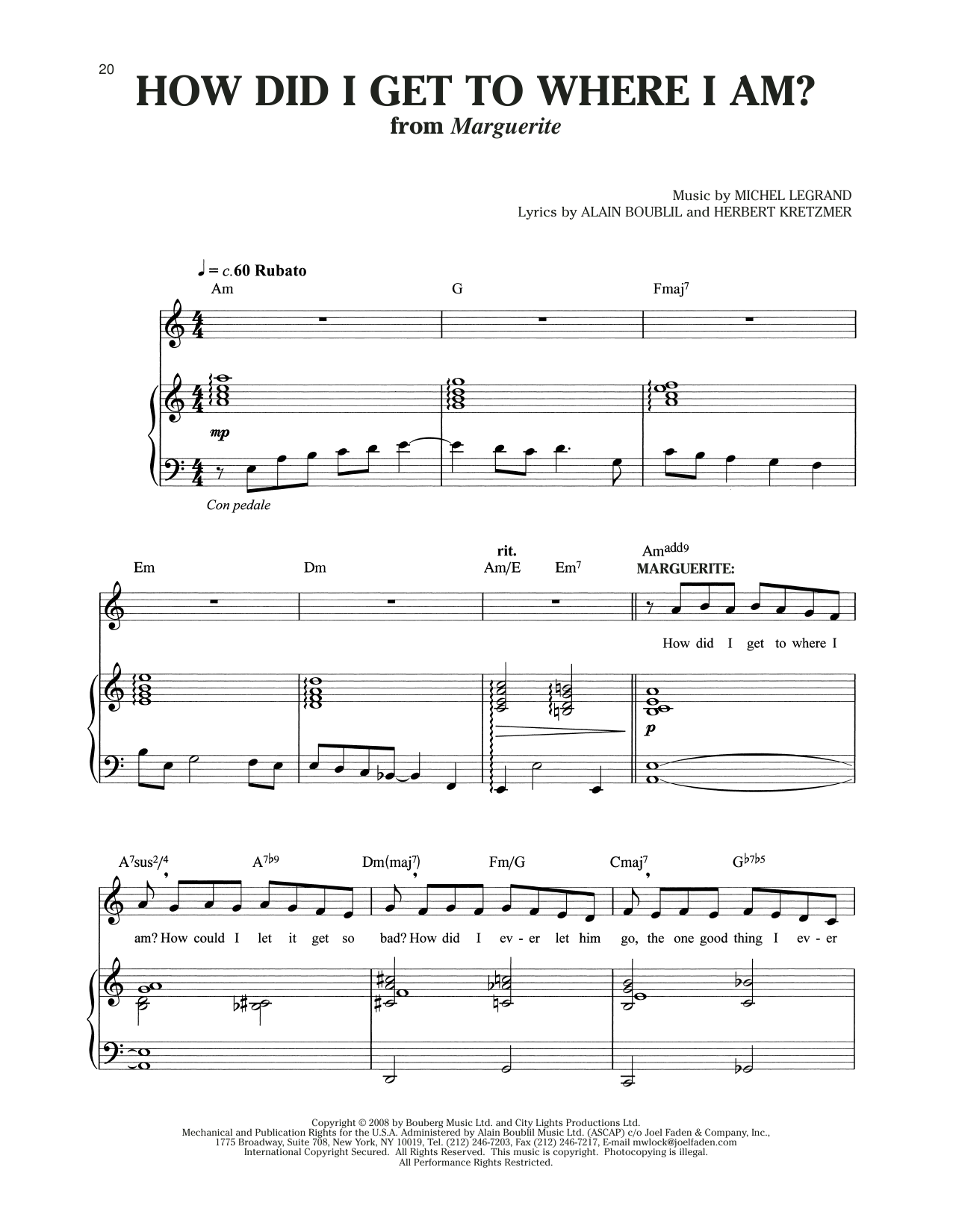
How Did I Get Where I Am? (from Marguerite) Sheet Music Preview

How Did I Get Where I Am? (from Marguerite): Piano Vocal

By Michel LeGrand / By Claude-Michel Schönberg

Item: 35-DS01735384

Digital Download
$5.99
Description

How Did I Get Where I Am? (from Marguerite): Piano Vocal isn't in MakeMusic Cloud just yet...but it could be. Let us know you'd like to see it, and you'll help shape what comes next. In the meantime, start a free trial and dive into thousands of interactive titles your students can play along with today.

Sample Audio
No sample audio found.
Sample Video
Additional Details
Publisher: Hal Leonard
Page Count: 5
SKU: 35-DS01735384

More about this title

About the Composer: Michel LeGrand

Michel LeGrand stands as one of the most prolific film composers of the 20th century, with an output that spans jazz, classical, and popular idioms. His gift for melody and harmonic sophistication made him a natural fit for theatrical work, where his scores for films like The Umbrellas of Cherbourg and The Thomas Crown Affair became standards. LeGrand's piano writing balances accessibility with genuine artistry, making his compositions valuable teaching material for singers and pianists alike.

Beyond his film work, LeGrand composed extensively for stage and concert hall, demonstrating a composer's range that extended far beyond movie music. His collaboration with lyricists and librettists on theatrical projects shows his versatility in adapting his melodic gift to dramatic storytelling. For music educators, his work offers examples of how popular sensibility and musical craft can coexist without compromise.

Why we love this

LeGrand's melodic generosity on display here gives singers genuine material to sink their voices into, while the piano part avoids the trap of mere accompaniment. The song sits beautifully for vocal students working toward musical theater repertoire, offering both accessibility and enough harmonic interest to keep pianists engaged through multiple run-throughs.

What to expect

This is introspection set to music. The song has the quality of someone taking stock of their life, and LeGrand's harmonic language supports that contemplative mood without becoming heavy or overwrought. There's warmth in the writing that invites empathy, even when the character is wrestling with difficult questions.

Who it's for

Singers preparing musical theater audition material or concert repertoire will find a song that showcases legit singing without excessive demands. Piano teachers can use this with advancing students who want exposure to theatrical idioms, and voice instructors working with students interested in crossover styles will appreciate its musical legitimacy.

How to get the most out of it

  • Shape the vocal line with the legit voice, resisting the urge to oversell. LeGrand's melodies breathe naturally when you trust the writing rather than impose extra expression.
  • Work the piano part independently first. The accompaniment contains the harmonic logic that supports the vocal line, so the pianist needs to know it thoroughly.
  • Listen for the phrasing arc across full phrases rather than beating the song into sections. This music rewards singers who think in long lines.
  • Find the character within the song's context. Knowing where this moment lands in Marguerite's arc helps both singer and pianist make intelligent musical choices.

How to use it

This works well in a concert celebrating either musical theater literature or specific composers. Consider pairing it with other LeGrand songs to showcase the breadth of his melodic gift, or use it within a recital program to give singers a moment of character contrast and emotional depth.

Skills your students will build

  • Legit voice technique in a theatrical context
  • Phrasing sung dialogue with musical intention
  • Reading and interpreting jazz-influenced harmonies
  • Piano accompaniment technique for vocal music
  • Sustaining vocal line over longer harmonic progressions

You May Also Like