
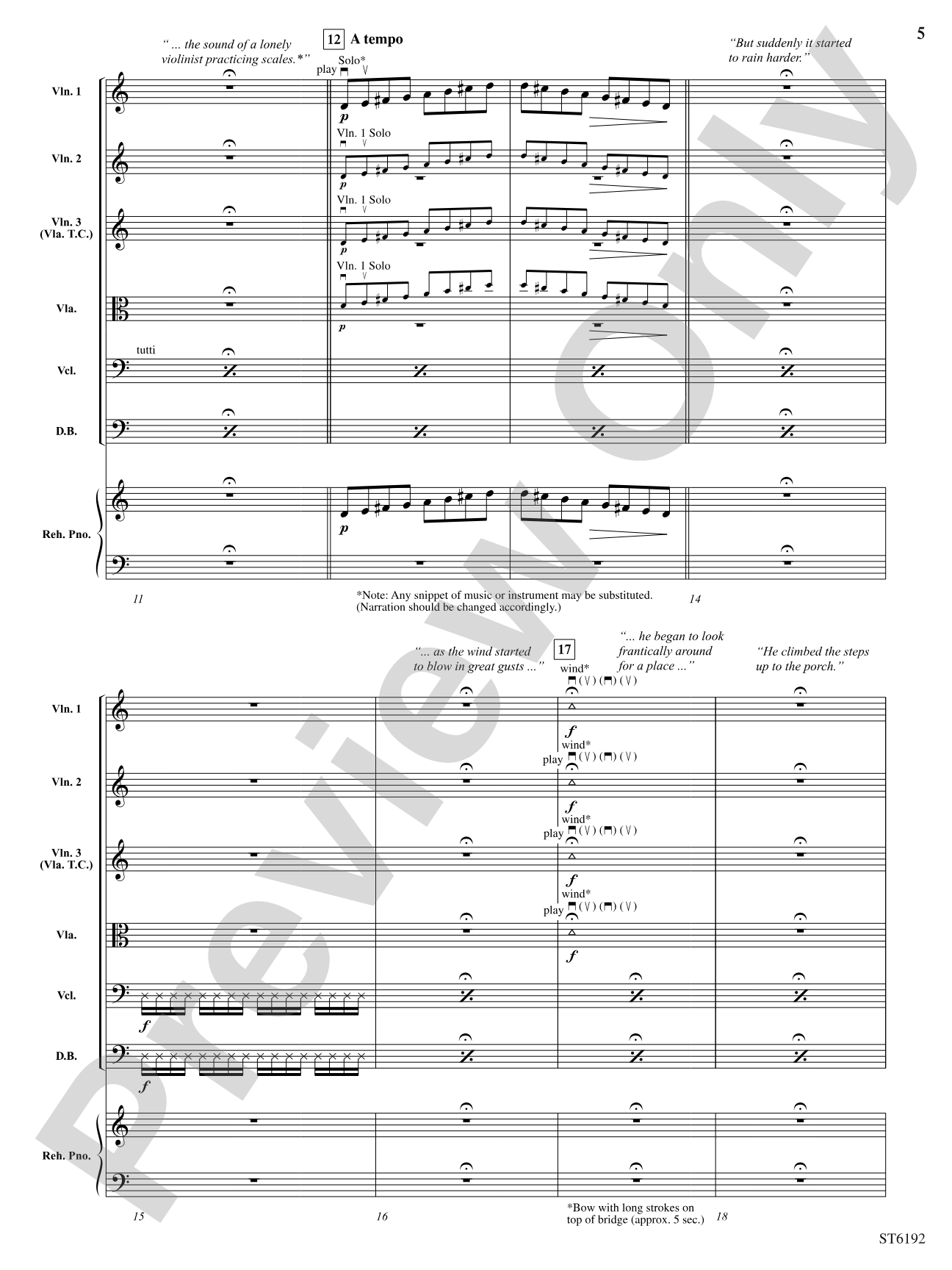
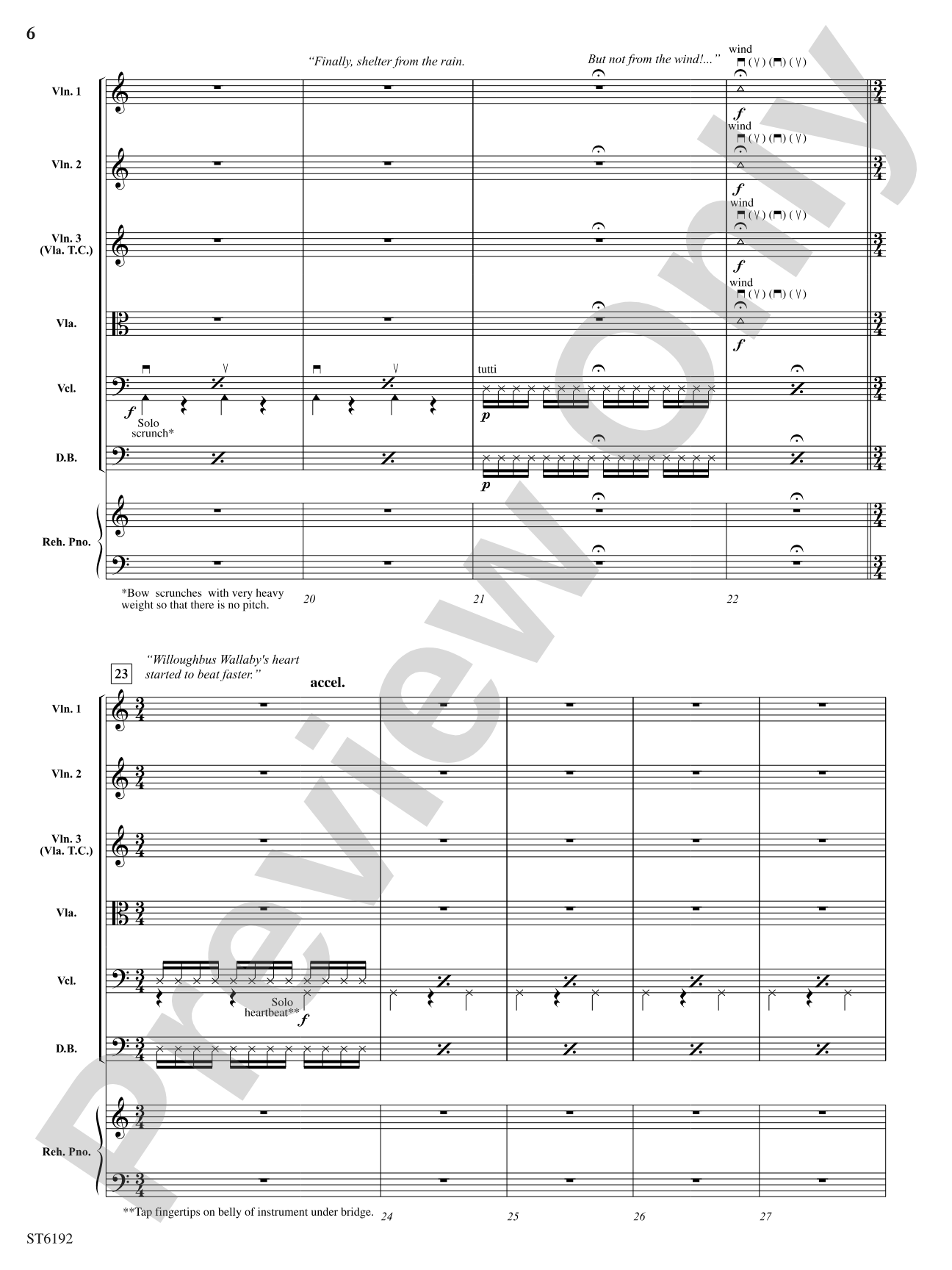
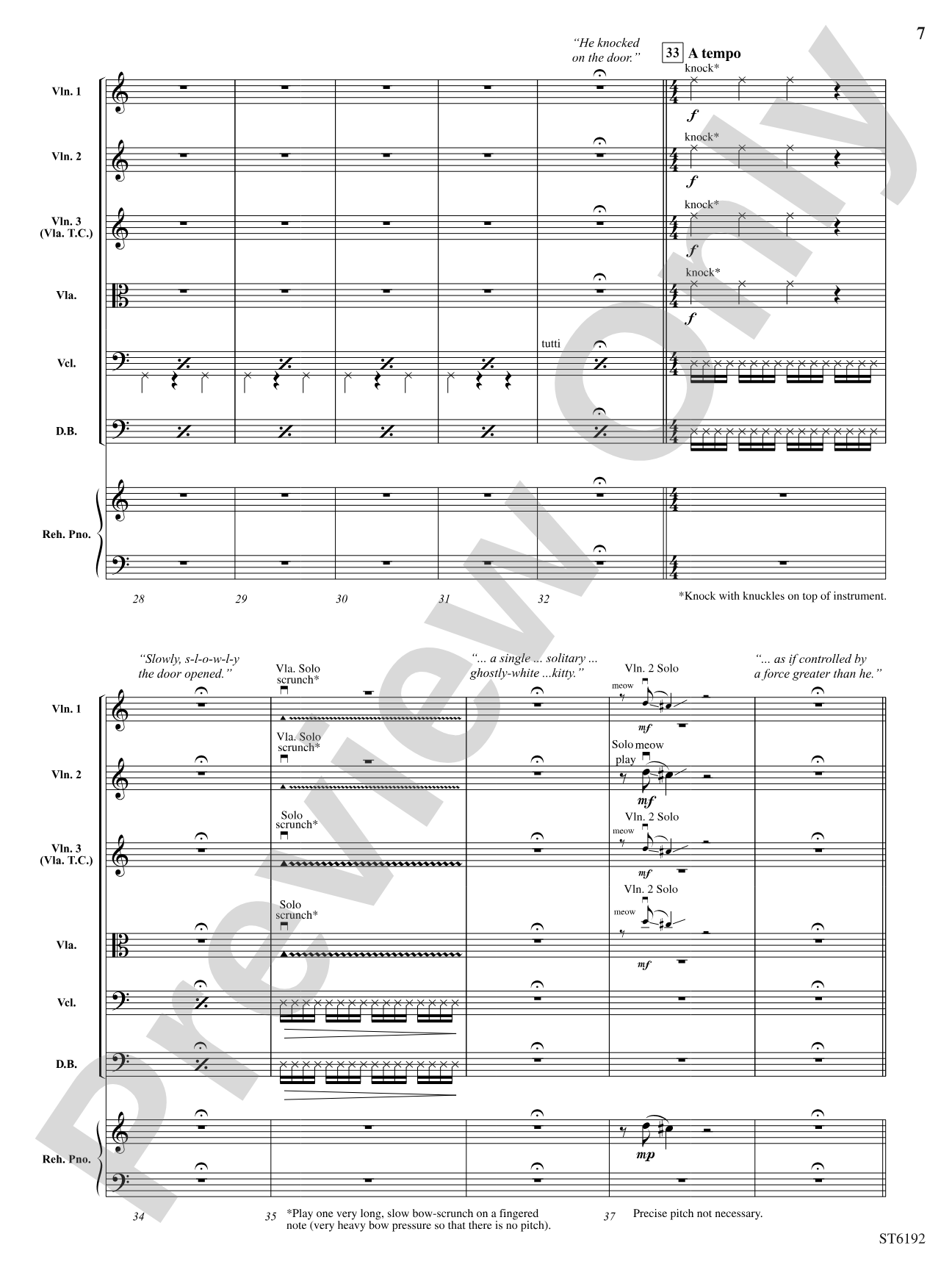
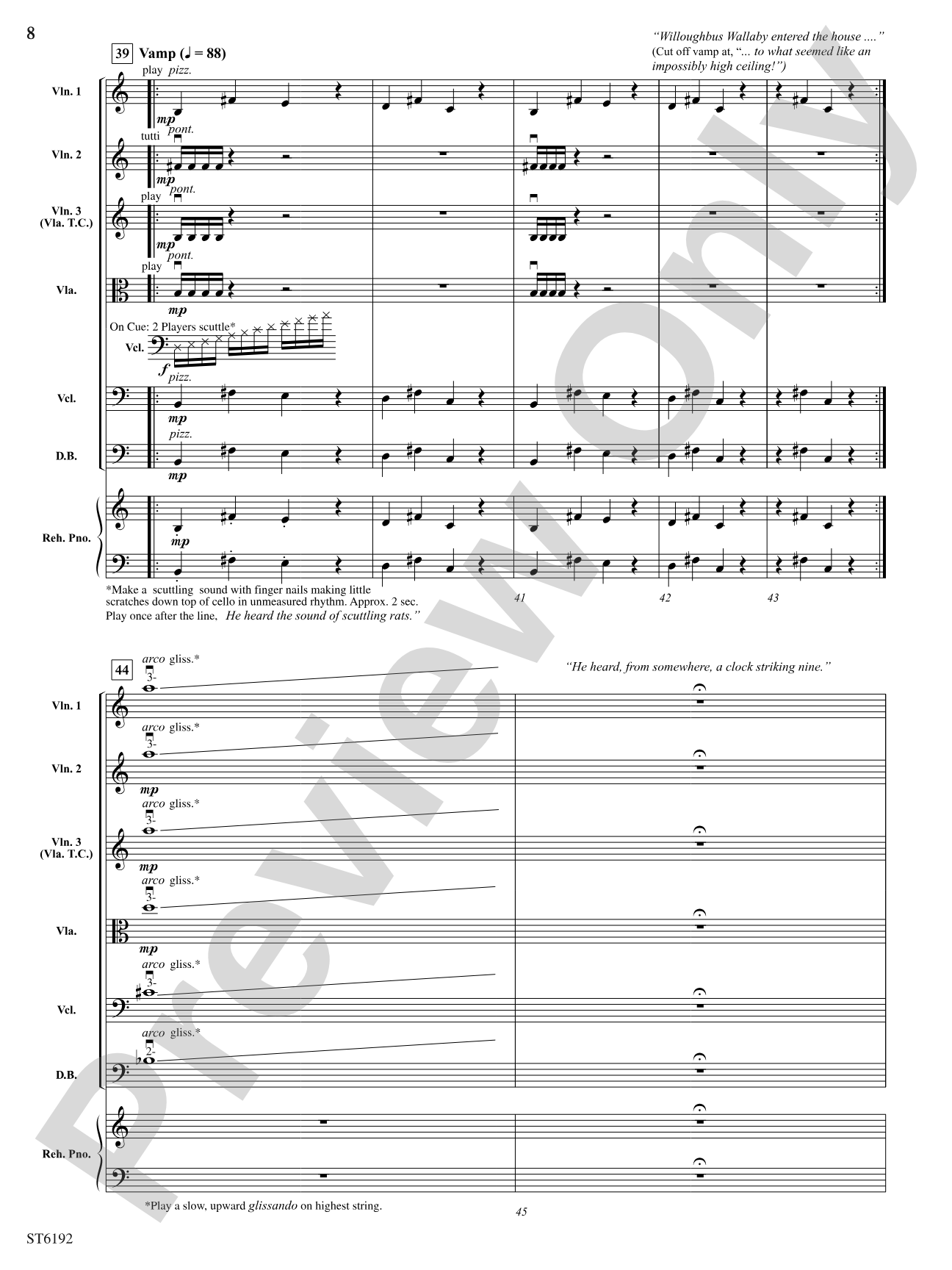
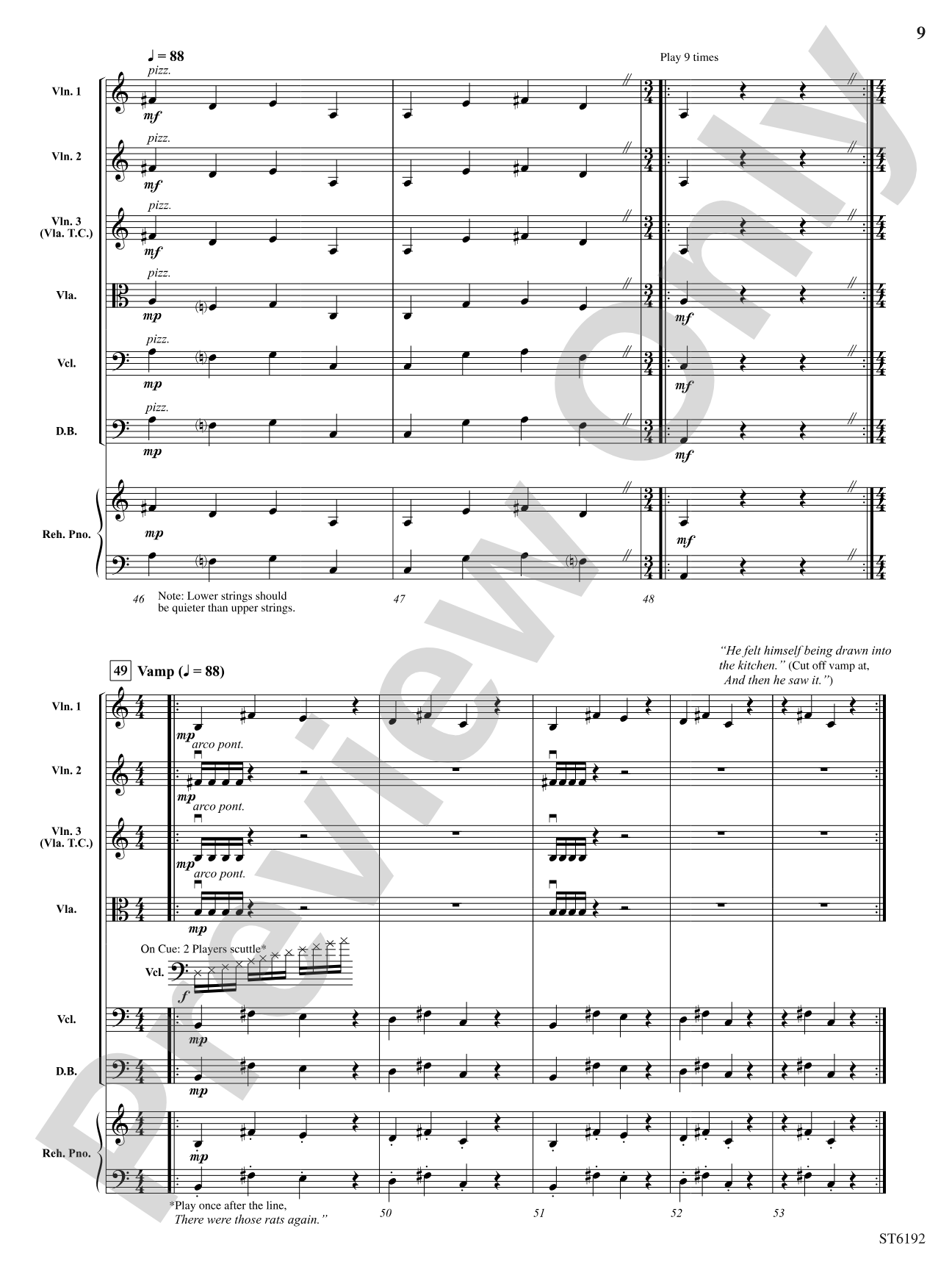
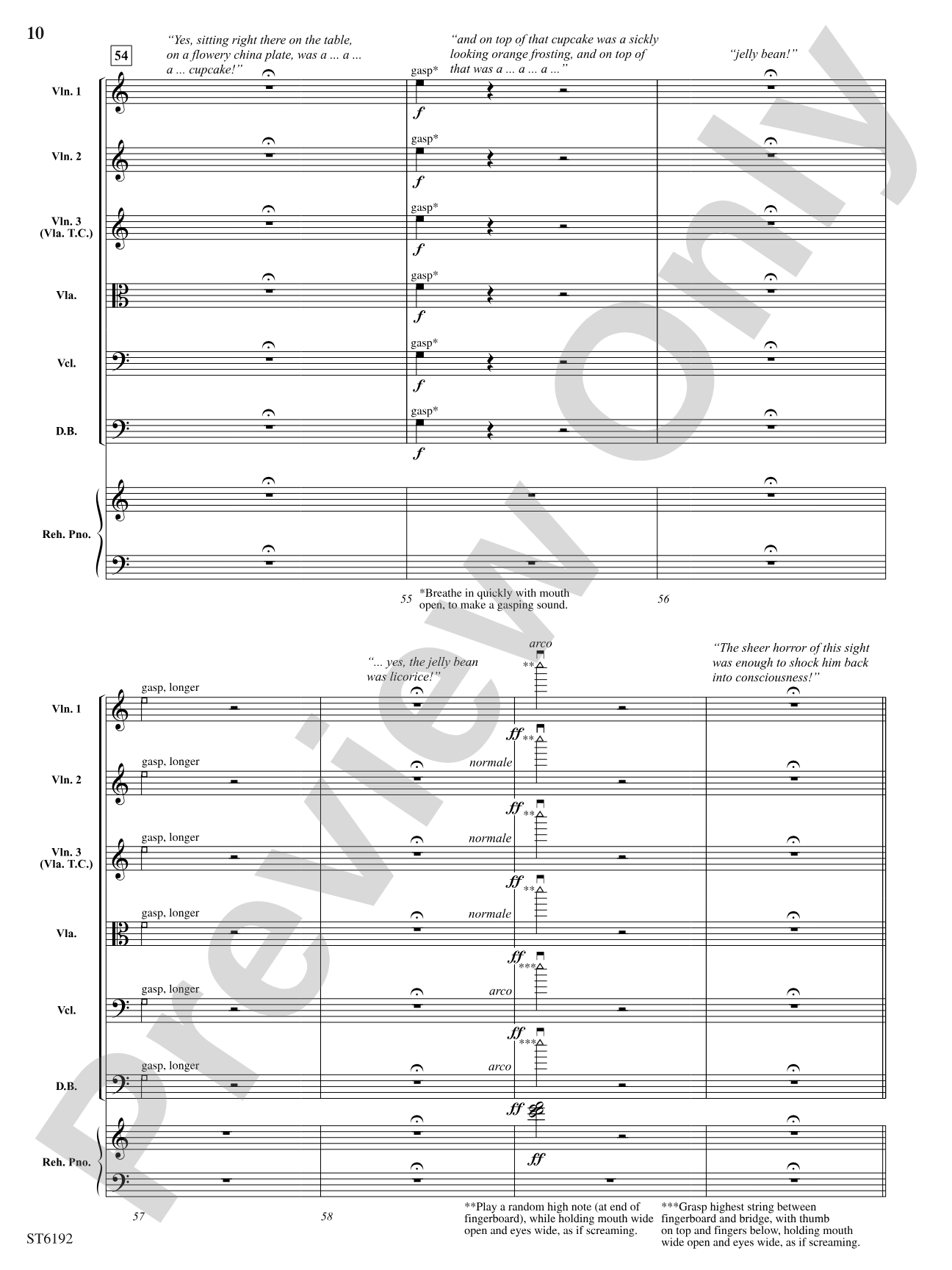
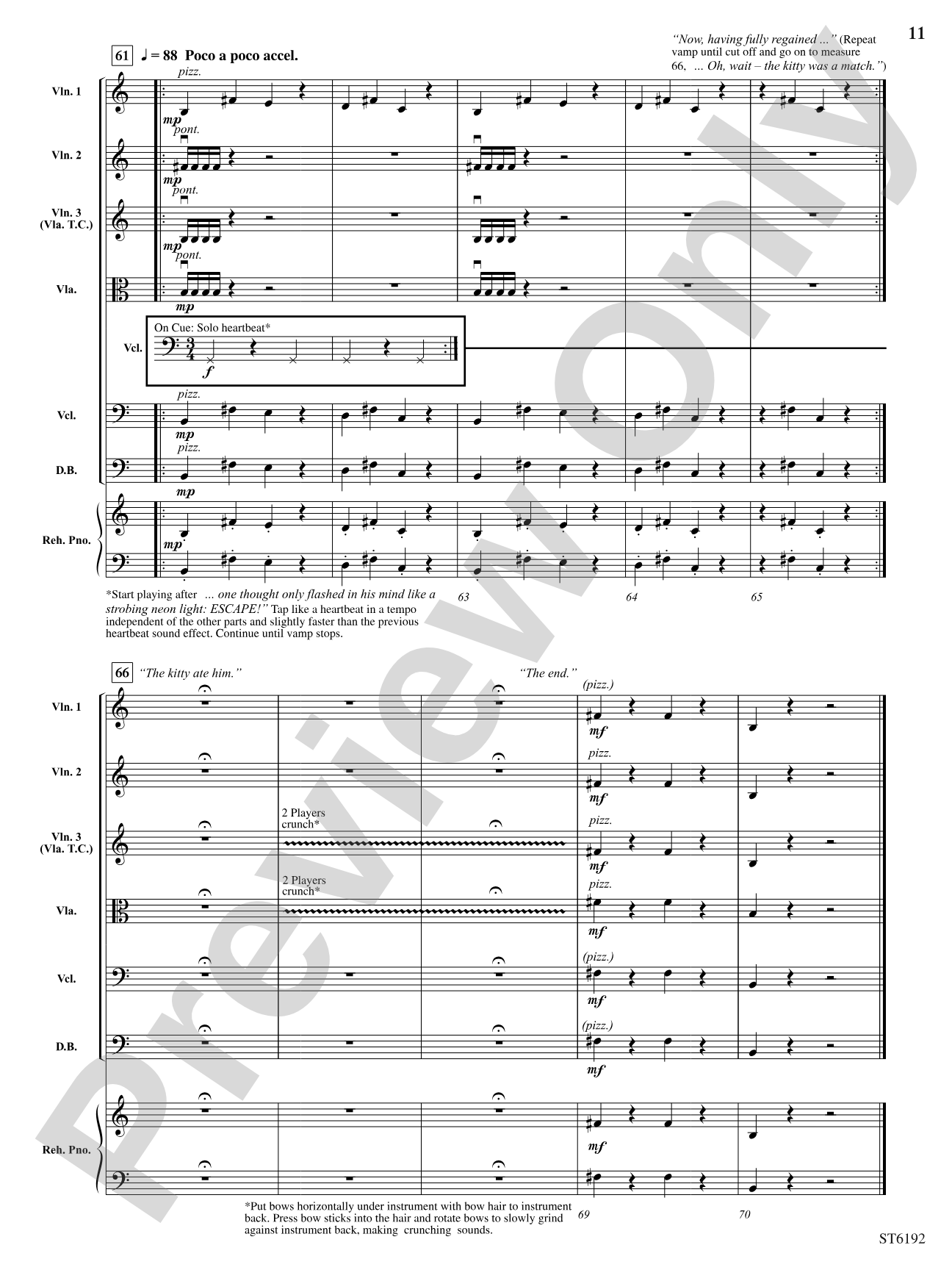

House of Untold Horrors (for Narration and String Orchestra): Score
for Narration and String Orchestra
By Lauren Bernofsky
Grade: 1
Item: 98-DST6192S
$11.00
Pickup currently not available
Description
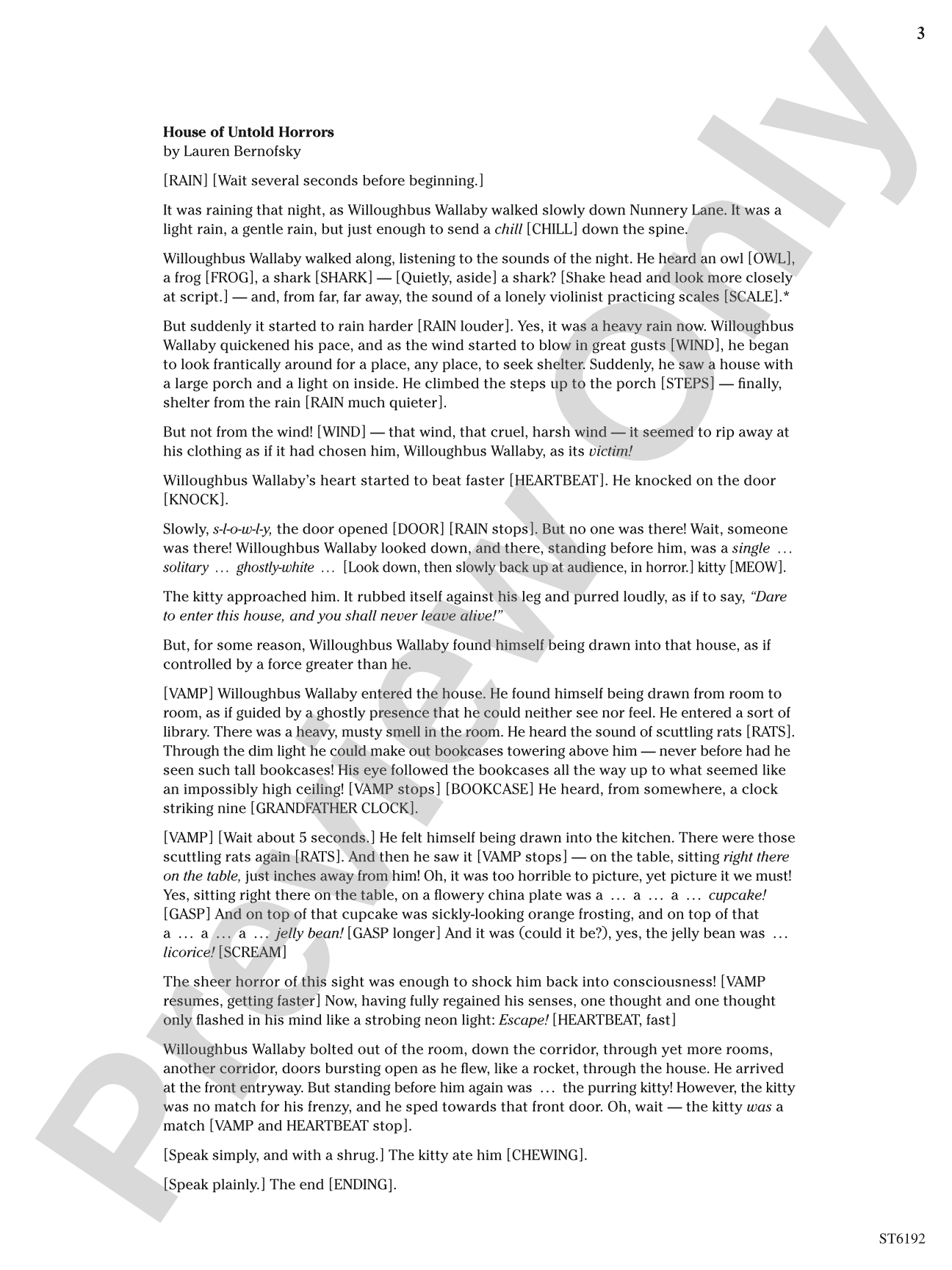
One of the most interesting and inventive novelty pieces in years! This work uses narrator to tell the horrific yet comical story of Willoughbus Wallaby and his encounter with a ghostly house and its resident kitty. Using a whirlwind of fun, achievable effects (you will be stunned by the incredible sounds your orchestra will be able to make), this piece is ideal for orchestras with some students who are not yet able to use their bow (or in some cases, don't even know fingerings yet!). In addition, many effects reinforce pedagogical concepts while students have fun. Sure to be one of the highlights of your next program, regardless of what time of year you perform it!


House of Untold Horrors (for Narration and String Orchestra): Score isn't in MakeMusic Cloud just yet...but it could be. Let us know you'd like to see it, and you'll help shape what comes next. In the meantime, start a free trial and dive into thousands of interactive titles your students can play along with today.
Request This Title
Tell us you want it.
Start Your Free Trial
Explore everything that's ready to play right now.
Sample Audio
1
Audio File
--:--
0:00
0:00
Sample Video
No sample videos found.
Additional Details
Series:
FJH Beginning Strings
Publisher:
The FJH Music Company, Inc.
SKU:
98-DST6192S
More about this title
About the Composer: Lauren Bernofsky

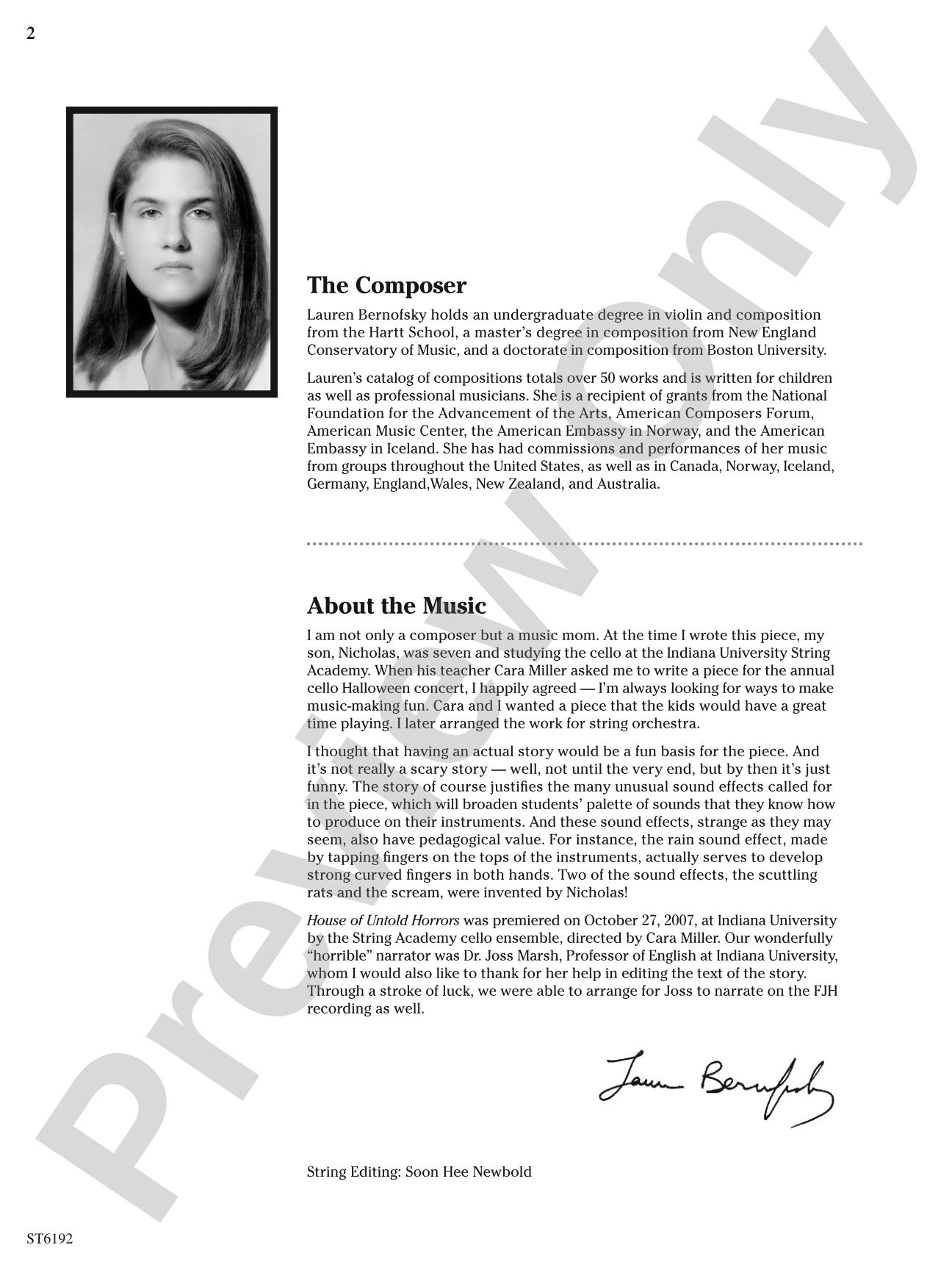
Lauren Bernofsky brings a distinctive voice to contemporary composition, grounded in both emotional depth and technical sophistication. Her catalog spans solo works, chamber music, choral literature, and large-scale pieces for orchestra, film, ballet, and opera. Her compositions have earned recognition including a National Flute Association competition win for her Sonatine, the Opera Puppets Award for Mooch the Magnificent, and a winning entry in the Dalai Lama Composition Contest. Major ensembles and soloists have commissioned her work, and her string quartet Anacostia Journal received national broadcast exposure on PBS.
Bernofsky holds degrees from The Hartt School, New England Conservatory, and Boston University, with doctoral training in composition. She has taught at the Peabody Institute and Interlochen Center for the Arts, and her Concerto for Trumpet and Orchestra has been featured in the International Trumpet Guild journal and was the subject of a doctoral dissertation at the University of Wisconsin-Madison.
Why we love this
Bernofsky has created a piece that genuinely works for beginning orchestras while refusing to condescend musically or narratively. The novelty frame (a narrator telling a spooky-yet-silly story) gives every student a reason to care about ensemble precision, and the creative effects make that engagement feel earned rather than imposed. At Grade 1, many beginning orchestras struggle to keep rehearsals engaging; this piece solves that by making the constraints of early string technique into its own kind of fun.
What to expect
Equal parts theatrical and mischievous, with the narrator steering you through a Halloween house tour that never quite takes itself seriously. The sound palette shifts constantly from plucked strings to scrapes and taps, creating a cartoonish soundscape that feels surprisingly sophisticated despite Grade 1 technique requirements.
Who it's for
Beginning string orchestras with mixed instrumental readiness, including students still developing bow control or fingering fluency. This piece is equally at home in school orchestra programs, community youth ensembles, or studio settings where you need engaging repertoire that doesn't penalize less experienced players.
How to get the most out of it
- Establish clear cues with your narrator before rehearsals begin. The narrator's timing drives the orchestra, not the reverse; mark the conductor score with the narrator's breathing points and natural phrase breaks so students know exactly when to respond musically.
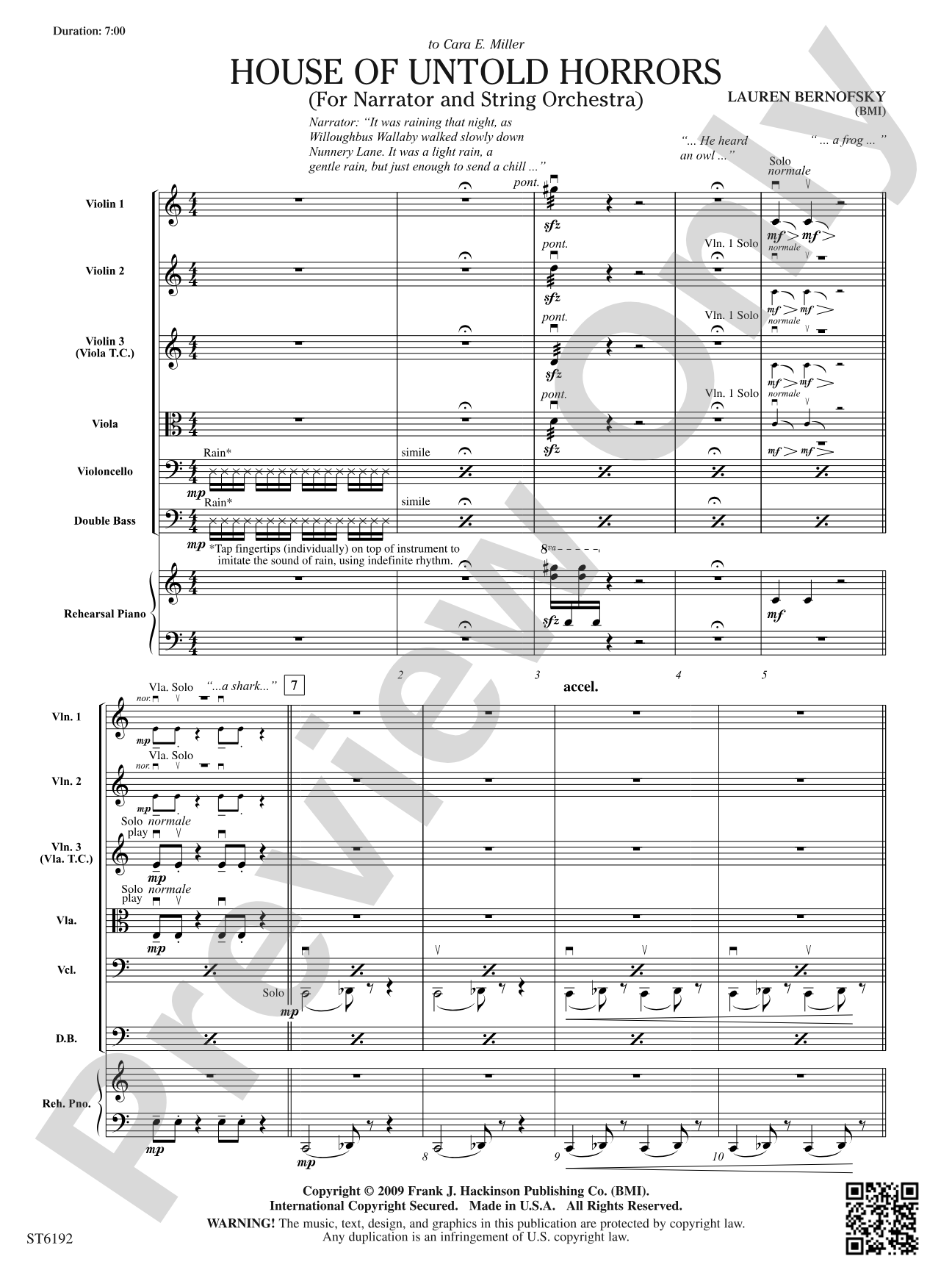
- Rehearse the fun effects (pizzicato, col legno, open strings) as technique-building moments rather than asides. These sounds reinforce fundamentals while building student confidence in what young players can actually produce.
- Conduct the narration passages with clear, generous gestures so the narrator stays locked with the orchestra. Even though Grade 1 students may not read every dynamic marking, they will follow a conductor who shapes the story clearly.
How to use it
This is an obvious fit for an October or Halloween concert, but don't limit it there. A spring family concert benefits just as much from novelty programming that makes young musicians the stars of an entertaining, story-driven piece. Consider pairing it with one serious work to demonstrate the full range of your orchestra's abilities.
Skills your students will build
- Precise ensemble entrances and exits following narrator timing
- Pizzicato articulation and control
- Open string technique and awareness
- Listening for and executing creative effects (col legno, percussive sounds)
- Responding to conductor cues in narrative-driven contexts
- Confidence in early-stage technical playing within an engaging musical framework