Hot Potato: String Bass Sheet Music Preview

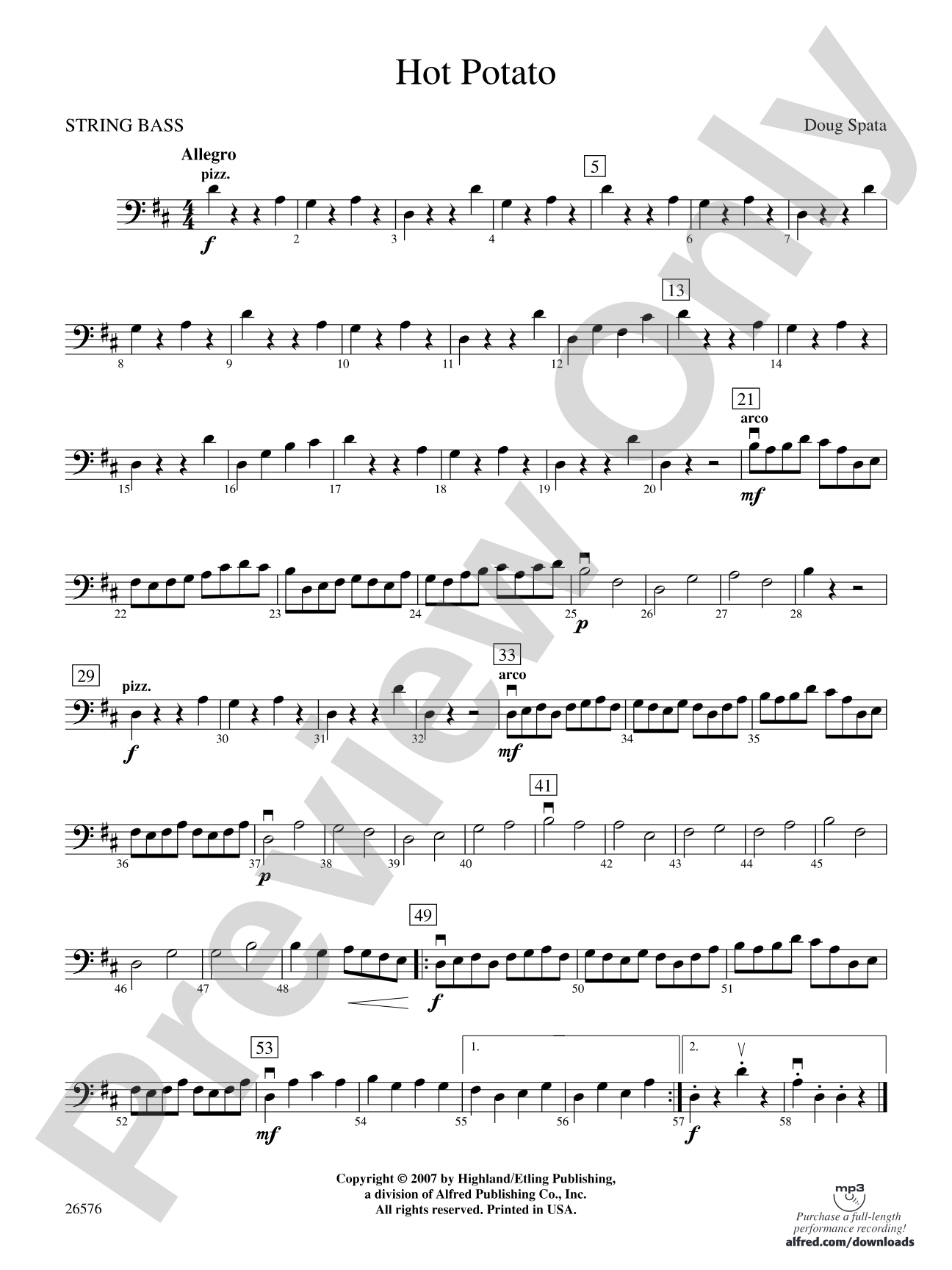
Hot Potato: String Bass

By Doug Spata

Grade: 1

Item: 00-PC-0001092_SB

Digital Download
$5.99
Description
Hot Potato is a "perpetual motion" for beginning orchestras. Simple eighth-note melodies pass seamlessly between parts over a simple, pizzicato accompaniment. Designed to build part independence, improve listening skills, and give young musicians a feel for rhythmic subdivision, Hot Potato is a fun musical game! This title is available in MakeMusic Cloud.

Don't just read it, hear it, play along with it, and watch your students grow with it. In MakeMusic Cloud, Hot Potato: String Bass comes alive with professional accompaniment, adjustable tempo, and built-in practice tools that turn solo practice into real progress.

Sample Audio
0:00
0:00
Sample Video
Additional Details
Series: Highland/Etling String Orchestra
Publisher: Alfred Music
Page Count: 31
SKU: 00-PC-0001092_SB

More about this title

About the Composer: Doug Spata

Doug Spata

Doug Spata trained as a clarinetist but found his compositional voice writing for strings, informed by years spent directing young orchestras. His music has earned recognition across the country and internationally, performed by student ensembles and professional orchestras alike.

Beyond educational works, Spata's catalog spans opera, ballet, symphonies, and chamber music across all ensemble sizes. His ability to write accessibly for student musicians while maintaining genuine musical substance has made him a trusted voice in string orchestra repertoire.

Why we love this

Hot Potato transforms a simple musical premise into a tool that builds ensemble cohesion and active listening without feeling like work. The pizzicato accompaniment stays static and predictable, letting the melody line become the focal point as it travels between sections, so every student knows exactly when to enter and what to play. For a Grade 1 orchestra, this is the kind of piece that generates real engagement and leaves rehearsal time for refinement rather than basic decoding.

What to expect

Bright and energetic, with a sense of playful momentum as simple eighth-note melodies bounce between instrumental families. The pizzicato foundation creates a light, almost quirky sound that keeps the piece from feeling precious, and the perpetual motion builds an infectious, forward-moving rhythm that makes rehearsing feel like active participation rather than standing and waiting.

Who it's for

Beginning string orchestras (Grade 1) looking for a high-engagement piece that builds part independence and listening skills in a fun, game-like format. Directors will appreciate how Hot Potato keeps every player focused and active while reinforcing fundamental ensemble concepts like balance, precision, and the rhythmic subdivision required of young string players.

How to get the most out of it

  • Keep the pizzicato accompaniment locked in one tempo throughout. Stability in the background parts lets the melodic lines breathe and makes hand-offs between sections crystal clear.
  • Mark each melody entrance in pencil during sectional rehearsals so violins, violas, and cellos can see exactly when they take the line and anticipate the gesture from the previous section.
  • Conduct with a clear, steady pulse. Young musicians rely on your beat to know when to enter, especially as the melody passes quickly between parts.
  • Let the perpetual motion feel playful in performance. The energy comes from the continuous dialogue, not from forcing dynamics or stretching phrases.

How to use it

Program Hot Potato early in a concert when energy and engagement matter, or use it as a palate cleanser between weightier works. Its novelty appeal and obvious fun factor make it an excellent choice for family-friendly concerts or festival play, where the piece's game-like structure invites audience smiles while showcasing what your ensemble can do rhythmically.

Skills your students will build

  • Part independence and awareness of what other sections are playing
  • Rhythmic precision with eighth-note subdivision at a steady tempo
  • Ensemble listening and the ability to cue off section entrances
  • Clean pizzicato articulation and rhythmic accuracy in accompaniment parts
  • Counting skills and readiness to enter after rests

You May Also Like