
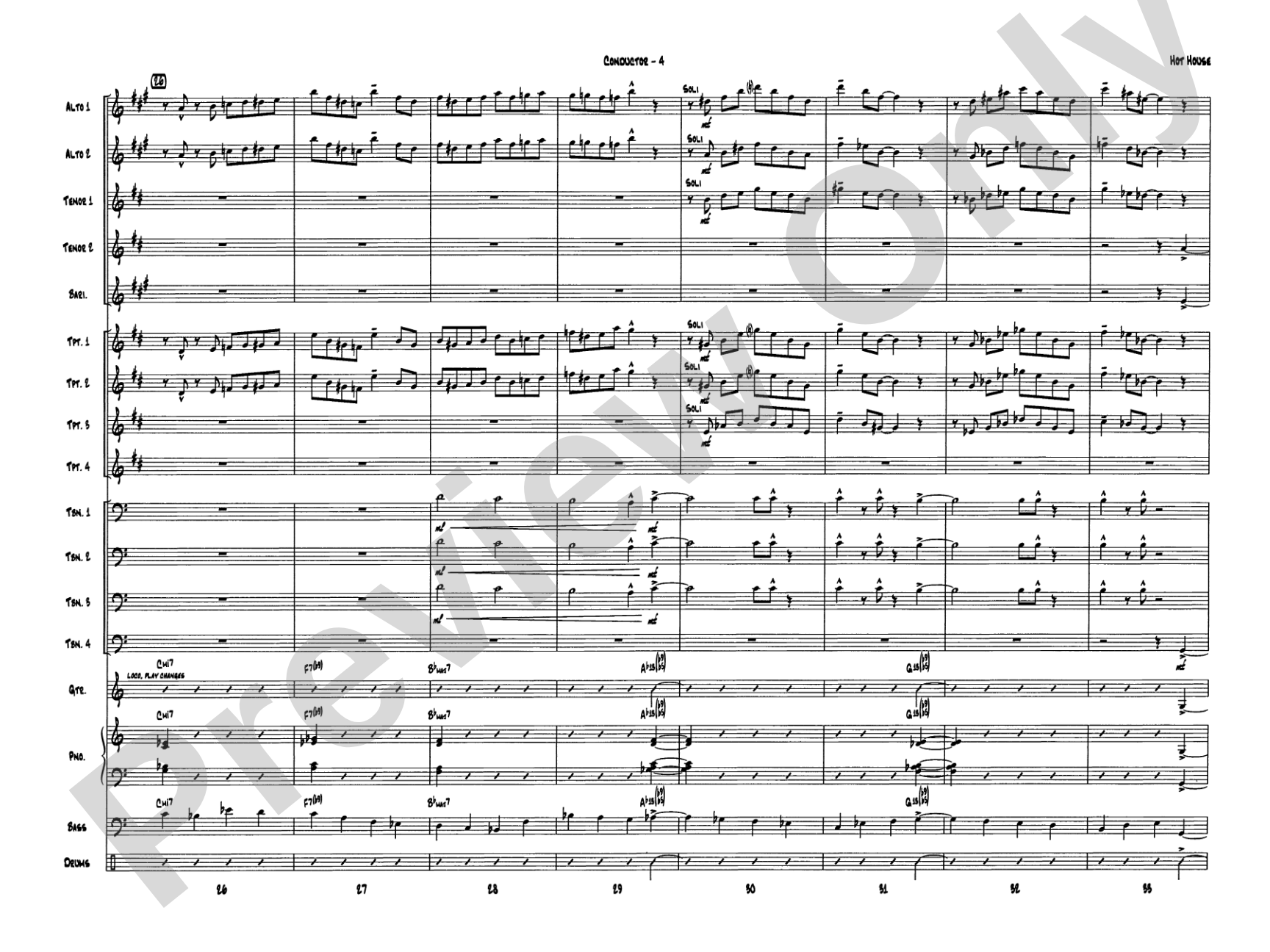
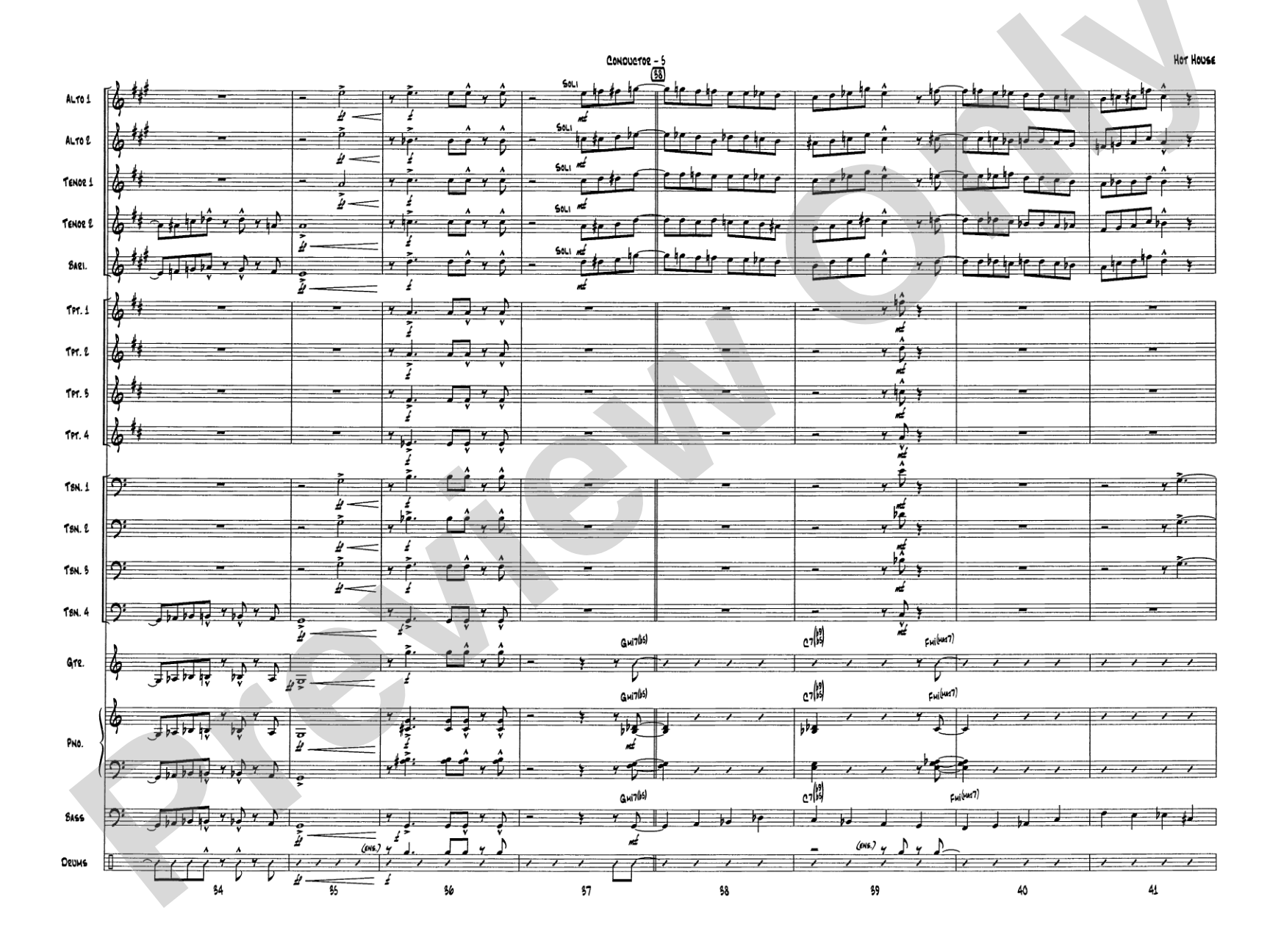
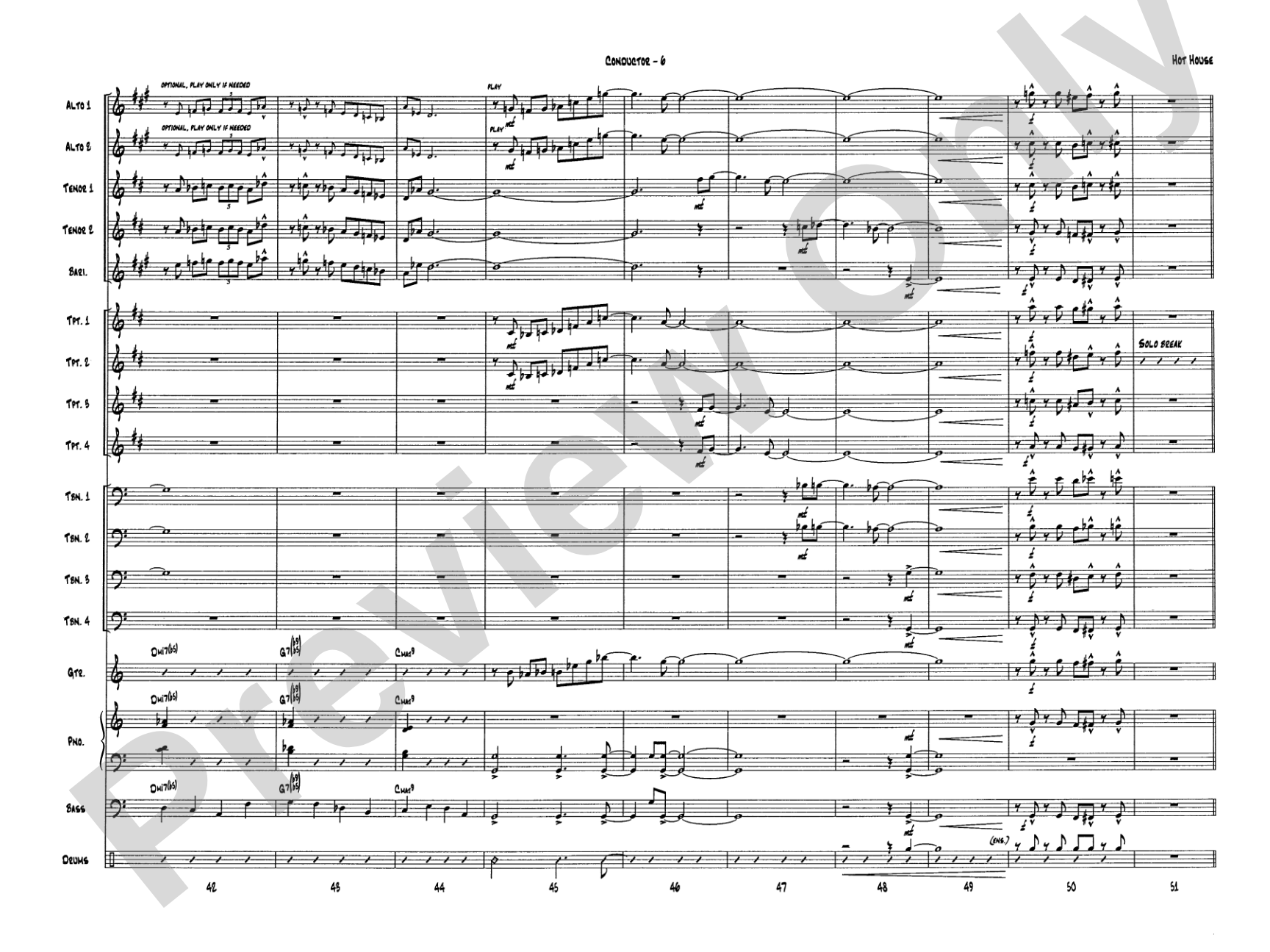
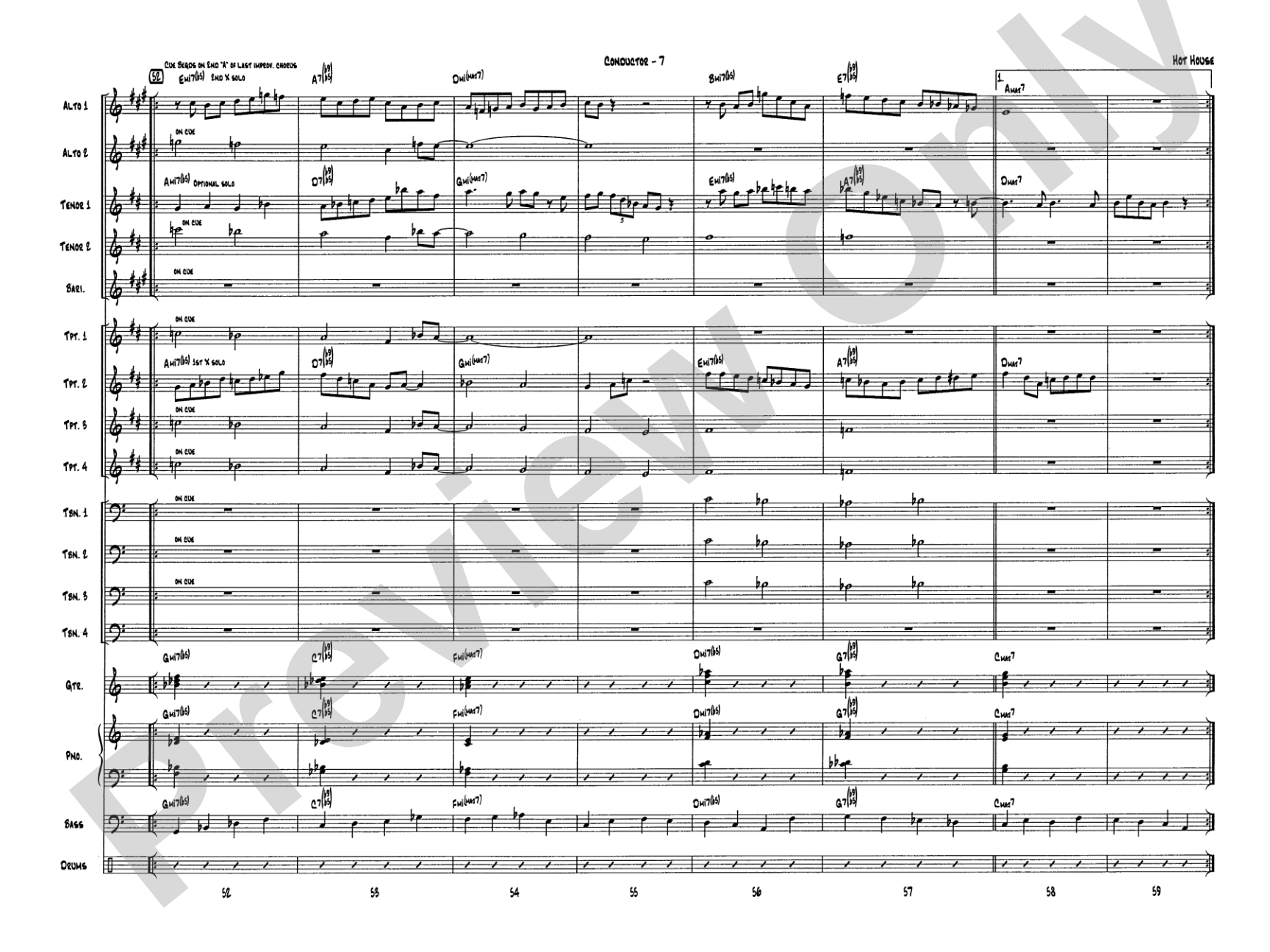
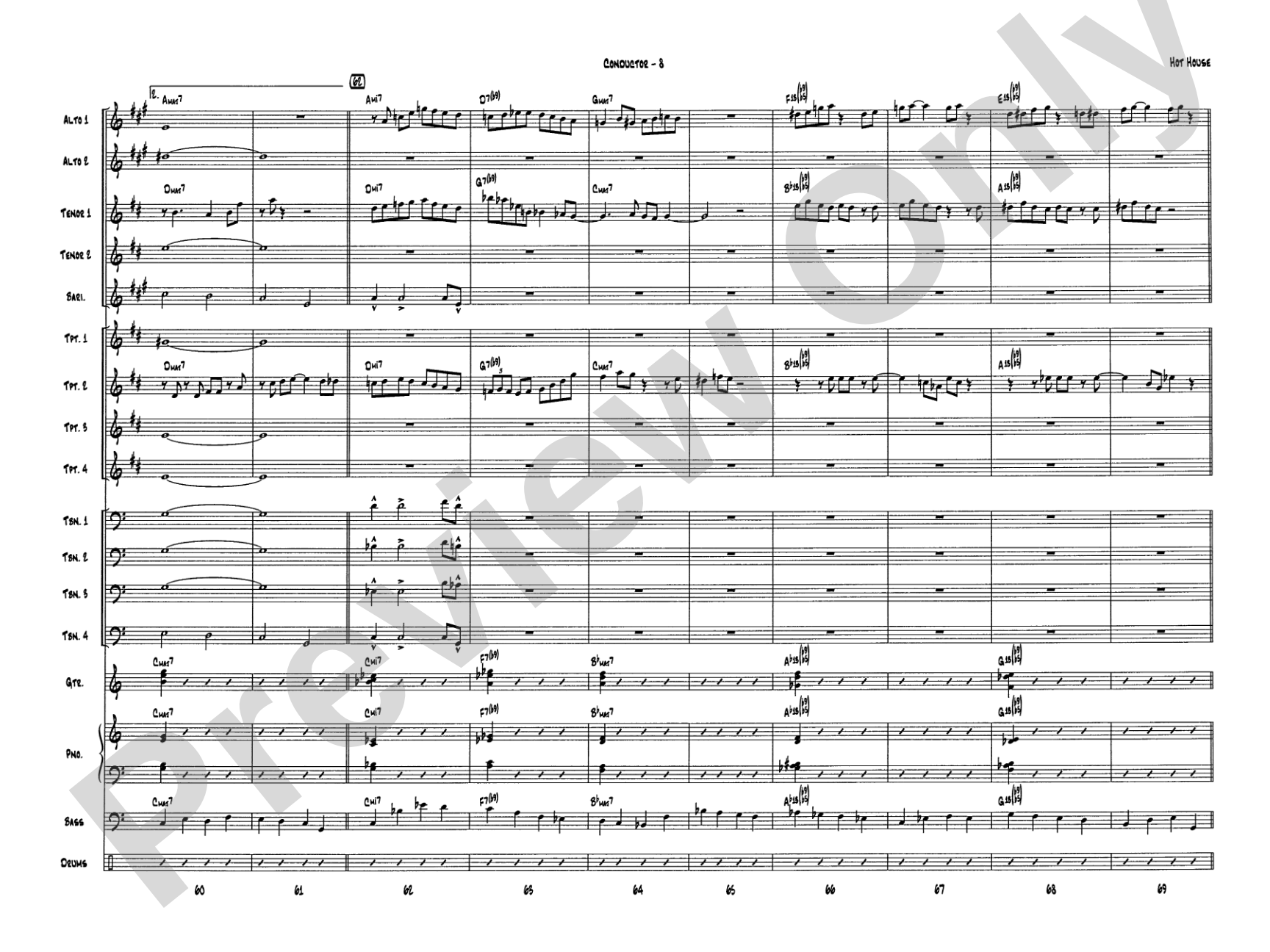
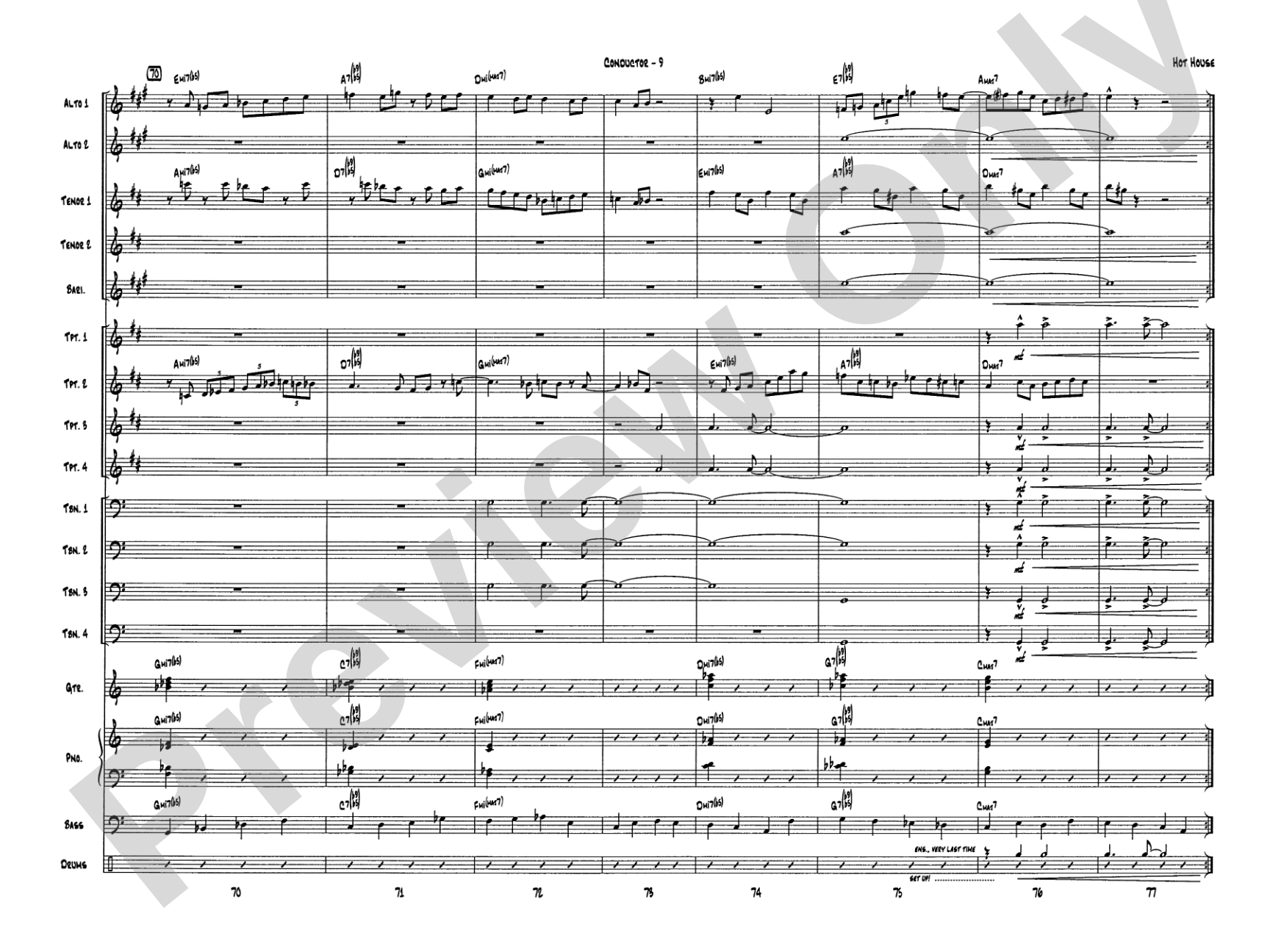
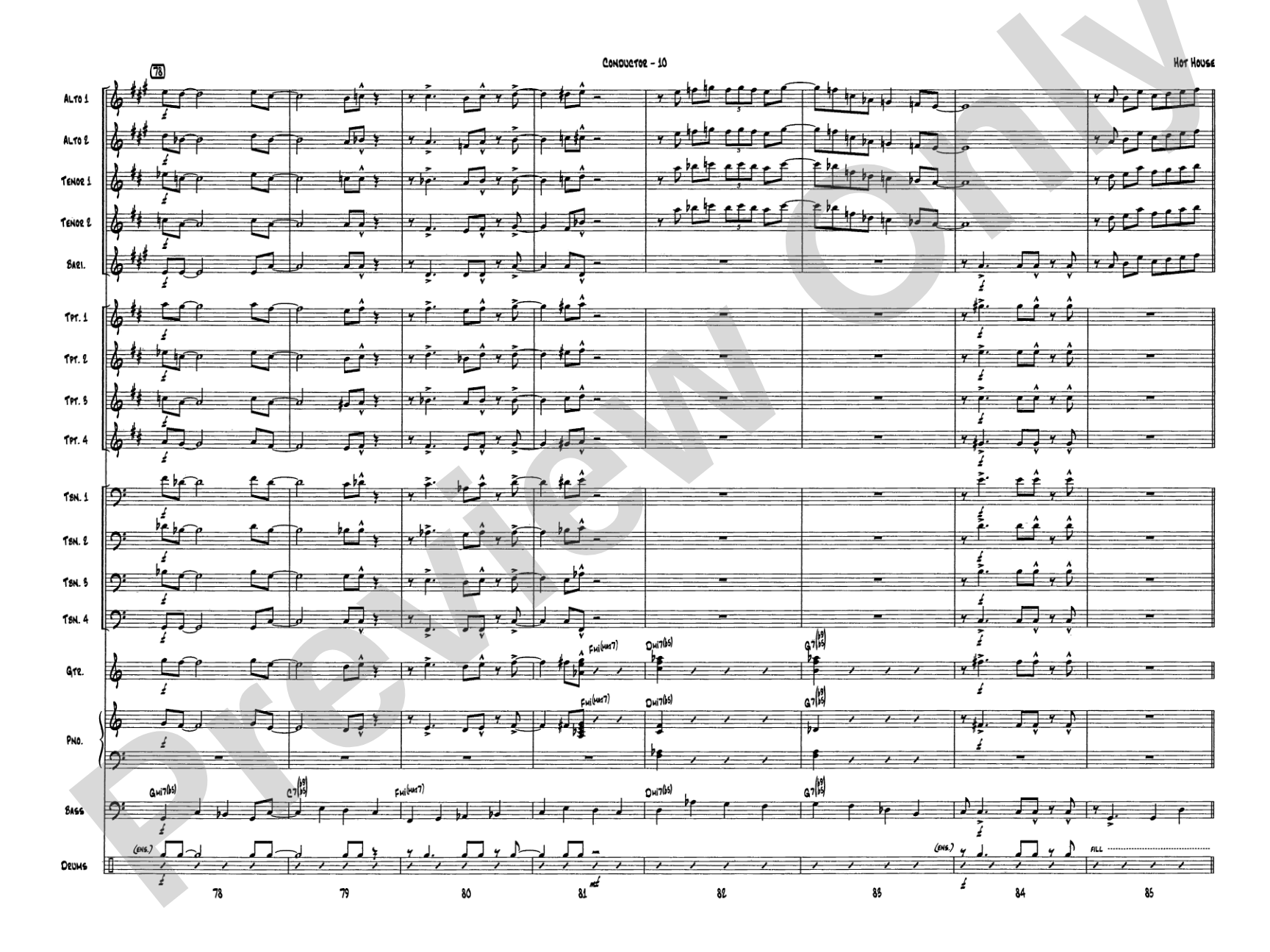
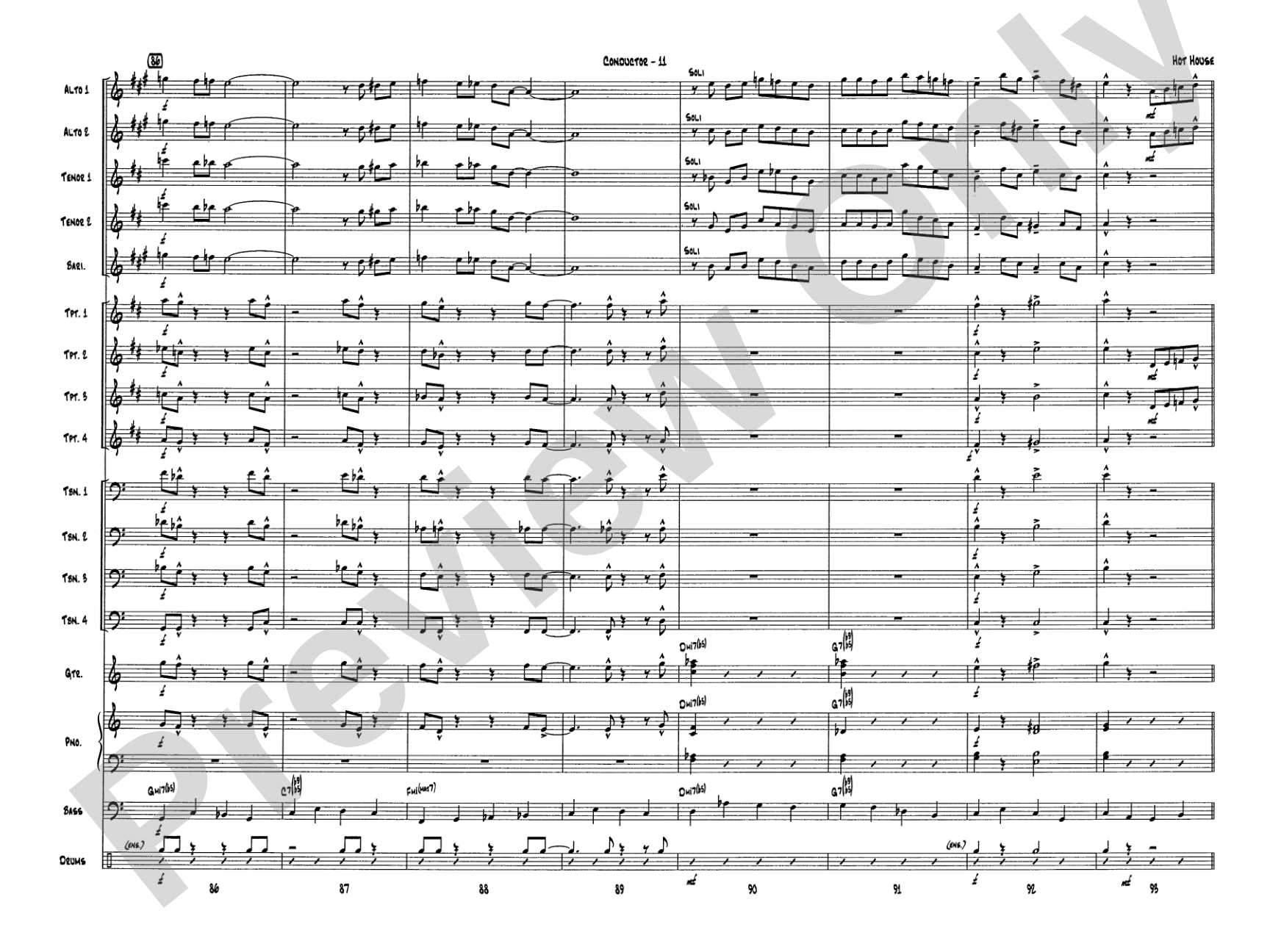
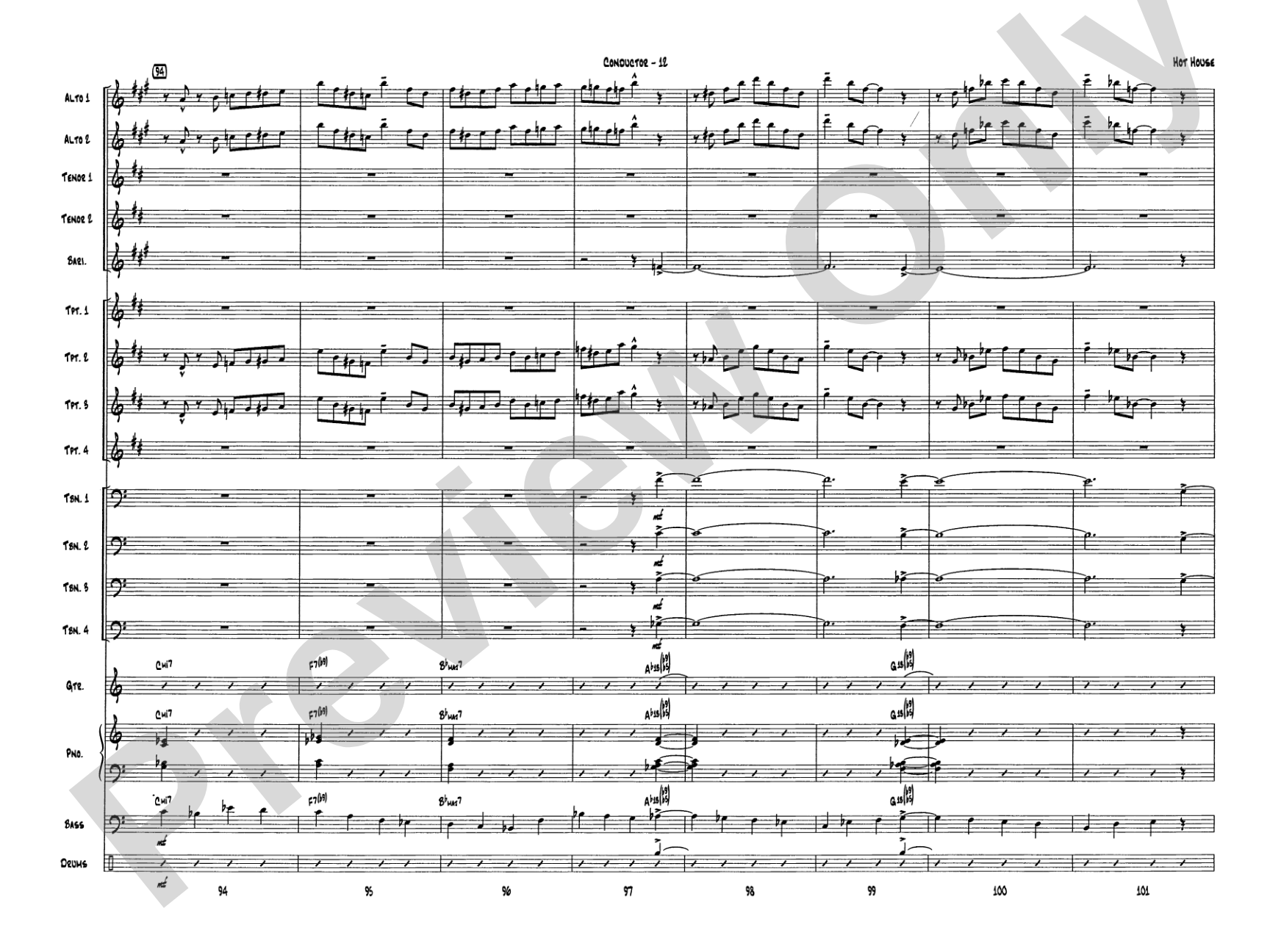
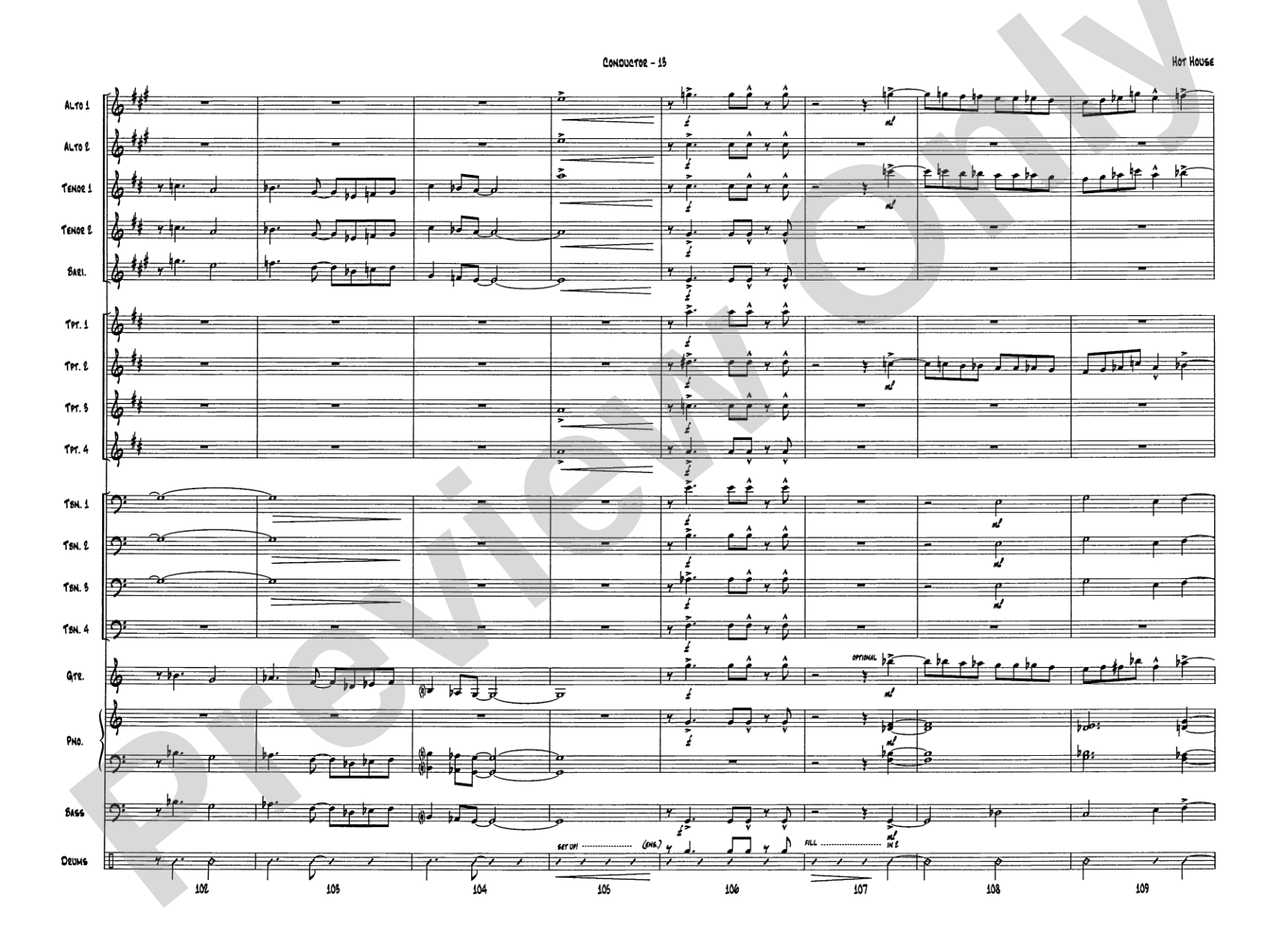
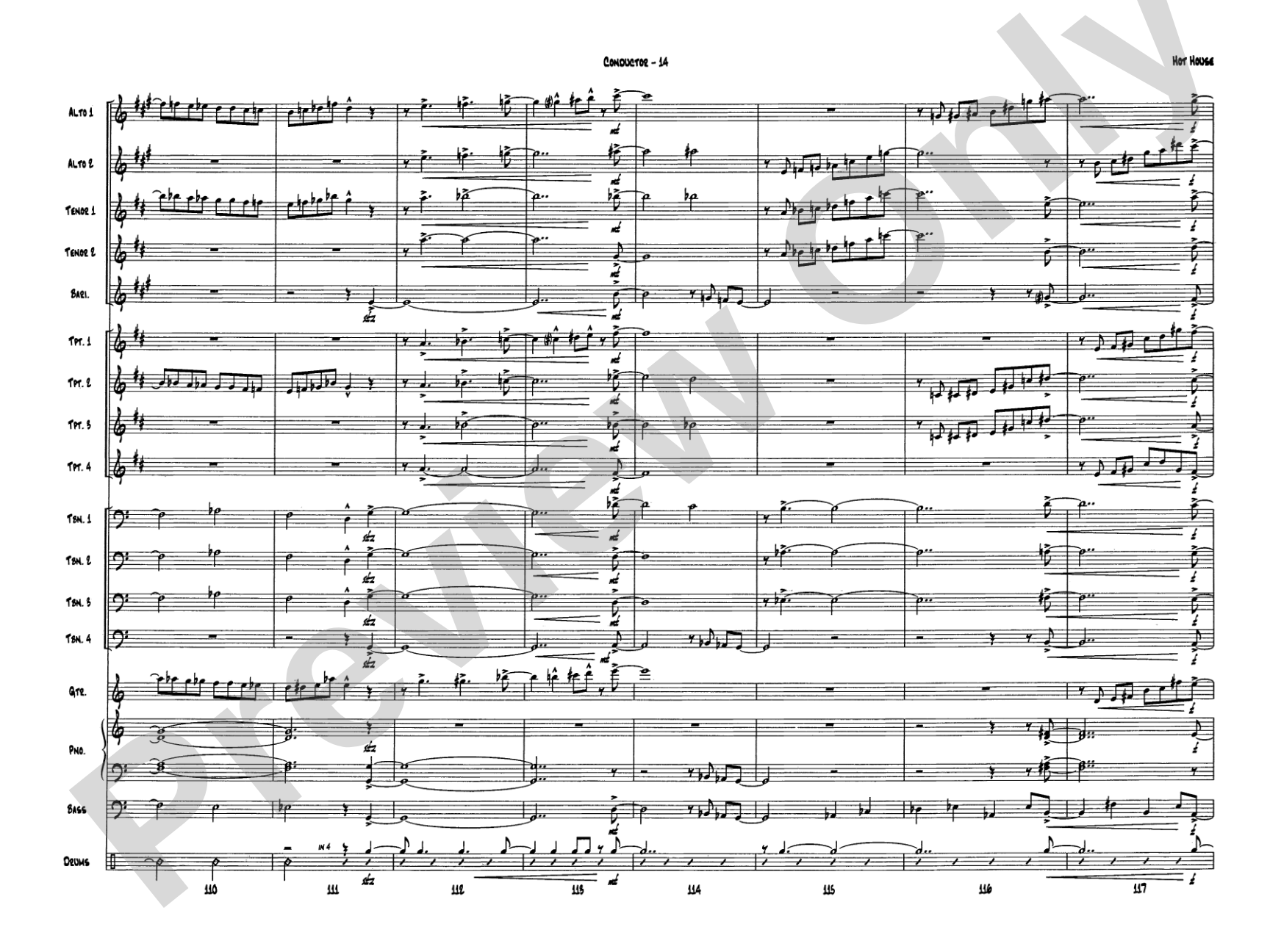
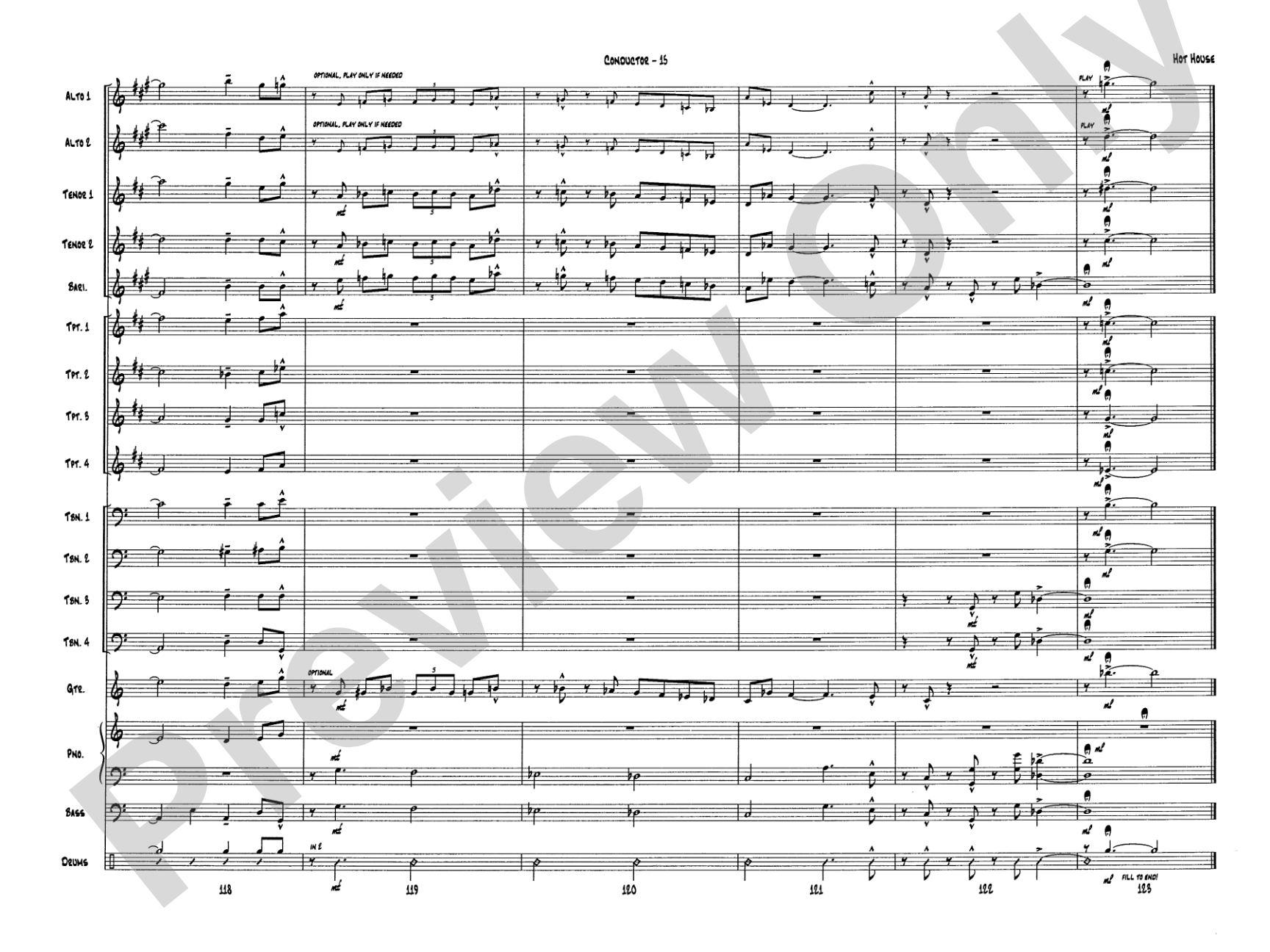

Hot House: Jazz Ensemble Conductor Score & Parts
By Tadd Dameron / arr. Jack Cooper
Grade: 3 (Medium)
Item: 00-PK-0002482

$52.00
One moment…
Description
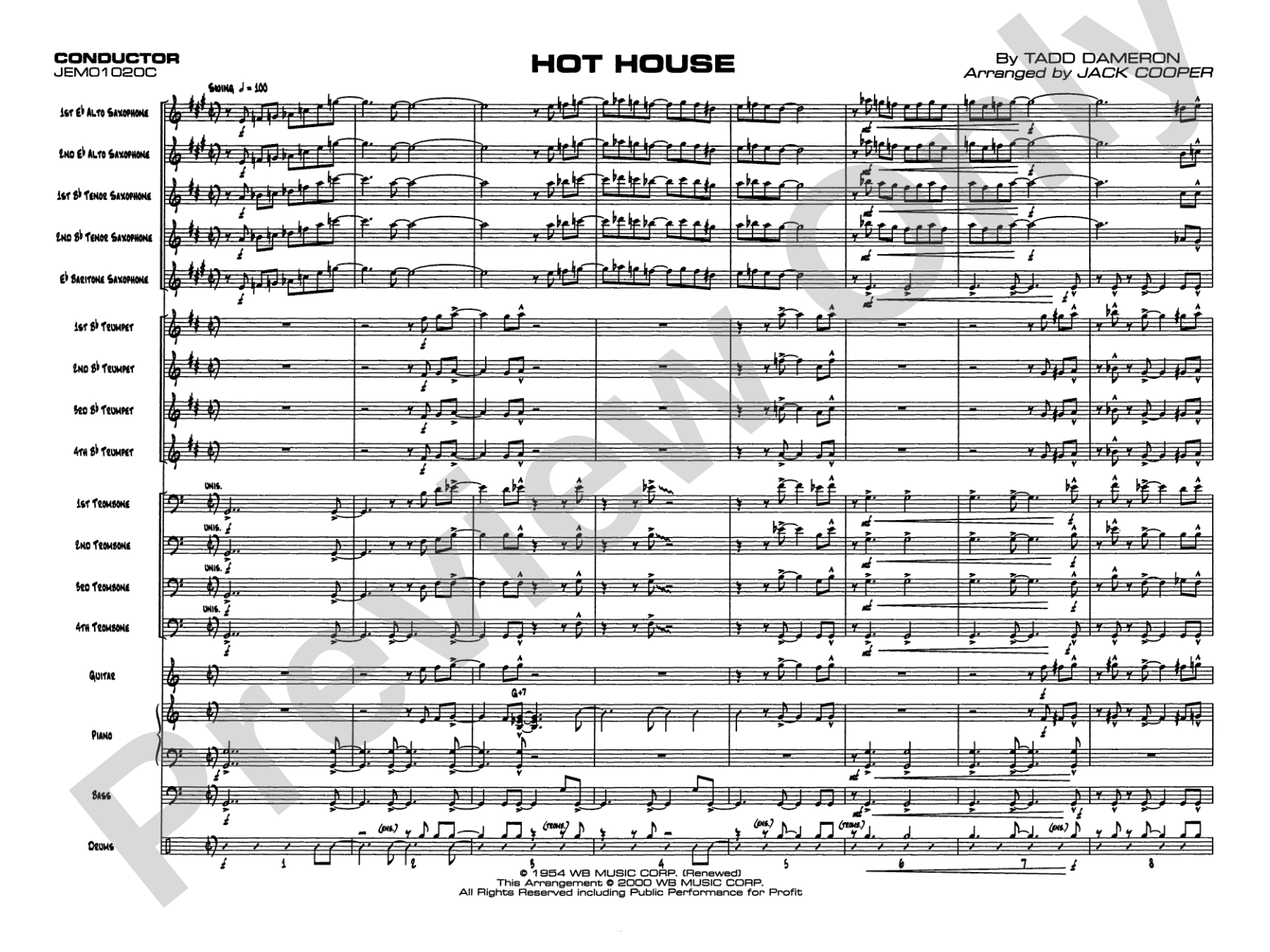
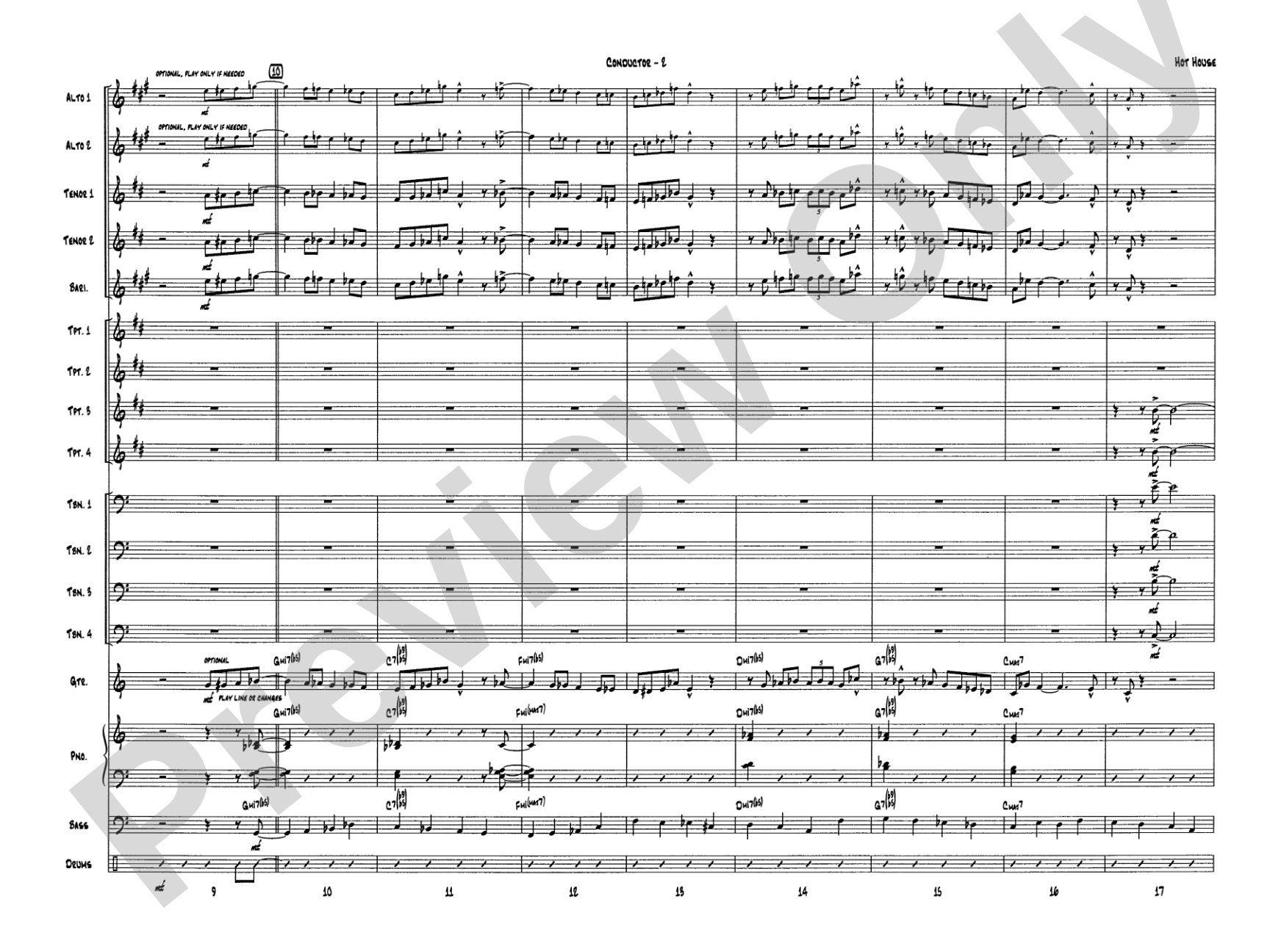
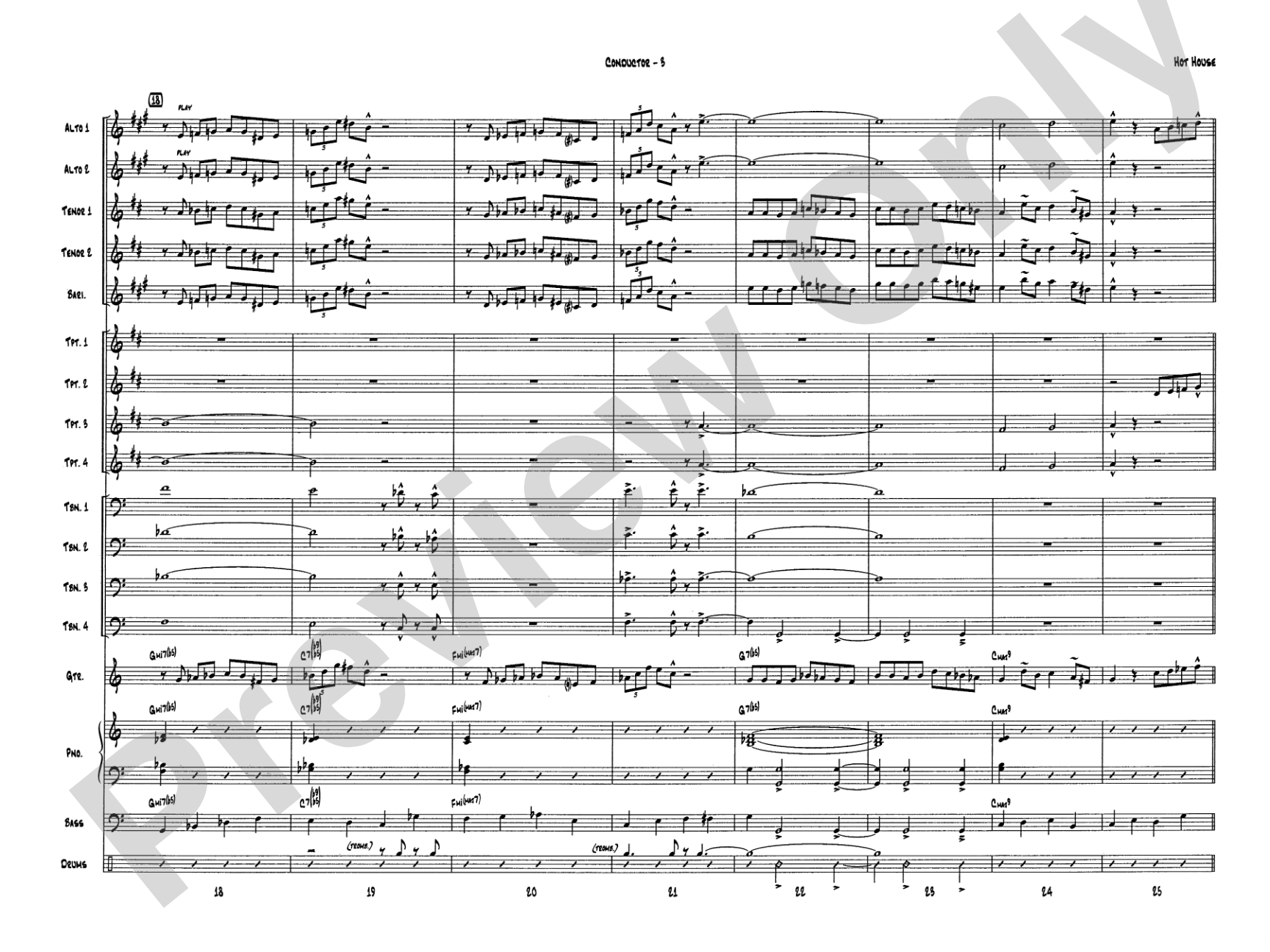
Be-bop for big band! Jack Cooper masterfully arranged Tadd Dameron's composition "Hot House" for the Jazz Band Series. Based on the chord changes to "What Is This Thing Called Love," "Hot House" has been played and recorded by all the jazz masters. Jack Cooper keeps your sax section working by stating the melody with a section soli. The improvised solo space (written solos provided) is for alto, tenor, and trumpet. Mix in the reasonable brass ranges and you've got yourself a fine chart on a jazz classic. Perfect for festivals or concerts.


Don't just read it, hear it, play along with it, and watch your students grow with it. In MakeMusic Cloud, Hot House: Jazz Ensemble Conductor Score & Parts comes alive with professional accompaniment, adjustable tempo, and built-in practice tools that turn solo practice into real progress.
Open in the Player
Jump straight in and assign it today.
Start Your Free Trial
Open this title and explore the full library in minutes.
Sample Audio
1
Audio File
--:--
0:00
0:00
Sample Video
No sample videos found.
Additional Details
Series:
Jazz Band Series
Publisher:
Alfred Music
Page Count:
122
SKU:
00-PK-0002482
More about this title
About the Composer: Tadd Dameron
Tadd Dameron (1917-1965) was a bebop pianist, composer, and arranger whose sophisticated harmonic sensibilities shaped the sound of modern jazz. His compositions became standards almost immediately, recorded by nearly every major jazz voice from the 1940s onward. Dameron's gift was writing melody and harmony that challenged improvisers while remaining deeply singable and memorable.
Dameron's most enduring works—including "Hot House," "Lady Bird," and "Fontainebleau"—became vehicles for improvisation in the hands of Miles Davis, John Coltrane, Dexter Gordon, and Clifford Brown. His arranging work for big bands and smaller ensembles demonstrated how bebop vocabulary could translate across ensemble sizes without losing its intellectual edge or swing.
Why we love this
Jack Cooper's arrangement respects Dameron's bebop architecture while giving your section players meaningful material. The sax soli on the melody keeps the ensemble engaged, and the written solo spaces (alto, tenor, and trumpet) mean your soloists have a scaffold without losing room for personality. This is a jazz standard that actually sits well for Grade 3 ensembles without feeling simplified.
What to expect
The energy is unbridled bebop: a tight, swinging melody stated in unison saxes, then the band opens up for soloists to navigate Dameron's elegantly constructed changes. There's an intellectual quality beneath the fun, a reminder that bebop musicians were solving harmonic puzzles at breakneck speed. When it swings, the whole room feels the weight of that tradition.
Who it's for
Jazz ensemble directors programming Grade 3 ensembles who want authentic bebop repertoire without overwrought arrangements. Bands with developing soloists benefit from the written solo heads, while strong improvisers can use them as springboards. This works equally well at jazz festivals and in concert programming.
How to get the most out of it
- Balance the saxophone section soli carefully so the melody cuts through without overpowering the rhythm section. The brass need to support, not compete.
- Establish a clear swing feel on the bridge changes. These chord progressions move quickly, and the rhythm section must lock in before soloists enter.
- Give improvisers time to find their lines during solo sections. Written solos provide scaffolding, but encourage musicians to use them as jumping-off points rather than read them note-for-note.
- Check all brass voicings for balance, especially in the ensemble figures beneath solos. Dameron's harmonies are close, and muddy high brass can obscure the changes.
How to use it
Program this alongside other straightforward standards (Hoagy Carmichael, Duke Ellington) for a bebop-focused jazz concert set. It pairs well with blues heads and minor-key bebop tunes as a contrast. Festival competition formats favor tightly arranged classics like this one, and it gives younger soloists exposure to changes that have shaped jazz pedagogy.
Skills your students will build
- Reading and executing fast, syncopated bebop melodies in unison
- Improvising over fast-moving chord changes (rhythm changes bridge)
- Section balance and blend in close saxophone voicings
- Swing feel and time keeping at medium-to-up tempos
- Listening to and responding to improvised solos as an ensemble
- Understanding bebop harmonic architecture through performance