
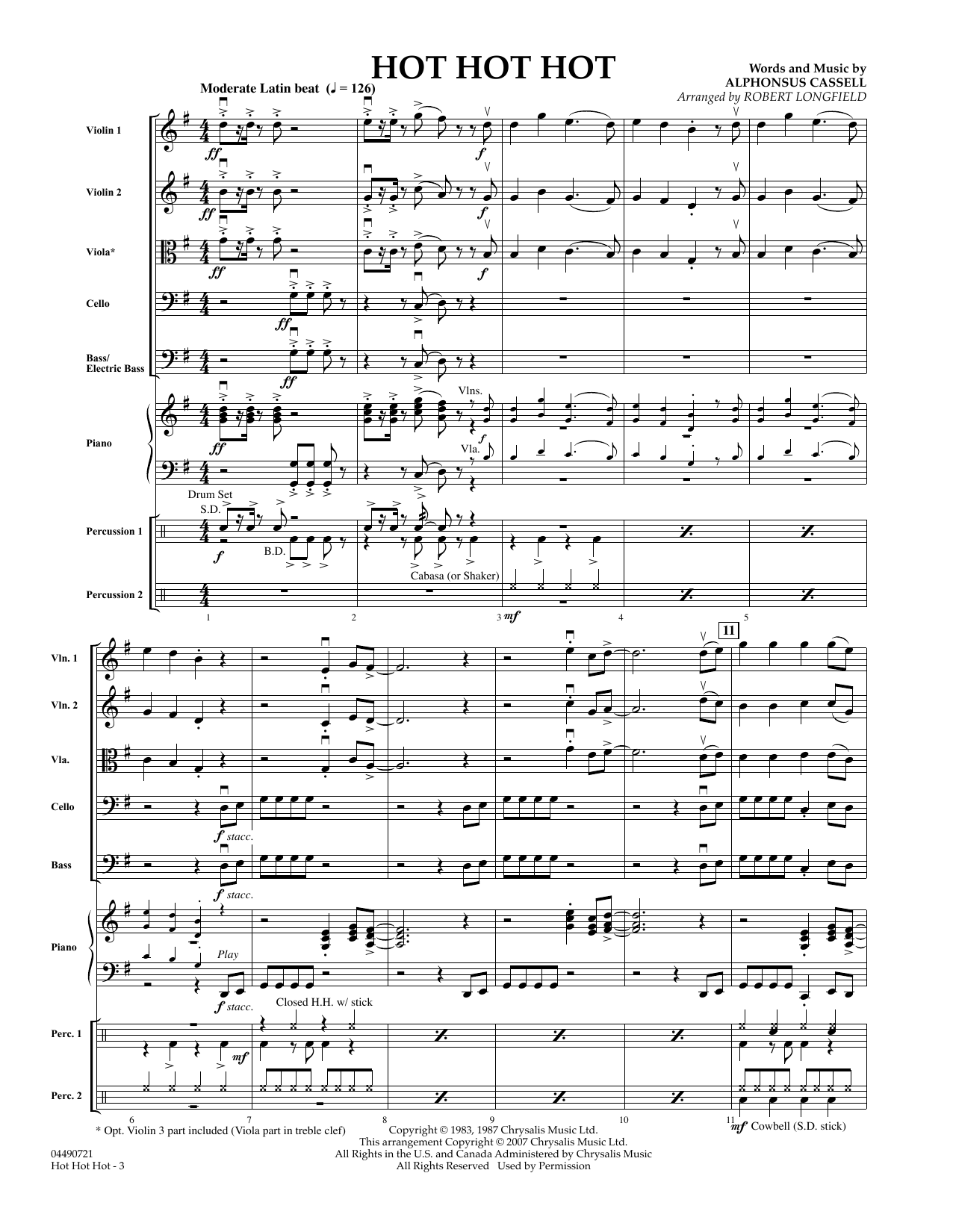

Hot Hot Hot: String Orchestra Conductor Score & Parts
As performed by Alphonsus Cassell / Arranged by Robert Longfield
Grade: 2-3
Item: 35-PK00319507
$40.00
Pickup currently not available
Buy Extra Parts (Digital PDF Download)
| Product | Price | Quantity |
|---|---|---|
| Hot Hot Hot - Full Score | $6.00 | |
| Hot Hot Hot - Violin 1 | $7.00 | |
| Hot Hot Hot - Violin 2 | $7.00 | |
| Hot Hot Hot - Violin 3 (Viola T.C.) | $7.00 | |
| Hot Hot Hot - Viola | $7.00 | |
| Hot Hot Hot - Cello | $7.00 | |
| Hot Hot Hot - String Bass | $7.00 | |
| Hot Hot Hot - Piano | $7.00 | |
| Hot Hot Hot - Percussion 1 | $7.00 | |
| Hot Hot Hot - Percussion 2 | $7.00 |
Parts Added to Cart!
Description
Who can forgot the stage presence and energy of Buster Poindexter and this high octane Latin rocker? Your students will love to play the catchy strains driven by a fun and rhythmic groove.
Dur: 2:35


Hot Hot Hot: String Orchestra Conductor Score & Parts isn't in MakeMusic Cloud just yet...but it could be. Let us know you'd like to see it, and you'll help shape what comes next. In the meantime, start a free trial and dive into thousands of interactive titles your students can play along with today.
Request This Title
Tell us you want it.
Start Your Free Trial
Explore everything that's ready to play right now.
Sample Audio
No sample audio found.
Sample Video
No sample videos found.
Additional Details
Publisher:
Hal Leonard
SKU:
35-PK00319507
More about this title
Why we love this
Robert Longfield's arrangement captures the infectious propulsive energy of the original without losing any of its swagger. The Latin percussion and rhythmic counterpoint sit perfectly within the range and technique of intermediate string players, making them genuine contributors to the groove rather than passengers.
What to expect
Bright, propulsive, impossible to sit still through. The arrangement bounces with Caribbean and Latin inflections, driven by a chugging rhythm that keeps every voice moving forward even when parts rest. It's the kind of piece that gets an audience smiling before the first phrase concludes.
Who it's for
String orchestras at the intermediate level who want a crowd-pleasing opener or closer with genuine musical substance. Directors seeking repertoire that engages students through infectious rhythmic energy while building confidence in a non-classical idiom.
How to get the most out of it
- Lock the bow strokes with the rhythmic hits in the rhythm section; the strings need to feel percussive on the syncopated accents to match the groove's pocket.
- Encourage vibrato restraint in the opening sections so the Latin rhythmic clarity comes through, then gradually expand it as the arrangement builds.
- Balance the melodic line against the busier accompanying figures by adjusting dynamic layers at sectional rehearsals rather than relying on printed markings alone.
- Let the recorded accompaniment run at performance tempo during early rehearsals so students internalize the style's swagger before polishing precision.
How to use it
Program this early in a concert to establish high energy and goodwill with your audience. It works equally well as a spring pops concert feature or a fun contrast within a classical program, giving students a moment to showcase their rhythmic precision and stylistic flexibility.
Skills your students will build
- Syncopated rhythm reading in a Latin context
- Stylistic vibrato control and dynamic layering
- Articulation accuracy in fast rhythmic figures
- Following a groove-based accompaniment rather than a conductor's beat
- Balance between melodic and rhythmic roles within the ensemble