
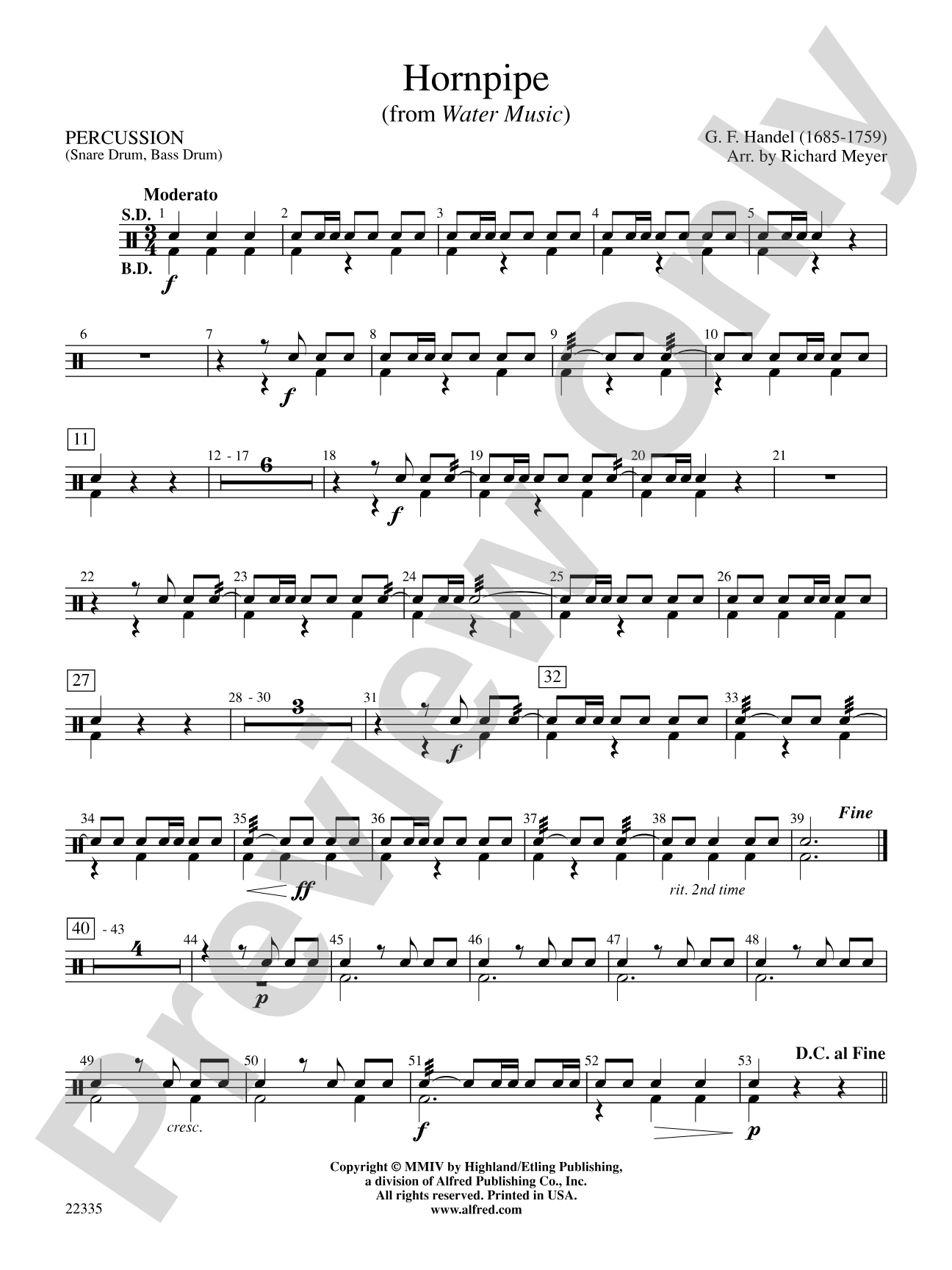

Hornpipe (from Water Music): 1st Percussion
By George Frideric Handel / arr. Richard Meyer
Grade: 2
Item: 00-PC-0000584_PC1
$3.00
Pickup currently not available
Description
In the early 1700s, London high society delighted in evening pleasure trips on the River Thames. These leisurely trips were often accompanied by a floating orchestra-a whole barge-load of musicians playing "water serenades." Handel composed suites of "water music" for such festive occasions. This vigorous tune is one of his most famous, and your students will instantly take to its catchy syncopations. The excellent antiphonal writing will foster "section" pride in your group, as the melody bounces around from strings to woodwinds to brass.


Don't just read it, hear it, play along with it, and watch your students grow with it. In MakeMusic Cloud, Hornpipe (from Water Music): 1st Percussion comes alive with professional accompaniment, adjustable tempo, and built-in practice tools that turn solo practice into real progress.
Open in the Player
Jump straight in and assign it today.
Start Your Free Trial
Open this title and explore the full library in minutes.
Sample Audio
No sample audio found.
Sample Video
No sample videos found.
Additional Details
Series:
Highland/Etling First Philharmonic
Publisher:
Alfred Music
Page Count:
102
SKU:
00-PC-0000584_PC1
More about this title
About the Composer: George Frideric Handel
George Frideric Handel (1685-1759) arrived in London in 1712 and became the defining musical voice of the English Baroque. A master of melody and orchestration, he composed 42 operas, numerous concertos, and sacred works that established him as one of Europe's most performed composers during his lifetime. His ability to write music that pleased both sophisticated court audiences and the general public made him uniquely influential in shaping British musical culture.
Handel's instrumental works, particularly the Water Music suites, reveal his gift for orchestral color and rhythmic vitality. These pieces were composed for royal occasions and public entertainment, and they remain essential to orchestra students encountering Baroque style. His clear harmonic language, memorable themes, and balanced instrumentation make his music ideal for young ensembles learning how different instrumental sections can carry and develop musical ideas.
Why we love this
This arrangement captures everything that makes Handel so rewarding for young orchestras: infectious melody, clear sectional writing that lets every student hear their part's purpose, and genuine musical substance at a manageable difficulty level. The syncopations give it personality without complexity, and watching the tune pass from strings to woodwinds to brass creates natural momentum and engagement that keeps rehearsals energized.
What to expect
Bright and propulsive, with a playful rhythmic swagger that immediately captures attention. The catchy syncopations and rapid-fire sectional exchanges create a sense of friendly competition between string and wind families, as if the musicians themselves are enjoying a lively musical conversation. It swings with the buoyancy of a baroque dance without any heaviness.
Who it's for
Grade 2 orchestras with mixed ability levels and developing ensemble cohesion. This piece works well for groups who need to build confidence in sectional independence while learning to listen across the orchestra. Students with one or two years of playing experience will find clear, rewarding parts that still require attention and musicianship.
How to get the most out of it
- Keep the tempo steady and cheerful; resist the urge to slow down during the syncopated figures. The energy comes from rhythmic precision, not deliberate pacing.
- Balance the antiphonal sections carefully so listeners can follow the melody clearly as it travels between instrumental families. Woodwinds should cut through strings, and brass should not overwhelm either.
- Pay attention to articulation consistency within each section. Baroque style calls for crisp tonguing in winds and clear, unified bowing in strings to define the bouncy rhythmic character.
- Let the syncopations breathe naturally. Emphasize the off-beat accents without rushing or making them sound strained.
How to use it
Open a concert with this piece to establish an energetic, accessible tone for your audience. It pairs beautifully with other Baroque arrangements or as a counterpoint to Romantic-era works later in the program. Consider programming it early in the season when students are still building ensemble confidence; its clear structure and catchy melody boost morale quickly.
Skills your students will build
- Reading and executing rhythmic syncopation in Baroque style
- Balancing sectional independence with ensemble unity
- Listening across the orchestra to follow antiphonal writing
- Maintaining steady tempo while navigating rhythmic complexity
- Baroque articulation and phrasing conventions
- Individual section pride and confidence within a full ensemble