
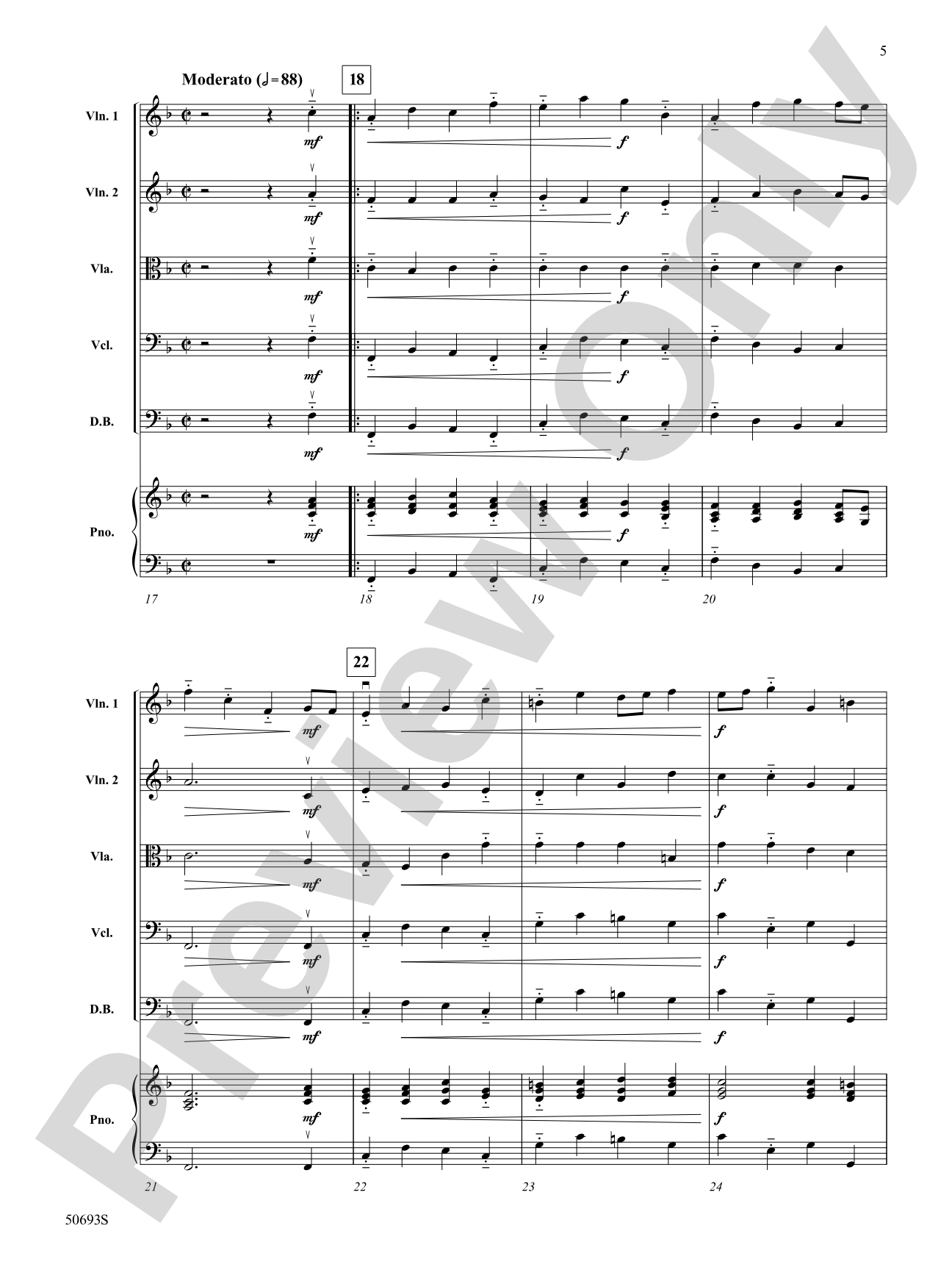
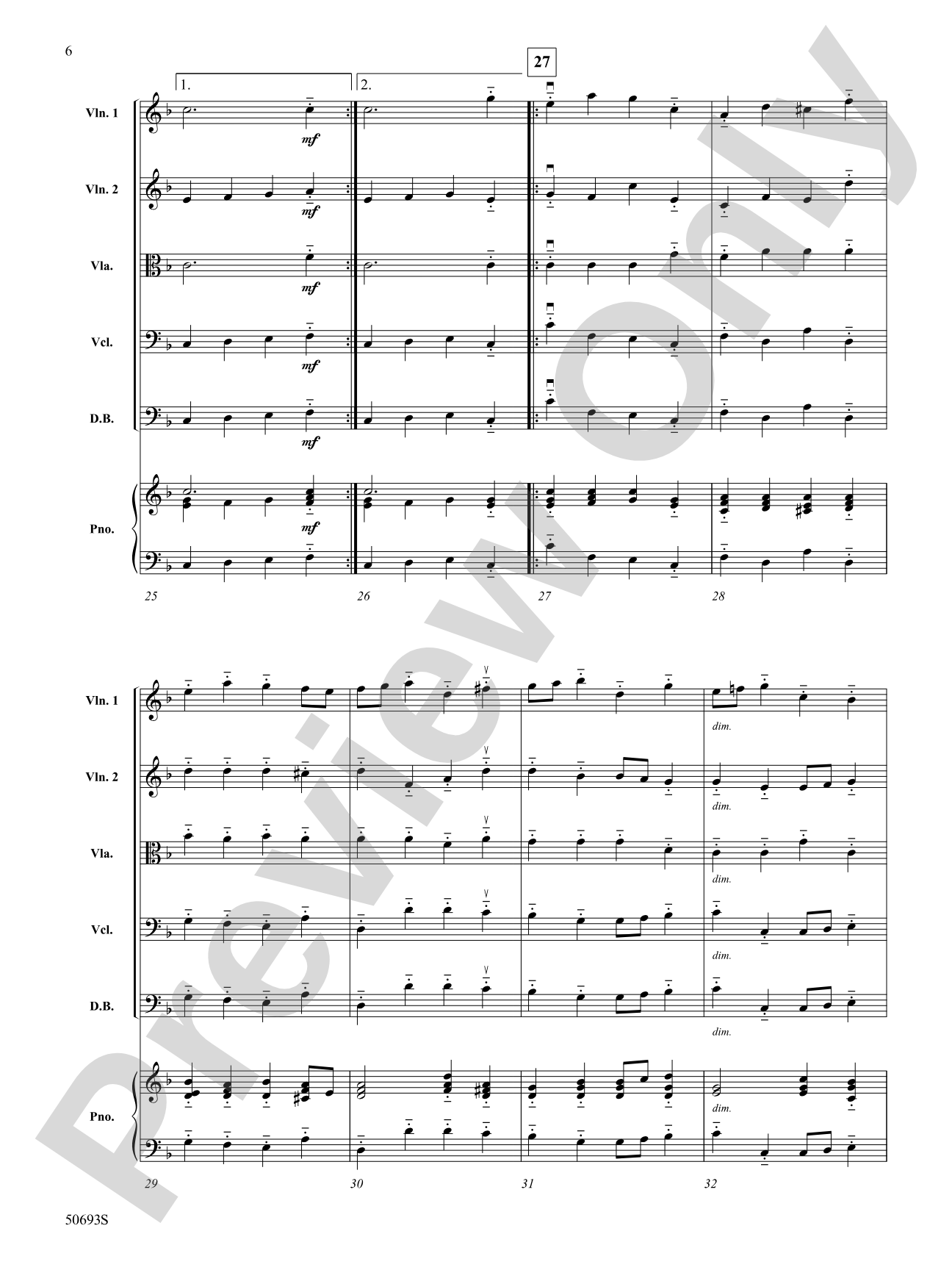
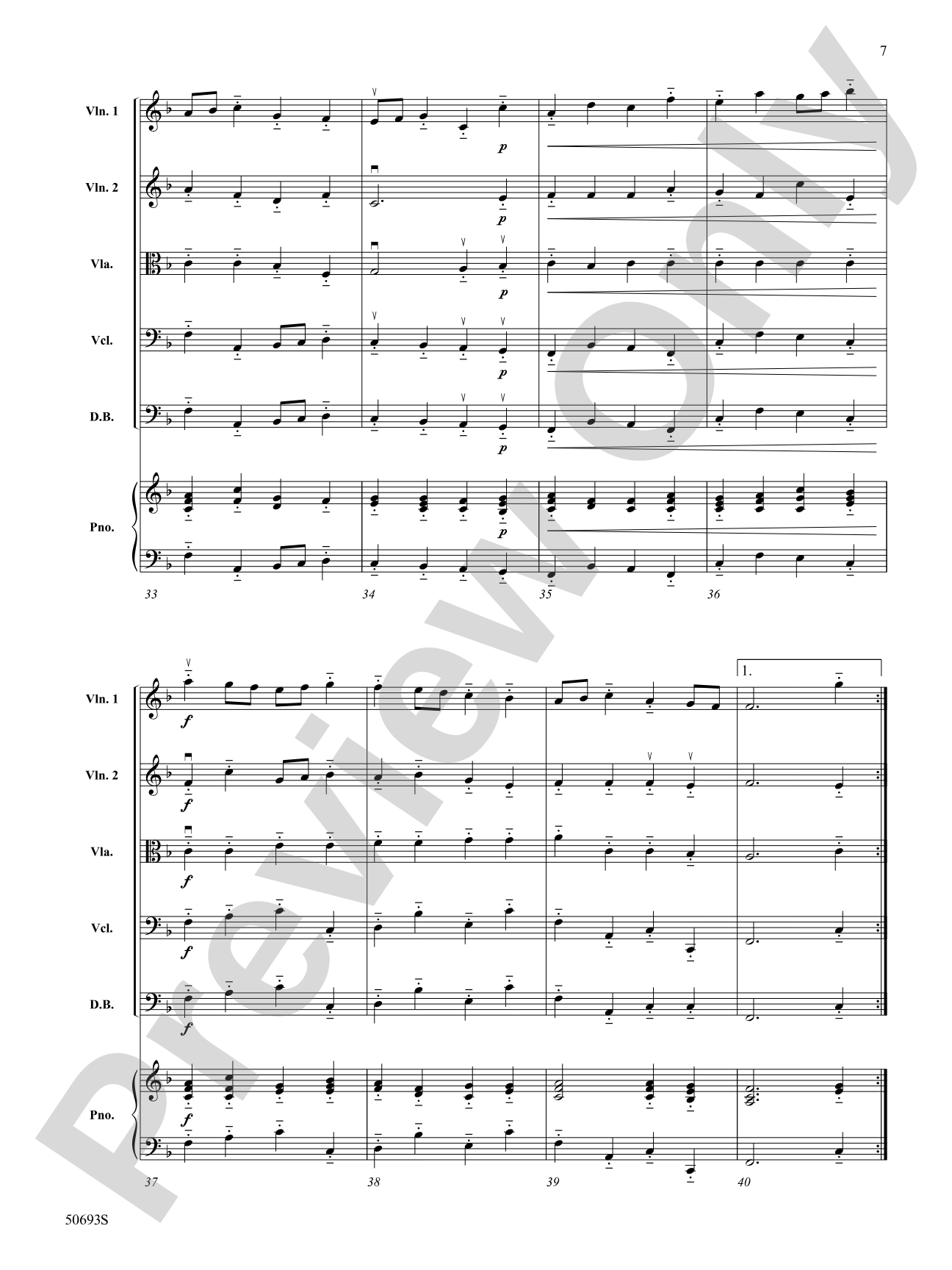
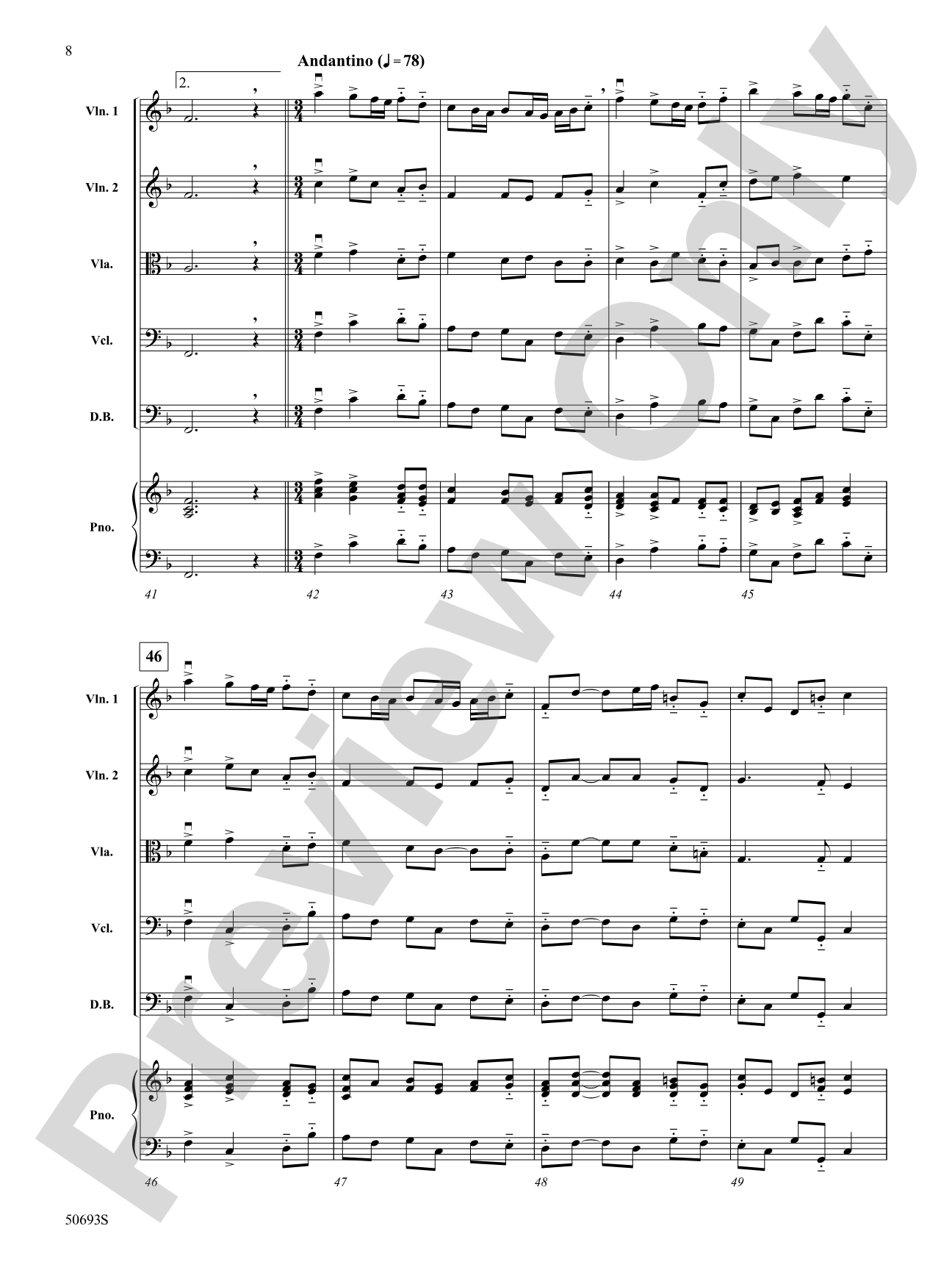
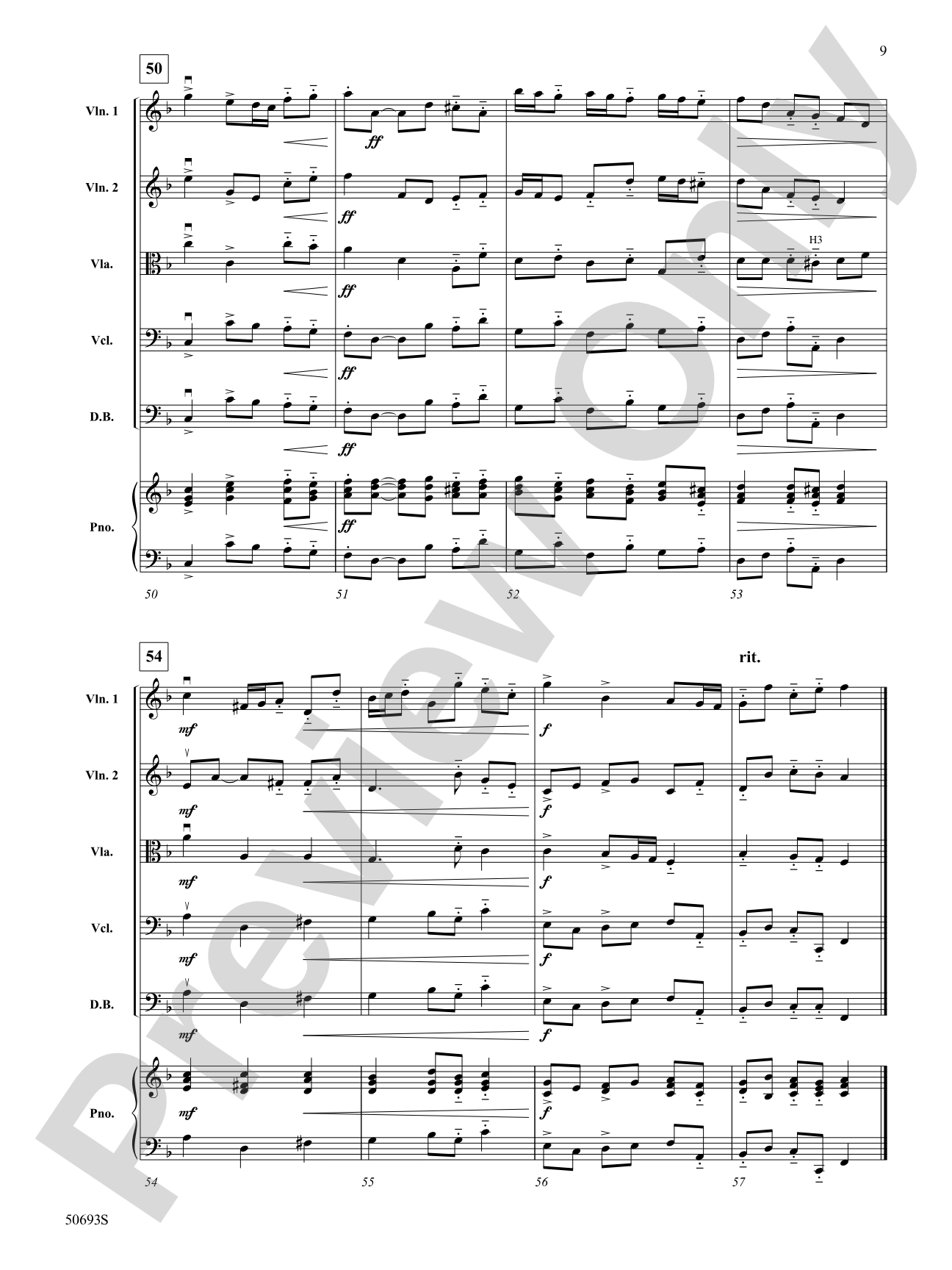

Hornpipe and Bourrée: String Orchestra Conductor Score & Parts
From Water Music Suite No. 2
By George Frideric Handel / arr. Deborah Baker Monday
Grade: 2.5
Item: 00-PK-0008710

$60.00
One moment…
Description
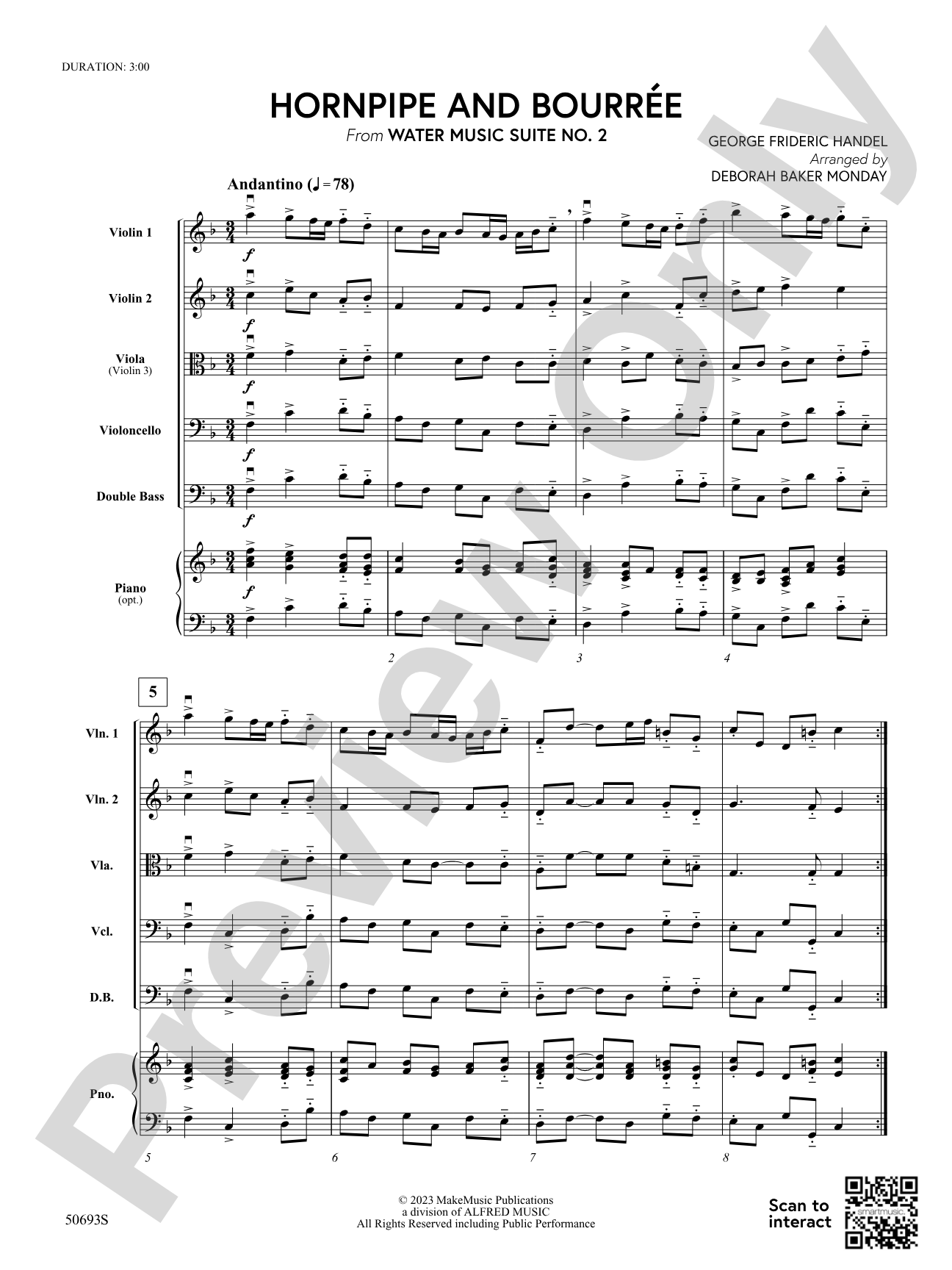
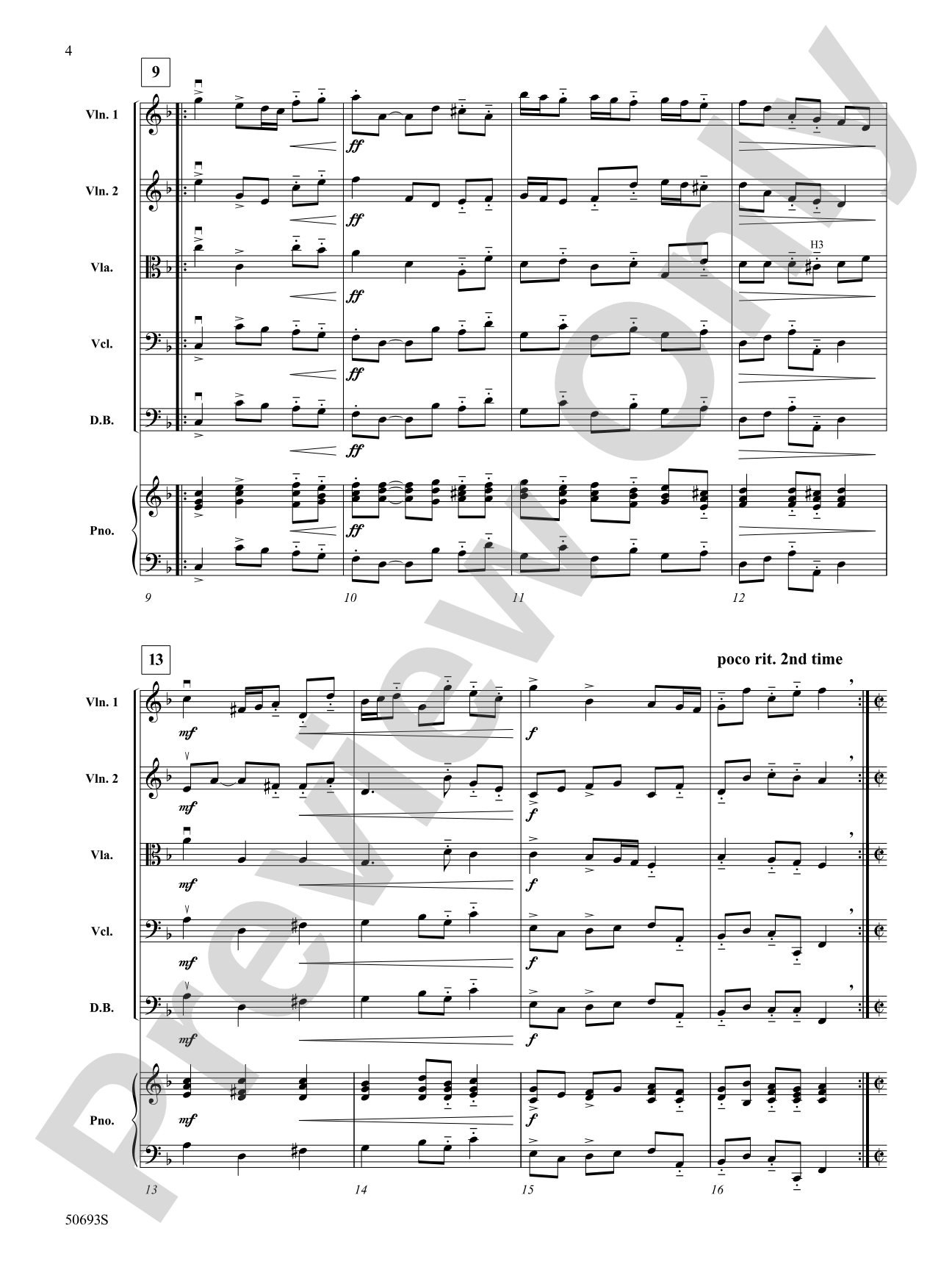
This joyful arrangement pairs George Frideric Handel's Hornpipe and Bourrée (from Water Music Suite No. 2) in the form of a minuet and trio. In the original key of F major, Deborah Baker Monday has taken great care to ensure all parts are engaging while staying remarkably true to Handel's original intent. Comfortably playable by developing musicians and a delightful arrangement for concert or festival. (3:00)


Don't just read it, hear it, play along with it, and watch your students grow with it. In MakeMusic Cloud, Hornpipe and Bourrée: String Orchestra Conductor Score & Parts comes alive with professional accompaniment, adjustable tempo, and built-in practice tools that turn solo practice into real progress.
Open in the Player
Jump straight in and assign it today.
Start Your Free Trial
Open this title and explore the full library in minutes.
Sample Audio
1
Audio File
--:--
0:00
0:00
Sample Video
Additional Details
Series:
MakeMusic Intermediate Strings
Publisher:
MakeMusic Publications
SKU:
00-PK-0008710
More about this title
About the Composer: George Frideric Handel
George Frideric Handel (1685–1759) shaped the musical landscape of the Baroque era through his prolific output of operas, oratorios, and instrumental works. Born in Germany and trained in Italy, he spent most of his career in England, where he became a naturalized citizen and a dominant figure in London's musical life. His gift for memorable melody and structural clarity made his music accessible to performers and audiences alike, qualities that have sustained his works in the repertoire for nearly 300 years.
Handel's Water Music Suite remains one of his most performed compositions, originally commissioned for outdoor performance on the Thames River. The Hornpipe and Bourrée showcase his mastery of dance forms and his ability to write music that is both sophisticated and immediately engaging. These pieces exemplify why Handel's instrumental works remain essential to string orchestra curricula: they combine elegant counterpoint with joyful, singable melodic lines that inspire musicians at every level.
Why we love this
Deborah Baker Monday's arrangement honors Handel's elegant voice leading while making every part matter in a way that keeps developing musicians engaged from first violin through cello. The minuet and trio pairing gives you a satisfying three-minute concert piece that sounds polished and professional without requiring advanced technical facility, making it an ideal choice for festival programming or a solid closer to a school concert.
What to expect
Bright and courtly, with the infectious energy of a dance that invites movement. The Hornpipe bounds along with rhythmic vitality while the Bourrée in trio form offers a moment of graceful reflection before returning to the opening theme, creating a satisfying arc of contrast and return.
Who it's for
String orchestra directors working with Grade 2-3 ensembles who need festival-ready repertoire with solid educational value. This arrangement suits programs that want to feature developing musicians in authentic Baroque music without oversimplifying the harmonic or structural content.
How to get the most out of it
- Shape the opening phrases with a gentle swell and release rather than playing at a static dynamic level; Handel's dance forms breathe naturally when you allow the arch of each melodic line to guide the phrasing.
- Balance the inner voices carefully in the trio section so the arrangement's textural shift is audible without drowning out the viola or cello line.
- Keep articulation light and consistent across the ensemble, particularly in the running sixteenth-note passages, to maintain the dance character and forward momentum.
- Use the minuet and trio contrast as an opportunity to shift color and texture subtly rather than dramatically; the relationship between sections should feel like variations on a theme rather than entirely separate pieces.
How to use it
Program this as a concert opener to establish an elegant, upbeat mood, or pair it with other Baroque string works to create a short thematic set. The three-minute duration makes it ideal for festival competitions where you want your ensemble to make a strong impression in a compact timeframe.
Skills your students will build
- Baroque phrasing and articulation in string writing
- Balancing primary and secondary melodic material
- Stylistic differentiation between minuet and trio forms
- Ensemble intonation in scalar passages at moderate tempo
- Dynamic shaping and expression within classical proportions