Hornpipe Sheet Music Preview

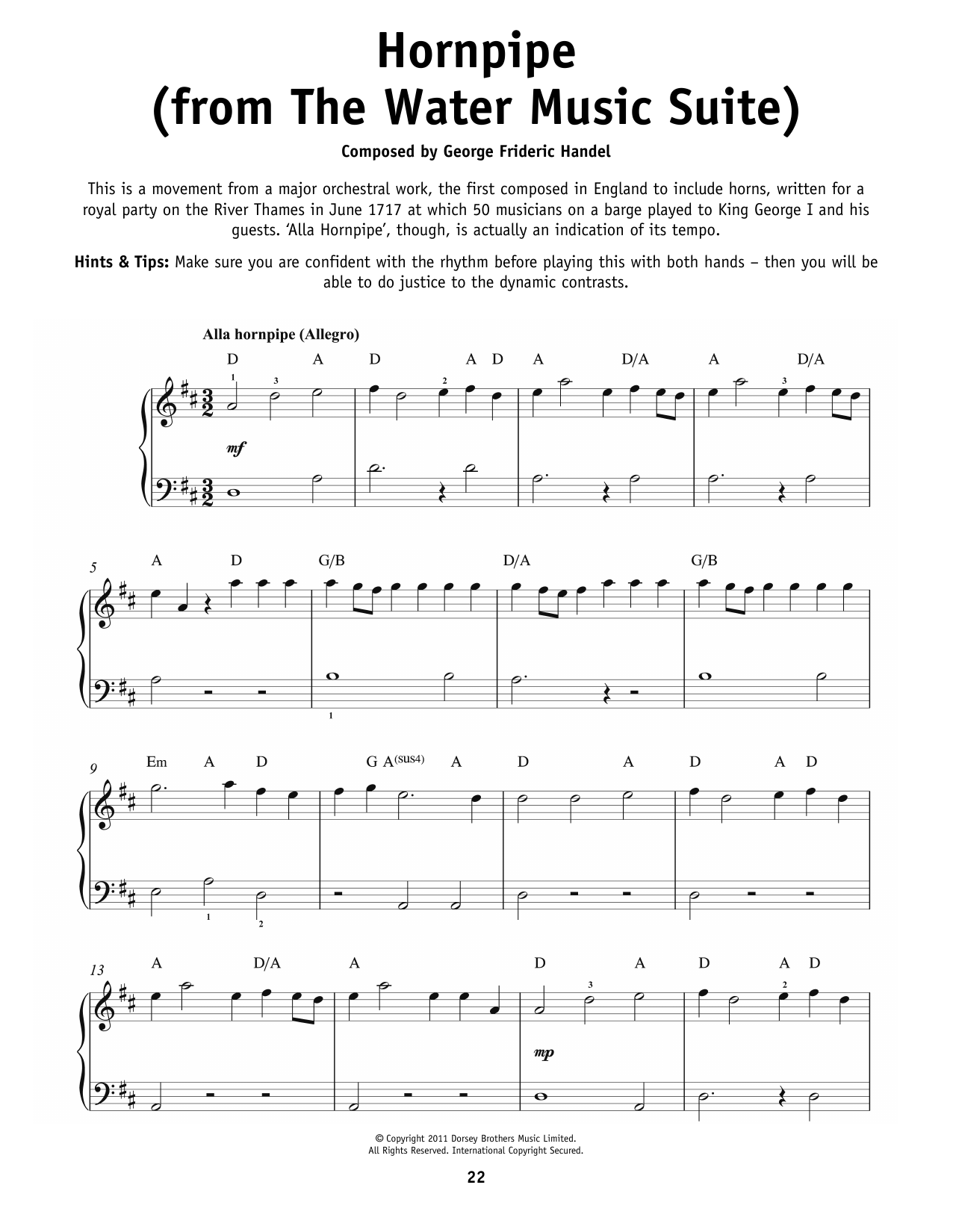
Hornpipe: Really Easy Piano

As performed by George Frideric Handel

Item: 35-DS01587922

Digital Download
$4.99
Description

Discover MakeMusic Cloud: thousands of interactive titles your students can play along with today.

Sample Audio
No sample audio found.
Sample Video
Additional Details
Publisher: Hal Leonard
Page Count: 2
SKU: 35-DS01587922

More about this title

About the Artist: George Frideric Handel

George Frideric Handel (1685–1759) was a German-born composer who spent most of his career in England, where he became a defining voice of the Baroque era. His instrumental works span concertos, overtures, and dance movements that showcase brilliant orchestration and clear harmonic architecture, qualities that made him one of the most performed composers of his time.

Handel's hornpipes appear across his theatrical works and instrumental suites, written for both stage and concert settings. These pieces exemplify his gift for crafting memorable melodic lines that sit comfortably within performer capabilities while maintaining genuine musical substance.

Why we love this

Hornpipes by Handel offer performers genuine musical satisfaction in just two pages. The melody is instantly recognizable, the harmonic language is transparent enough for young ensembles to hear their own intonation clearly, and the dance rhythm engages audiences immediately. This is accessible repertoire with professional credentials.

What to expect

Sprightly and purposeful. The hornpipe rhythm carries an almost lilting swagger, combining the energy of a dance with the refinement Handel brought to everything he wrote. Audiences recognize it instantly as festive and celebratory.

Who it's for

This works for intermediate ensembles seeking repertoire with historical weight and immediate musical payoff. String orchestras, wind bands, and smaller chamber groups can all find an arrangement suited to their instrumentation through the REP library.

How to get the most out of it

  • Keep the rhythmic pulse steady and energetic. Hornpipes thrive on forward momentum rather than rubato.
  • Balance the melody against accompaniment; the counterlines in Handel's scoring deserve audibility without overwhelming the primary voice.
  • Shape phrases through natural breath points rather than heavy dynamic changes. Let the harmonic rhythm carry the architecture.
  • Articulate the characteristically short notes with clarity. Baroque style calls for crisp tonguing or bowing without excessive separation.

How to use it

Open a concert or suite with this to establish a lively tone, or pair it with other Baroque dance movements for a coherent program segment. It sits perfectly between heavier Baroque works and lighter contemporary pieces, serving as both a standalone showpiece and a building block for themed programming around dance or wedding repertoire.

Skills your students will build

  • Baroque articulation and phrasing conventions
  • Maintaining steady rhythmic pulse in dance forms
  • Balancing melody and harmonic accompaniment
  • Reading and interpreting figured bass or continuo notation
  • Stylistic flexibility and historical awareness

You May Also Like