
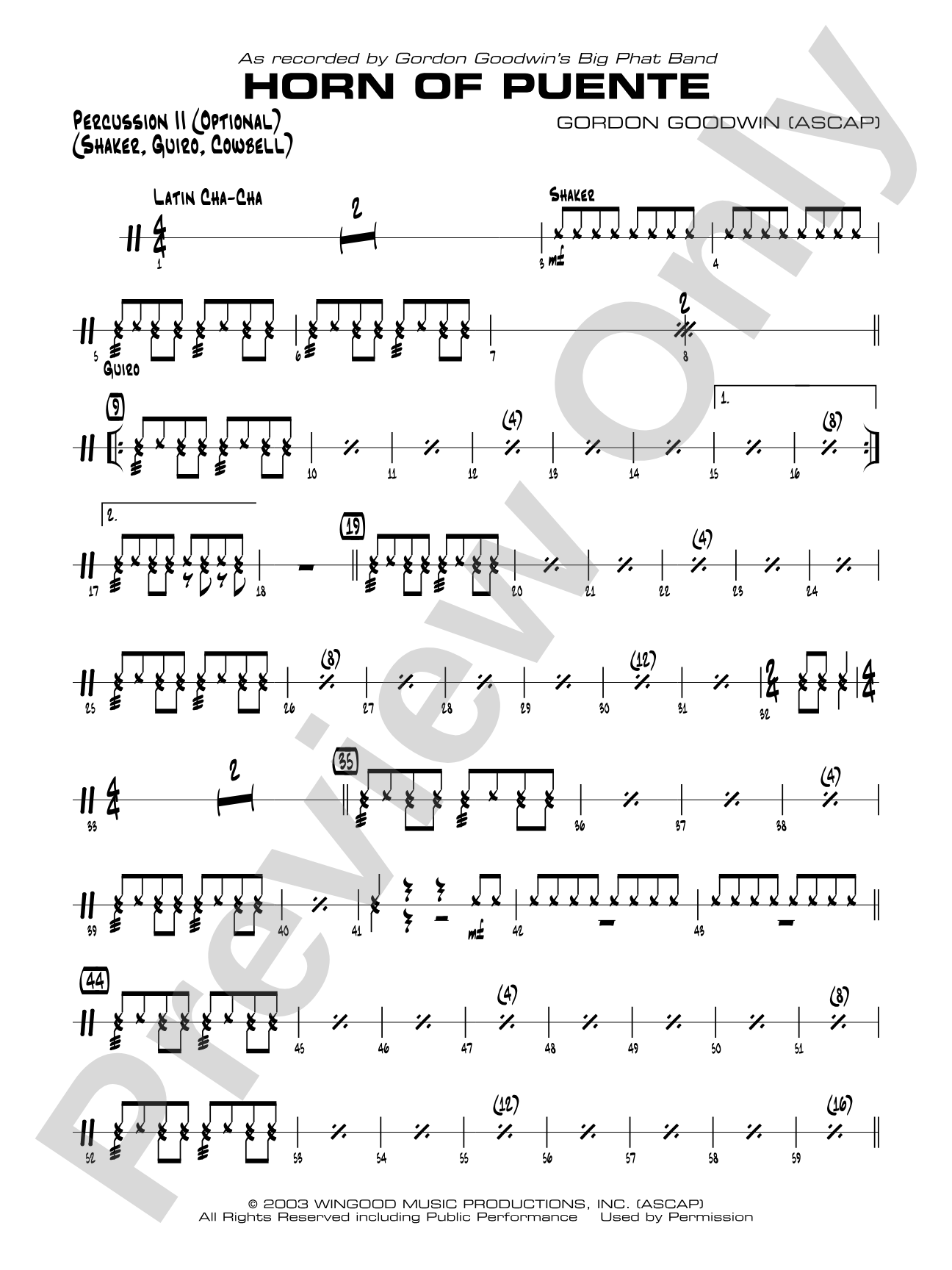

Horn of Puente: 2nd Percussion
By Gordon Goodwin
Grade: 5.5 (Advanced / Difficult)
Item: 00-PC-0002460_PC2
$3.00
Pickup currently not available
Description
A cha cha you won't forget! Trumpet is featured in this fabulous chart by today's hottest contemporary writer, Gordon Goodwin. The trumpet soloist has plenty of space to solo - both improvised and written and there are hot unison lines throughout this high-energy composition to keep everyone thinking. The piano has an authentic Latin ostinato, 1st alto sax has a soprano and flute doubles (optional alto sax part included), and a percussion part is provided. Dedicated to the legendary Latin percussionist Tito Puente. Ideal for festival and concert - this chart is outstanding! As recorded by Gordon Goodwin's Big Phat Band on the new CD Off the Beaten Path. This title is available in MakeMusic Cloud.


Don't just read it, hear it, play along with it, and watch your students grow with it. In MakeMusic Cloud, Horn of Puente: 2nd Percussion comes alive with professional accompaniment, adjustable tempo, and built-in practice tools that turn solo practice into real progress.
Open in the Player
Jump straight in and assign it today.
Start Your Free Trial
Open this title and explore the full library in minutes.
Sample Audio
1
Audio File
--:--
0:00
0:00
Sample Video
No sample videos found.
Additional Details
Series:
Gordon Goodwin Series
Publisher:
Alfred Music
Page Count:
116
SKU:
00-PC-0002460_PC2
More about this title
About the Composer: Gordon Goodwin
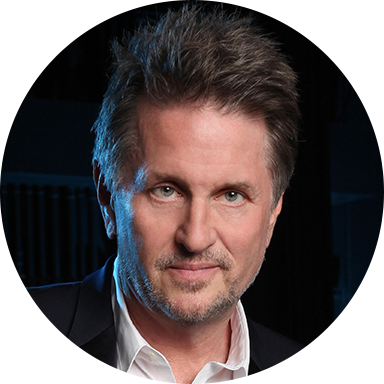
Gordon Goodwin began composing at five years old, transcribing complete pieces from his imagination rather than simple fragments. By age thirteen, he had already written his first big band chart, Hang Loose, signaling a precocious talent that would reshape contemporary jazz writing. His Emmy-winning work in film and television (Bad Boys II, Enemy of the State, Remember the Titans, Star Trek: Nemesis, and others) and his collaborations with artists including Christina Aguilera, Quincy Jones, Ray Charles, and Brian McKnight established him as a composer of exceptional range and sophistication.
In 2000, Goodwin founded Gordon Goodwin's Big Phat Band, one of Los Angeles's most vital large jazz ensembles. The band's recordings have earned multiple Grammy nominations, including recognition for Best Large Jazz Ensemble Album and Best Instrumental Composition. Goodwin has conducted world-class symphony orchestras across North America and Europe, and his charts have become standards in the jazz education repertoire, known for their infectious energy, sophisticated harmonies, and opportunities for both ensemble precision and soloist expression.
Why we love this
Goodwin's writing balances infectious rhythmic drive with genuine harmonic sophistication, and this cha cha delivers both. The trumpet soloist gets genuine space to shine with written figures and improvised sections, while the ensemble parts stay engaged throughout with unison figures and syncopated backgrounds that demand tightness and musicality.
What to expect
Propulsive and joyful. The cha cha rhythm moves with genuine Latin flavor, driven by the piano's authentic ostinato and energized by the ensemble's hot unison lines. The trumpet solos burst with personality against warm horn backgrounds, creating moments of individual expression nested inside a tightly crafted ensemble sound.
Who it's for
Advanced jazz ensembles ready for Grade 5.5 difficulty, festival-bound groups seeking contemporary big band literature, and ensembles with a strong trumpet soloist who can handle both written passages and improvisation. Conductors programming Latin jazz that avoids cliché will find Goodwin's sophisticated approach refreshing.
How to get the most out of it
- Lock the trumpet soloist and rhythm section together first. The written figures and transitions between scripted and improvised sections need to feel seamless, so rehearse these touchpoints in isolation before running the full chart.
- Establish the Latin ostinato in piano early and keep it anchored throughout rehearsals. This pattern is the heartbeat of the piece; every other section locks to it.
- Balance the optional alto sax doubling against the soprano and flute on the first alto part. If you use the additional alto, make sure it sits underneath the higher voices rather than competing for space.
- Pay attention to the unison lines as ensemble moments. These are where precision and blend matter most; mark them in parts and drill them separately to ensure clarity and punch.
How to use it
Place this on a jazz festival or concert set where you want to showcase both ensemble tightness and soloist artistry. It pairs well with other contemporary big band charts but stands alone as a high-energy closer or opener that audiences remember. The piece's accessibility (despite its advanced technical demands) and popularity from the Big Phat Band recording make it an excellent programming choice.
Skills your students will build
- Playing syncopated unison figures with precision and blend
- Comping and responding to trumpet soloist phrasing in written and improvised sections
- Latin rhythm section coordination (particularly authentic cha cha feel)
- Optional doubling and doublet voicing management (soprano/flute on first alto)
- Listening skills in response-based ensemble writing