
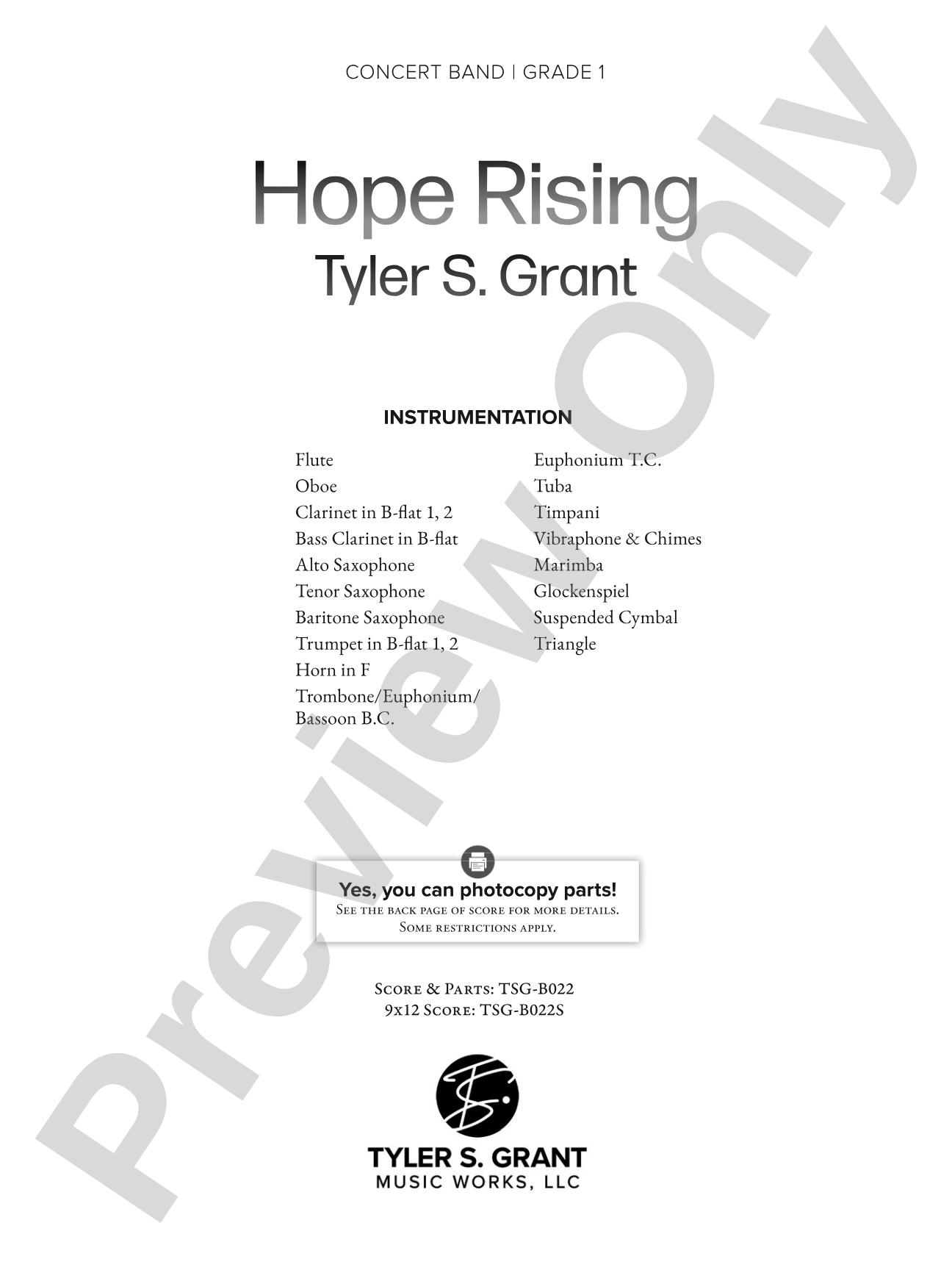
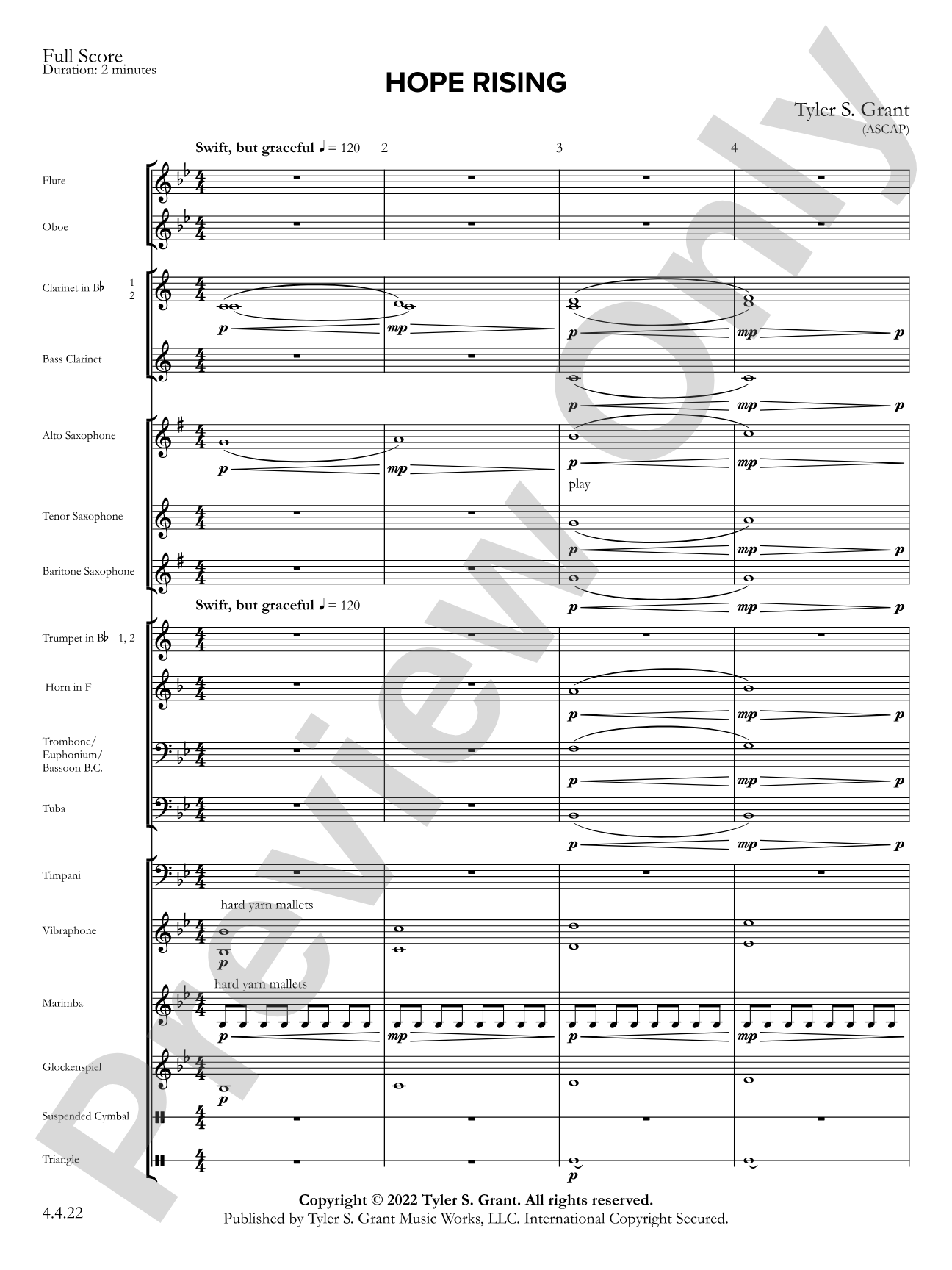
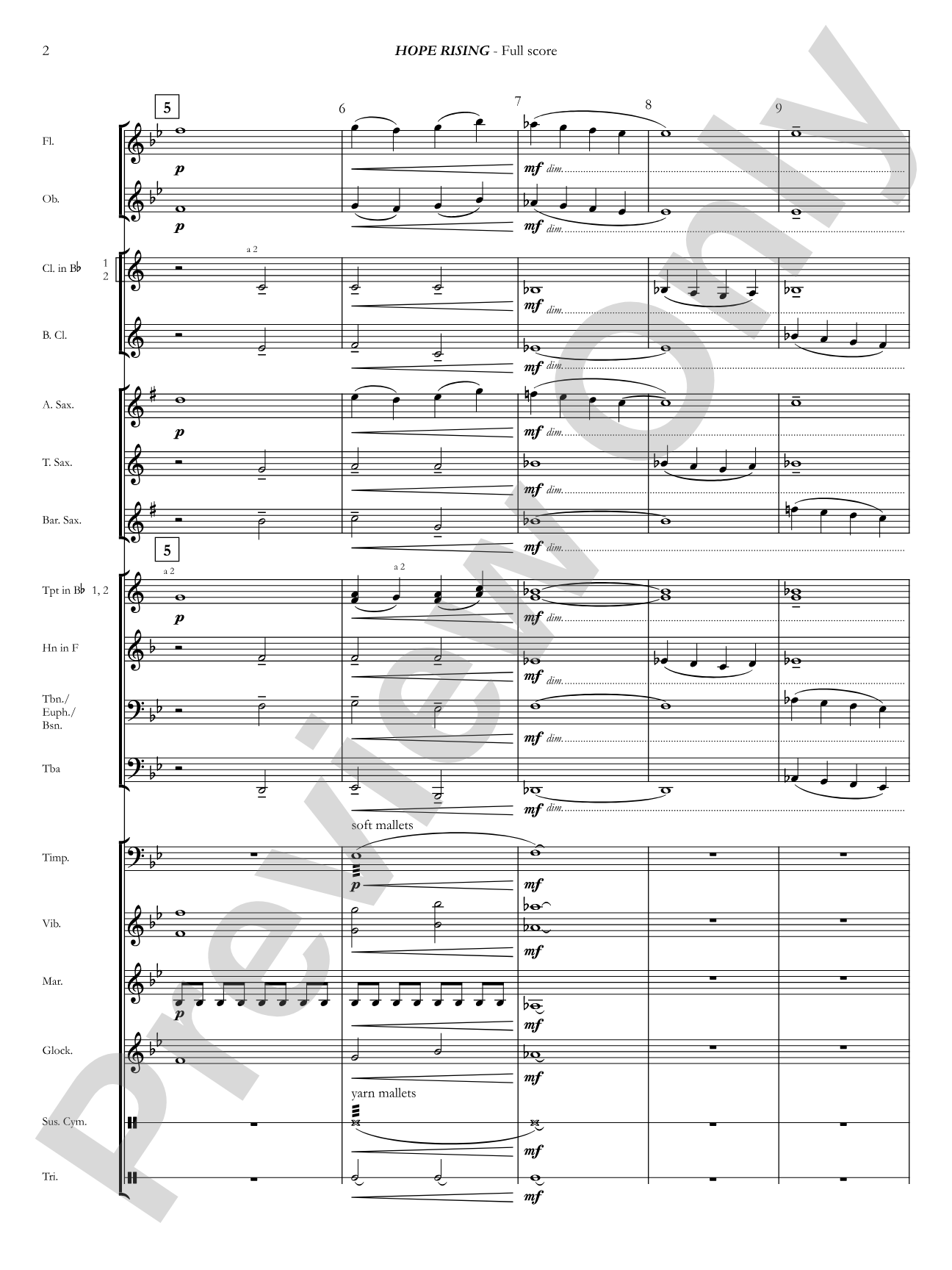
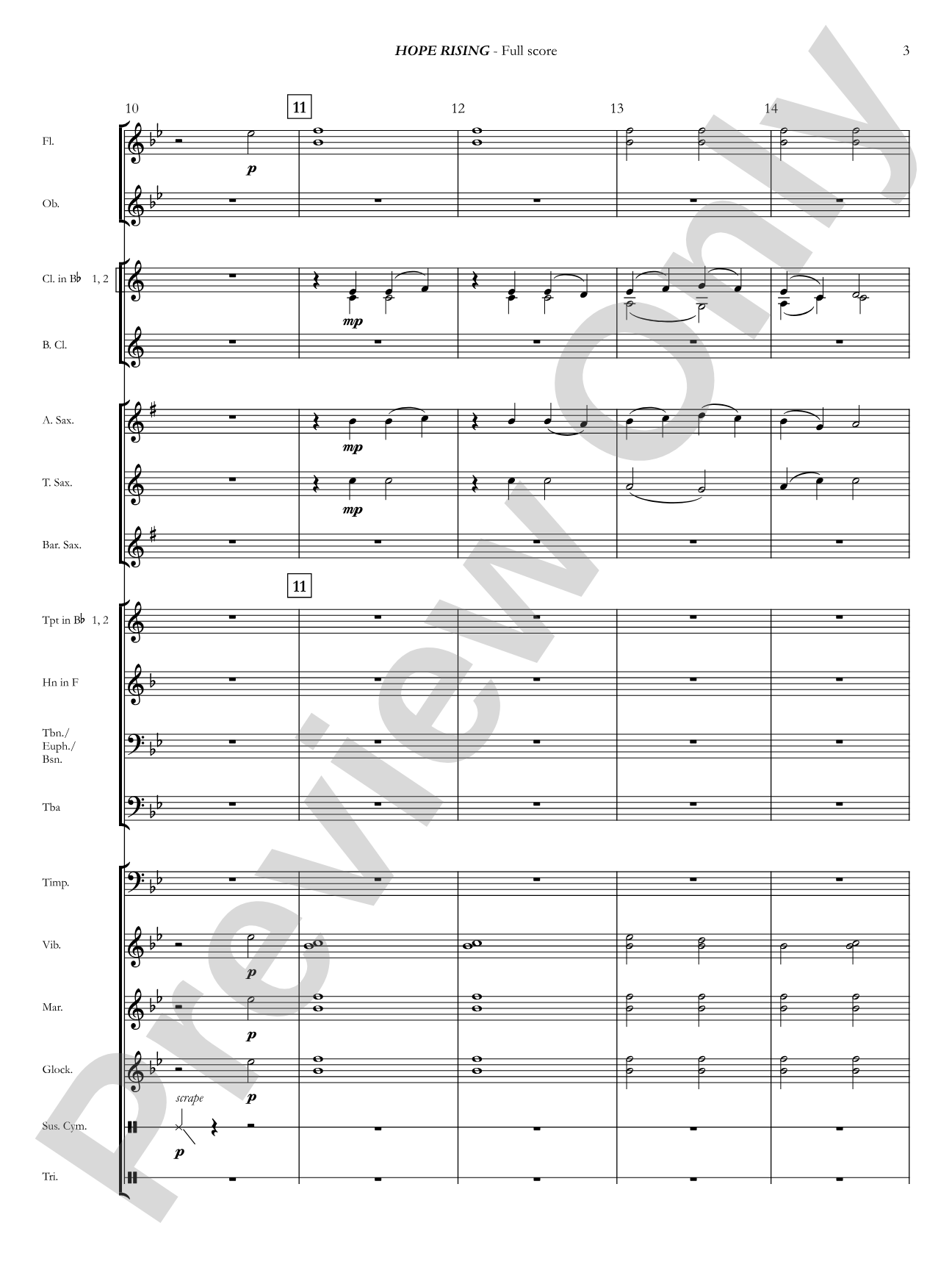
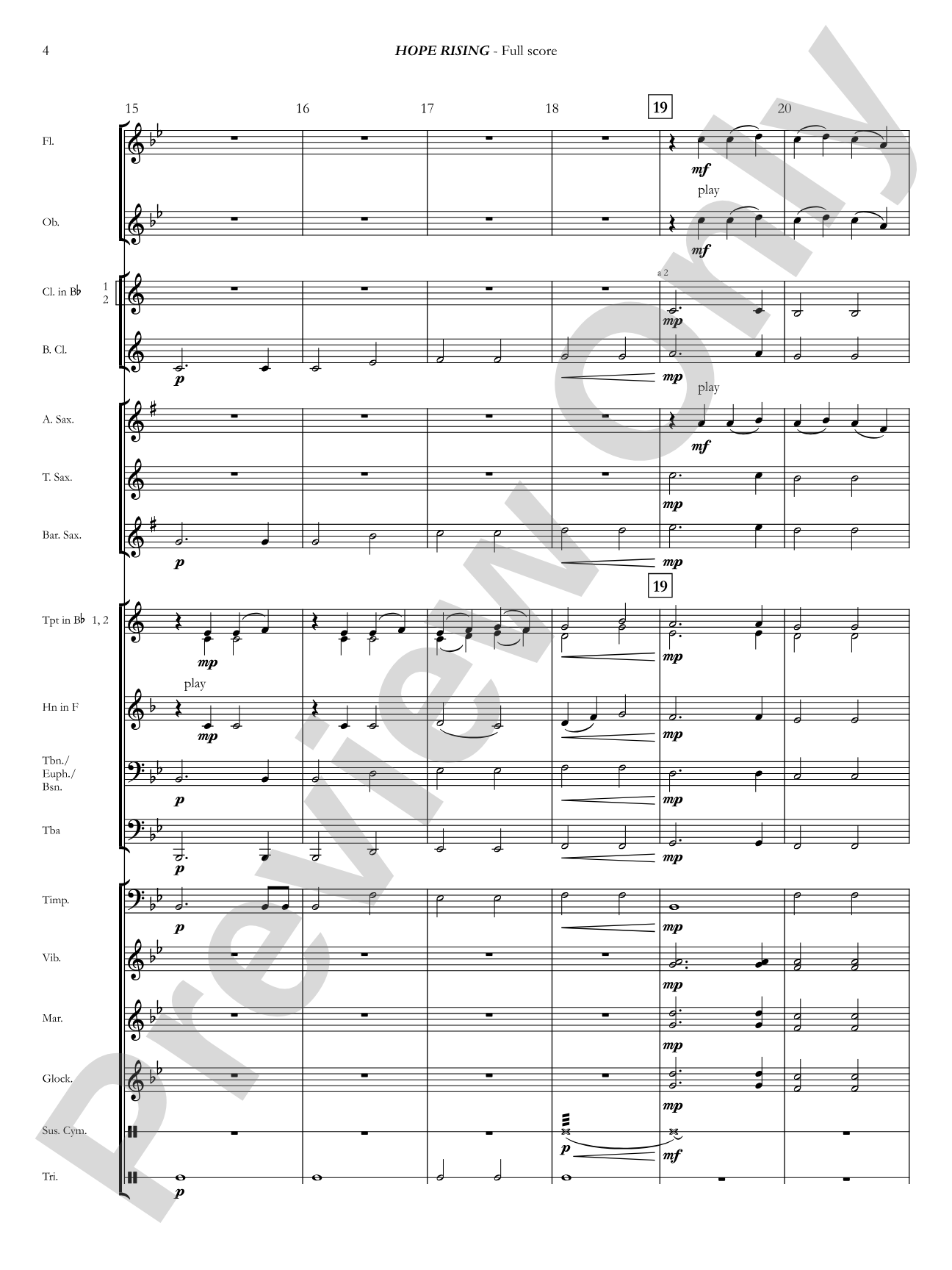
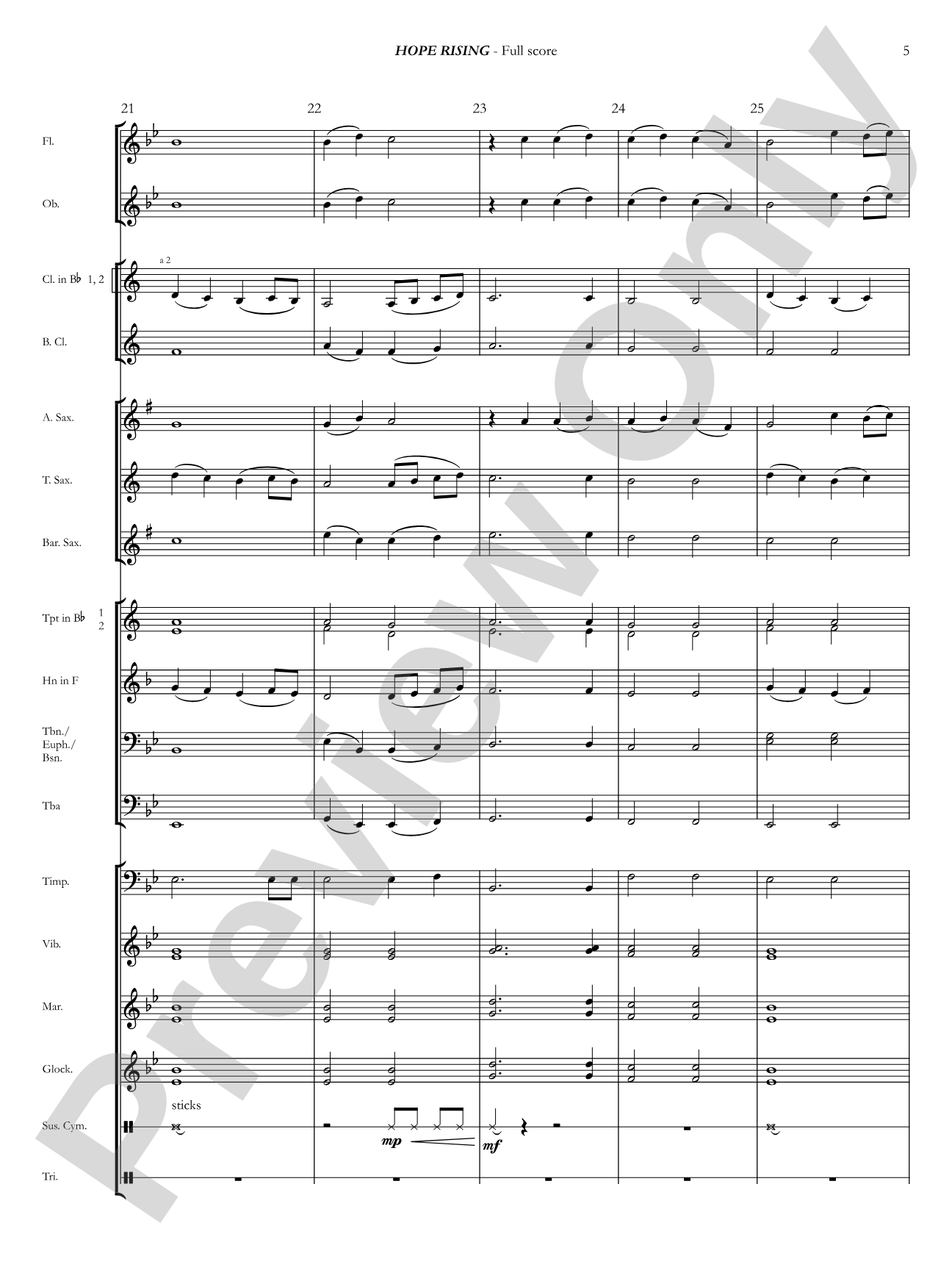
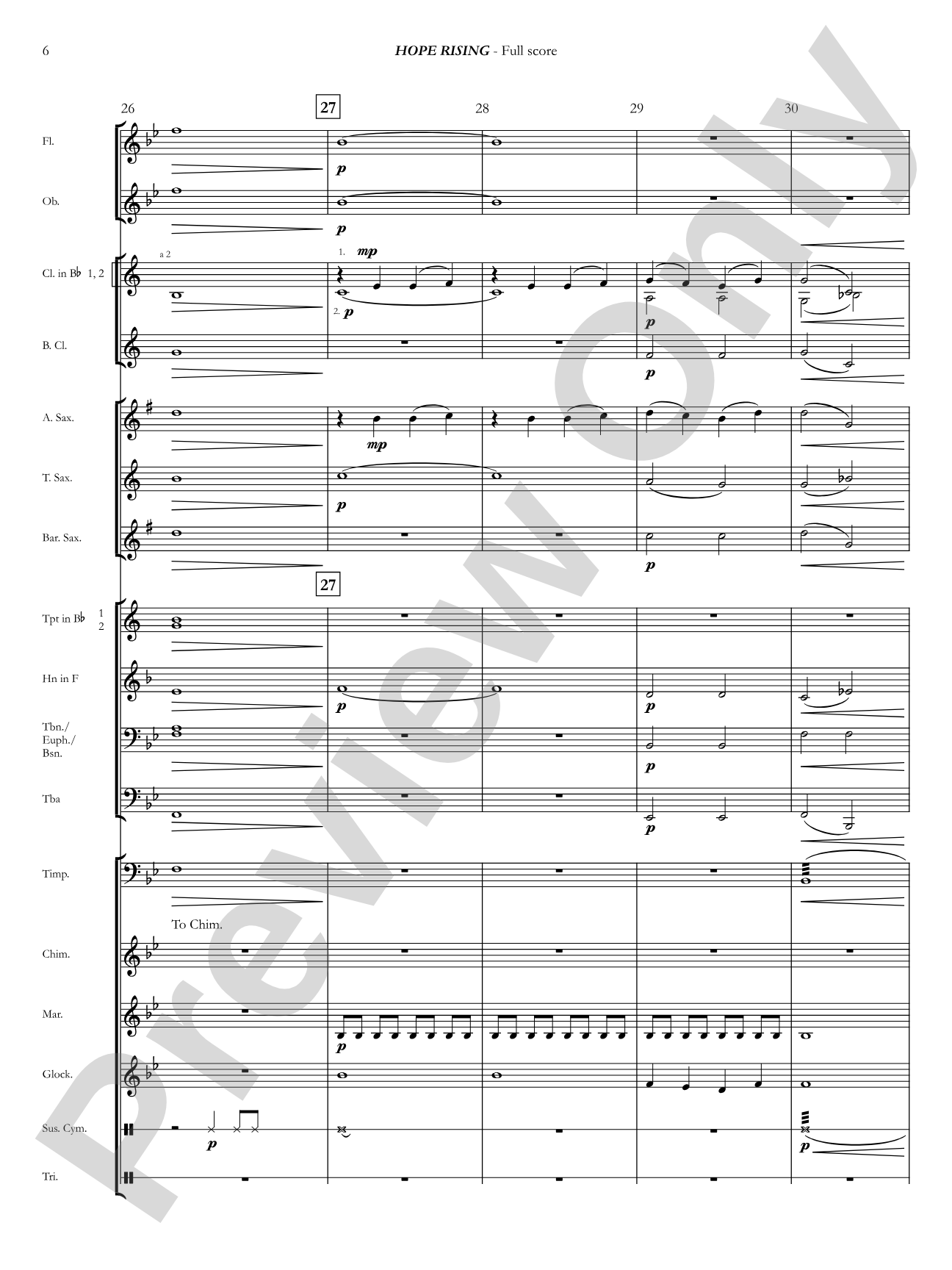
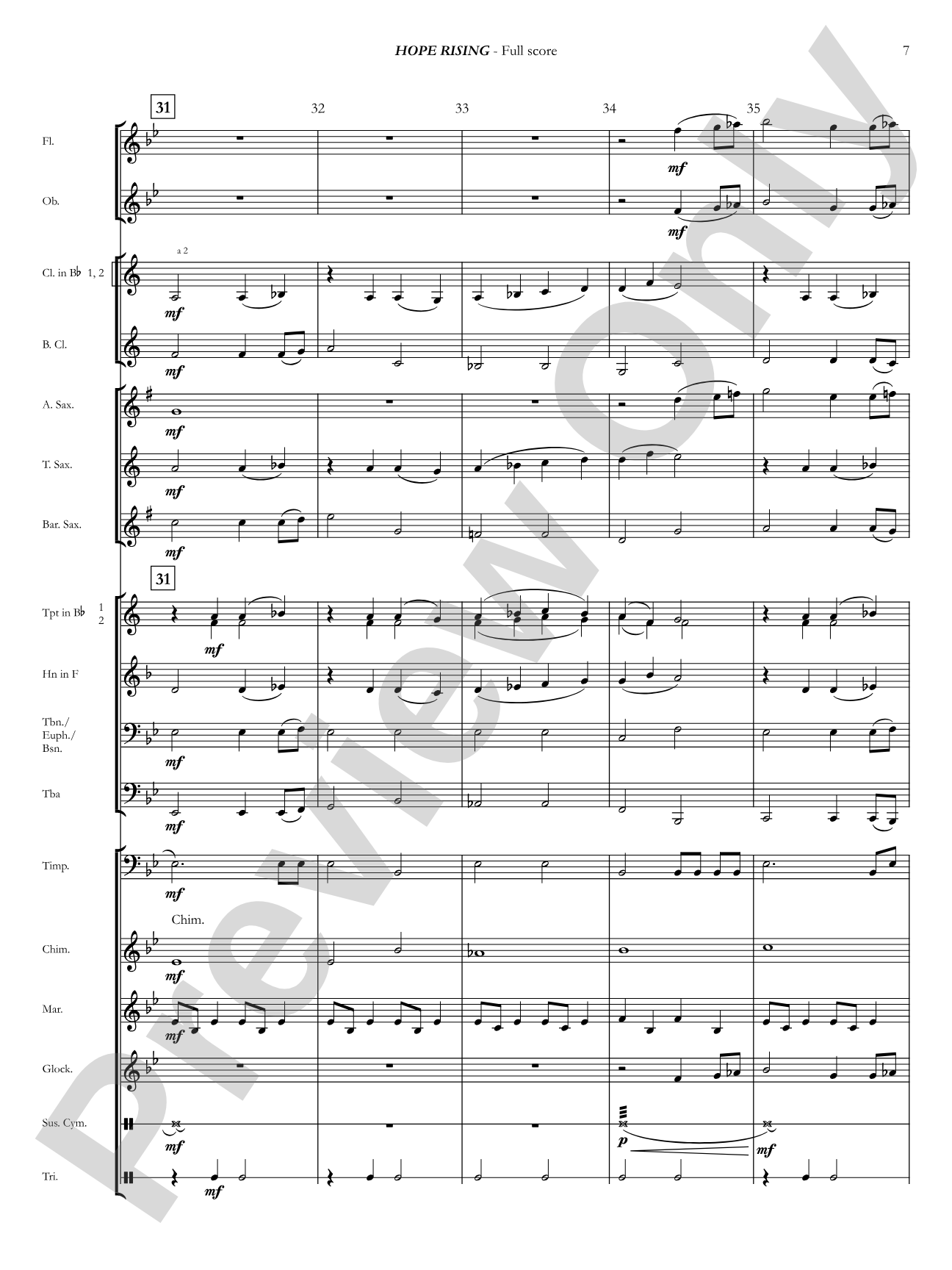
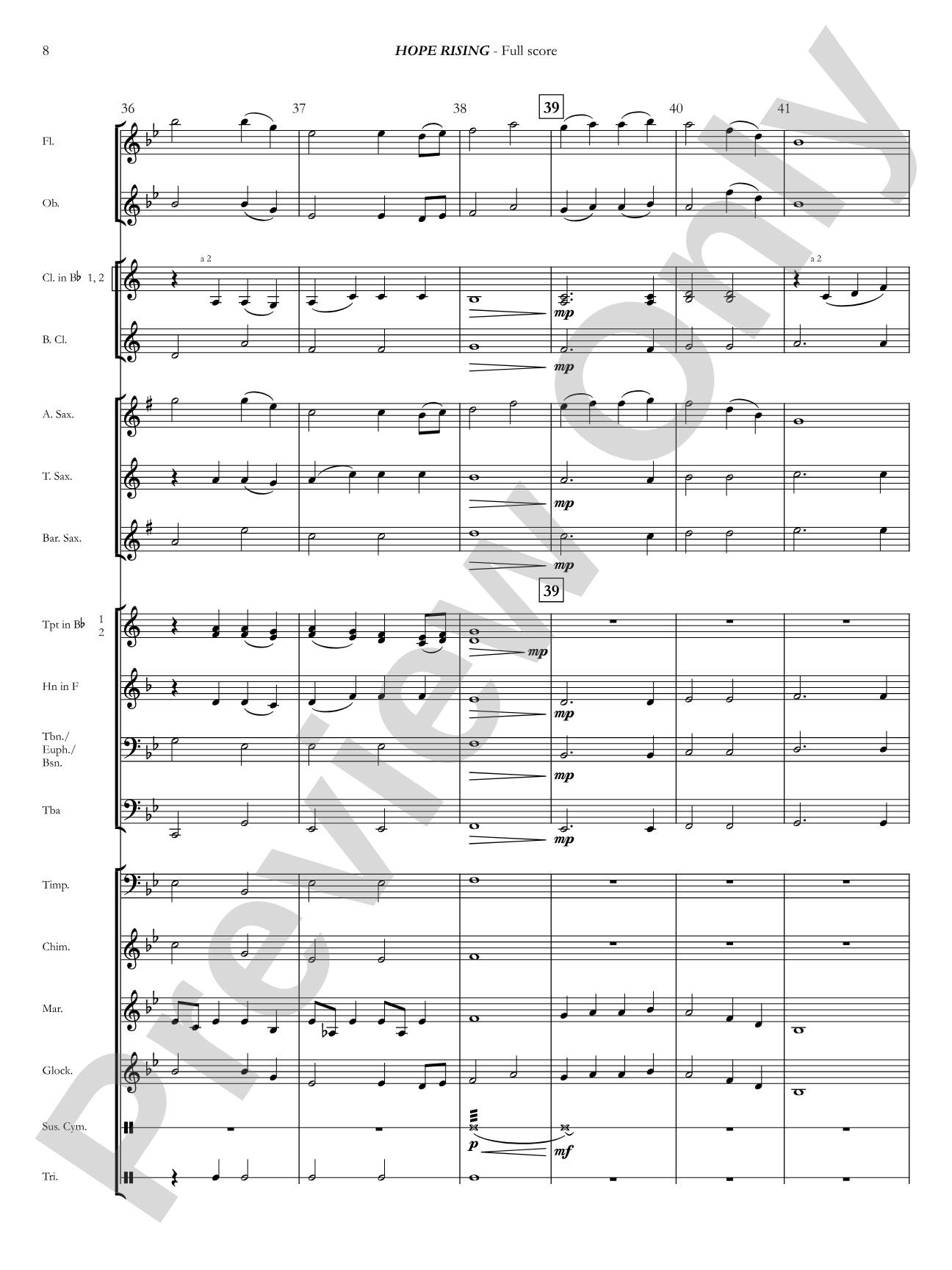
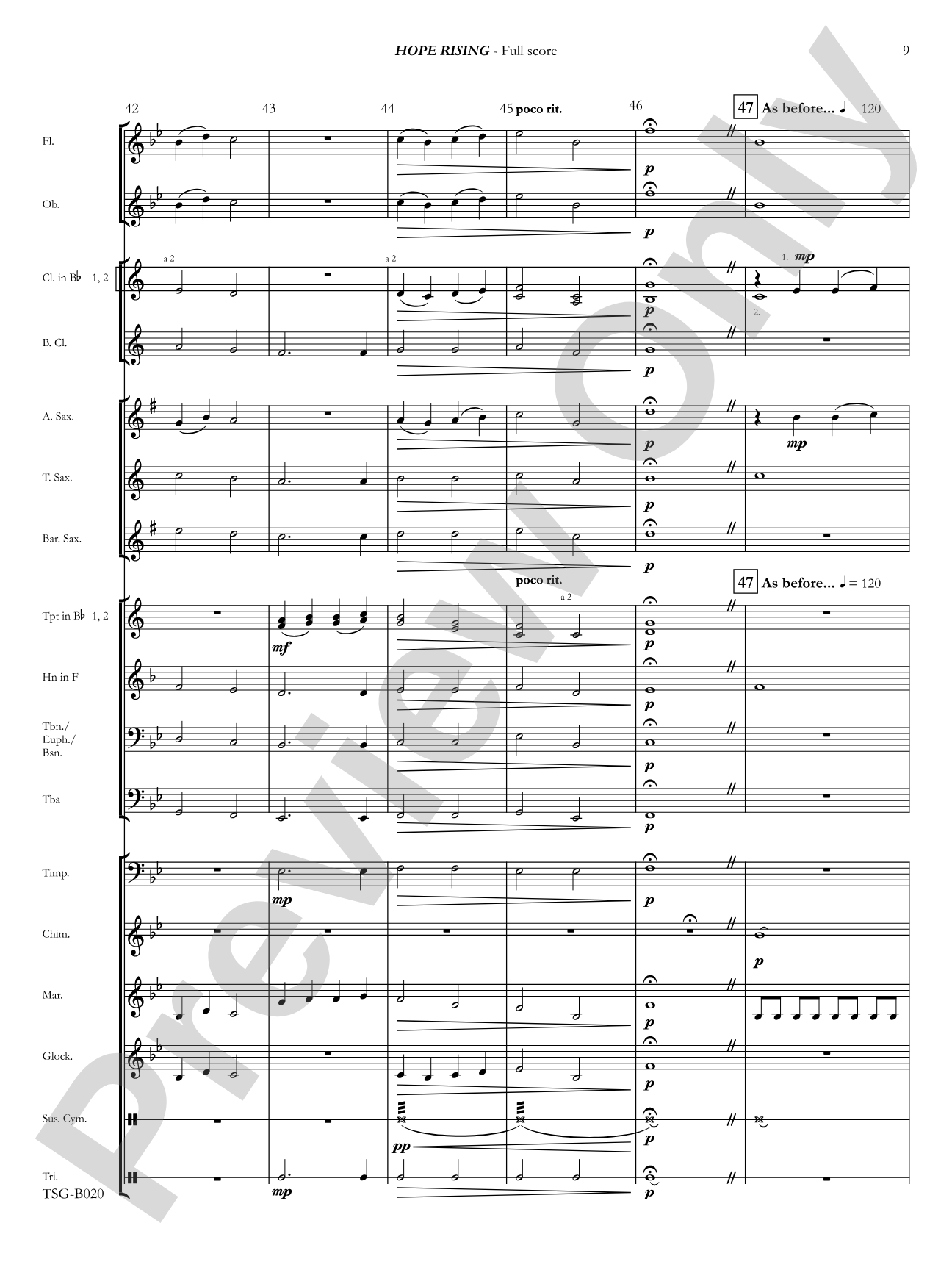
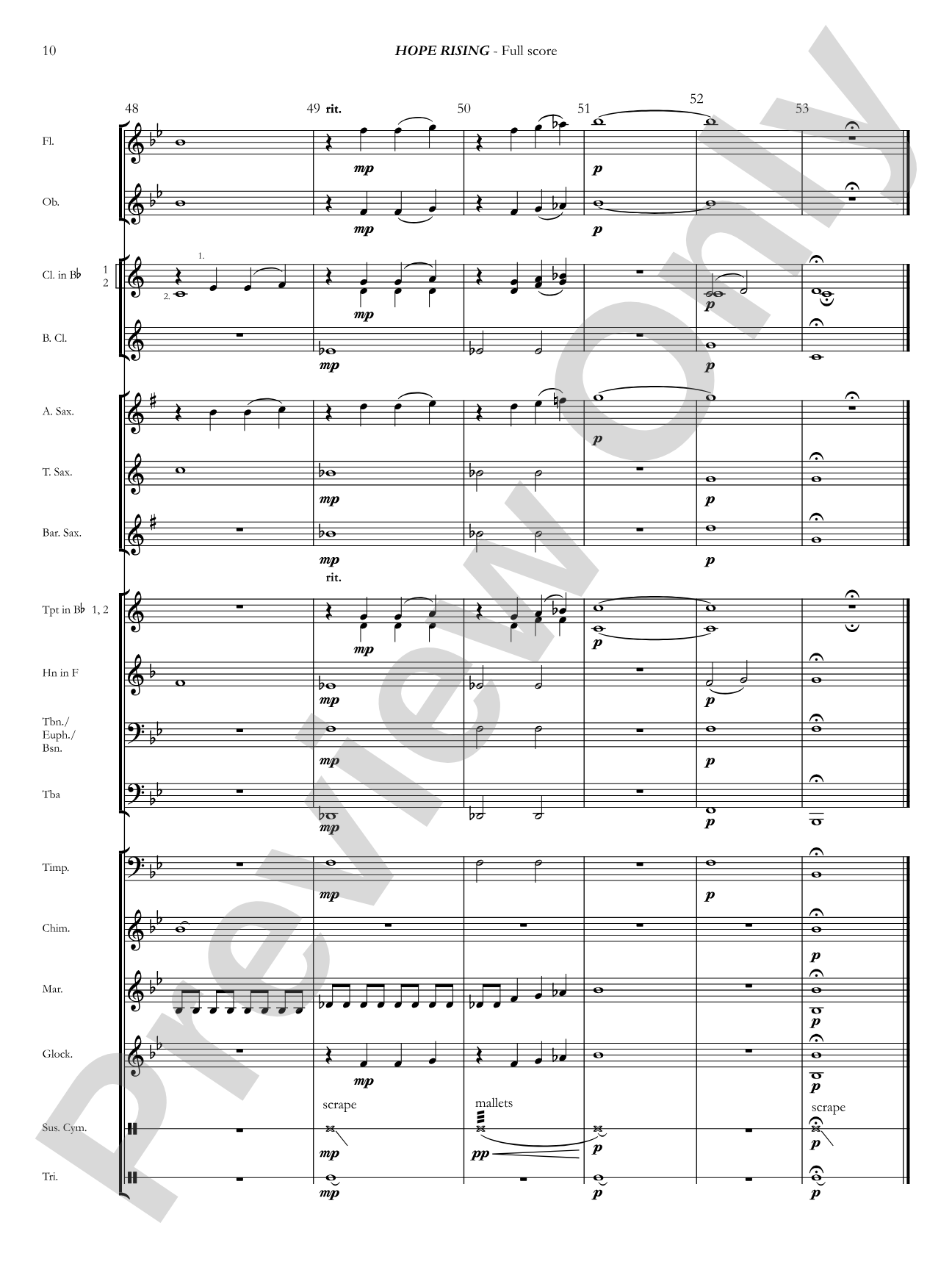

Hope Rising: Concert Band Conductor Score & Parts
By Tyler S. Grant
Grade: 1
Item: 98-DTSGB022
$60.00
Pickup currently not available
Buy Extra Parts (Digital PDF Download)
| Product | Price | Quantity |
|---|---|---|
| Hope Rising: Score | $12.00 | |
| Hope Rising: 1st Flute | $4.50 | |
| Hope Rising: Oboe | $4.50 | |
| Hope Rising: 1st B-flat Clarinet | $4.50 | |
| Hope Rising: 2nd B-flat Clarinet | $4.50 | |
| Hope Rising: Bass Clarinet | $4.50 | |
| Hope Rising: 1st E-flat Alto Saxophone | $4.50 | |
| Hope Rising: B-flat Tenor Saxophone | $4.50 | |
| Hope Rising: E-flat Baritone Saxophone | $4.50 | |
| Hope Rising: 1st B-flat Trumpet | $4.50 | |
| Hope Rising: 2nd B-flat Trumpet | $4.50 | |
| Hope Rising: 1st F Horn | $4.50 | |
| Hope Rising: 1st Trombone | $4.50 | |
| Hope Rising: Baritone T.C. | $4.50 | |
| Hope Rising: Tuba | $4.50 | |
| Hope Rising: Timpani | $4.50 | |
| Hope Rising: Vibraphone | $4.50 | |
| Hope Rising: Glockenspiel | $4.50 | |
| Hope Rising: Suspended Cymbal | $4.50 | |
| Hope Rising: Triangle | $4.50 | |
| Hope Rising: Marimba | $4.50 |
Parts Added to Cart!
Related Items
Hope Rising: Concert Band Conductor Score & Parts |
$60.00
|
View |
Description
Develop your ensemble's tone, phrasing, and overall musicianship with this beautifully lyrical work. Hope Rising by Tyler S. Grant for concert band was recorded by the Atlanta Wind Symphony. (2:15)


Hope Rising: Concert Band Conductor Score & Parts isn't in MakeMusic Cloud just yet...but it could be. Let us know you'd like to see it, and you'll help shape what comes next. In the meantime, start a free trial and dive into thousands of interactive titles your students can play along with today.
Request This Title
Tell us you want it.
Start Your Free Trial
Explore everything that's ready to play right now.
Sample Audio
1
Audio File
--:--
0:00
0:00
Sample Video
Additional Details
Series:
Tyler S. Grant Music Works
Publisher:
Tyler S. Grant Music Works, LLC.
SKU:
98-DTSGB022
More about this title
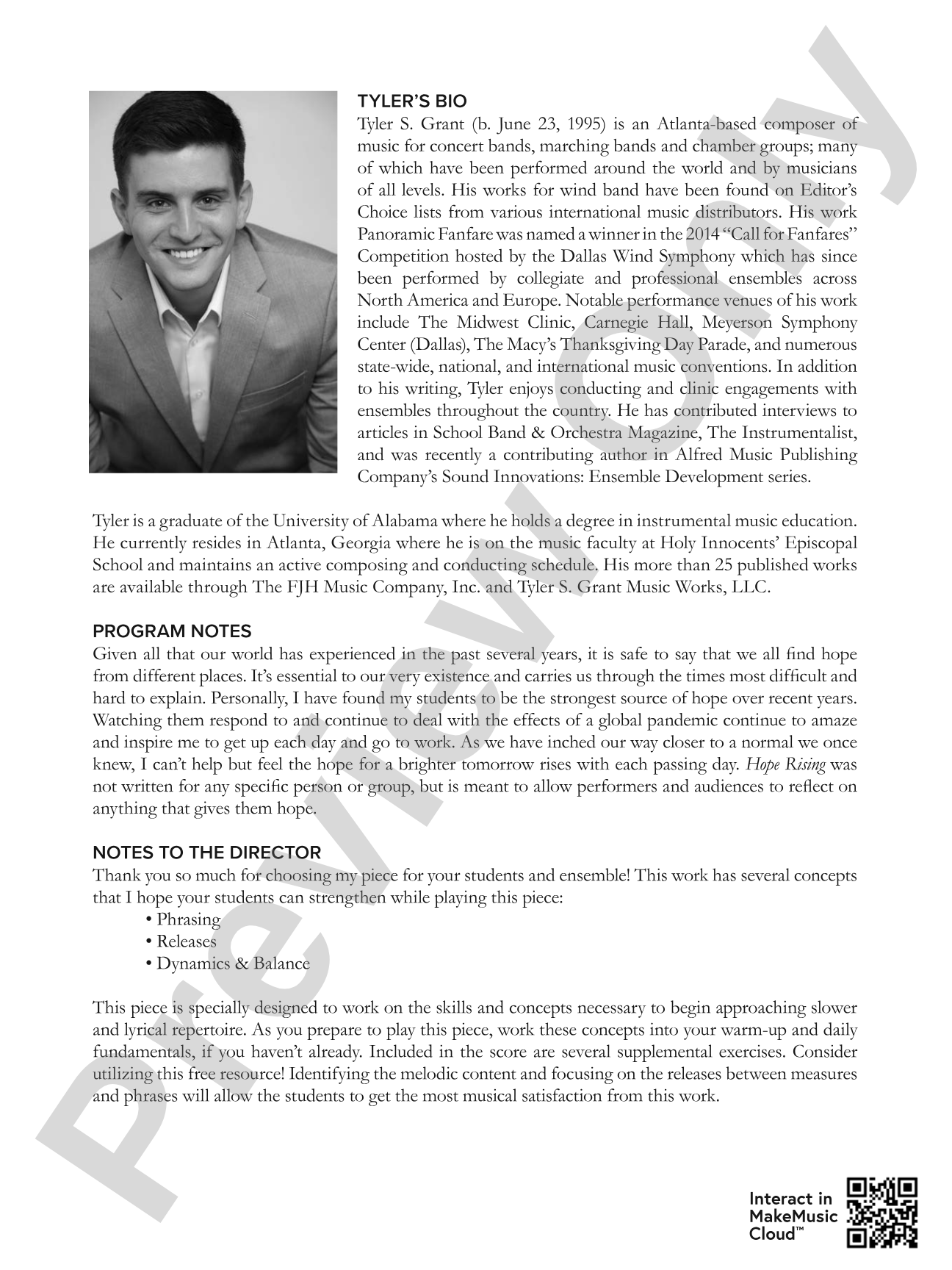
About the Composer: Tyler S. Grant

Tyler S. Grant builds his reputation through consistent, high-quality compositions and arrangements across multiple ensemble types. His works appear regularly on honor ensemble programs nationwide and have earned recognition including a 2014 Dallas Wind Symphony competition win for Panoramic Fanfare. Since 2010, he has maintained an active commissioning practice and released new publications annually.
Beyond the composing desk, Grant conducts clinics and guest conducting engagements throughout the United States, bringing his pedagogical experience to over 100 school instrumental programs across 15 states. His conducting appearances include The Midwest Clinic and all-state bands spanning the Midwest and South. Grant holds a bachelor's degree in instrumental music education from the University of Alabama, where he studied conducting with Randall Coleman, and he acknowledges Brian Balmages as a foundational influence on his compositional voice.
Why we love this
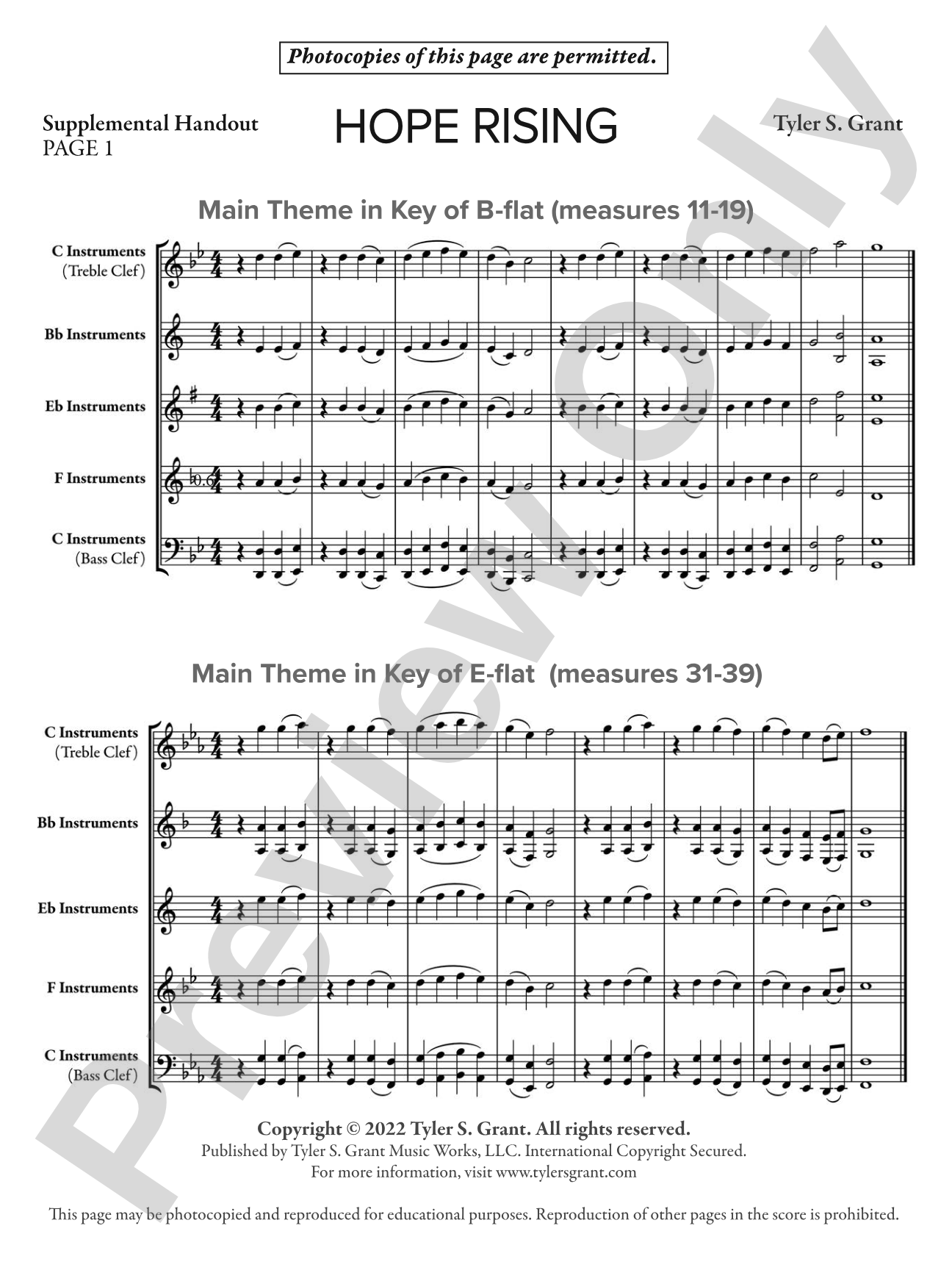
Grant's Grade 1 writing balances accessibility with genuine musical substance. The lyricism here demands real attention to tone production and line shaping from young musicians, making it an ideal choice when you want to develop musicianship rather than simply fill a slot on the program.
What to expect
Hope Rising unfolds with warmth and forward motion. The writing sits comfortably in the instruments' registers while encouraging players to sing rather than mechanically execute notes, creating an inviting sound that feels both hopeful and grounded.
Who it's for
Grade 1 concert bands seeking repertoire that supports tonal and phrase development without requiring advanced technical skills. Directors building musicianship in newer or younger ensembles will find the lyrical writing encourages careful listening and ensemble balance from the first rehearsal.
How to get the most out of it
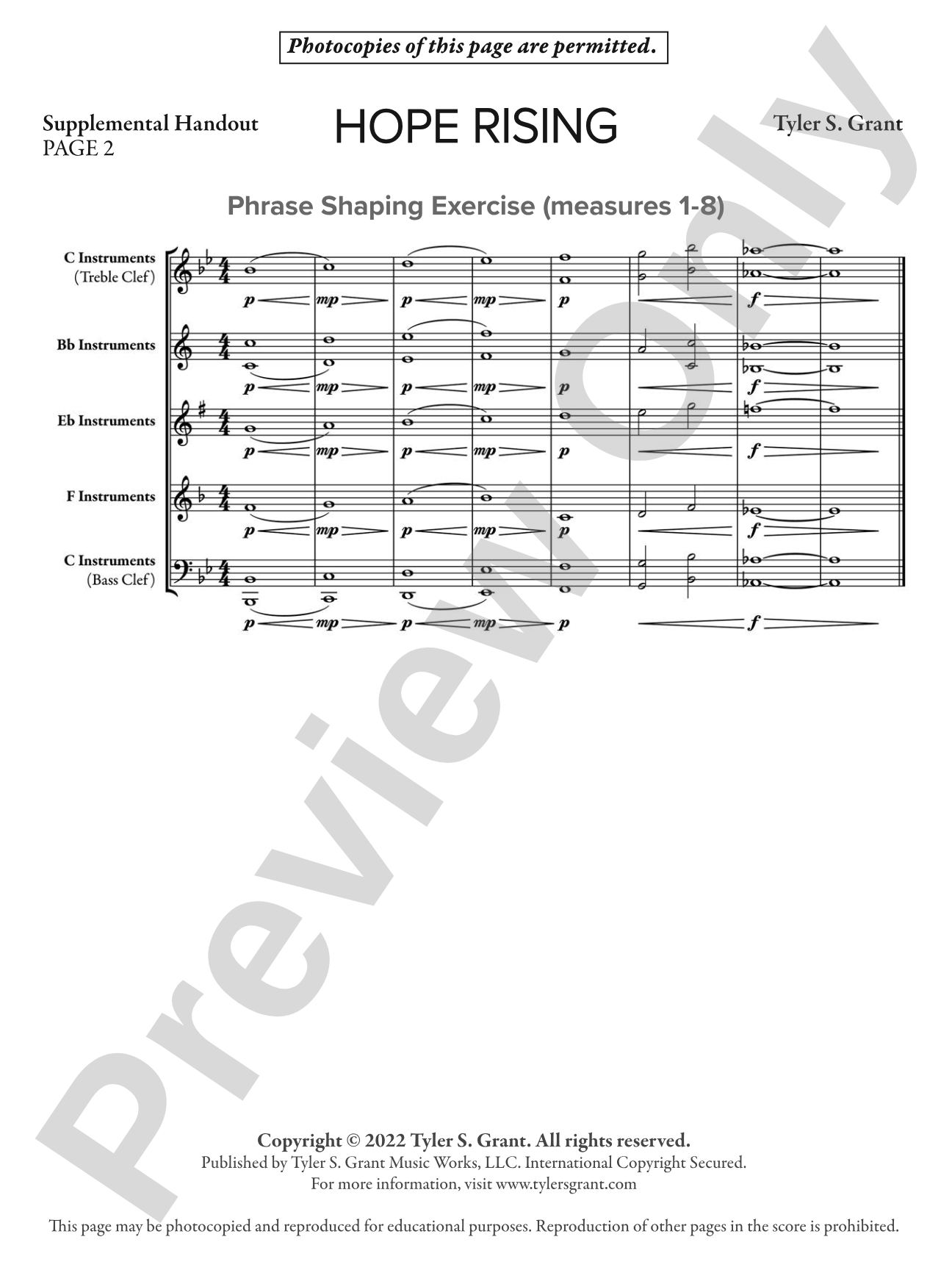
- Shape each phrase with a singing line by establishing clear breath points and maintaining consistent air support between phrases.
- Use the recorded reference (Atlanta Wind Symphony performance) to hear how the ensemble voices blend and balance across the full range.
- Build the dynamic arc gradually across longer sections rather than emphasizing individual forte markings; let the phrasing dictate intensity.
- Establish tempo early and hold it steady; the lyricism emerges from secure rhythmic foundation, not from rushing or dragging through emotional moments.
How to use it
Program this as a concert opener or closing piece where its lyrical character can anchor the audience's attention and establish the ensemble's musicianship. It works equally well in festival or contest settings where judges value clear tone and phrase architecture over flashy technical display.
Skills your students will build
- Sustaining legato phrases with consistent tone quality
- Balancing individual voice parts within the ensemble blend
- Responding to conductor's phrasing and dynamic shaping
- Listening for intonation across longer musical lines