
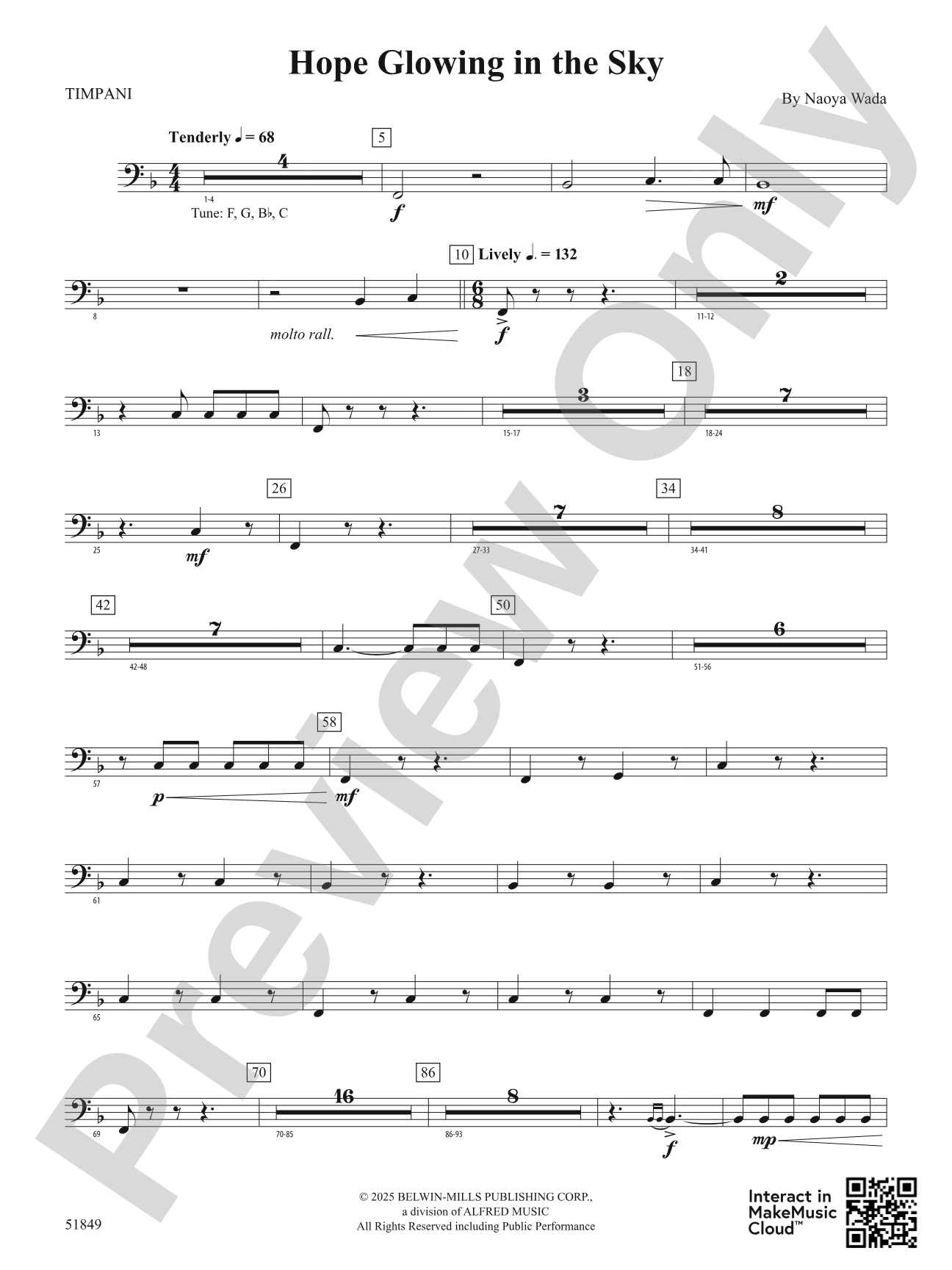

Hope Glowing in the Sky: Timpani
By Naoya Wada
Grade: 4
Item: 00-PC-0019584_TMP
$5.99
Pickup currently not available
Description
Hope Glowing in the Sky captures the breathtaking natural beauty of Kumamoto and the enduring hope of its people. It opens with an expressive theme introduced by the solo horn and solo flute---a motif representing hope. As the music unfolds, this theme is passed through various instruments, developing and transforming in a way that reflects the hope continuing to shine across generations. (6:35)
Hope Glowing in the Sky was commissioned by the Kamoto High School Band in Kumamoto Prefecture and premiered on March 30, 2024, with Mr. Tomohiro Maemura, director conducting.


Don't just read it, hear it, play along with it, and watch your students grow with it. In MakeMusic Cloud, Hope Glowing in the Sky: Timpani comes alive with professional accompaniment, adjustable tempo, and built-in practice tools that turn solo practice into real progress.
Open in the Player
Jump straight in and assign it today.
Start Your Free Trial
Open this title and explore the full library in minutes.
Sample Audio
1
Audio File
--:--
0:00
0:00
Sample Video
Additional Details
Series:
Belwin Symphonic Band
Publisher:
Alfred Music
SKU:
00-PC-0019584_TMP
More about this title
About the Composer: Naoya Wada
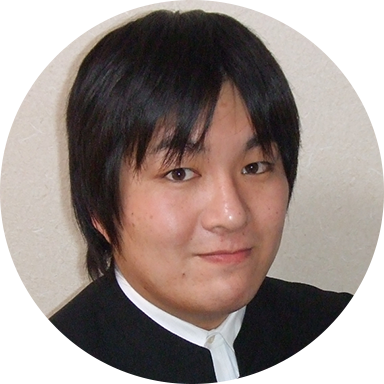
Naoya Wada, born in Kitakyushu, Fukuoka in 1986, has emerged as a significant voice in contemporary educational band music. His commissions span concert bands, orchestras, and broadcast ensembles, and his works have reached performers from elementary through professional levels across the globe. He regularly serves as guest conductor and clinician, bringing direct engagement with the educational community.
Wada's contributions to the field have earned recognition including multiple Bandworld Top 100 selections and J.W. Pepper Editor's Choice citations. In 2009, he received the 42nd Kitakyushu Cultural Award in recognition of his artistic achievements. His catalog reflects both the craftsmanship of a published composer and a deep understanding of what makes music meaningful for student musicians.
Why we love this
Wada writes with remarkable clarity about resilience and continuity. The thematic material feels natural in the hands of young musicians yet carries genuine emotional weight. The passing of the hope motif through the band creates an inherent collaborative energy that rehearsals can build on, and the 6:35 duration sits at that ideal length for concert programming without overextending younger ensembles.
What to expect
The opening feels like watching light break through clouds at dawn, luminous and gradual. As the theme travels through the band, the music feels like passing a torch from hand to hand, each player discovering the melody anew while recognizing where it has been.
Who it's for
Concert bands at the Grade 4 level seeking repertoire with genuine artistic substance and emotional resonance. This work serves bands ready to engage with thematic development and ensemble balance without the technical demands of higher grades.
How to get the most out of it
- Shape the opening horn and flute duet with warmth and generosity. This is your foundation for all that follows, so spend time in sectionals finding the breathe points and phrasing that feel most natural to those players.
- As the hope theme passes from instrument to instrument, help each section understand they are receiving and passing a living thing. The work benefits from listening within the ensemble rather than playing to the conductor.
- Balance the accompanying figures carefully in the middle section. Sustained backgrounds should feel supportive, never heavy, so the theme remains visible even as it transforms.
- Resist over-conducting the final statements of the theme. Let the band breathe and settle into the resolution; the piece earns its power through restraint.
How to use it
Program this as a centerpiece for a spring concert celebrating hope, renewal, or cultural exchange. Its moderate length and accessible character make it effective alongside more demanding works, and the commissioned origin story provides context for audiences interested in contemporary composition.
Skills your students will build
- Thematic identification and tracking across instrumental families
- Balance and transparency in accompanying figures
- Sustained legit tone in solo passages
- Ensemble listening and interdependence
- Phrasing control and musical architecture across longer forms