

Hope: SSA Choral Octavo
Words by Emily Dickinson, music by Bruce W. Tippette
Item: 00-PO-0002373

$1.95
Minimum order quantity: 20 copies
Pickup currently not available
Related Items
Hope: SSA Choral Octavo |
$1.95
|
View |
Description
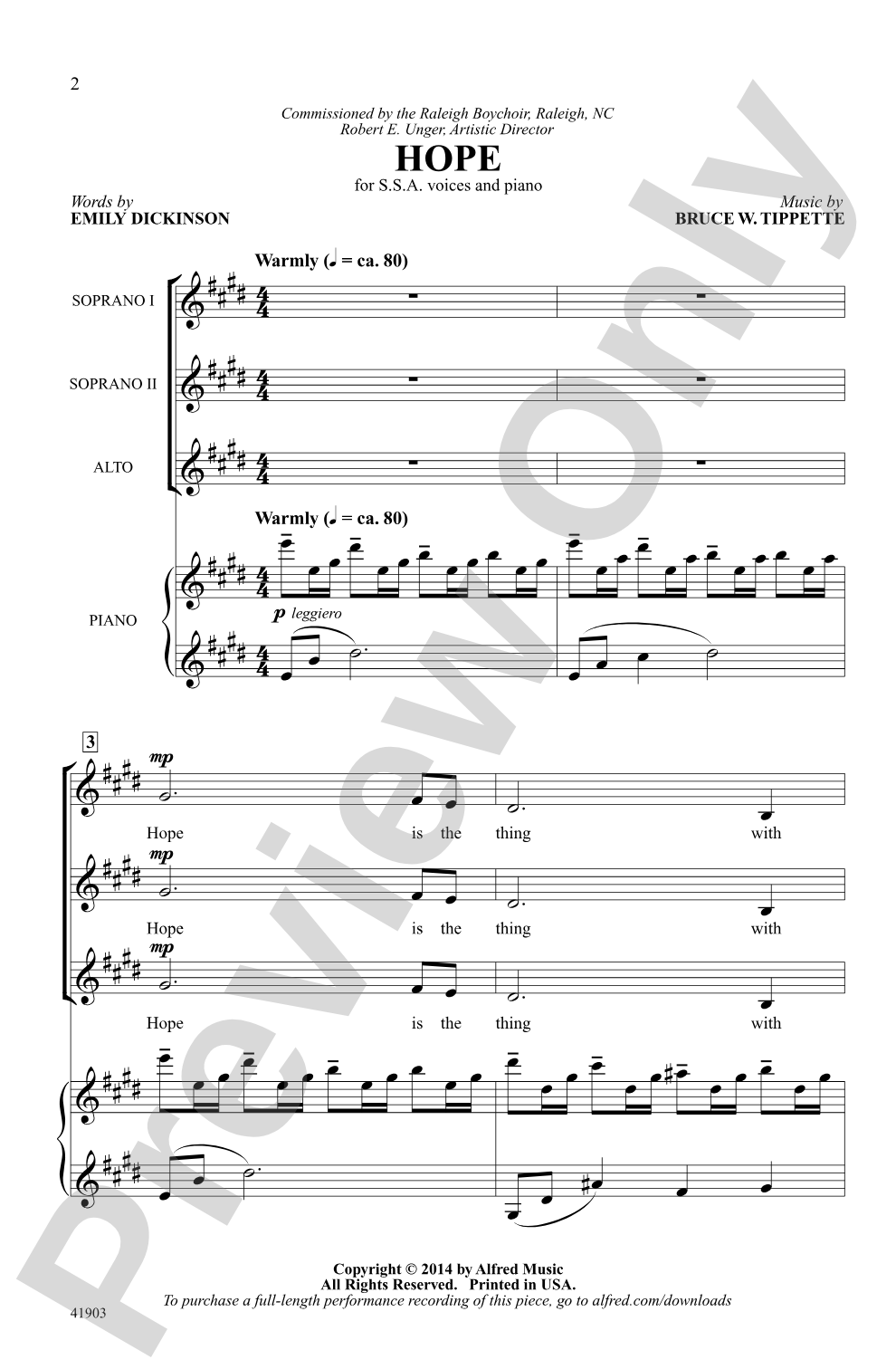
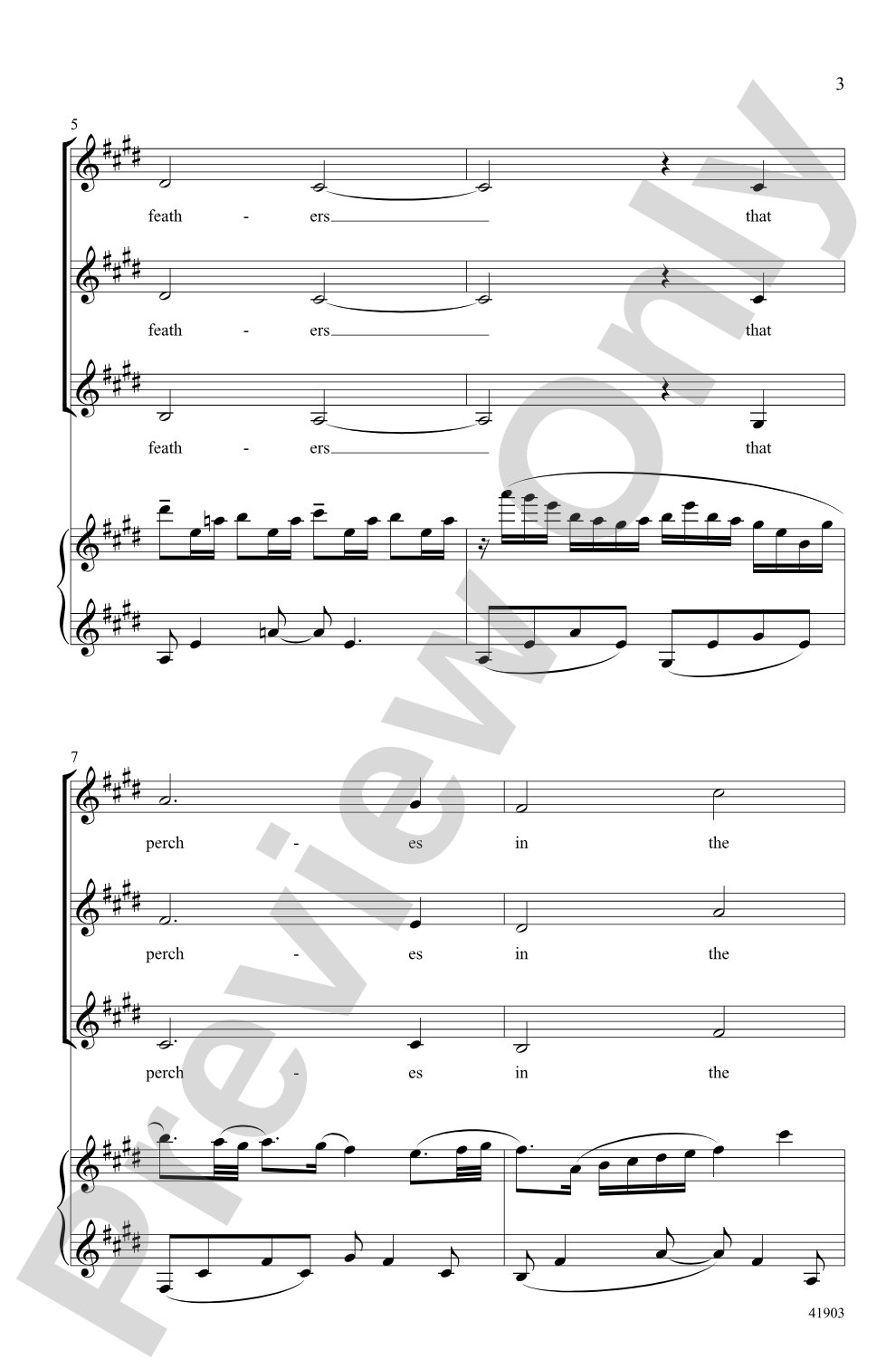
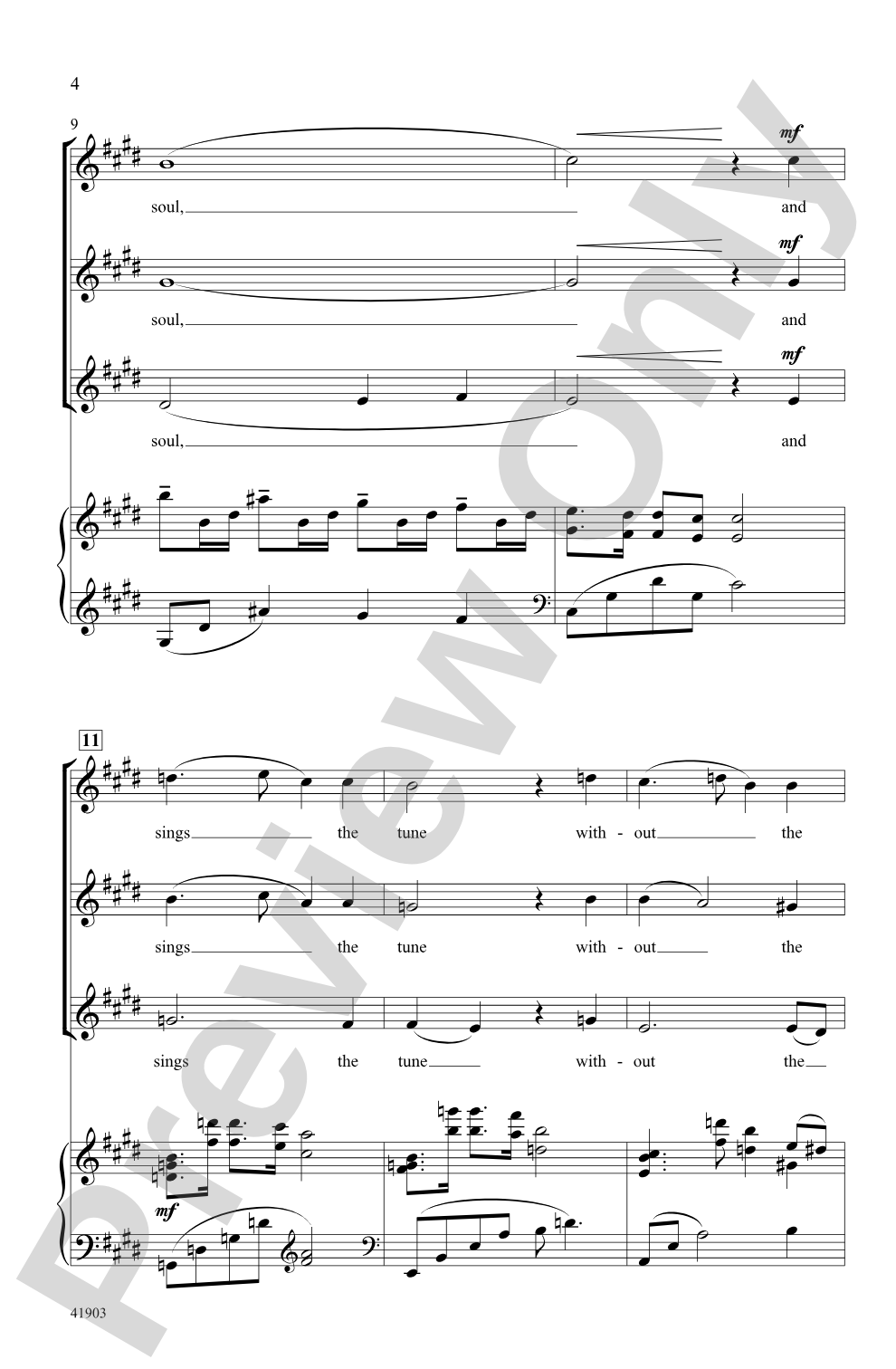
This beautiful treble choral features a lyrical melody supported by an expressive piano accompaniment. The perfect setting of the famous text, "Hope is the thing with feathers, that perches in the soul."


Don't just read it, hear it, play along with it, and watch your students grow with it. In MakeMusic Cloud, Hope: SSA Choral Octavo comes alive with professional accompaniment, adjustable tempo, and built-in practice tools that turn solo practice into real progress.
Open in the Player
Jump straight in and assign it today.
Start Your Free Trial
Open this title and explore the full library in minutes.
Sample Audio
1
Audio File
--:--
0:00
0:00
Sample Video
No sample videos found.
Additional Details
Series:
Lawson-Gould
Publisher:
Alfred Music
Page Count:
16
SKU:
00-PO-0002373
More about this title
About the Composer: Bruce W. Tippette

Bruce W. Tippette is a composer and educator whose work spans concert music, film, and collaborative projects. He earned his Master of Music in composition from the University of North Carolina School of the Arts and a Bachelor of Music in composition/theory and music education from Appalachian State University. His orchestral work Unconquered won the 2012 Mary Starling Composition Competition and has been performed multiple times by the Winston-Salem Symphony. In 2012, 2013, and 2014, he was commissioned to compose new works as part of a groundbreaking experimental collaboration between Cirque du Soleil and UNC School of the Arts.
Tippette's compositions for choral and instrumental ensembles receive regular performances and commissions. Beyond concert works, he has composed for choreography, film, and co-created music for a children's musical. His piano solo Dance of Fire received the Lynn Freeman Olson Composition Award. He currently teaches music composition, theory, piano, and voice at the Community Music School of UNC School of the Arts, serves as Youth Music and Handbell Director at Augsburg Lutheran Church, and works as a collaborative pianist and freelance engraver.
Why we love this
Tippette's setting captures the essence of Emily Dickinson's poem with a lyrical melody that invites singers into the text's quiet resilience. The piano accompaniment is genuinely expressive without overshadowing the voices, giving your singers room to breathe and connect with this profound meditation on hope. This is a choral piece that rewards both the ensemble and the audience with emotional clarity.
What to expect
The music unfolds with quiet dignity, never rushed or sentimental. There is a sense of intimate reflection, as if the singers are sharing a personal discovery. The lyrical melody and expressive piano create a space where Dickinson's words about hope can settle into the listener's own soul.
Who it's for
This octavo suits treble choirs at intermediate to advanced levels who can sustain lyrical singing and handle some harmonic complexity. It works beautifully for high school and college choirs, community vocal ensembles, and treble section singers in mixed choirs seeking a meaningful standalone piece.
How to get the most out of it
- Shape the melodic line by thinking of it as a single, unbroken phrase rather than breaking it into smaller segments; this maintains the poem's reflective quality.
- Balance the upper voices carefully so the melody remains prominent while the harmonies provide warm support without crowding.
- Work closely with your accompanist to match the piano's expressive character; the accompaniment sets the emotional tone and the voices should complement that pacing and sensitivity.
- Allow space and silence where the text suggests natural pauses; restraint makes the moments of fuller texture more impactful.
How to use it
This piece fits naturally into a concert exploring poetry in music, or as a contemplative anchor in a program that moves between contrasting moods. Its modest page count and accessibility make it ideal for a spring concert, memorial service, or community arts series where emotional authenticity matters more than spectacle.
Skills your students will build
- Sustaining lyrical lines with consistent breath support
- Balancing ensemble blend within SSA voicing
- Responding to piano accompaniment as a collaborative partner
- Interpreting poetic text through vocal phrasing and dynamic control
- Reading music with expressive markings and following interpretive cues