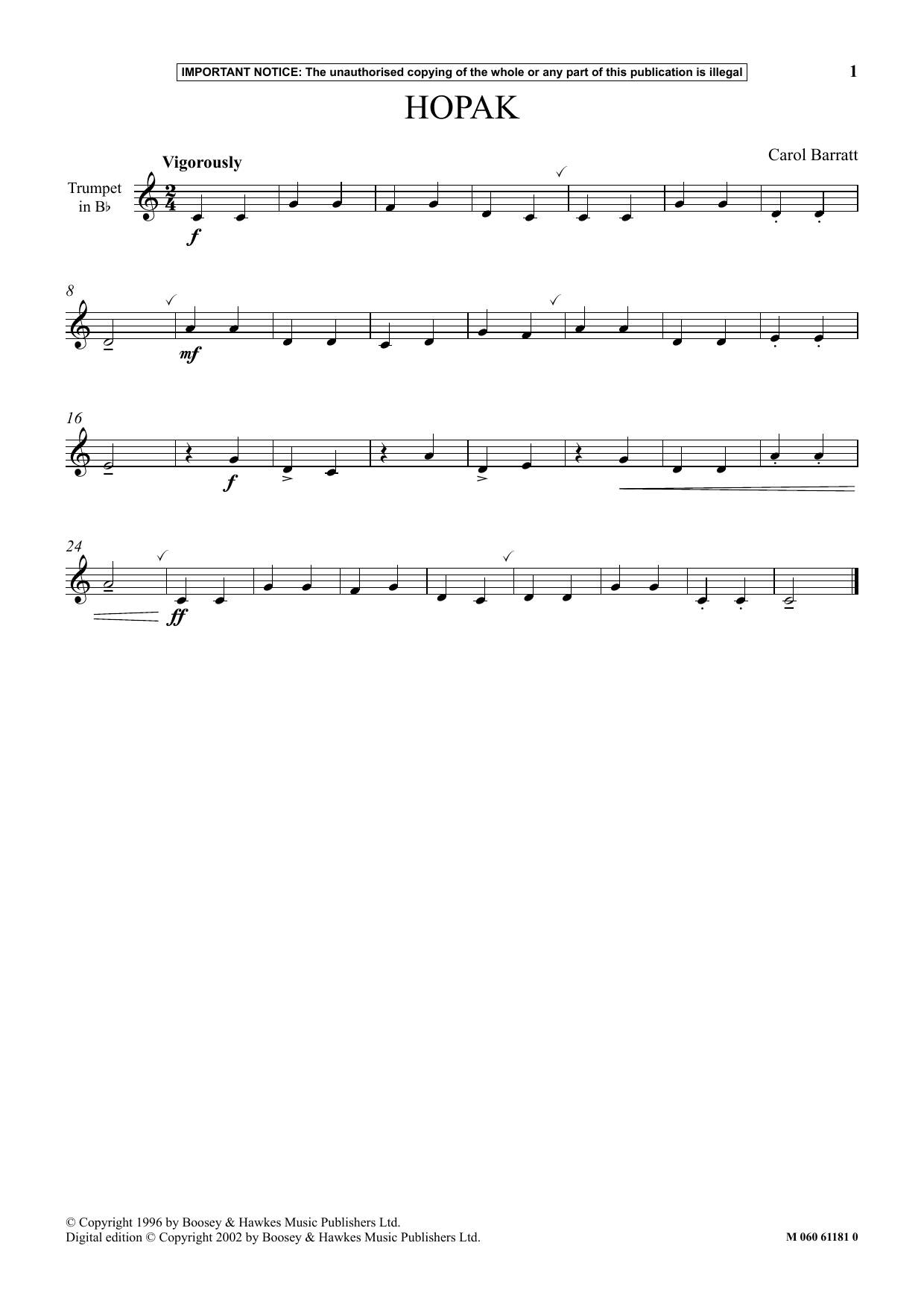
Barratt captures the propulsive energy of this Ukrainian folk dance without sacrificing clarity or accessibility. The arrangement respects the traditional character while sitting comfortably within reach for players still building technical facility.
What to expect
Bright, driven, and infectious. The hopak bounces with the joy and physical exuberance of a traditional Ukrainian celebration, with just enough harmonic color to keep modern ears engaged without overwhelming the source material.
Who it's for
Young ensemble players tackling folk material for the first time, or educators building a program rooted in world music traditions. This works equally well as a standalone concert piece or as part of a cultural studies unit.
How to get the most out of it
Keep the rhythm section locked on the characteristic hopak pulse; this dance lives or dies by rhythmic precision and forward momentum.
Balance the melodic line so it cuts through the accompaniment without dominating; these folk melodies thrive when they feel integrated rather than spotlit.
Shape the phrasing to match the natural breathing of the dance itself; resist the urge to iron out the folk idiom into classical regularity.
How to use it
Pair this with other Central or Eastern European folk arrangements to build a thematic concert program, or use it as a high-energy closer that leaves audiences smiling. The two-page length makes it ideal for filling a specific slot without requiring substantial rehearsal time.
Skills your students will build
Internalizing the rhythmic character of non-Western folk traditions
Balancing melody and accompaniment in ensemble settings
Maintaining consistent pulse through syncopated rhythmic figures
Responding to the physical, dance-based origins of melodic phrasing
You May Also Like
Scan to Complete Your Purchase
Use your phone's camera to scan the code below
You'll log in on your phone and the order will be added to your account