Hooked on Holidays: Tuba Sheet Music Preview

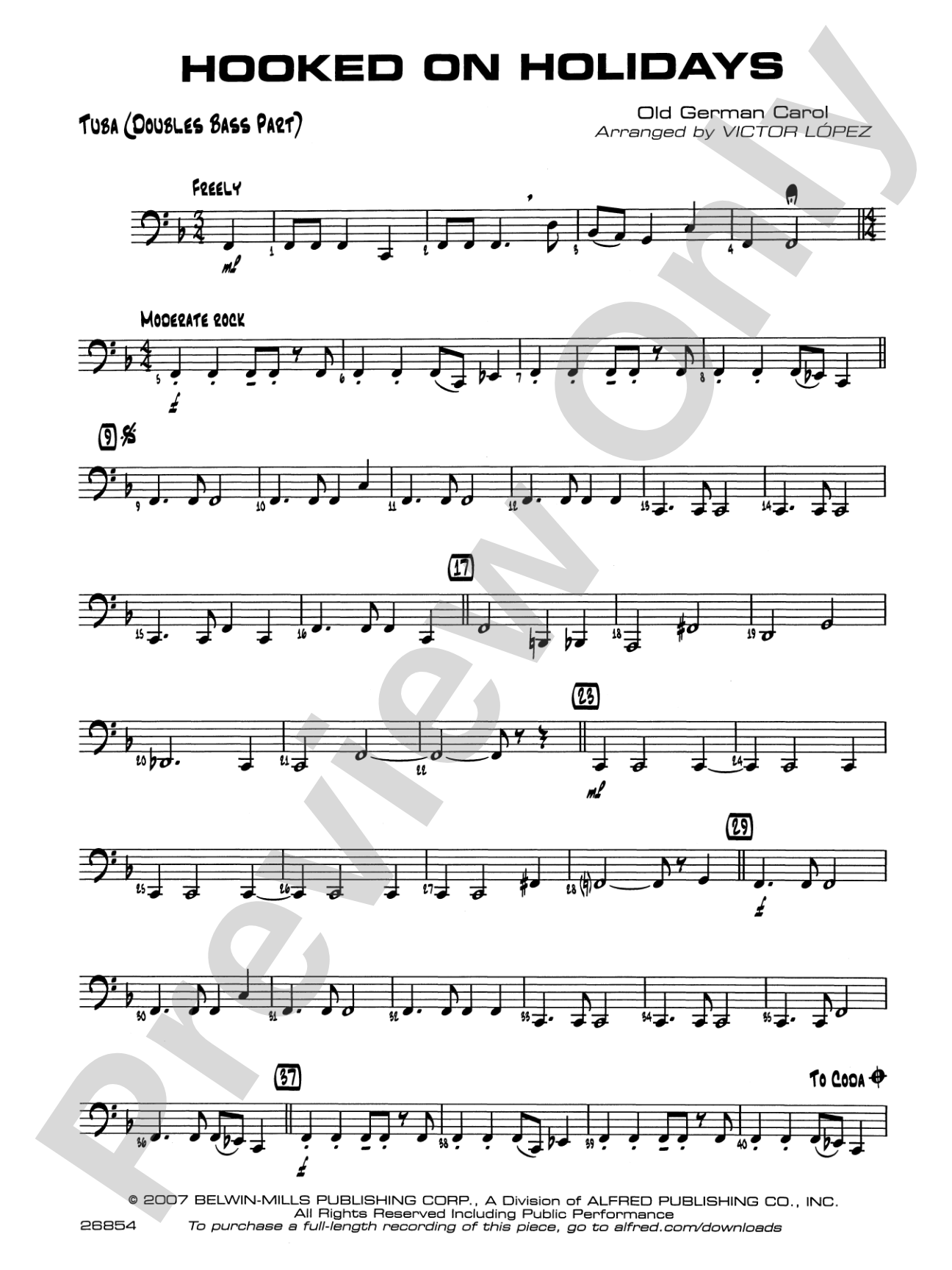
Hooked on Holidays: Tuba

By Victor López

Grade: 0.5 (Very Easy)

Item: 00-PC-0015282_TB1

Digital Download
$3.00
Description
Victor López has arranged "O Christmas Tree" or "O Tannenbaum" for the young jazz band. Easy rhythms and ranges, a flexible solo section for all winds that can be played in unison, harmony, with individuals, sections or the full ensemble. This chart will be quick to come together and be very effective. This title is available in MakeMusic Cloud.

Don't just read it, hear it, play along with it, and watch your students grow with it. In MakeMusic Cloud, Hooked on Holidays: Tuba comes alive with professional accompaniment, adjustable tempo, and built-in practice tools that turn solo practice into real progress.

Sample Audio
0:00
0:00
Sample Video
Additional Details
Series: Jazz Beginnings Series
Publisher: Alfred Music
Page Count: 82
SKU: 00-PC-0015282_TB1

More about this title

About the Composer: Victor Lopez

Victor López is a composer and arranger whose work spans wind band, jazz ensemble, and choral literature. His arrangements are known for their accessibility without sacrificing musicality, making sophisticated jazz concepts available to developing ensembles. López has been a significant voice in expanding the jazz repertoire for younger players, particularly through the Jazz Beginnings Series.

Why we love this

López writes for the young jazz band with real understanding of what players at this level can execute while still sounding intentional and swinging. The flexible solo section is a gift to any director: the same chart works whether you have one strong soloist, multiple confident players, or a section that needs to carry the melodic weight together. The arrangement sits comfortably in easy ranges and rhythms, which means your rehearsal time goes toward ensemble cohesion and jazz fundamentals rather than range struggles.

What to expect

A familiar holiday melody reimagined through a light jazz lens, with enough space and air in the writing to let younger players hear themselves thinking and responding. The easy ranges and straightforward rhythms create room for the ensemble to focus on tone, balance, and the subtle art of playing together in a jazz setting.

Who it's for

This arrangement serves young jazz bands (Grade 0.5) encountering jazz idiom for the first time, as well as more experienced beginner ensembles that need accessible repertoire with authentic swing feel. It works equally well for directors building jazz programs from scratch or for concert bands adding one or two jazz pieces to their season.

How to get the most out of it

  • Set the feel early in rehearsals by establishing a relaxed swing eighth-note pulse during warm-ups, then transfer that pocket feeling directly into the chart.
  • Experiment with the solo section during sectional rehearsals before the full ensemble runs it; soloists will gain confidence knowing exactly where the changes sit and how their section anchors them.
  • Balance the arrangement by reminding rhythm section players that laid-back timekeeping is more effective than pushing; young rhythm players often tense up, which kills the swing.
  • Record a sectional run-through early so players can hear how their part contributes to the whole arrangement, especially helpful for winds not carrying the melody.

How to use it

Program this during winter concerts as a palate-cleansing bridge between traditional holiday material and your concert band repertoire, or feature it as the opening number in a holiday pops concert to establish an upbeat, accessible tone. The quick learning curve makes it ideal for February jazz festivals or end-of-winter concert programming when rehearsal time is tight.

Skills your students will build

  • Reading jazz articulations and phrasing marks in score and parts
  • Responding to flexible solo section frameworks (ensemble unison, harmony, section, and individual improvisation)
  • Playing with swing feel and understanding the relationship between rhythm section and front line
  • Balancing in small jazz ensemble voicings
  • Listening and adjusting intonation in jazz harmony contexts

You May Also Like