Honeysuckle Rose: Drums Sheet Music Preview

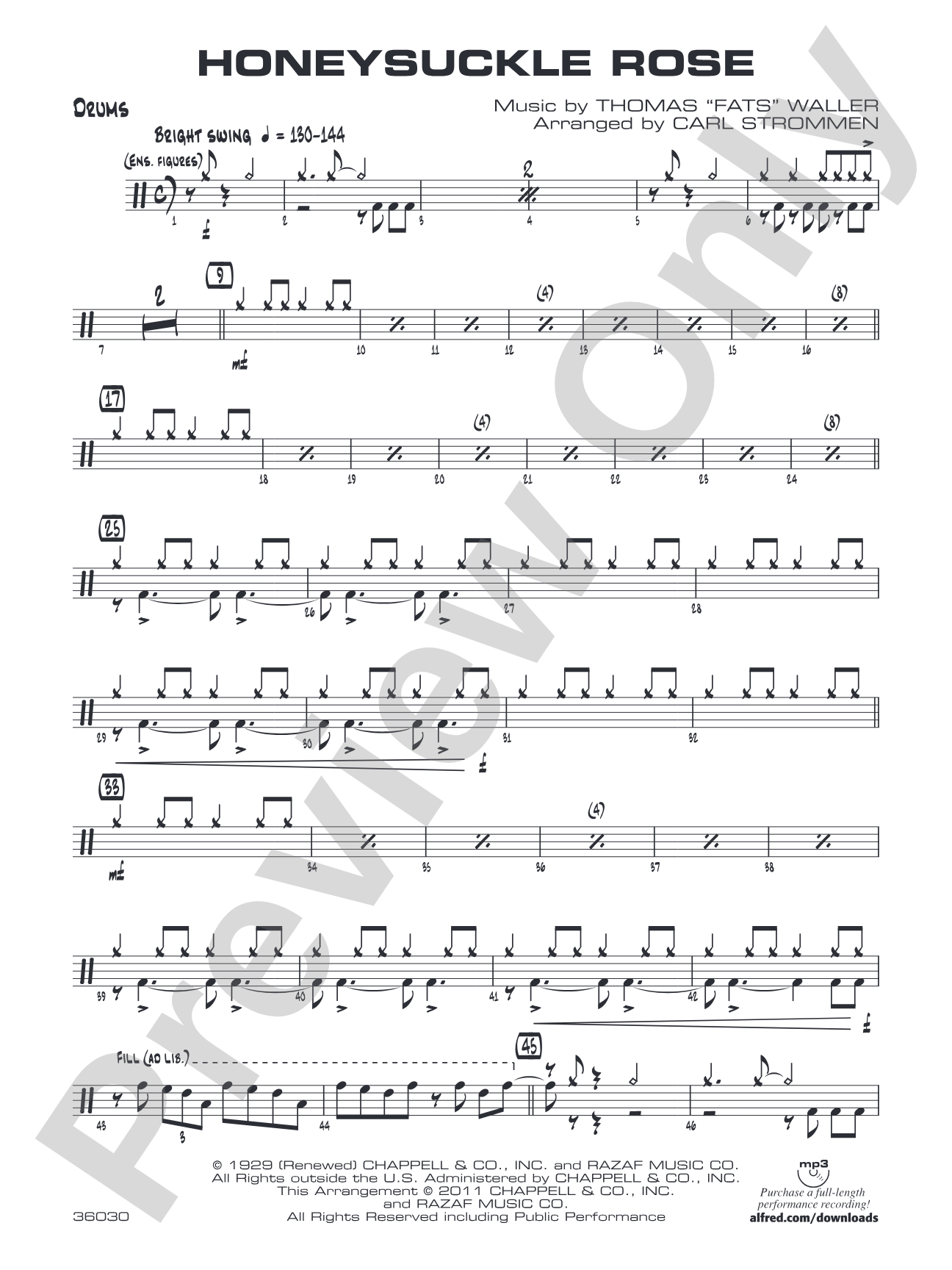
Honeysuckle Rose: Drums

By Thomas "Fats" Waller / arr. Carl Strommen

Grade: 2 (Medium Easy)

Item: 00-PC-0016693_D

Digital Download
$3.00
Description
A great jazz standard at a medium tempo. It is full of great jazz licks, sax solis, a modulation from E-flat to F, a shout chorus, and interesting harmonies and rhythmic patterns. Trumpet 2 and piano solos are written out and trumpet 1 range is to written G on top of the staff.

Don't just read it, hear it, play along with it, and watch your students grow with it. In MakeMusic Cloud, Honeysuckle Rose: Drums comes alive with professional accompaniment, adjustable tempo, and built-in practice tools that turn solo practice into real progress.

Sample Audio
0:00
0:00
Sample Video
Additional Details
Series: Young Jazz Ensemble
Publisher: Alfred Music
Page Count: 90
SKU: 00-PC-0016693_D

More about this title

About the Composer: Thomas "Fats" Waller

Thomas "Fats" Waller (1904-1943) was a pianist, organist, composer, and entertainer who shaped the sound of swing-era jazz and popular music. His prolific output spanned stride piano technique, big band arrangements, and unforgettable melodies that remain central to the jazz repertoire. Waller's gift for both composition and performance made him one of the most influential musicians of the 1930s and early 1940s.

Beyond his technical mastery and compositional skill, Waller was known for his wit, warmth, and ability to engage audiences. His standards continue to teach musicians about jazz phrasing, harmonic sophistication, and the balance between structure and improvisation that defines the jazz tradition.

Why we love this

Strommen's arrangement captures everything that makes this standard essential for developing jazz ensembles: clear solo vehicles, accessible ensemble figures, and enough harmonic interest to hold musicians' attention. The written-out solos and moderate tempo give players a genuine entry point into jazz language without oversimplifying the tune's character.

What to expect

Warm, infectious, and playful. The tune swings with the ease of a well-worn favorite, moving through its changes with genuine charm. There's sophistication in the harmonies and rhythmic figures, yet the overall character remains approachable and fun, capturing Waller's gift for making complex jazz feel natural and alive.

Who it's for

Grade 2 jazz ensembles looking for a standard that teaches genuine jazz vocabulary without heavy complexity. Players working on their first written solos and ensemble members building comfort with swing feel and jazz harmonies will find clear models here. This arrangement works for groups new to jazz literature as well as more experienced ensembles preparing lighter concert fare.

How to get the most out of it

  • Anchor the rhythm section early. Lock the hi-hat and kick drum pattern before adding ensemble figures; this arrangement depends on precise rhythmic foundation.
  • Treat the modulation from E-flat to F as a moment of lift rather than a technical hurdle. Have the band lean slightly into the brighter key to let listeners hear the shift.
  • Shape the sax soli with forward motion and conversational phrasing. These aren't technical displays but chances for students to hear how melody and changes interact.
  • Let the shout chorus build organically. Avoid the temptation to drive tempo; trust the arrangement's harmonic movement to create energy.

How to use it

Pair this with other Waller standards or classic swing repertoire for a cohesive jazz concert or school assembly set. The moderate tempo and straightforward charm make it ideal as a concert opener or closer, setting an accessible tone for audiences unfamiliar with jazz. It also serves well in educational contexts where you want to highlight what makes a tune endure across decades.

Skills your students will build

  • Reading and executing swing rhythms and articulations
  • Playing written jazz solos with phrasing and interpretation
  • Following harmonic movement through a modulation
  • Locking ensemble figures with a functioning rhythm section
  • Building shout chorus energy through ensemble participation

You May Also Like