
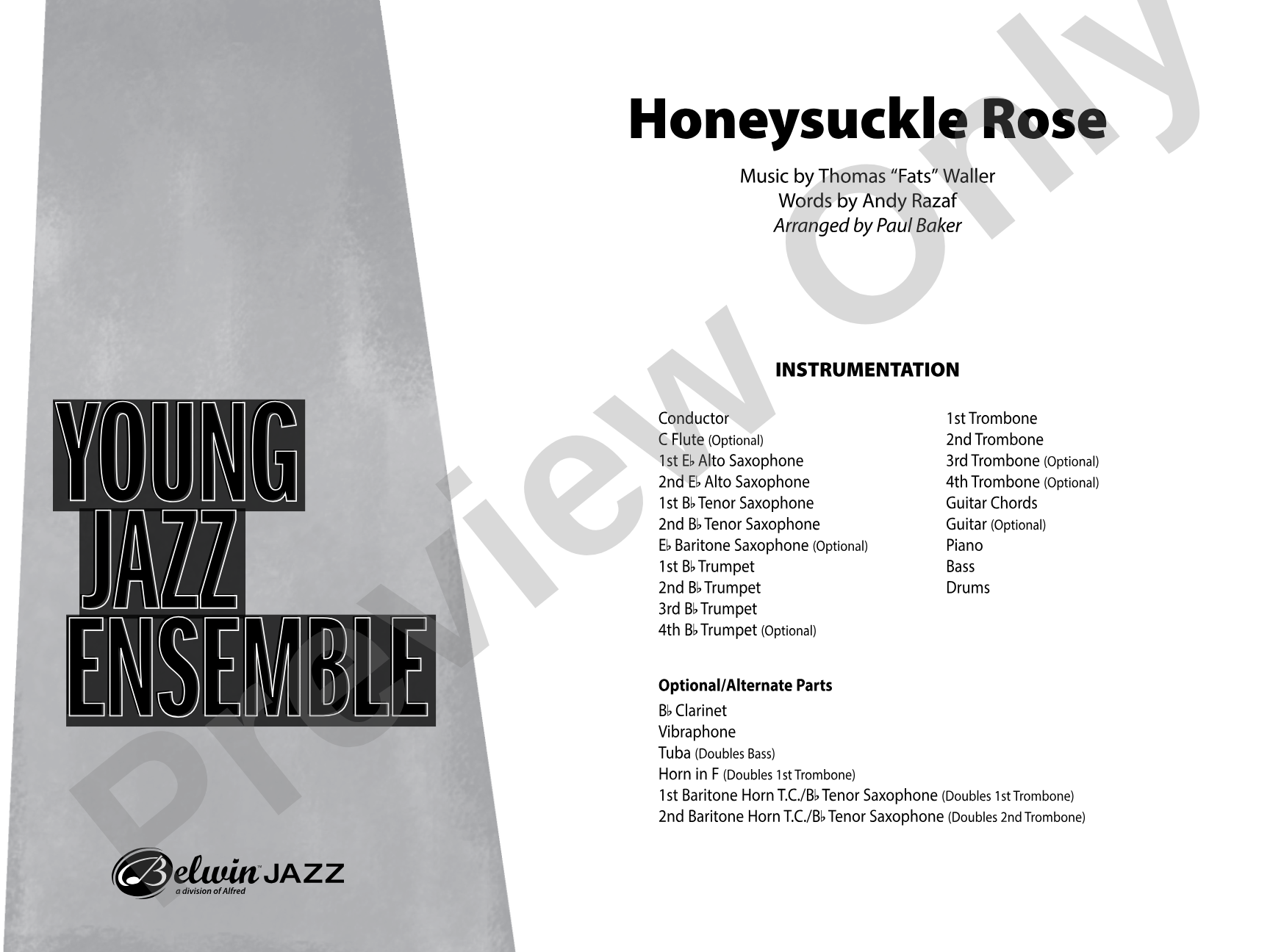
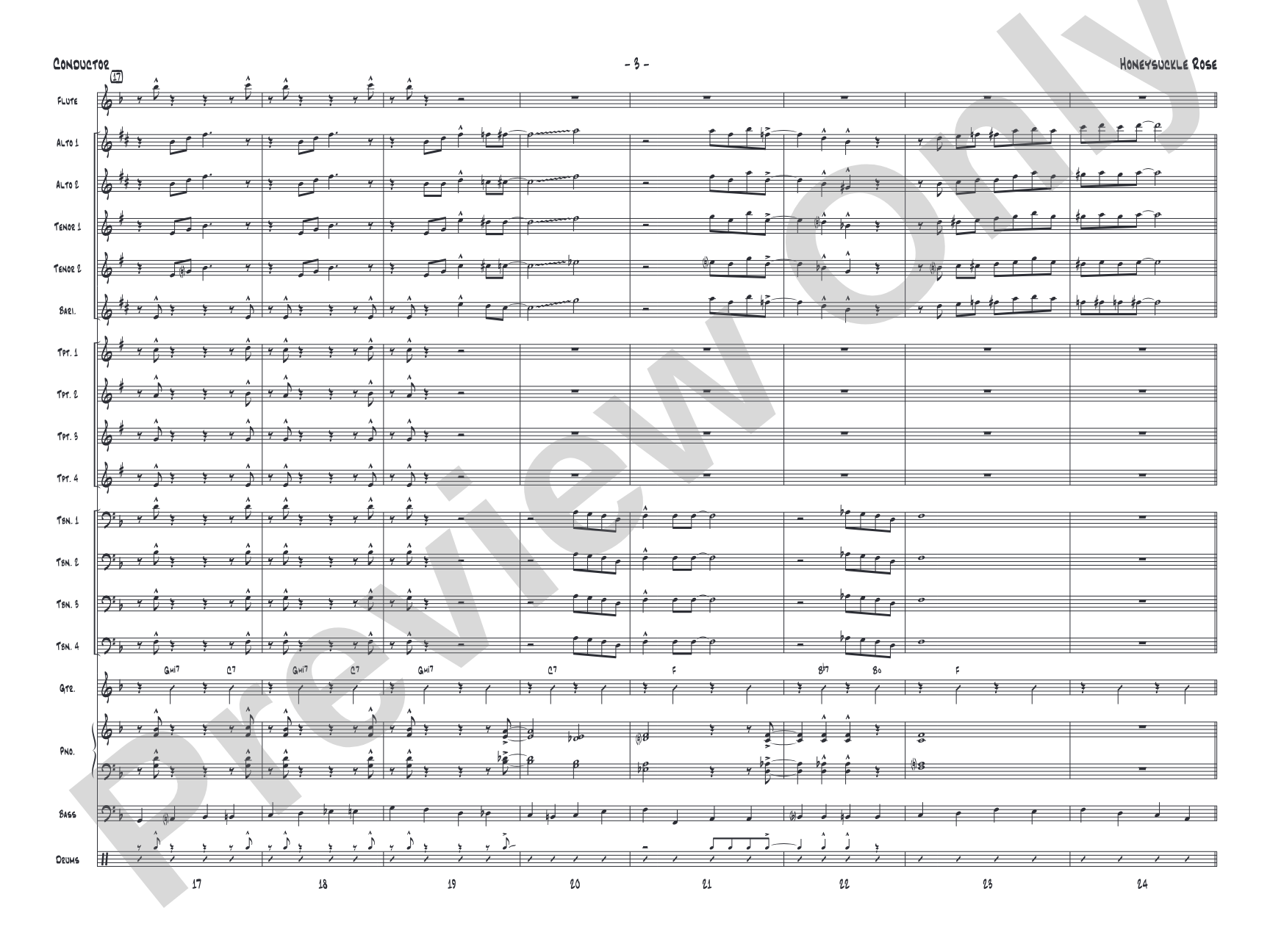
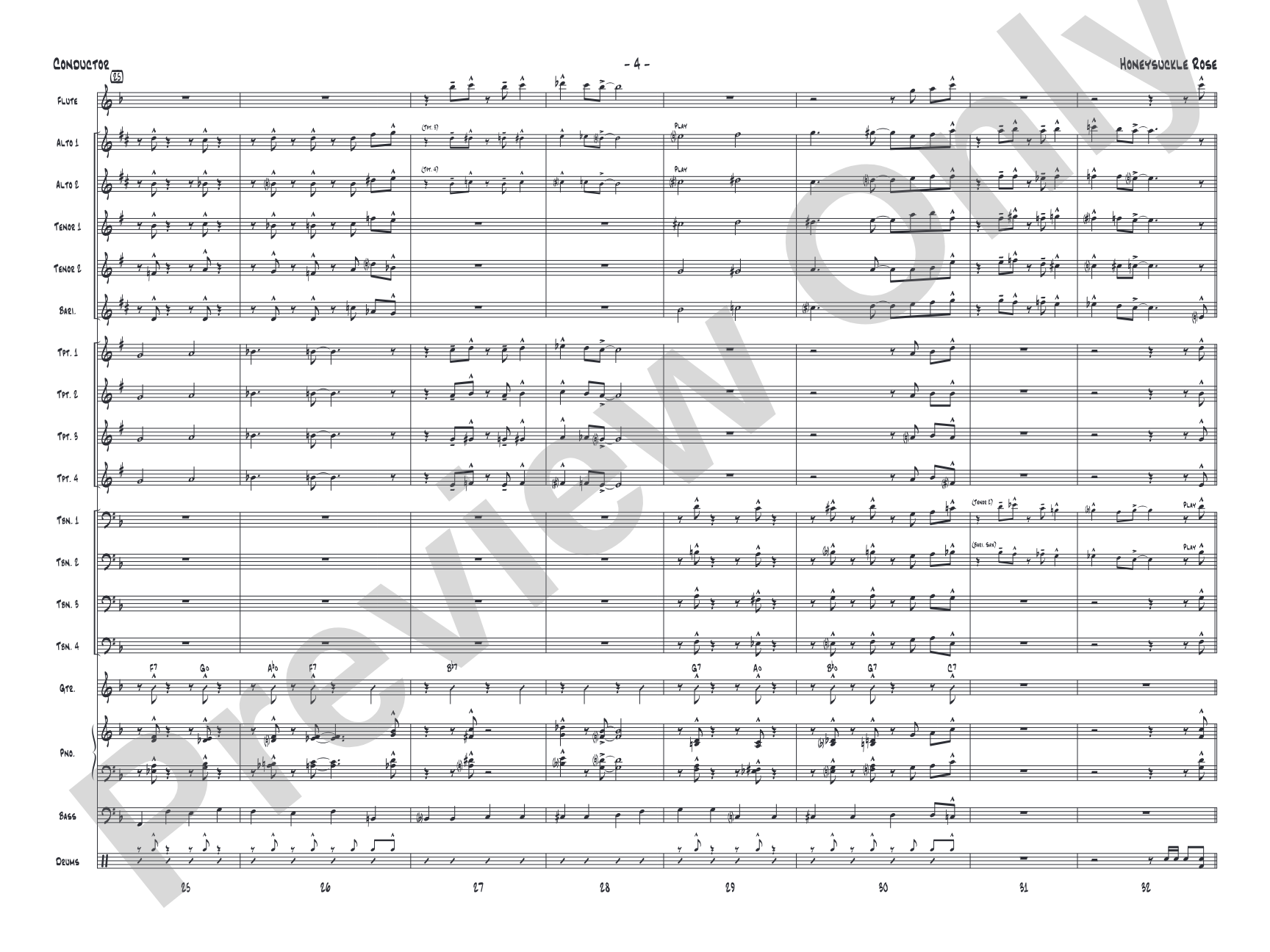
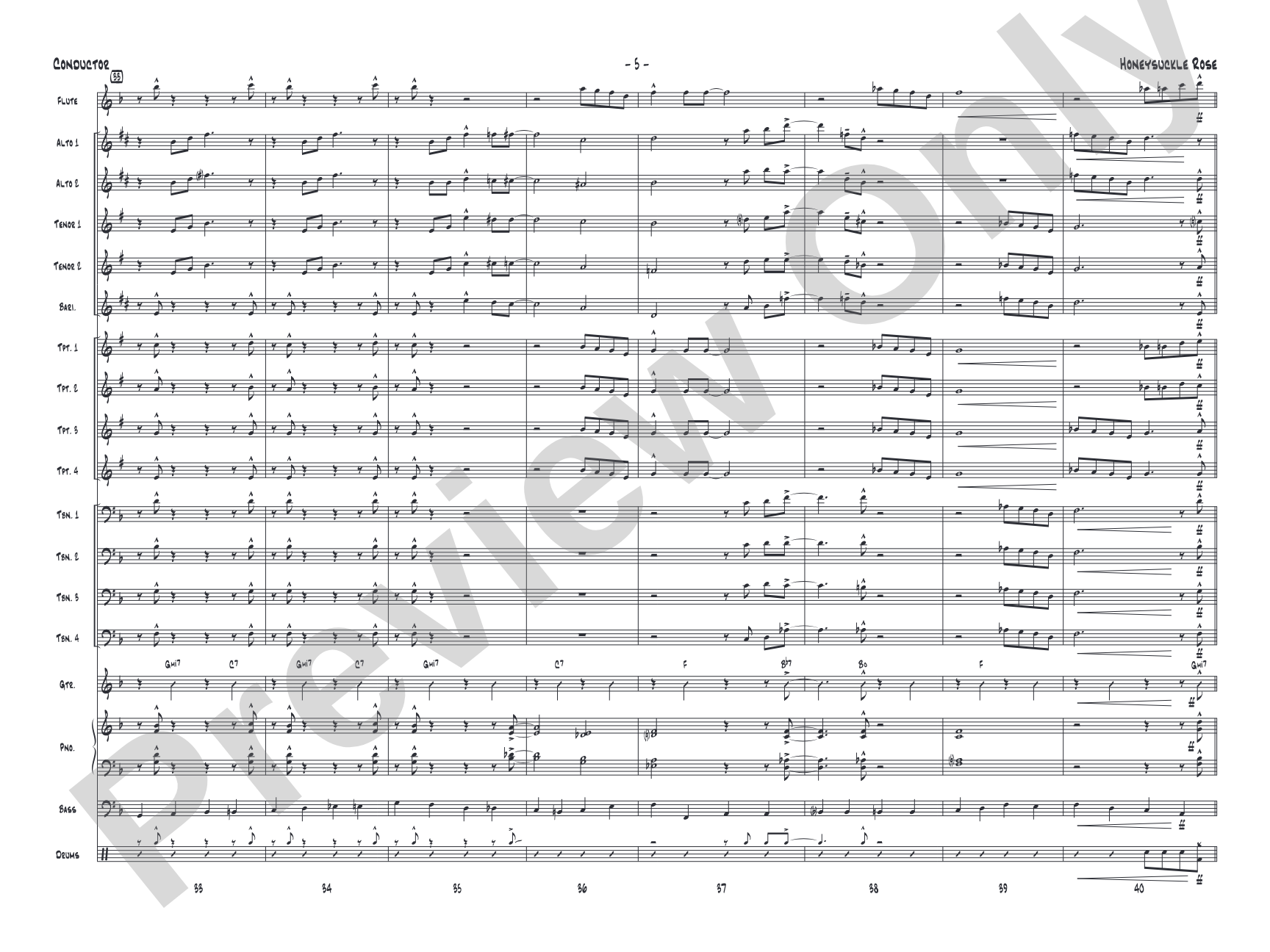
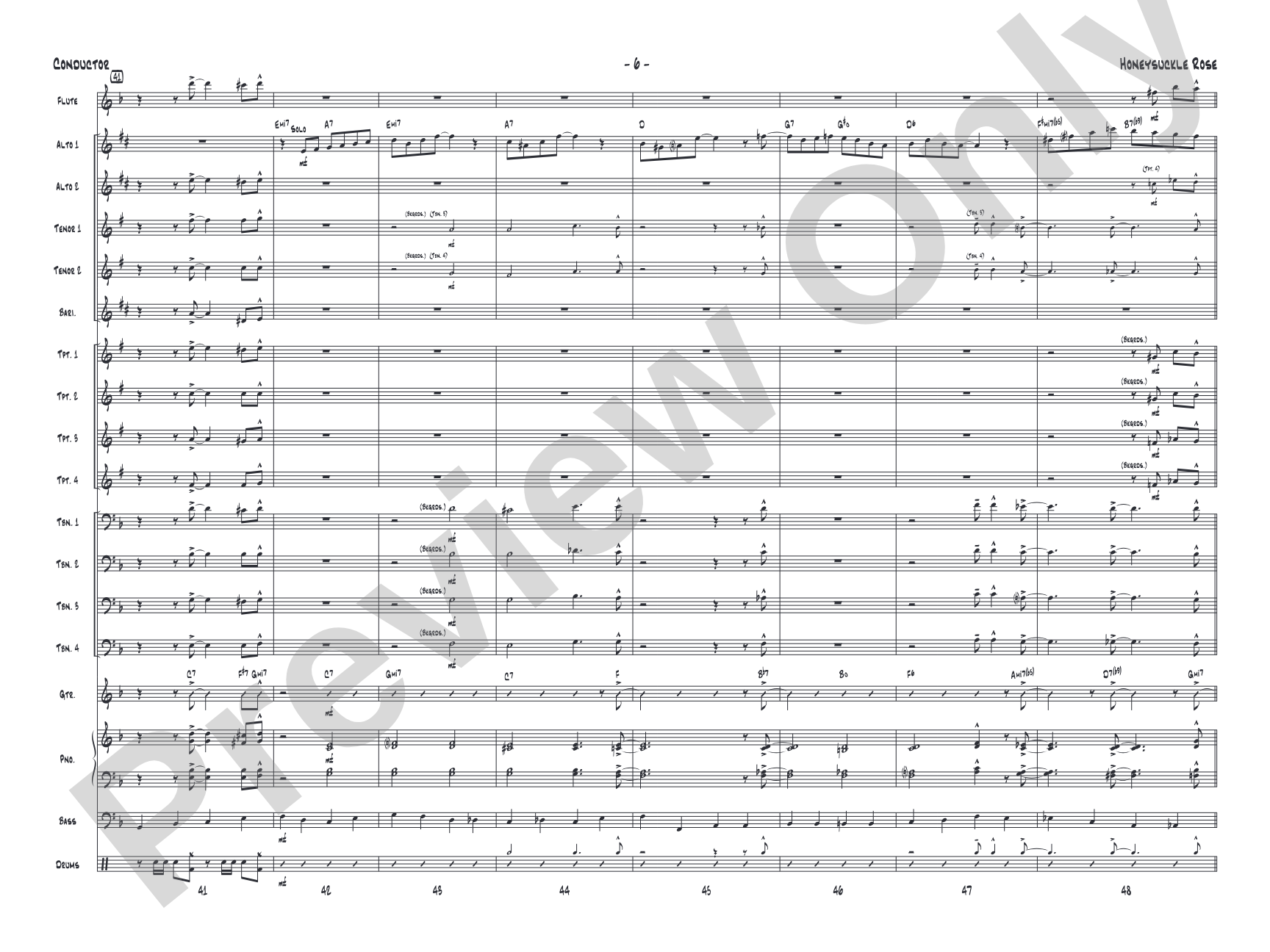
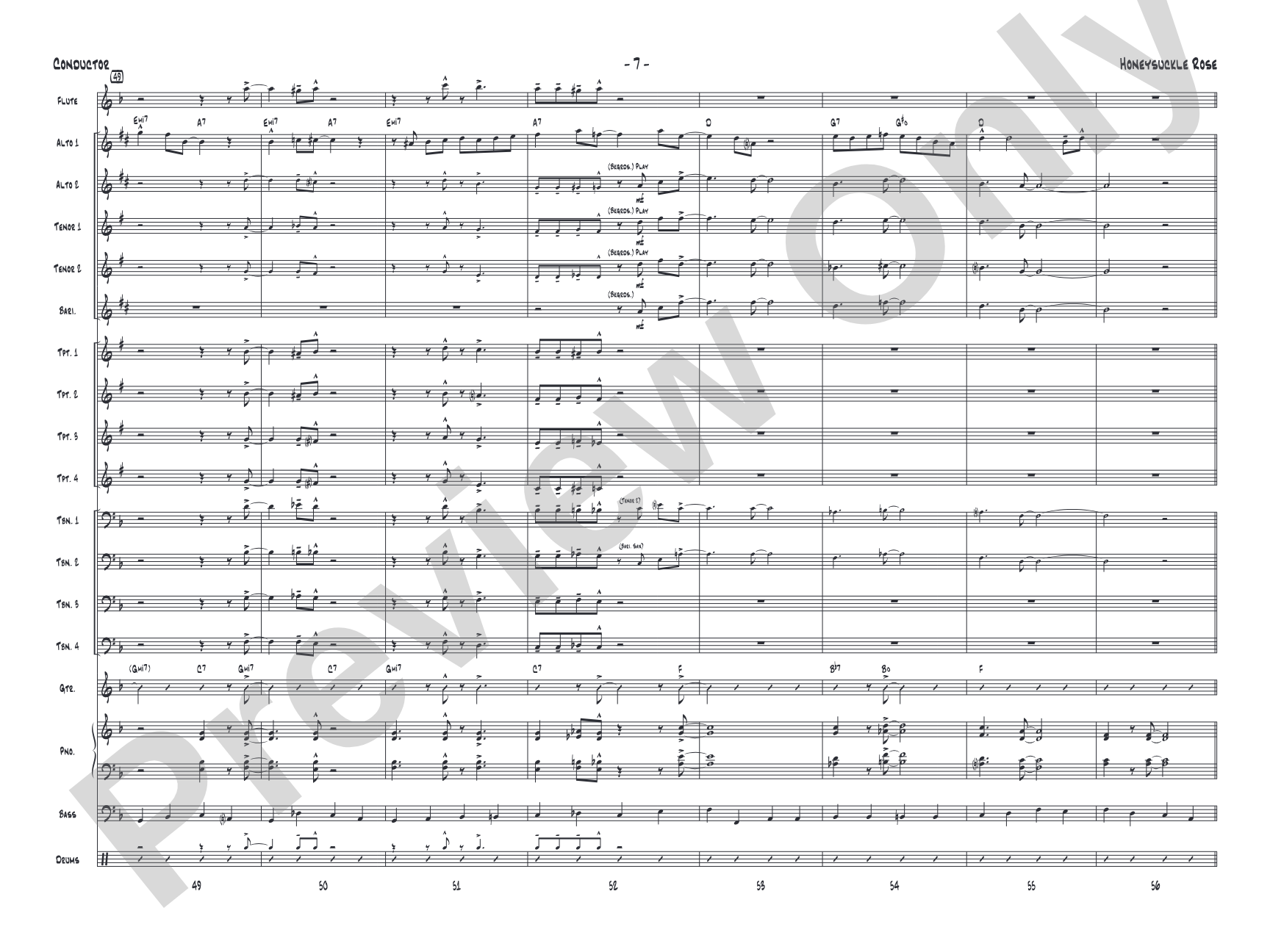
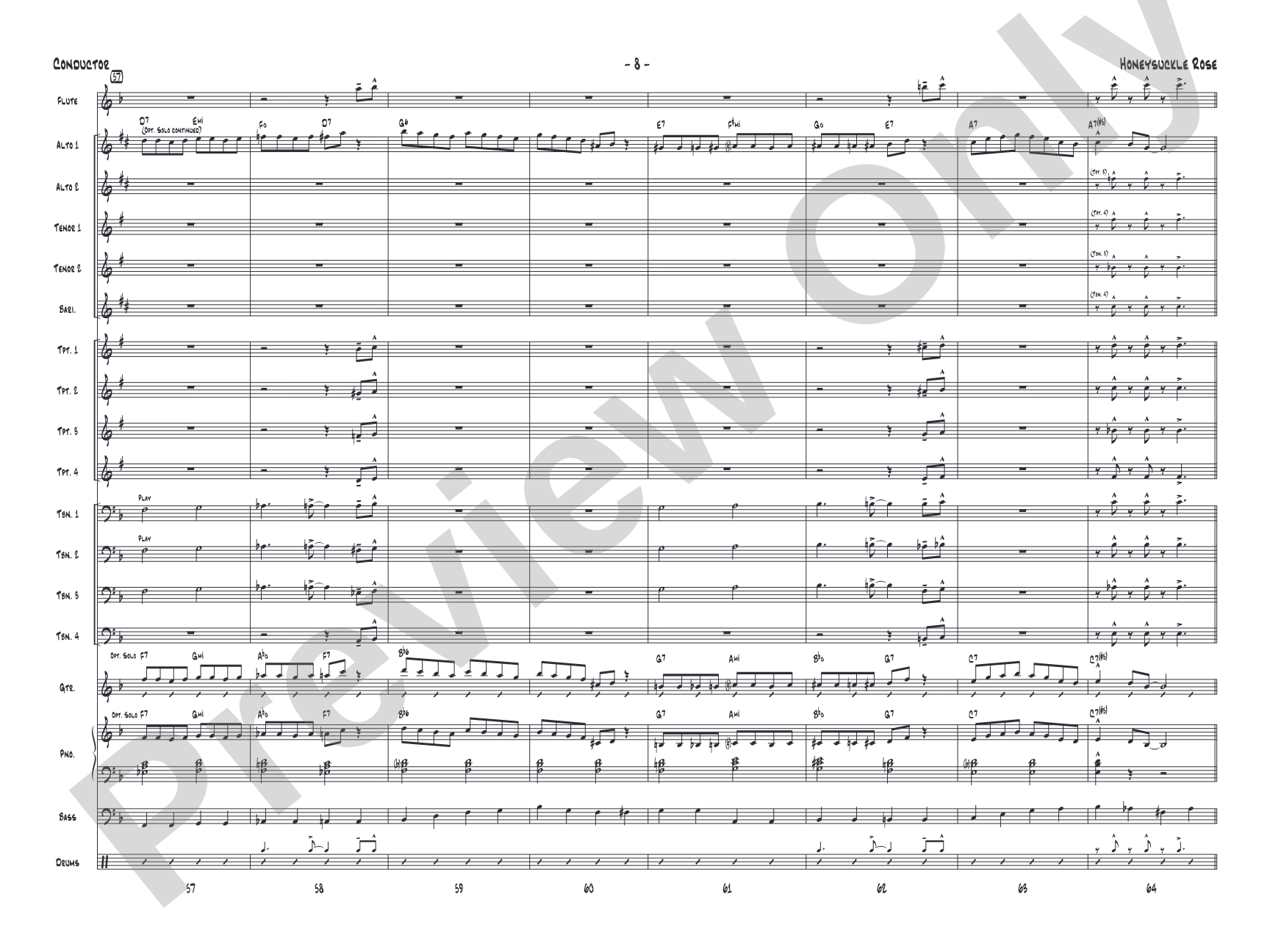
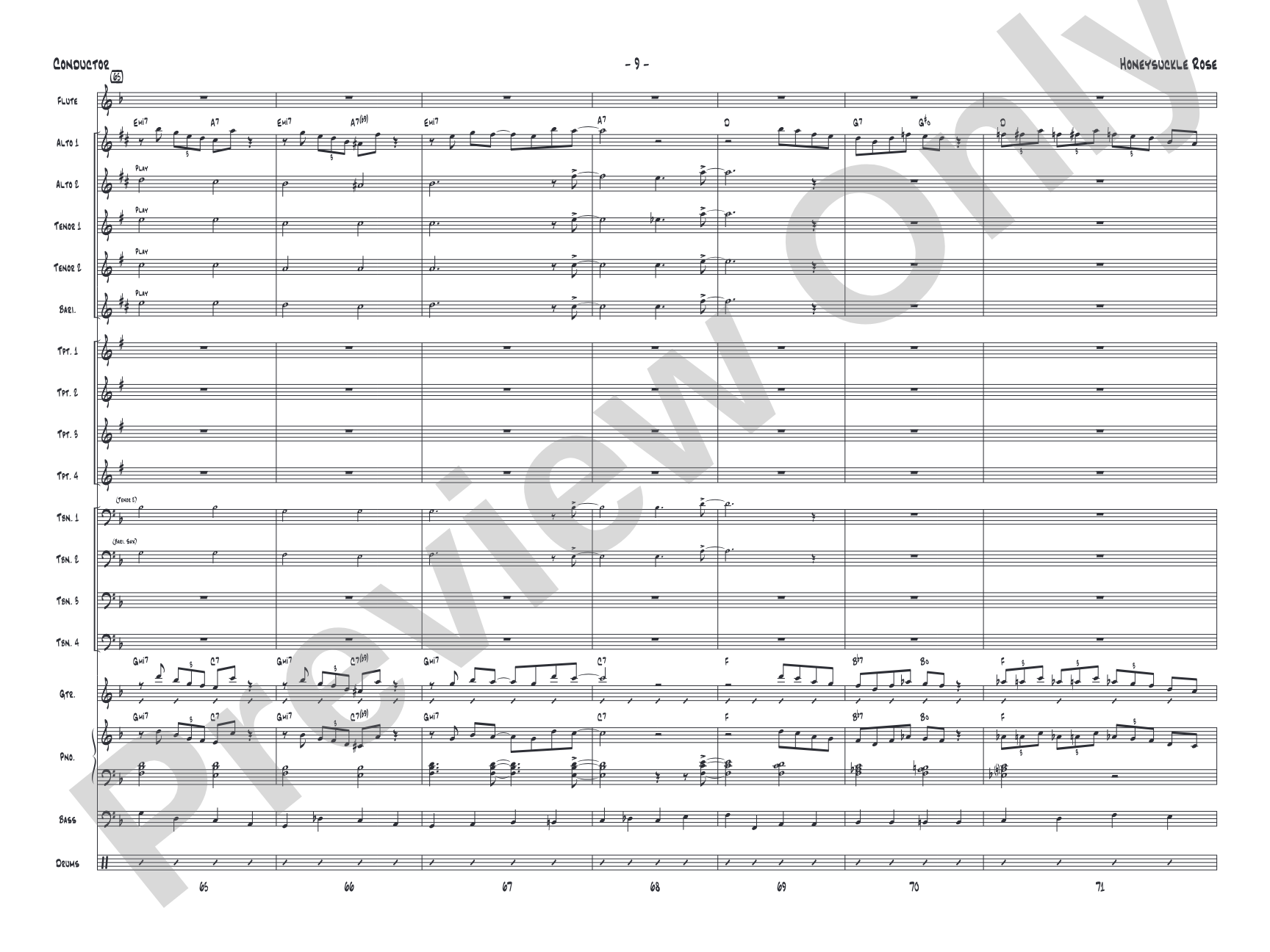
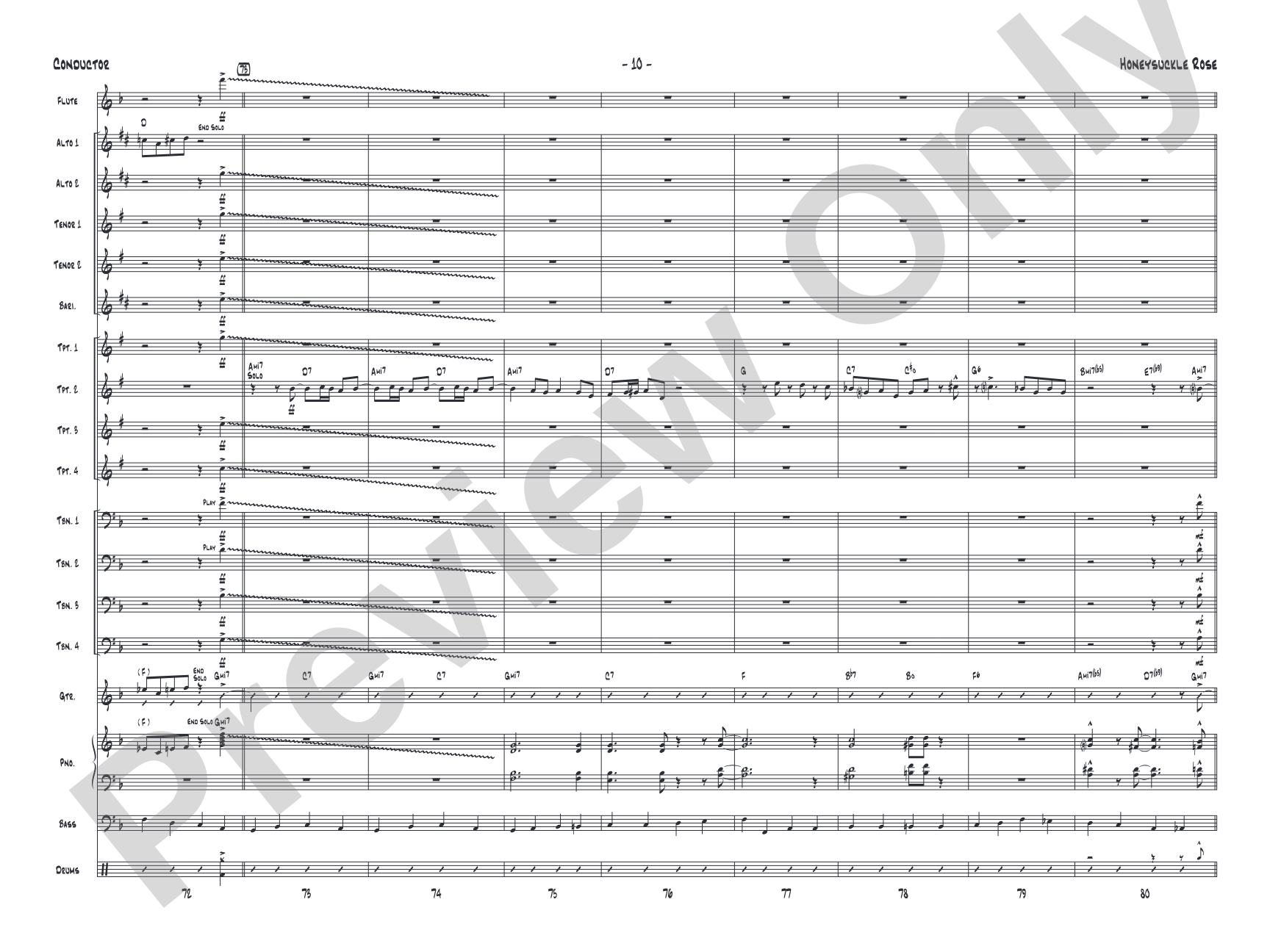
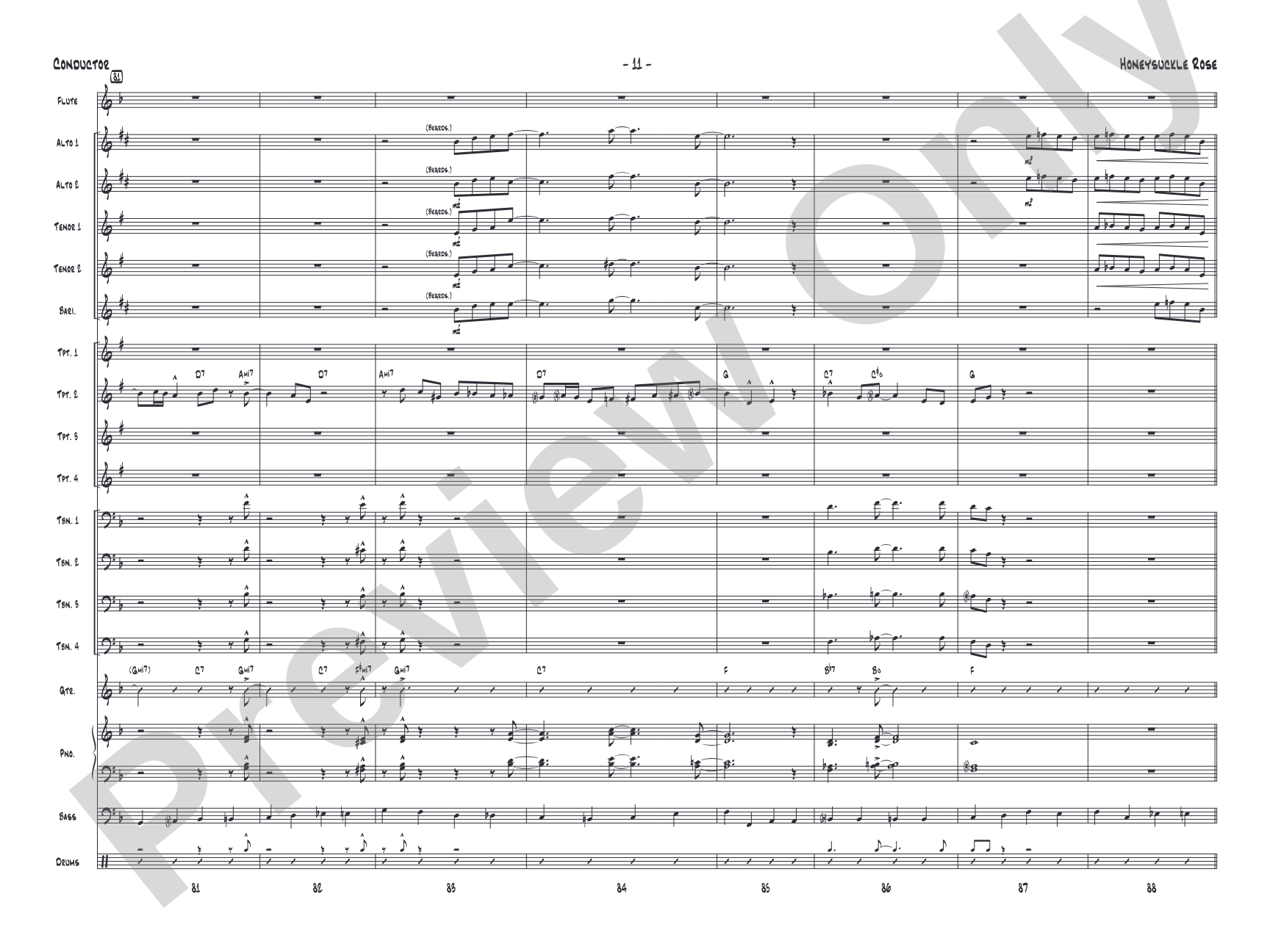
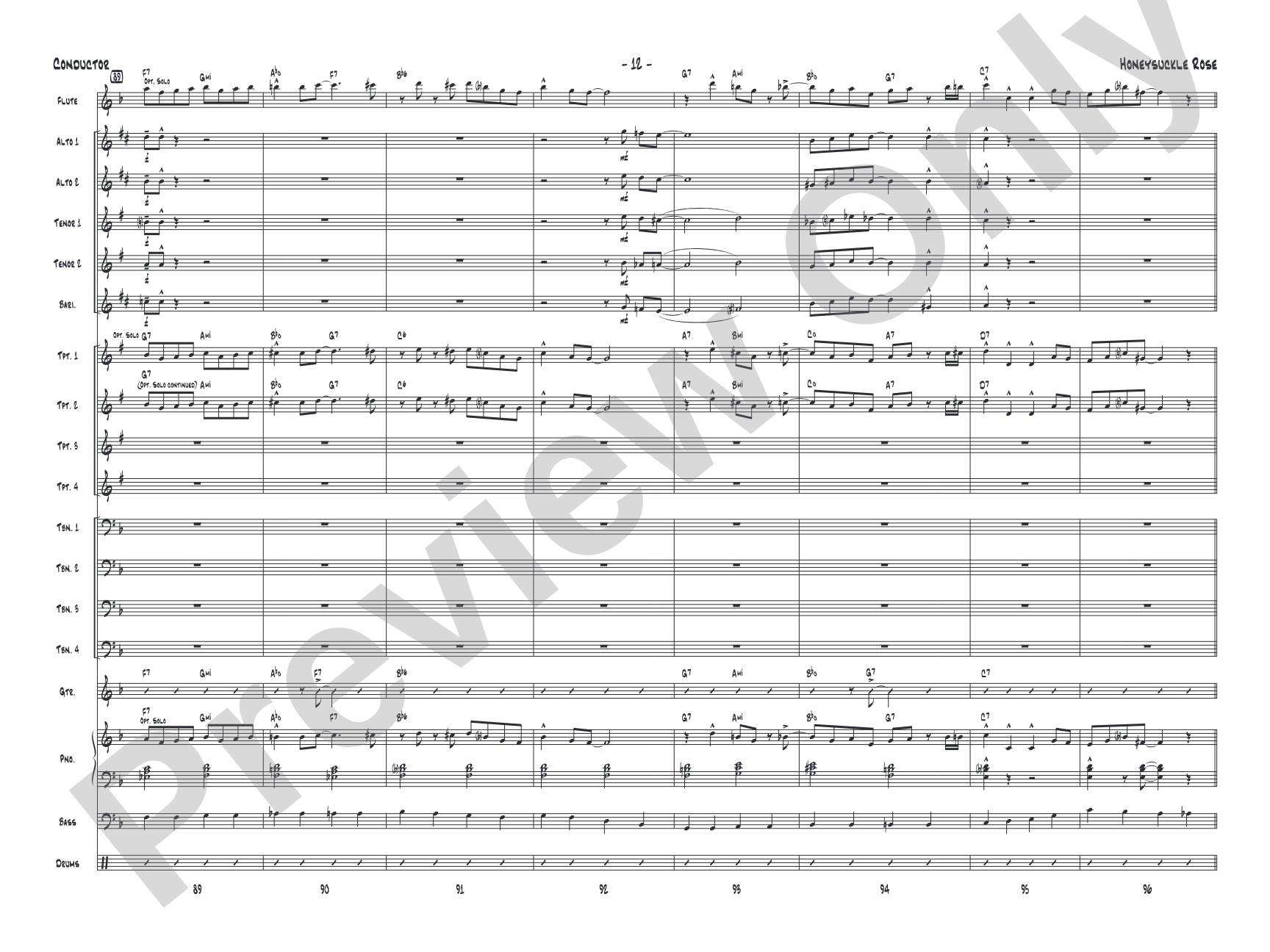
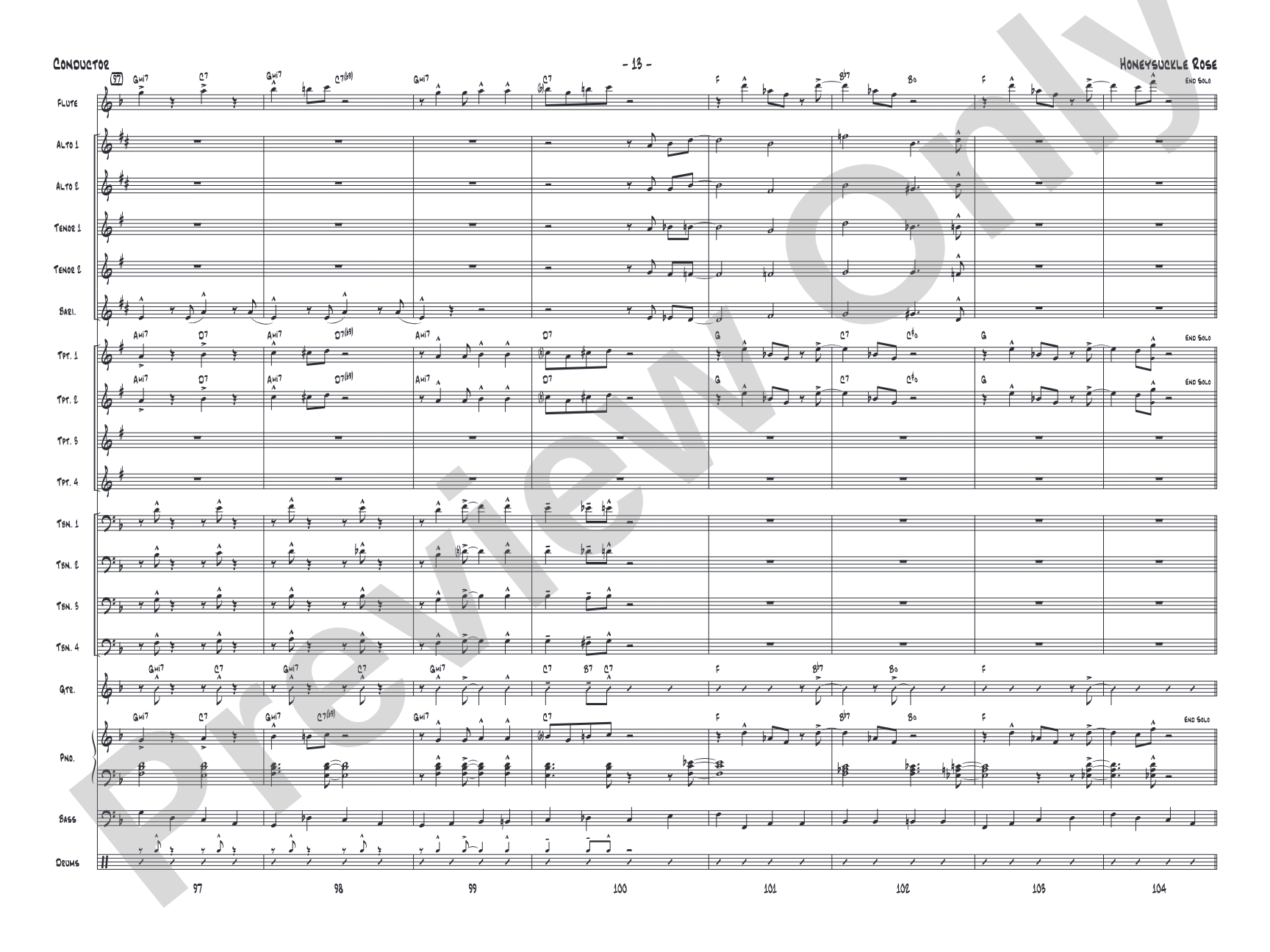
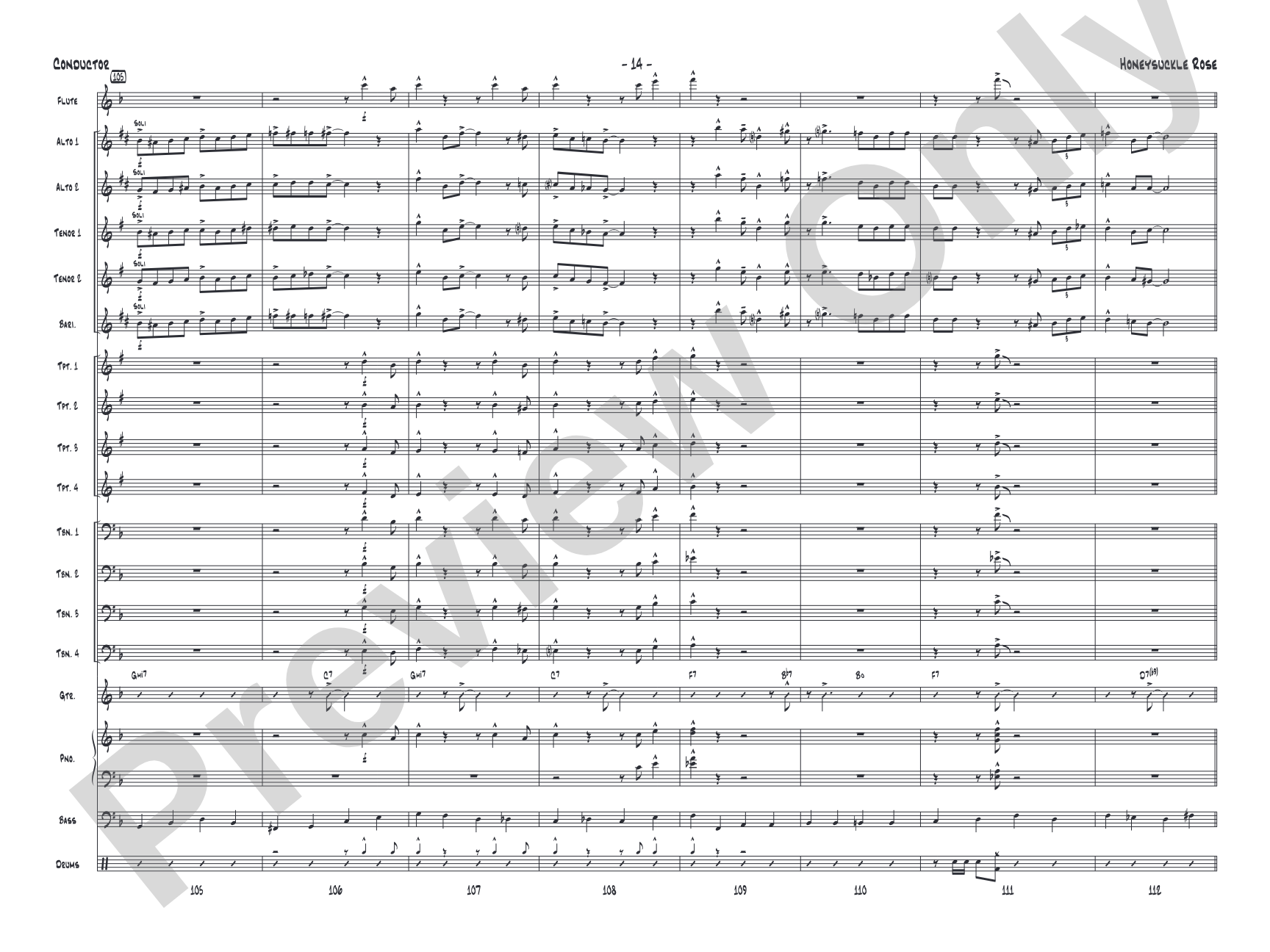
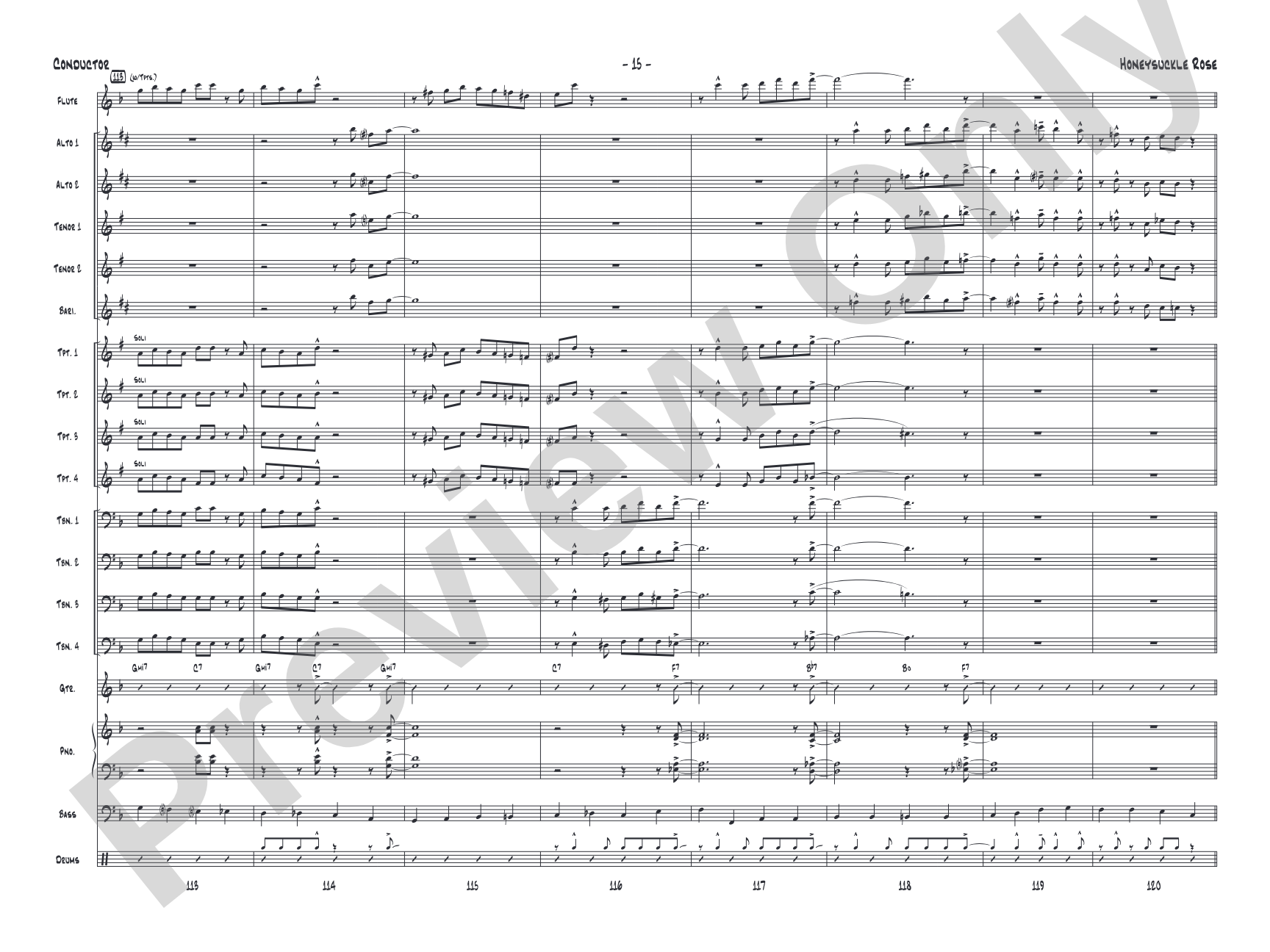
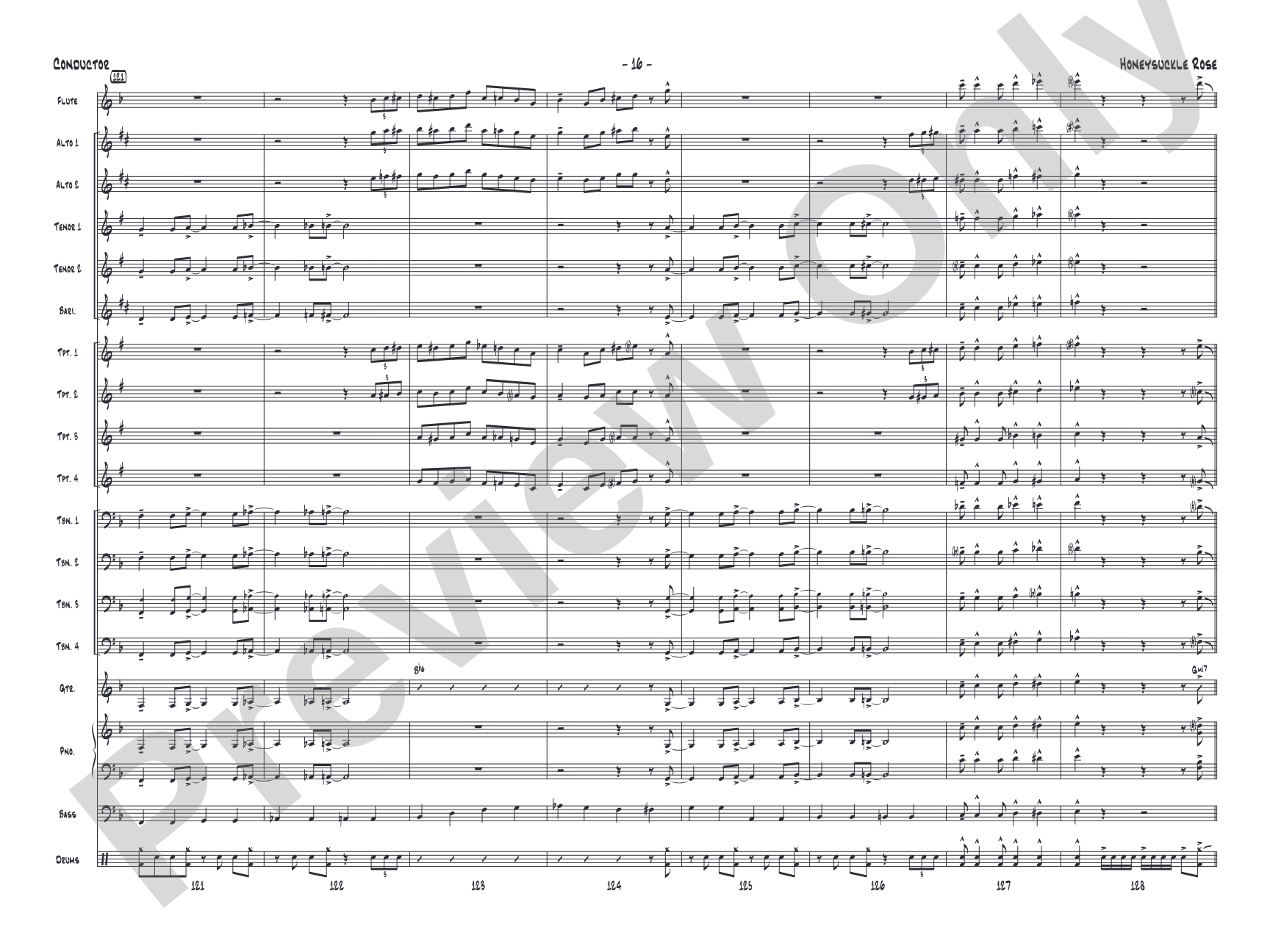
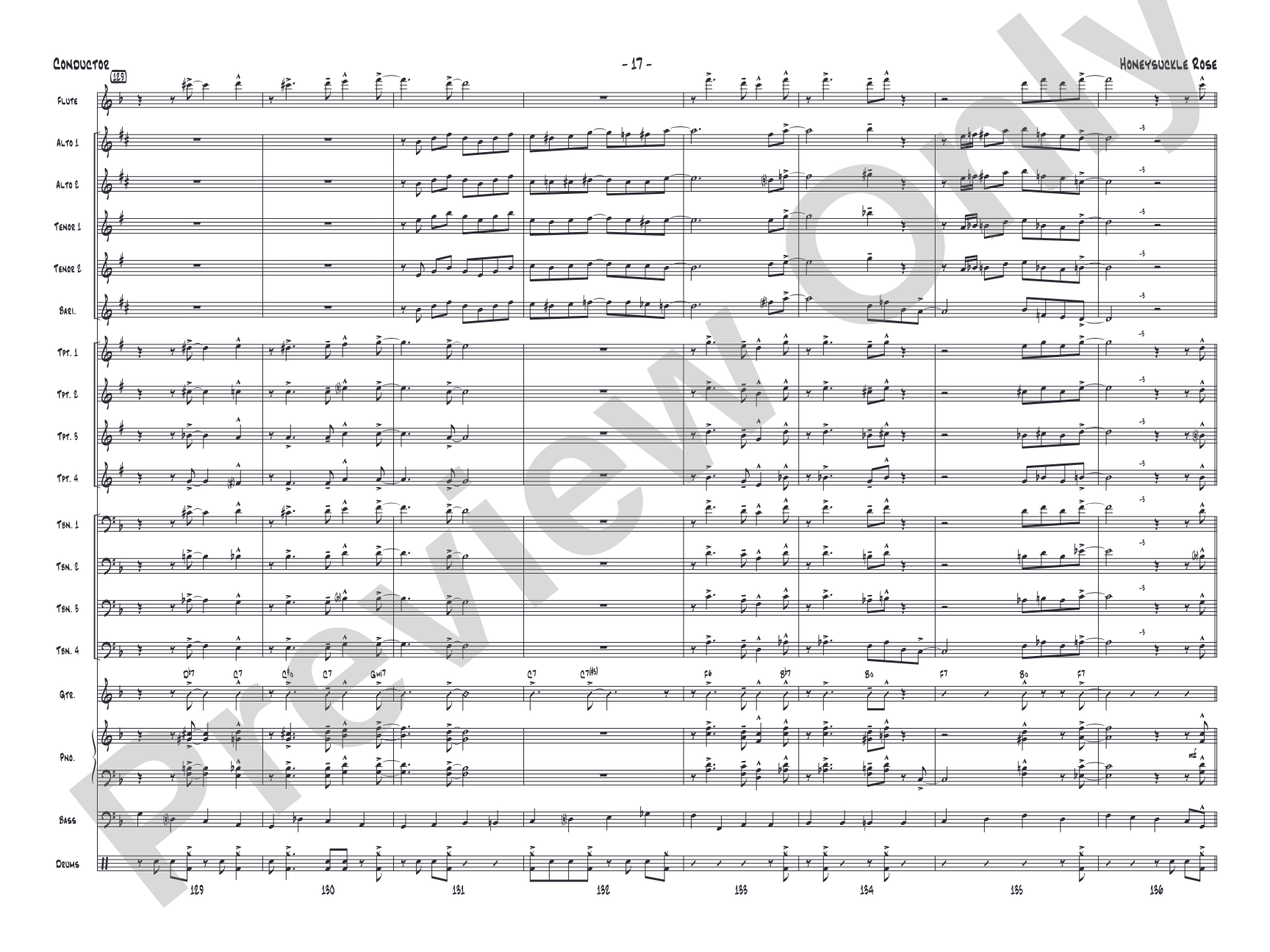
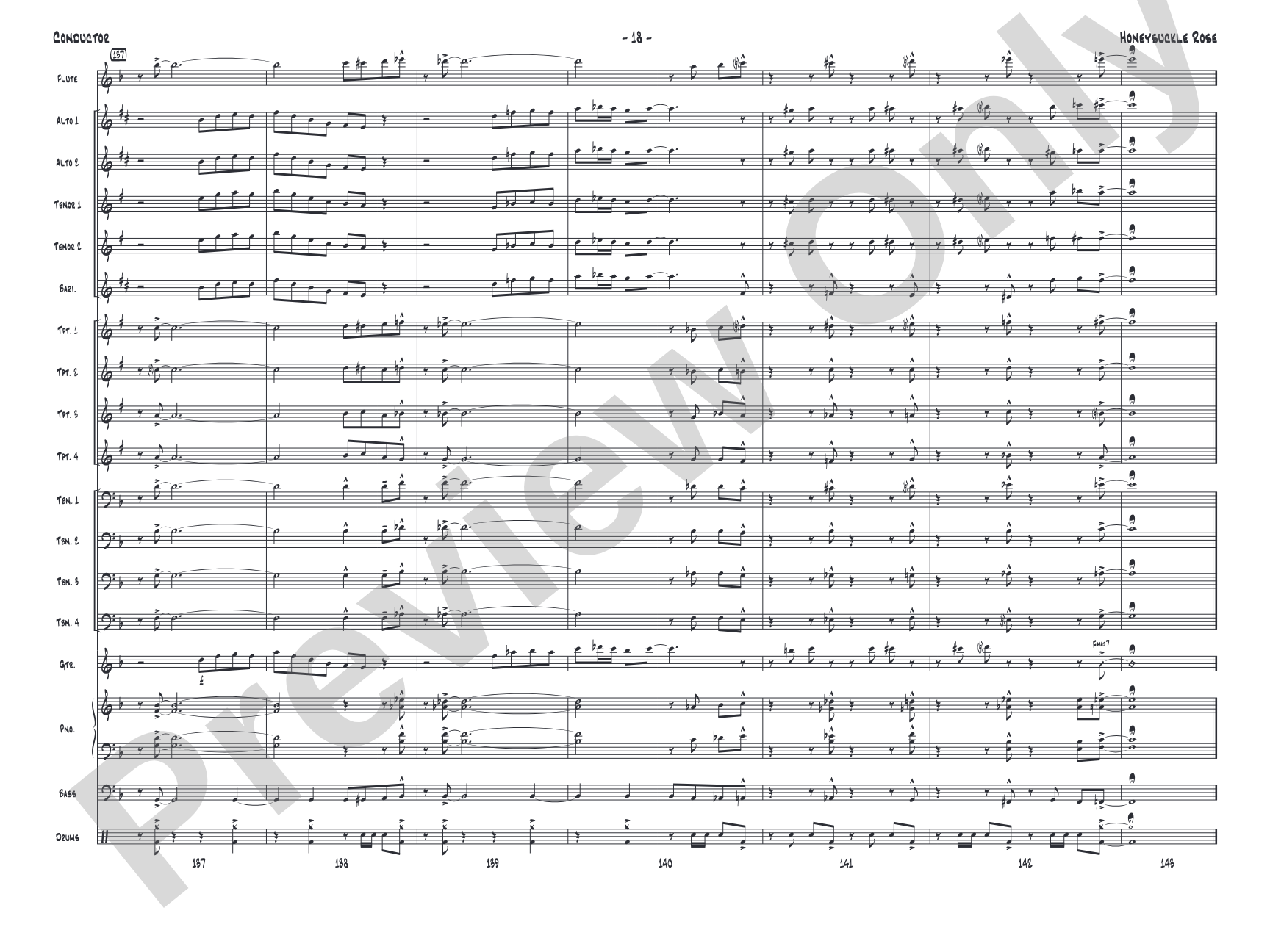

Honeysuckle Rose: Jazz Ensemble Conductor Score & Parts
Music by Thomas "Fats" Waller, words by Andy Razaf / arr. Paul Baker
Grade: 2.5 (Medium Easy)
Item: 00-PK-0007723

$50.00
One moment…
Description
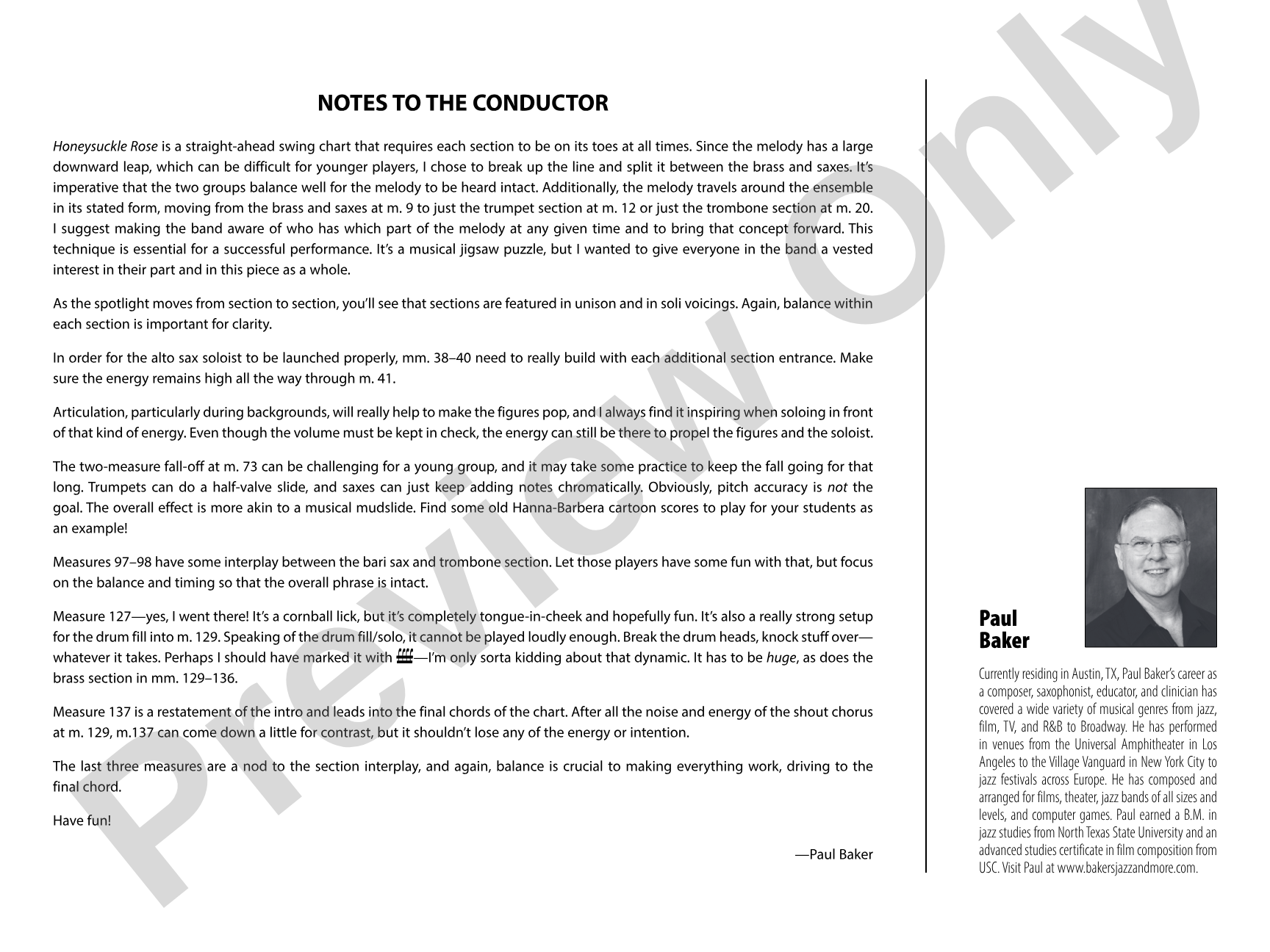
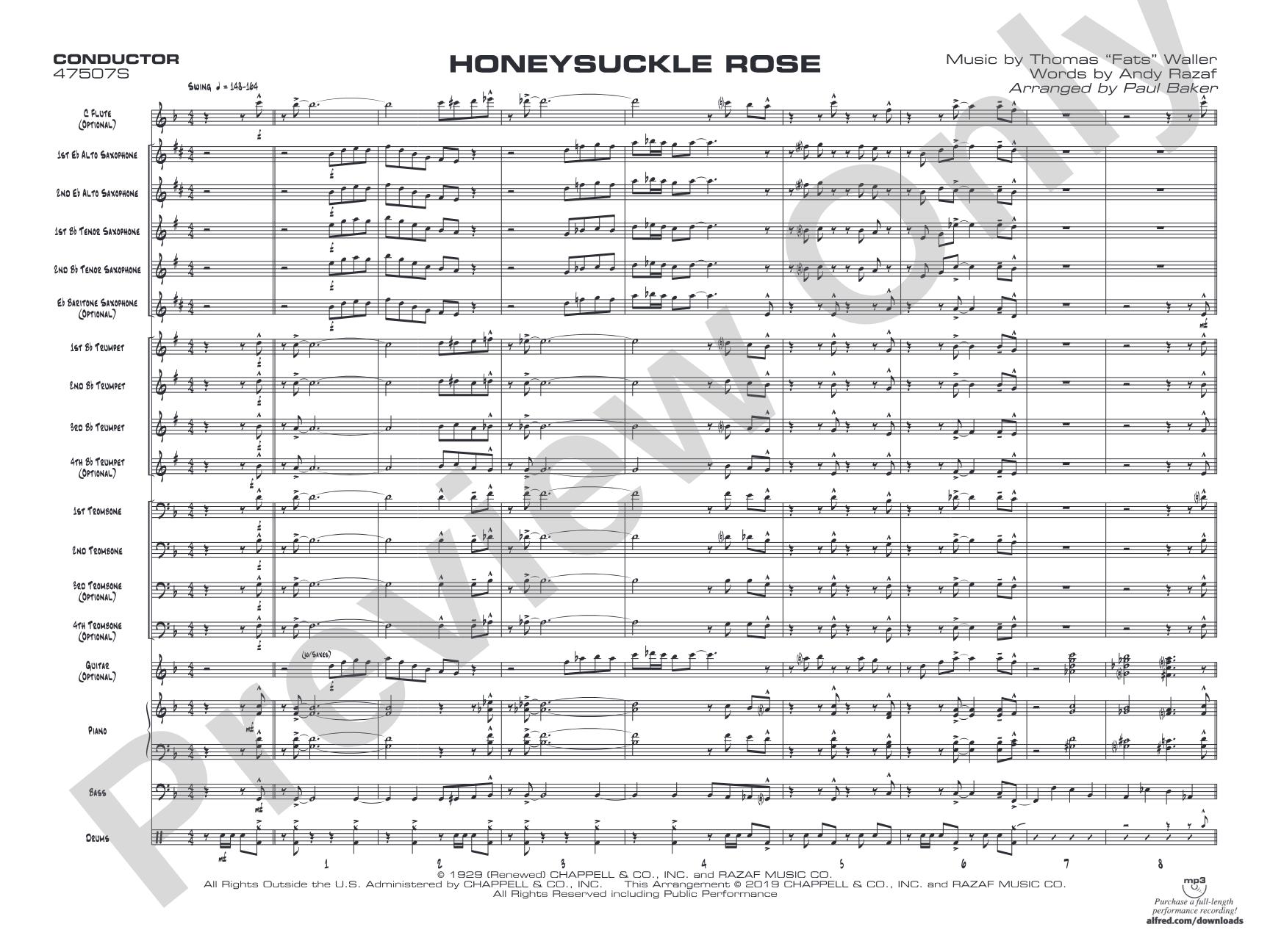
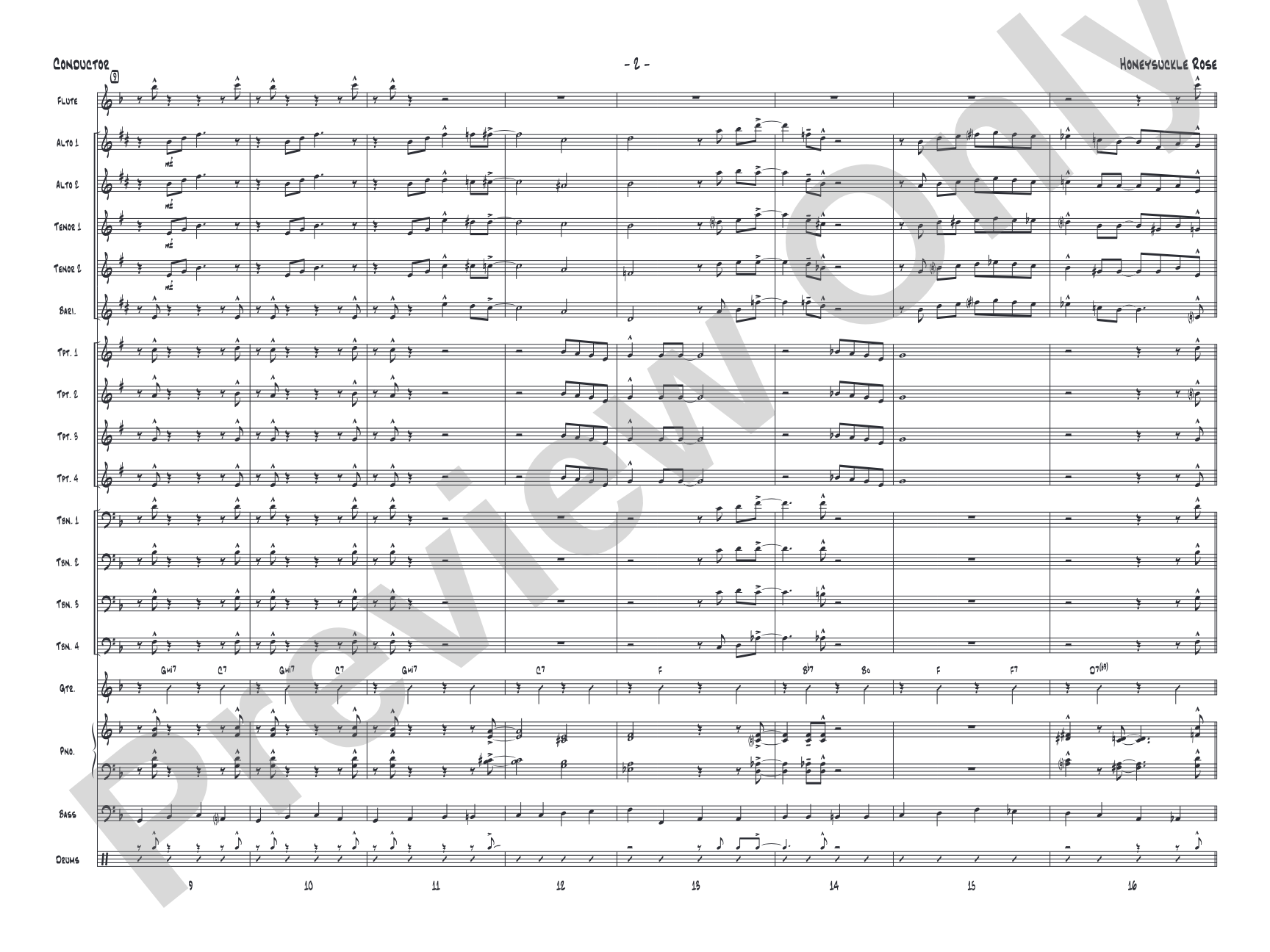
A swingin' jazz classic played around 156 BPM. Written-out suggested solos are provided for alto 1 and trumpet 2 with cues for piano and trumpet 1. The sax section soli, drum fills, a few familiar quotes along with well-notated rhythm parts all come together creating a fine chart that will make your band shine.


Don't just read it, hear it, play along with it, and watch your students grow with it. In MakeMusic Cloud, Honeysuckle Rose: Jazz Ensemble Conductor Score & Parts comes alive with professional accompaniment, adjustable tempo, and built-in practice tools that turn solo practice into real progress.
Open in the Player
Jump straight in and assign it today.
Start Your Free Trial
Open this title and explore the full library in minutes.
Sample Audio
1
Audio File
--:--
0:00
0:00
Sample Video
Additional Details
Series:
Young Jazz Ensemble
Publisher:
Alfred Music
Page Count:
102
SKU:
00-PK-0007723
More about this title
About the Composer: Thomas "Fats" Waller
Thomas "Fats" Waller (1904-1943) was a stride pianist, composer, and bandleader whose prolific output shaped American jazz and popular song. His gift for melody and humor made him one of the most recorded artists of the 1920s and 1930s, with compositions that remain central to the jazz repertoire.
Waller's infectious swing and accessibility make his music ideal for jazz education. His charts reward strong section playing while offering soloists room to explore jazz phrasing and blues language within clearly written frameworks.
Why we love this
This arrangement channels Waller's signature bounce without requiring advanced reading skills. The written-out solos for alto and trumpet give students a secure entry point into jazz vocabulary, while the sax section soli and drum fills provide color and sophistication that audiences recognize immediately. At 2.5 grade level, it's accessible enough for developing ensembles yet swings hard enough to hold its own at festivals.
What to expect
Pure swing energy. The rhythm section drives a steady, infectious groove while saxes lock into block harmony and brass punch out cues with warmth. The solos invite listeners into the familiar jazz conversation between melody and accompaniment, all wrapped in Waller's unmistakable good humor.
Who it's for
Jazz ensembles at the developing level who are ready to move past simple head charts and tackle written big band idiom. This works equally well for high school jazz bands building their contest repertoire and college jazz ensembles looking for a crowd-pleaser that doesn't demand virtuosity.
How to get the most out of it
- Lock the tempo at 156 BPM early in rehearsal. The written solos depend on rhythmic clarity; once that's secure, the swing feel will settle naturally into place.
- Shape the alto and trumpet solos with a light touch. These are models for imitation, not monuments. Encourage soloists to hear them as starting points rather than museum pieces.
- Balance the sax section soli so the melody cuts through without drowning the rhythm section. Brass responds; don't let them overwhelm the chart's harmonic foundation.
- Attend to the drum fills and use them to build momentum through form. They're not decorative; they signal section transitions and propel the ensemble forward.
How to use it
Schedule this for a spring jazz festival or concert where you need something that lands immediately with an audience. It pairs well alongside harder-swinging Ellington or Basie charts and works equally well as a closer that sends people home smiling. It's also sturdy enough to program at a secondary concert or community event where polish and showmanship matter as much as difficulty.
Skills your students will build
- Comping rhythms and swing feel in jazz context
- Reading and executing written-out solo models
- Sectional soli execution and blend
- Responding to drum fills and chart navigation
- Jazz articulation and phrasing over an ensemble foundation