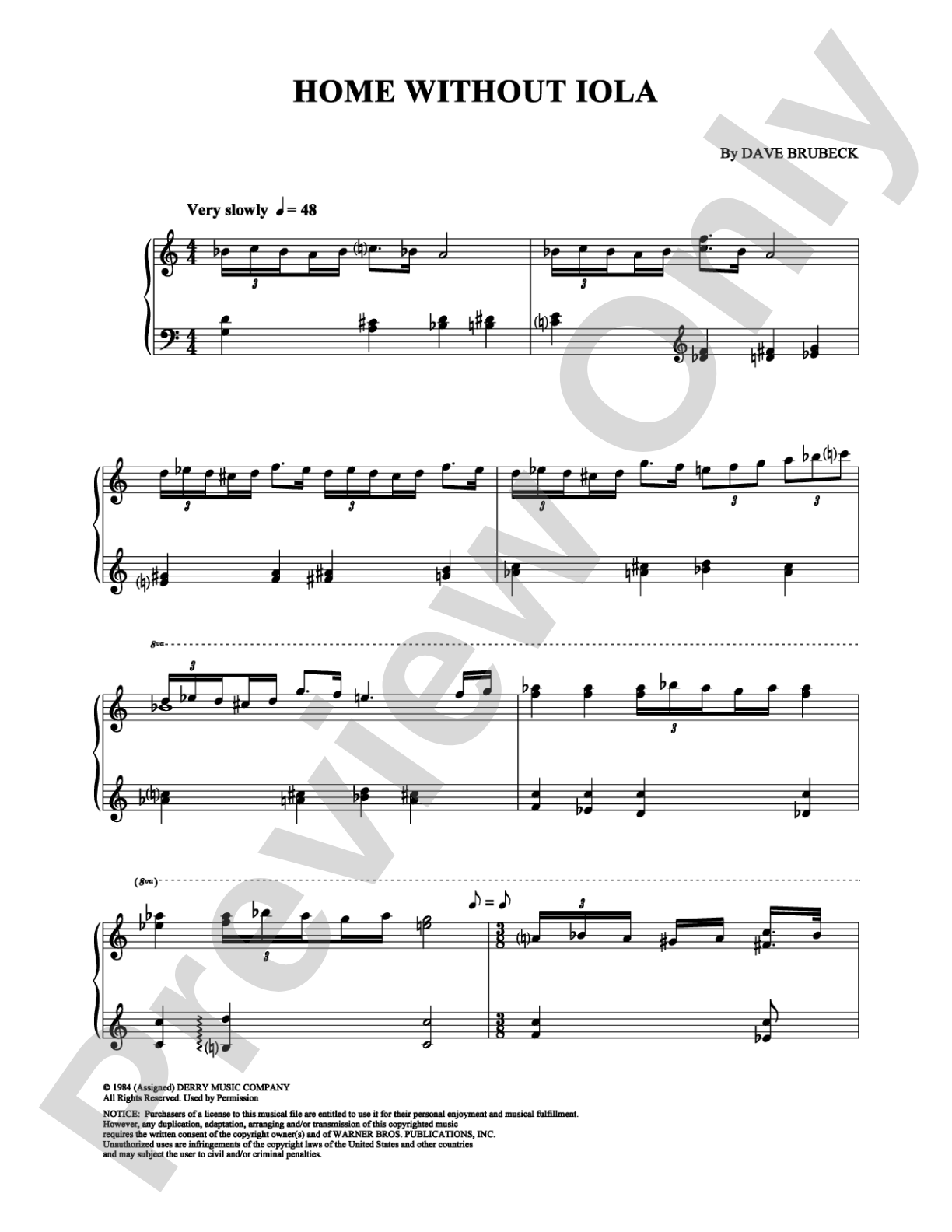
Home Without Iola: Piano Digital Sheet Music

Home Without Iola: Piano Digital Sheet Music

Dave Brubeck

Item: 00-PS-0000921

Digital Download
$3.99
Description

Home Without Iola: Piano Digital Sheet Music isn't in MakeMusic Cloud just yet...but it could be. Let us know you'd like to see it, and you'll help shape what comes next. In the meantime, start a free trial and dive into thousands of interactive titles your students can play along with today.

Sample Audio
No sample audio found.
Sample Video
Additional Details
SKU: 00-PS-0000921

More about this title

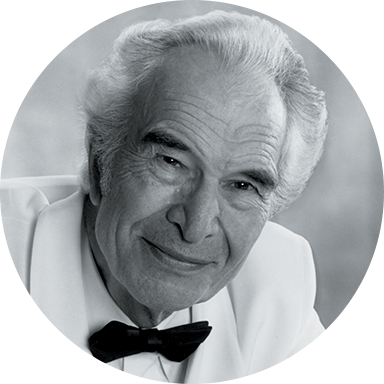
About the Artist: Dave Brubeck

Dave Brubeck

Dave Brubeck stands as one of jazz's most consequential figures, equally accomplished as an improviser and a serious composer working across multiple musical languages. His education at College of the Pacific and subsequent studies with Darius Milhaud at Mills College shaped a compositional voice that wove jazz vocabulary into classical forms, chamber works, orchestral pieces, and large-scale choral compositions. His 1959 album "Time Out" became the first jazz recording to sell over a million copies, anchored by the iconic "Take Five," yet this commercial breakthrough represented only one facet of his artistic output.

Beyond his recordings and performances, Brubeck used his prominence to advance racial integration in American music during a pivotal era. His sacred works, including the mass "To Hope!" and oratorios like "The Voice of the Holy Spirit," have been performed and recorded internationally by major orchestras and choirs. Recognition came throughout his life in the form of a Grammy Lifetime Achievement Award, the Presidential Medal of the Arts, induction into the American Classical Music Hall of Fame, and a lifetime achievement award from the London Symphony Orchestra.

Why we love this

This piece captures Brubeck's gift for merging jazz sensibility with composed structure, giving pianists a chance to work with one of jazz's most influential voices in a fully notated format. The blend of rhythmic sophistication and pianistic writing demonstrates why Brubeck remained relevant as both a recording artist and a serious composer throughout his career.

What to expect

The music balances swing sensibility with composed sophistication, neither purely jazz nor purely classical but something distinctly Brubeck. Harmonic richness and rhythmic ease flow through the writing, inviting the performer into a conversational, unhurried musical landscape.

Who it's for

This piece suits pianists with jazz experience or those studying Brubeck's compositional approach alongside his improvisation legacy. It works well for intermediate to advanced pianists exploring how a major jazz voice notated his material.

How to get the most out of it

  • Observe Brubeck's articulation markings closely; his jazz roots inform how notes connect and separate, and respecting these details shapes the piece's character
  • Balance the harmonic language between swing-era vocabulary and the more complex voicings that reflect Brubeck's classical training
  • Pay attention to rhythmic precision without letting the piece feel metronomic; jazz time requires relaxation within accuracy

How to use it

Include this as part of a jazz piano recital or a program exploring American composers who bridged jazz and classical traditions. It pairs naturally with other Brubeck compositions or alongside mid-20th-century pianists who engaged with jazz language in concert settings.

Skills your students will build

  • Interpreting jazz articulation and phrasing within notated music
  • Understanding harmonic language that blends swing-era and classical vocabulary
  • Balancing rhythmic precision with the relaxed feel characteristic of jazz piano
  • Recognizing compositional techniques Brubeck used to translate his improvisational style into written form

You May Also Like