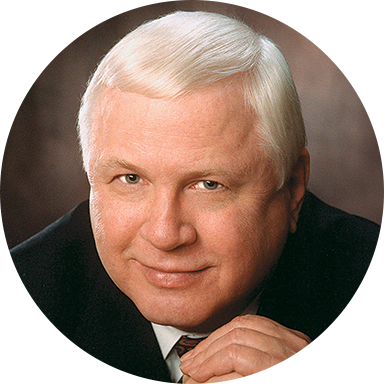
Tom Fettke has shaped church and school music for more than five decades as a composer, arranger, and recording producer. His catalog spans hundreds of published works, with The Majesty and Glory of Your Name becoming one of the most widely performed contemporary choral pieces in America. His influence extends across multiple roles: classroom music teacher in California's public schools, church music director for congregations of all sizes, and architect of two major hymnals that have collectively reached millions of worshippers since the mid-1980s.
Fettke's approach to choral writing emerges from deep roots in both liturgical and educational contexts. He served as Director of Choral Activities for the Redwood Christian School System and held leadership positions with The Hymnal for Worship and Celebration and The Celebration Hymnal, bringing a practitioner's understanding of what choirs actually need. His degrees from Oakland City College and California State University, paired with a California Lifetime Music Credential, underscore his formal training in both composition and pedagogy. Now based in Nashville with his wife Jan, Fettke continues to shape contemporary church music through arrangements that honor liturgical tradition while remaining singable and accessible.
Why we love this
Fettke's arrangement carries the liturgical weight of the text without demanding extended rehearsal time or extreme vocal ranges, making it genuinely usable in mixed-ability choirs. The four-part writing sits comfortably across all sections while maintaining harmonic sophistication that keeps singers engaged and audiences moved. This is the kind of repertoire that sounds far more substantial than its technical difficulty suggests.
What to expect
Reverent and grounded, with harmonic progressions that feel both contemporary and rooted in liturgical tradition. The piece invites singers into contemplative participation rather than flashy display.
Who it's for
Church choirs seeking accessible sacred repertoire and school choirs preparing for concert or festival programming. The SATB voicing works equally well for volunteer church singers and trained students.
How to get the most out of it
Balance the soprano and alto lines in the opening phrases; both carry thematic material, and neither should dominate.
Shape the text naturally through phrase breathing rather than pushing for dramatic vocal projection.
Allow the harmony to speak in the sustained passages; slight rubato supports the reverent quality without feeling mannered.
How to use it
Position this as a centerpiece for a worship service or sacred concert segment, where its devotional character can unfold without rushing. It pairs naturally with other Fettke arrangements or with settings of different liturgical texts from similar periods.
Skills your students will build
Balancing vocal lines in close four-part harmony
Sustaining tone quality through longer phrases without forcing volume
Responding to text-driven interpretation in sacred music
Tuning and blend in vertical chord structures
You May Also Like
Scan to Complete Your Purchase
Use your phone's camera to scan the code below
You'll log in on your phone and the order will be added to your account