
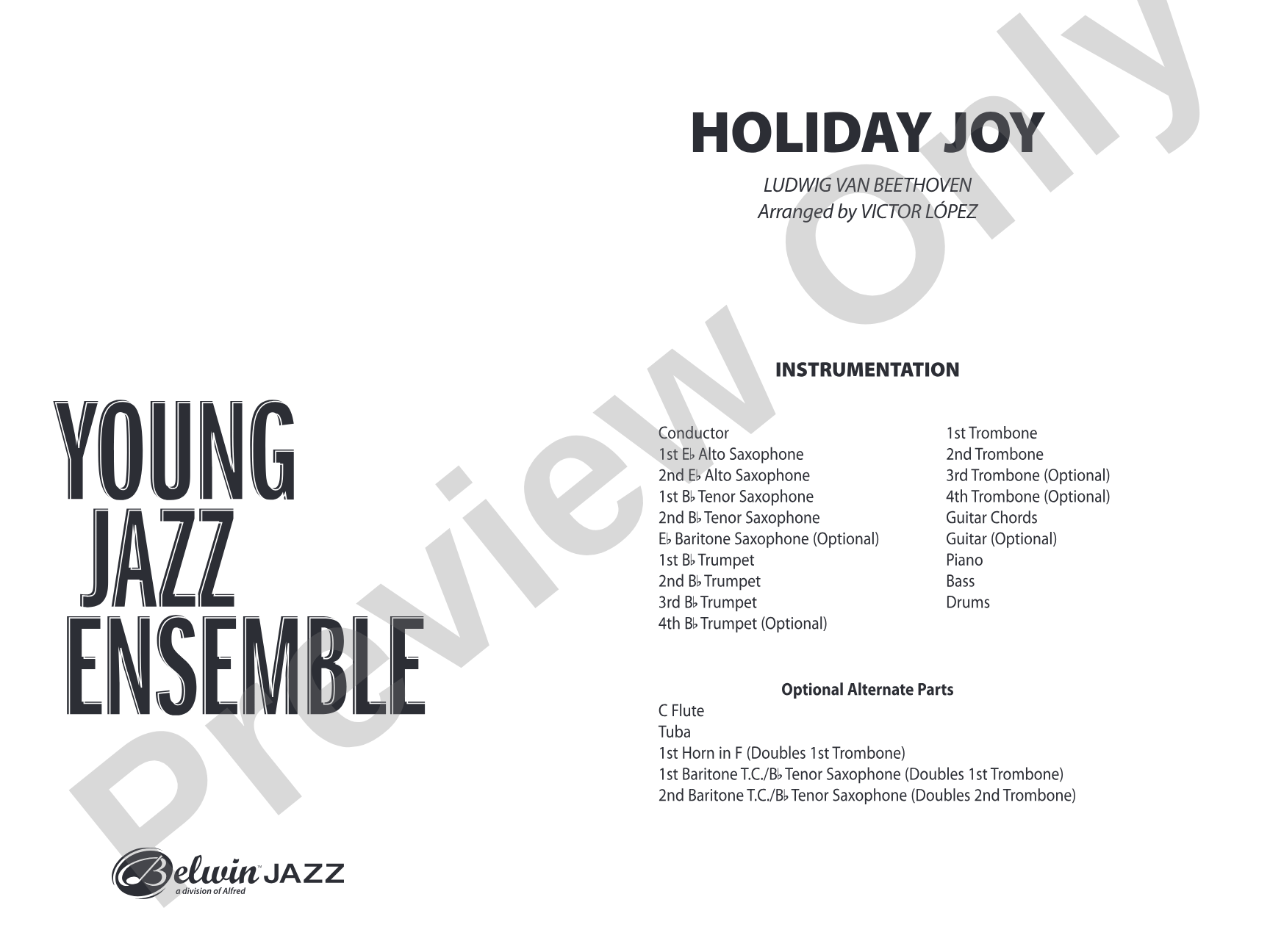
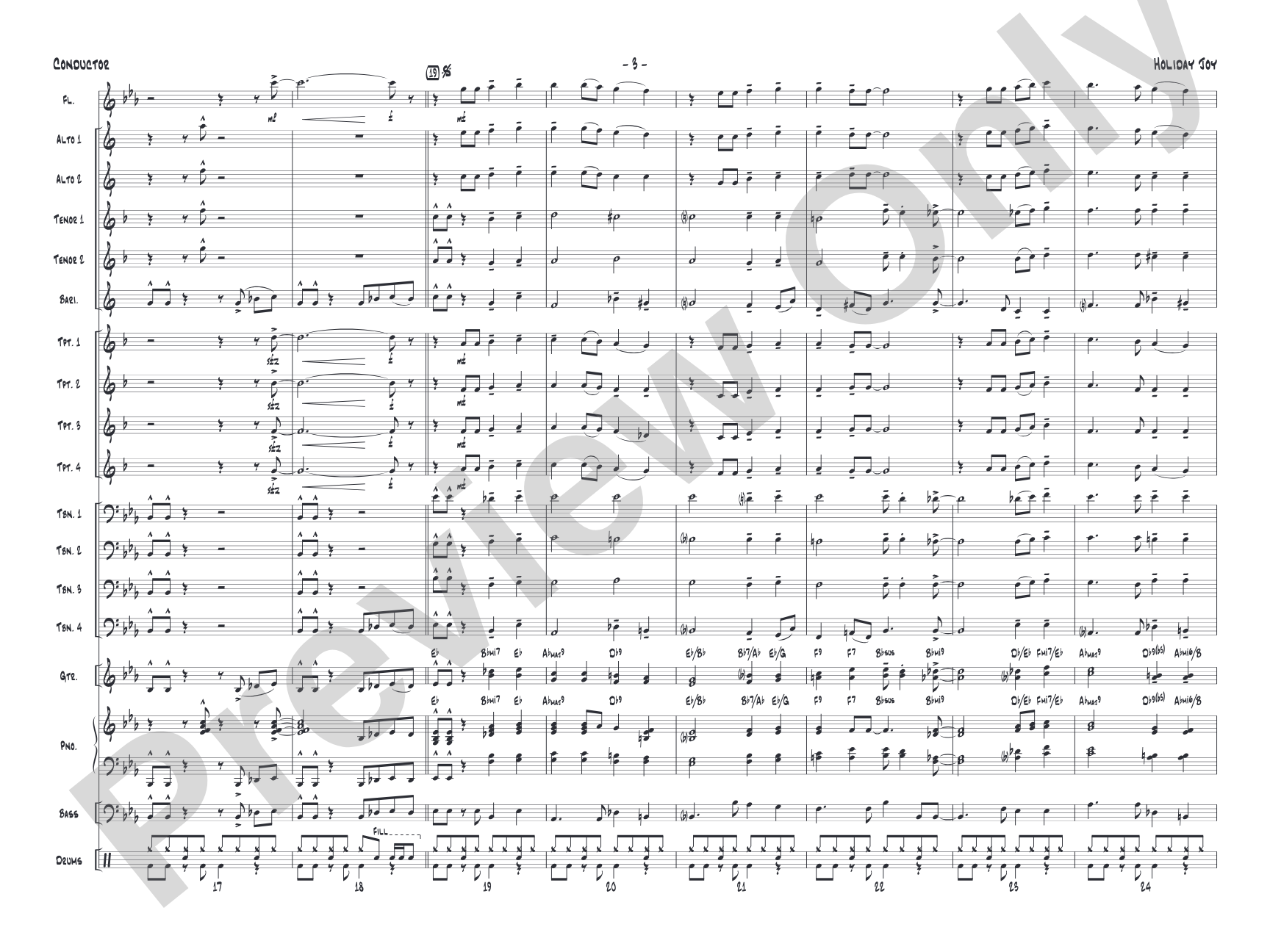
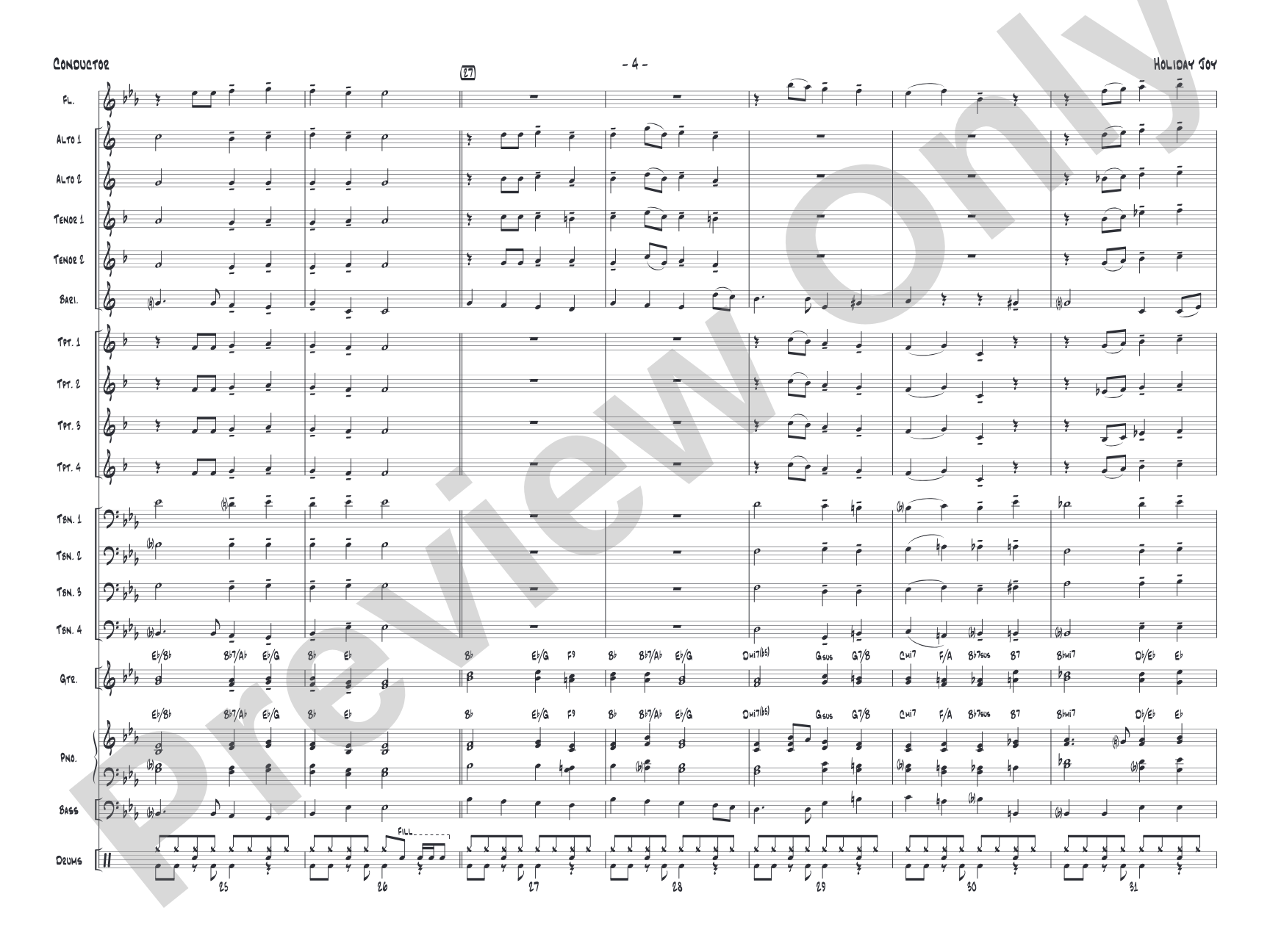
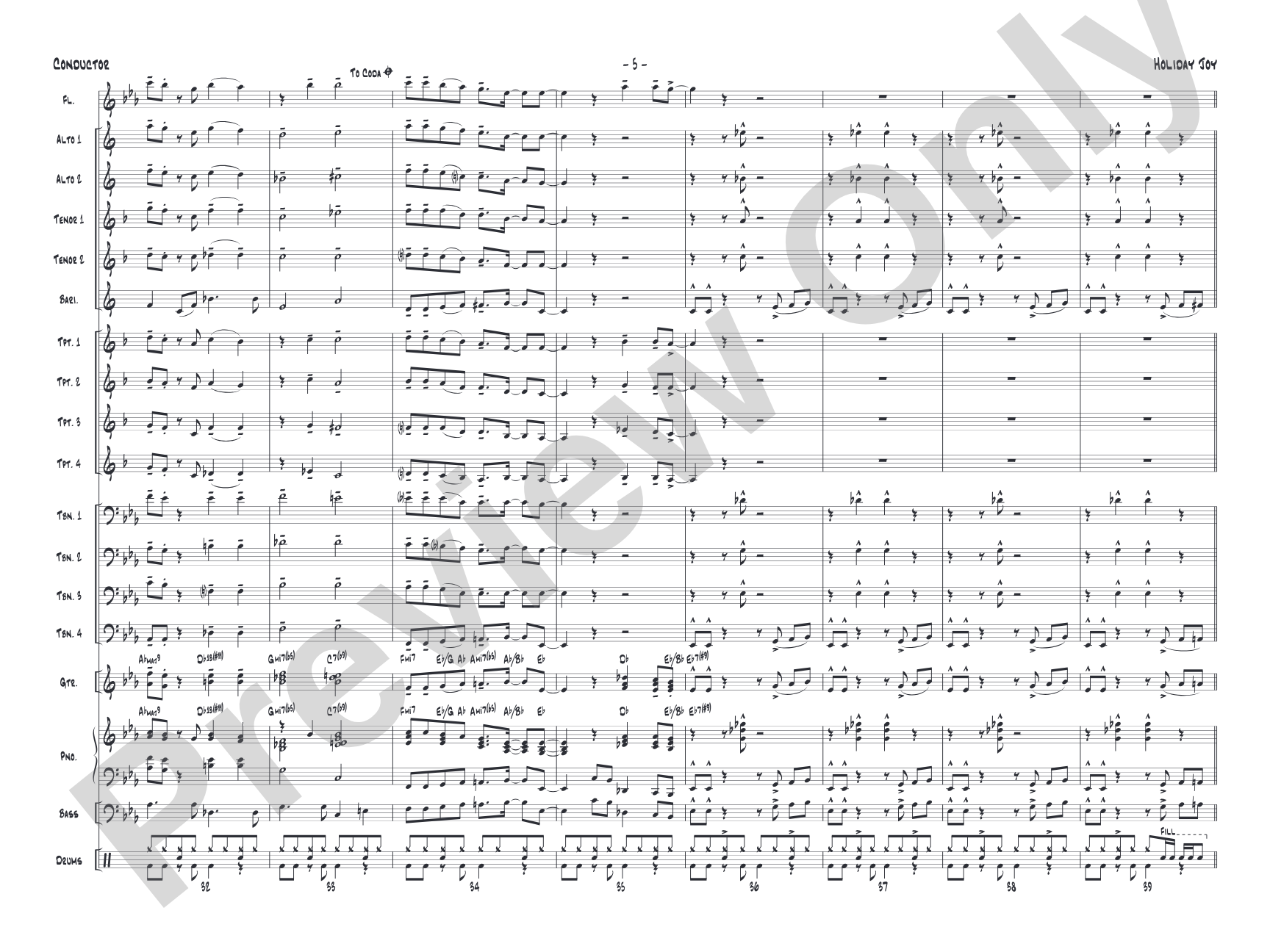
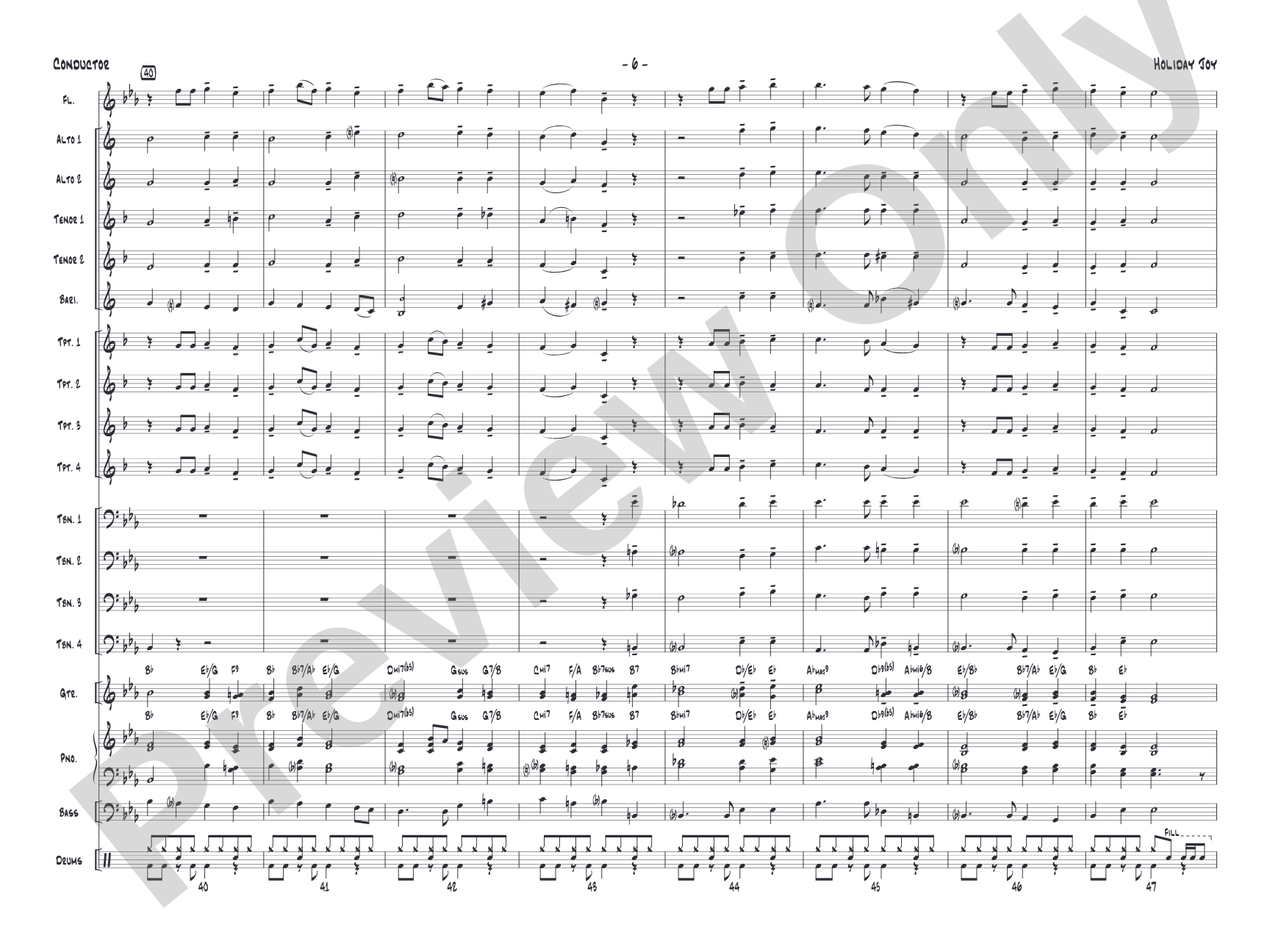
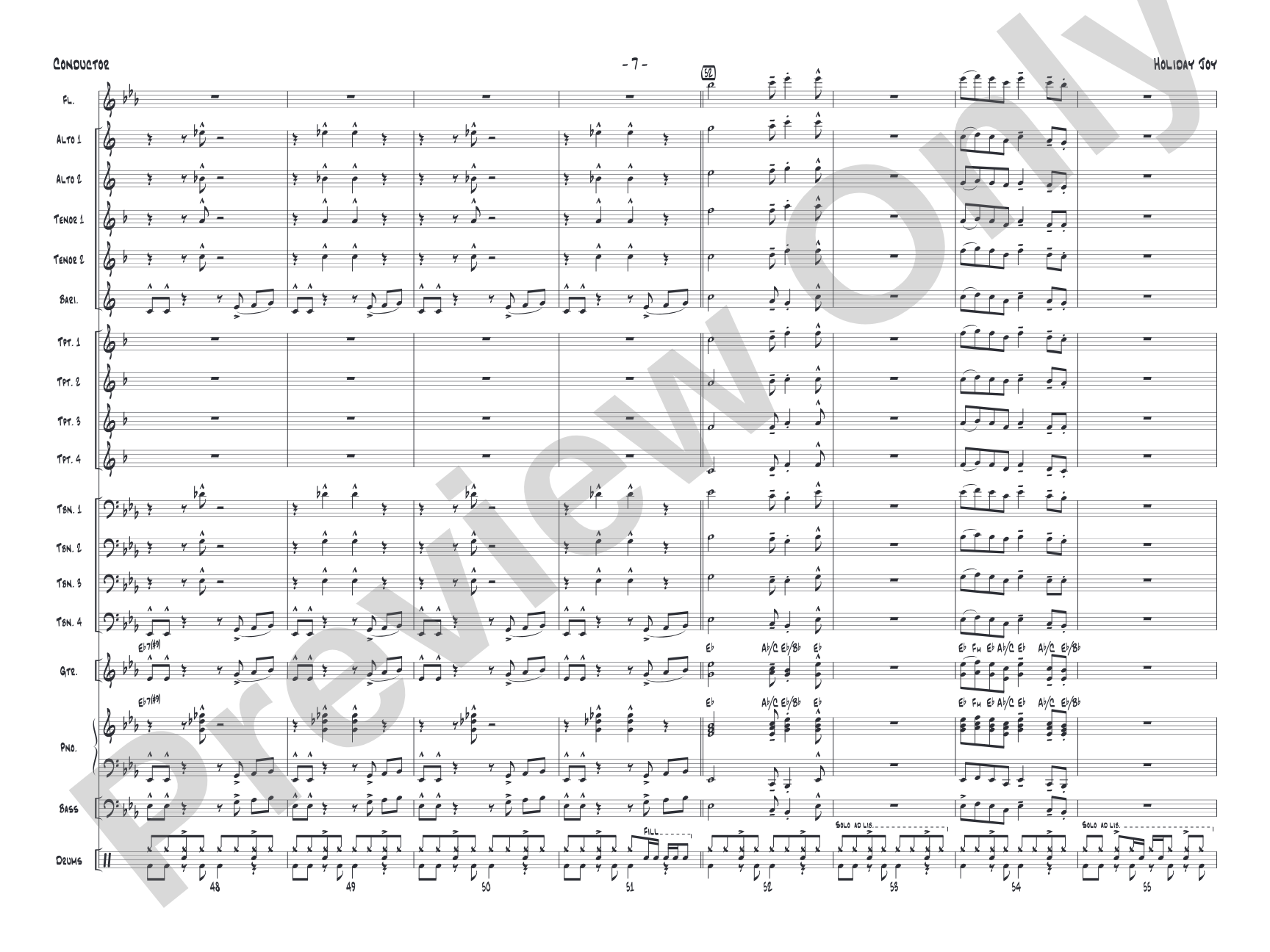
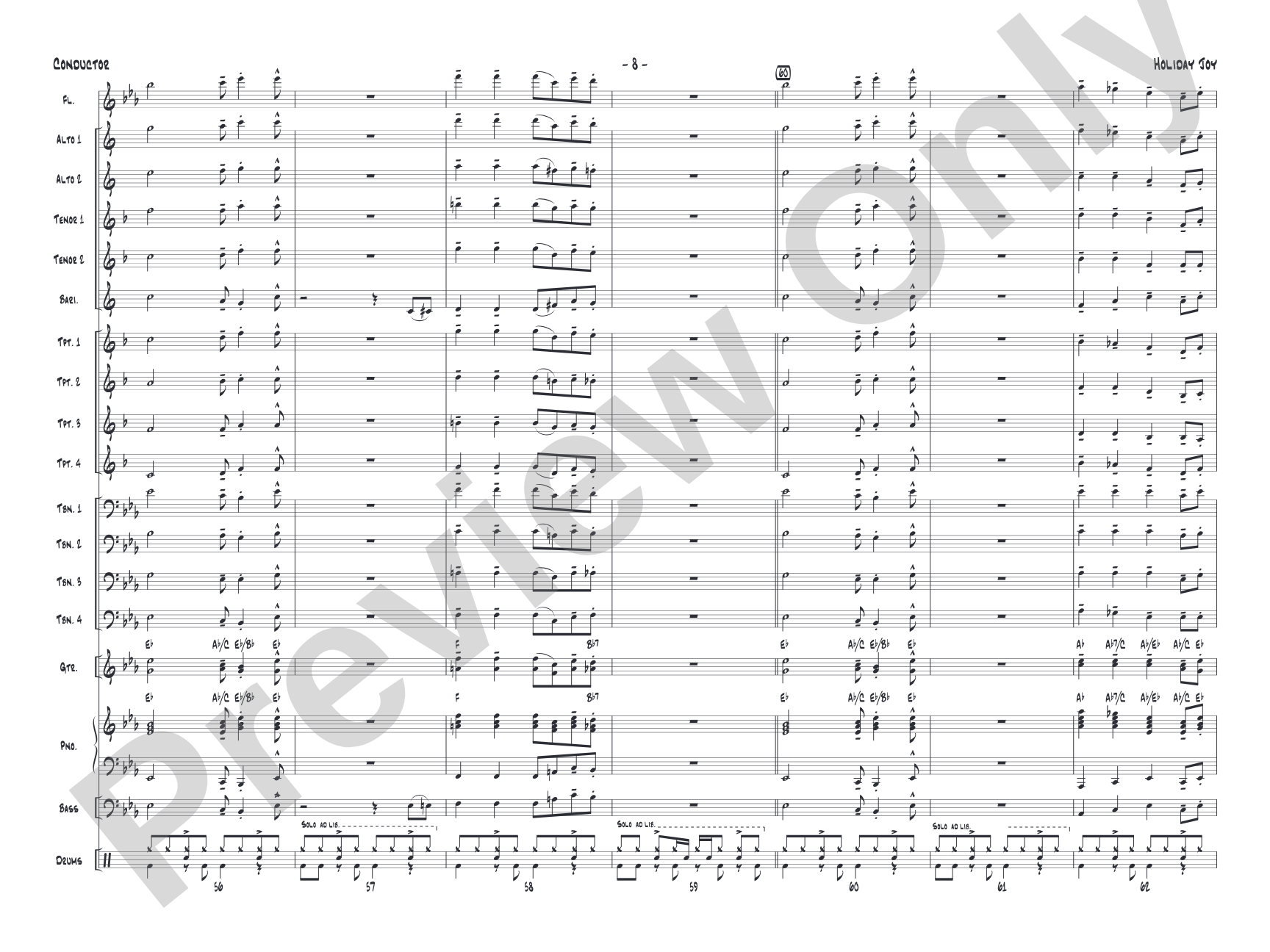
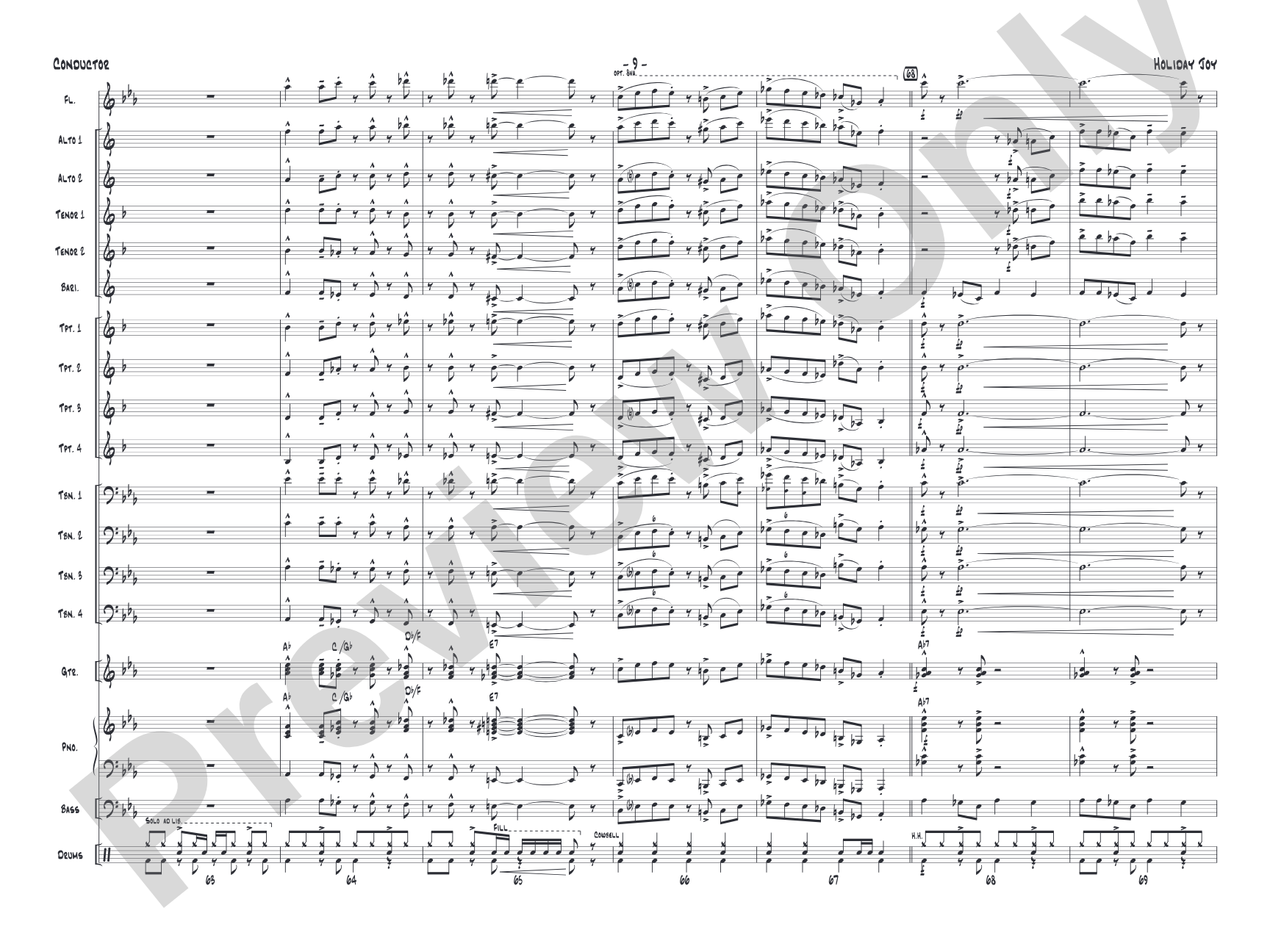
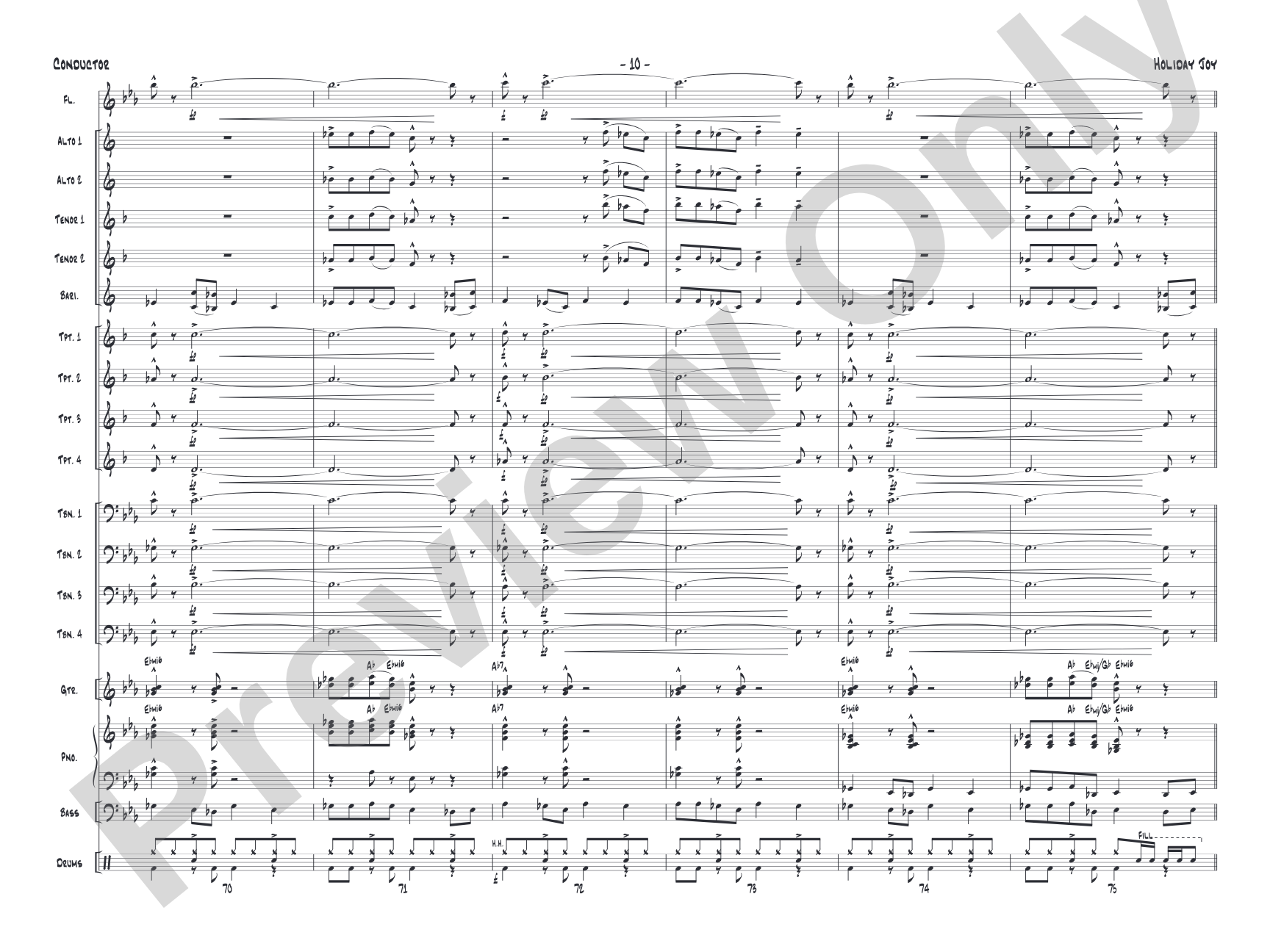
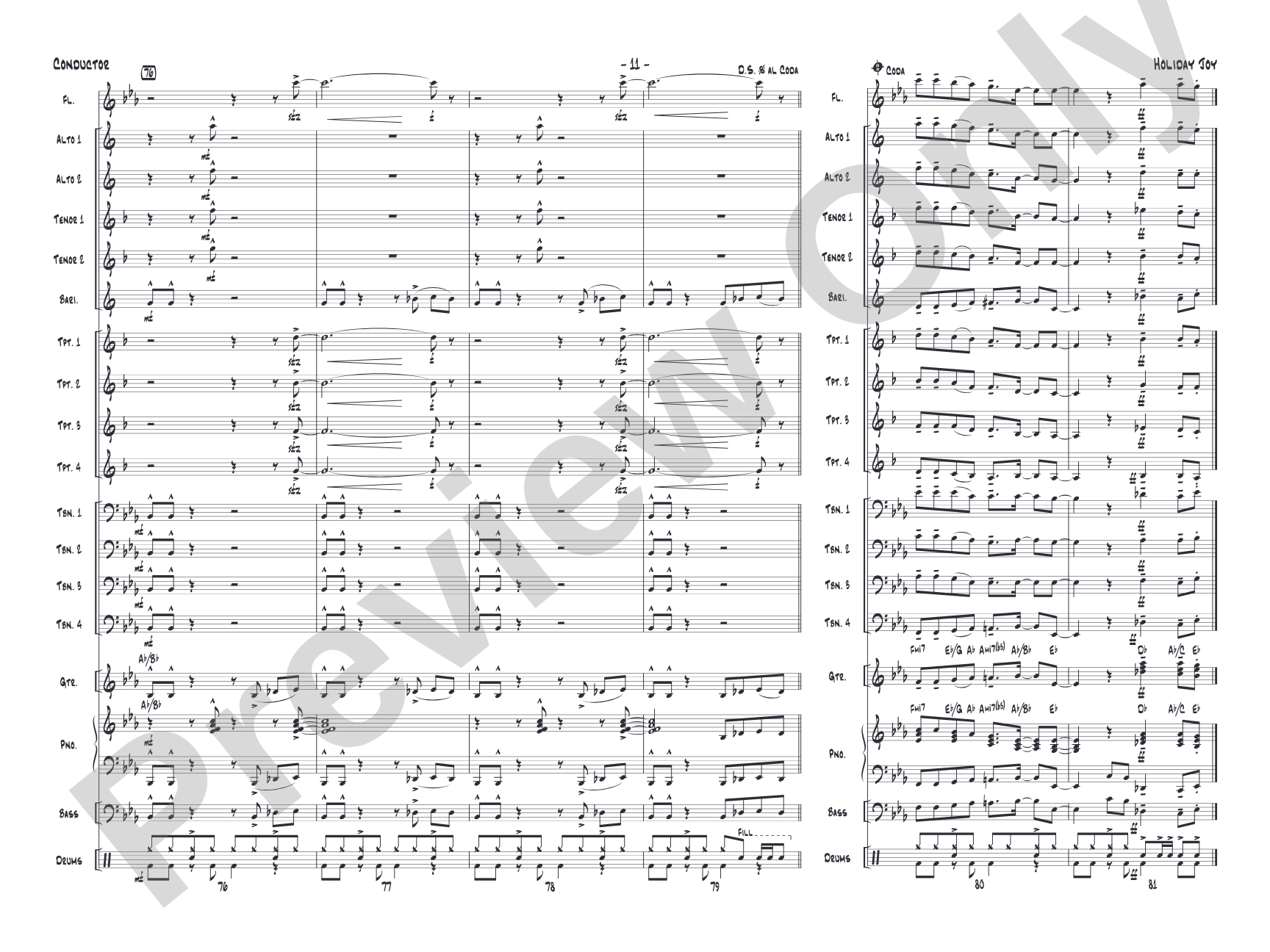

Holiday Joy: Jazz Ensemble Conductor Score & Parts
By Ludwig van Beethoven / arr. Victor López
Grade: 2 (Medium Easy)
Item: 00-PK-0005919

$48.00
Pickup currently not available
Buy Extra Parts (Digital PDF Download)
| Product | Price | Quantity |
|---|---|---|
| Holiday Joy: Score | $9.00 | |
| Holiday Joy: E-flat Alto Saxophone | $3.00 | |
| Holiday Joy: 2nd E-flat Alto Saxophone | $3.00 | |
| Holiday Joy: B-flat Tenor Saxophone | $3.00 | |
| Holiday Joy: 2nd B-flat Tenor Saxophone | $3.00 | |
| Holiday Joy: E-flat Baritone Saxophone | $3.00 | |
| Holiday Joy: 1st B-flat Trumpet | $3.00 | |
| Holiday Joy: 2nd B-flat Trumpet | $3.00 | |
| Holiday Joy: 3rd B-flat Trumpet | $3.00 | |
| Holiday Joy: 4th B-flat Trumpet | $3.00 | |
| Holiday Joy: 1st Trombone | $3.00 | |
| Holiday Joy: 2nd Trombone | $3.00 | |
| Holiday Joy: 3rd Trombone | $3.00 | |
| Holiday Joy: 4th Trombone | $3.00 | |
| Holiday Joy: Guitar Chords | $3.00 | |
| Holiday Joy: Guitar | $3.00 | |
| Holiday Joy: Piano Accompaniment | $3.00 | |
| Holiday Joy: String Bass | $3.00 | |
| Holiday Joy: Drums | $3.00 | |
| Holiday Joy: Flute | $3.00 | |
| Holiday Joy: Tuba | $3.00 | |
| Holiday Joy: 1st F Horn | $3.00 | |
| Holiday Joy: Baritone T.C. | $3.00 | |
| Holiday Joy: 2nd Baritone T.C. | $3.00 |
Parts Added to Cart!
Description
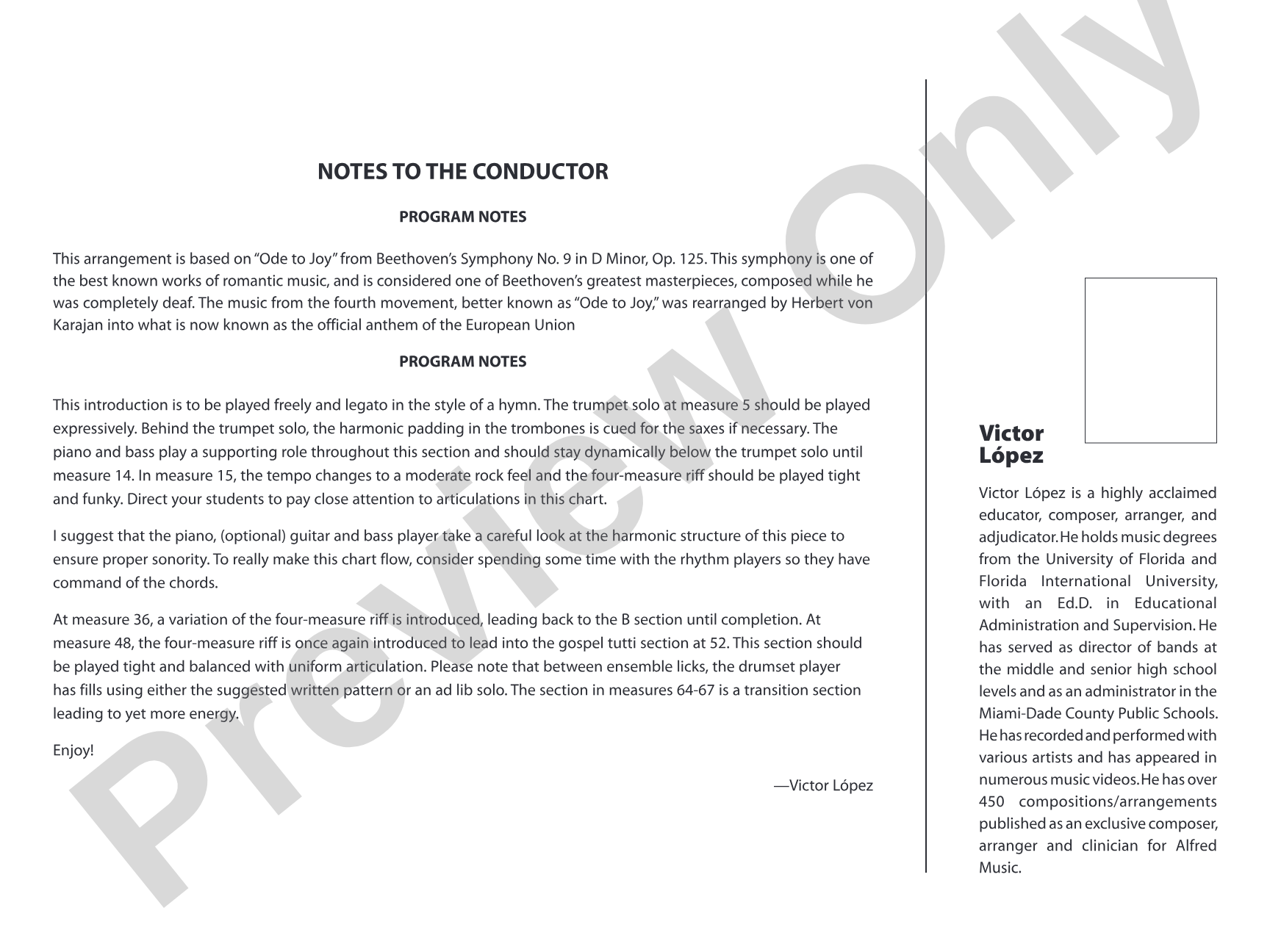
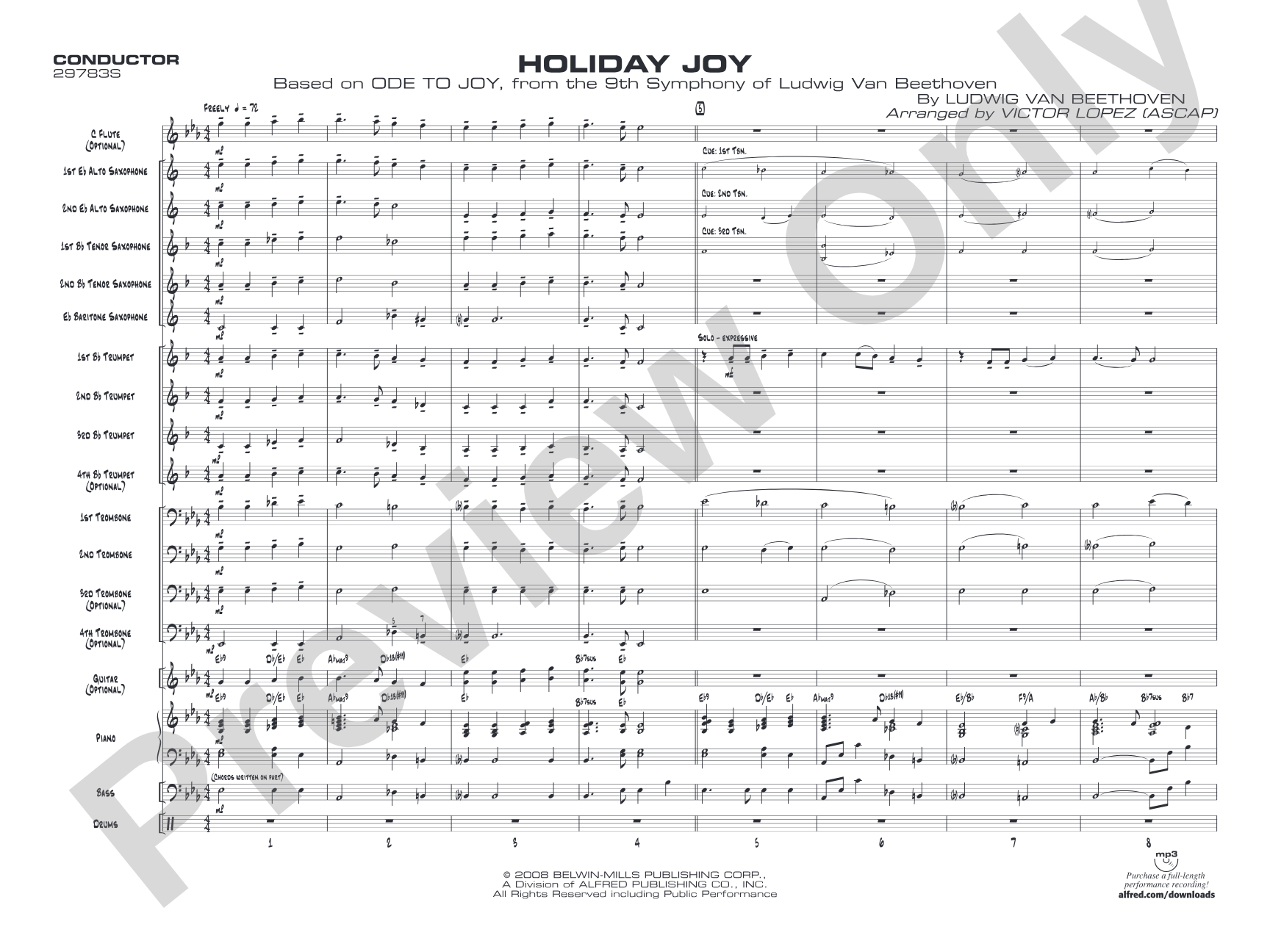
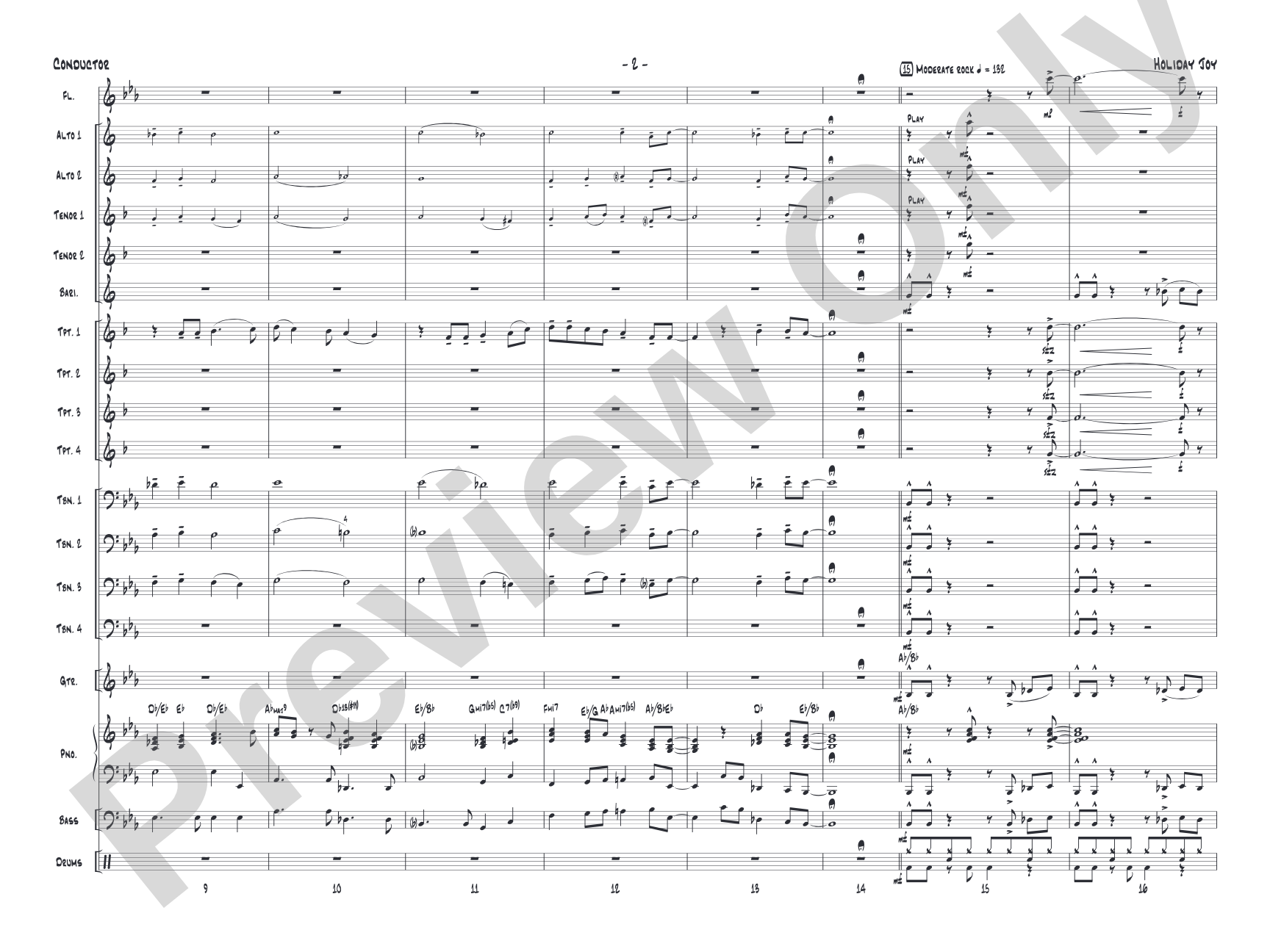
Based on Beethovens "Ode to Joy," arranger Victor López begins with a hymn-style chorale then switches to a rock feel for the development. This chart has a nice rock groove, interesting harmony, no individual solos and the lead trumpet player's highest note is a written A-flat. A very pleasant change of pace for the holiday concert. (3:21)


Don't just read it, hear it, play along with it, and watch your students grow with it. In MakeMusic Cloud, Holiday Joy: Jazz Ensemble Conductor Score & Parts comes alive with professional accompaniment, adjustable tempo, and built-in practice tools that turn solo practice into real progress.
Open in the Player
Jump straight in and assign it today.
Start Your Free Trial
Open this title and explore the full library in minutes.
Sample Audio
1
Audio File
--:--
0:00
0:00
Sample Video
No sample videos found.
Additional Details
Series:
Young Jazz Ensemble
Publisher:
Alfred Music
Page Count:
90
SKU:
00-PK-0005919
More about this title
About the Composer: Ludwig van Beethoven
Ludwig van Beethoven (1770-1827) stands as one of the most consequential composers in Western music history. His nine symphonies, string quartets, and piano sonatas established the blueprint for Romantic orchestration and harmonic language that composers still follow today. The final movement of his Ninth Symphony, which includes "Ode to Joy," represents his vision of universal brotherhood and has become one of the most recognizable melodies in music education and concert programming.
Why we love this
Victor López's arrangement captures the essential nobility of Beethoven's melody while reshaping it entirely for a contemporary jazz ensemble. The journey from hymn-like chorale into rock groove gives your ensemble genuine musical contrasts to explore, and at Grade 2, the writing respects players' developing range and rhythmic security without sacrificing energy or interest. You get a crowd-pleasing holiday staple that feels fresh, requires no soloist heroics, and fits seamlessly into a concert that spans classical traditions and modern idioms.
What to expect
The piece opens with gentle, reverent harmony that honors Beethoven's original voice. When the rock feel arrives, the mood lifts into something buoyant and driving, with the familiar melody grounded in modern harmonic color and groove. It feels ceremonial becoming celebratory, giving your ensemble and audience both the warmth of tradition and the vitality of contemporary jazz.
Who it's for
Jazz ensemble directors looking for a Grade 2 chart that works equally well for young high school groups and advanced middle school ensembles. Players new to jazz articulation and rhythm will find this accessible; the absence of individual solos means everyone stays engaged in the ensemble sound without spotlight pressure.
How to get the most out of it
- Shape the opening hymn-style chorale with attention to balance and phrasing; let the harmony breathe before the energy shifts to the rock section.
- Anchor the rock groove with tight rhythm section communication between drums and bass; this foundation allows the ensemble to sit confidently into the pocket.
- Voice the trumpet section clearly in the development so the lead player's written A-flat sits comfortably without strain while maintaining the energy of the rock feel.
- Use the three-minute-plus duration to build dynamics gradually from the chorale into the full ensemble sound rather than jumping to volume immediately at the style change.
How to use it
This works beautifully as a mid-program piece that bridges classical tradition and modern ensemble sound, especially effective between a more formal orchestral number and uptempo jazz standards. The holiday context makes it natural for December concerts, but the rock arrangement and Beethoven credentials also suit spring or end-of-year celebrations where you want to acknowledge the classical curriculum while showcasing your jazz ensemble's identity.
Skills your students will build
- Switching between hymn-style and rock articulation and phrasing
- Reading and executing jazz rhythm notation and swing feel
- Balancing melody and harmony within a rock groove framework
- Ensemble blend across changing musical textures and dynamics
- Coordination of classical melodic structure with contemporary harmonic language