Hold On (Keep Your Hand on the Plow) Cover Image

Hold On (Keep Your Hand on the Plow): String Orchestra Conductor Score

$7.00 USD
Sale price  $7.00 USD Regular price 
Skip to product information
Hold On (Keep Your Hand on the Plow) Cover Image

Hold On (Keep Your Hand on the Plow): String Orchestra Conductor Score

Spiritual / arr. Carrie Lane Gruselle

Grade: 2.5

Item: 00-31594S

$7.00
Shipped

One moment…

Description
This African-American spiritual expresses the difficulty of the lives of those who would have been singing it, and yet, embedded in its intensity is a call for strength and perseverance. Freedom will come but we must hold on. Both struggle and hope are represented in this arrangement by variations in scoring, beginning with the cello and bass in their lower register and ending with the violins in third position, and by fluctuating dynamics and varying articulations.

Hold On (Keep Your Hand on the Plow): String Orchestra Conductor Score isn't in MakeMusic Cloud just yet...but it could be. Let us know you'd like to see it, and you'll help shape what comes next. In the meantime, start a free trial and dive into thousands of interactive titles your students can play along with today.

Sample Pages

Sample Audio
No sample audio found.
Sample Video
Additional Details
Series: Highland/Etling String Orchestra
Publisher: Alfred Music
Page Count: 12
UPC: 038081349787
SKU: 00-31594S

More about this title

About the Arranger: Carrie Lane Gruselle
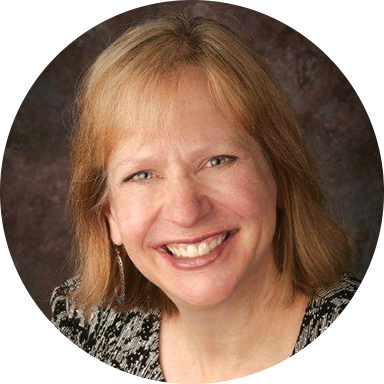
Carrie Lane Gruselle

Carrie Lane Gruselle earned her Bachelor of Music Education from the University of Wisconsin–Eau Claire and her Master of Music Education from the University of Wisconsin–Stevens Point, where she specialized in Suzuki pedagogy. She teaches strings to elementary and middle school students in the Appleton Area School District and serves as cello instructor for the Lawrence University Arts Academy in Appleton, Wisconsin.

Why we love this

Gruselle captures both the weight and resilience of this spiritual through orchestration choices that let the story unfold gradually. The arrangement moves from lower voices in their deepest registers to violins climbing into third position, creating an arc that mirrors the text's journey from struggle to determination. It's substantial enough to engage middle school players while remaining accessible, making it ideal for programs seeking meaningful multicultural repertoire with real musical substance.

What to expect

The piece begins in shadow, with low cellos and basses anchoring the listener in struggle and weight. As voices gradually join and climb upward, an undercurrent of hope emerges without erasing the difficulty. By the time the violins reach their highest voices in third position, the music has transformed struggle into something hard-won and luminous, yet never loses the gravity of what came before.

Who it's for

This arrangement serves conductors building a string program that engages with African-American sacred music and its historical and emotional significance. It works equally well for Grade 2-3 orchestras seeking festival or contest material with pedagogical depth, and for ensembles exploring spiritual traditions in depth during a unit or concert.

How to get the most out of it

  • Shape the opening cello and bass lines with warmth and depth; these voices carry the emotional foundation, so support the lower register with full tone and steady bow control.
  • Attend carefully to the dynamic fluctuations and articulation changes throughout. They function as emotional markers, not just surface variety, so conductor clarity here will deepen student understanding of the text.
  • Balance the gradual addition of instruments as the piece builds toward the violins in third position. Resist rushing the tempo during these transitions; let each layer settle before the next enters.
  • Encourage vibrato in the sustained passages, particularly when the upper voices emerge, to enhance the sense of yearning that permeates the spiritual.

How to use it

Program this as a powerful opener for a concert centered on spirituals, freedom songs, or social justice themes, where its moderate length and Grade 2.5 difficulty allows it to anchor a thoughtful evening. It also serves well as a festival or competition selection that judges will recognize as both musically and culturally substantive. Consider pairing it with poetry readings or brief historical context to deepen audience and student engagement.

Skills your students will build

  • Sustaining tone quality across register shifts and dynamic changes
  • Reading extended upper positions (third position on violins)
  • Responding to articulation and dynamic variation as emotional expression
  • Playing with ensemble awareness as voices layer and emerge
  • Understanding spiritual tradition and its place in American music history

You May Also Like