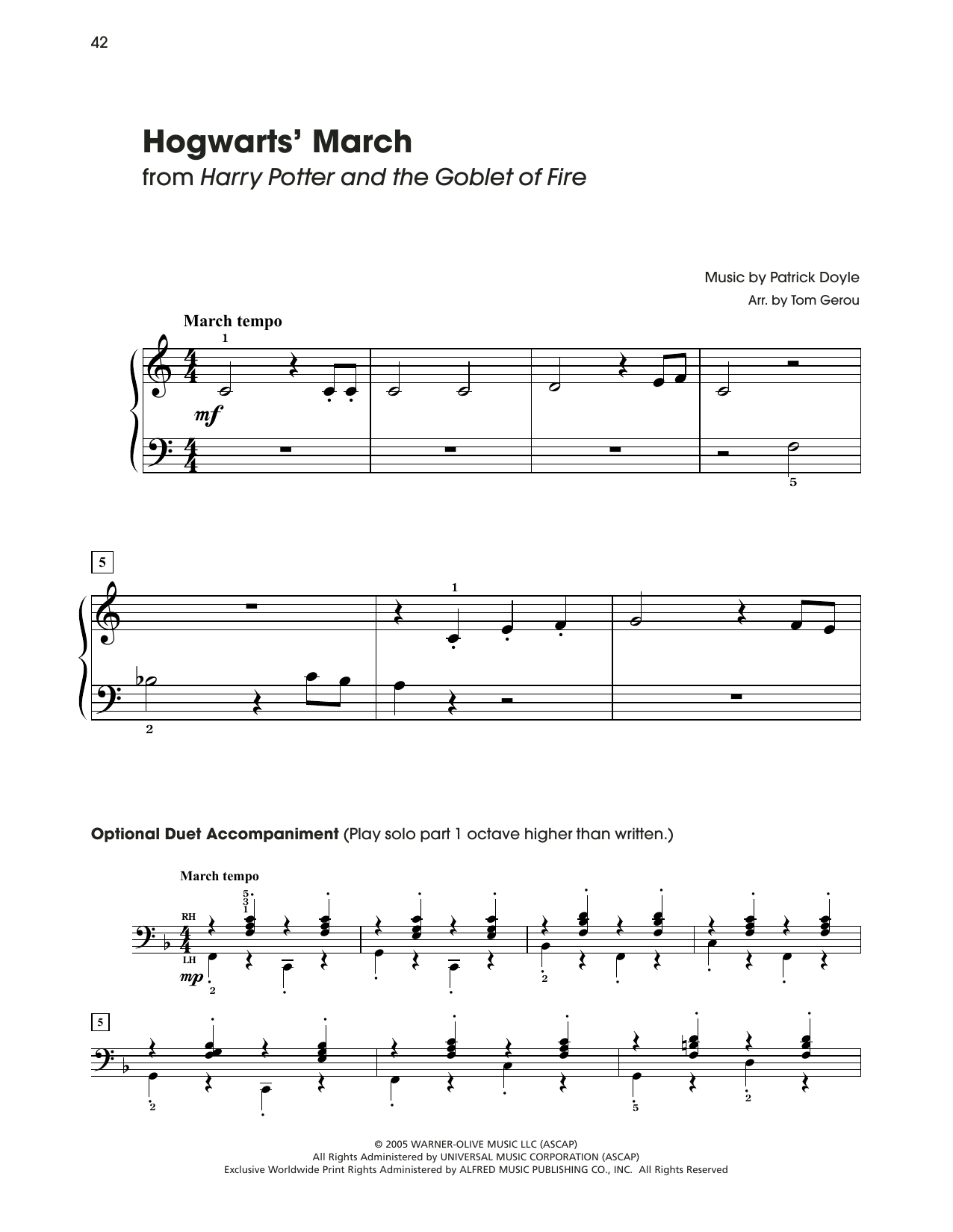
Hogwarts' March (from Harry Potter) (arr. Tom Gerou) Sheet Music Preview

Hogwarts' March (from Harry Potter) (arr. Tom Gerou): 5-Finger Piano

Item: 35-DS01270517

Digital Download
$4.99
One moment…
Description

Discover MakeMusic Cloud: thousands of interactive titles your students can play along with today.

Sample Audio
No sample audio found.
Sample Video
Additional Details
Publisher: Hal Leonard
Page Count: 4
SKU: 35-DS01270517

More about this title

About the Creator: Tom Gerou

Tom Gerou has spent decades making sophisticated music accessible to developing pianists. His arrangements respect the integrity of beloved melodies while removing unnecessary technical barriers, allowing students to experience the joy of playing recognizable music early in their studies.

Gerou's work across film scores and popular compositions demonstrates his gift for understanding what makes a piece tick musically and how to preserve that essence at a beginner level. His 5-finger arrangements have become staples in studios and classrooms because they never talk down to young players.

Why we love this

Students recognize this theme instantly, which means they arrive at the first lesson already invested in nailing it. The 5-finger voicing keeps technical demands minimal while preserving the stately, processional character that makes the Hogwarts theme so memorable, freeing young pianists to focus on shaping phrases and controlling dynamics instead of wrestling with hand position.

What to expect

Solemn and processional, like walking through a grand hall lit by candlelight. The melody unfolds with dignity and quiet pride, never hurried, creating that sense of timeless magic the original score captures so perfectly.

Who it's for

Elementary and early intermediate pianists with just a few months of study under their belts. Any student ready to move beyond simple one-hand melodies but still within the comfort of five-finger positions will connect with this piece immediately.

How to get the most out of it

  • Shape the opening phrase with a gentle swell to the highest note, then taper back down; this creates the grand entrance the melody deserves without requiring dramatic volume shifts.
  • Keep the tempo steady and deliberate, resisting the urge to rush through passage work or relax into the sustained notes.
  • Voice the accompaniment softly enough that the melody always reads clearly even when both hands are moving simultaneously.

How to use it

Feature this in a student recital or casual performance class where beginner pianists can showcase their growing control and musicality. It also works beautifully as a theme for a practice incentive program or as a bridge piece between strictly pedagogical exercises and longer classical forms.

Skills your students will build

  • Reading and executing notes across both treble and bass clef
  • Controlling dynamics and shaping long melodic lines
  • Sustaining a steady tempo while managing accompaniment patterns
  • Coordinating two hands independently without position shifts
  • Interpreting character and style within technical constraints

You May Also Like