
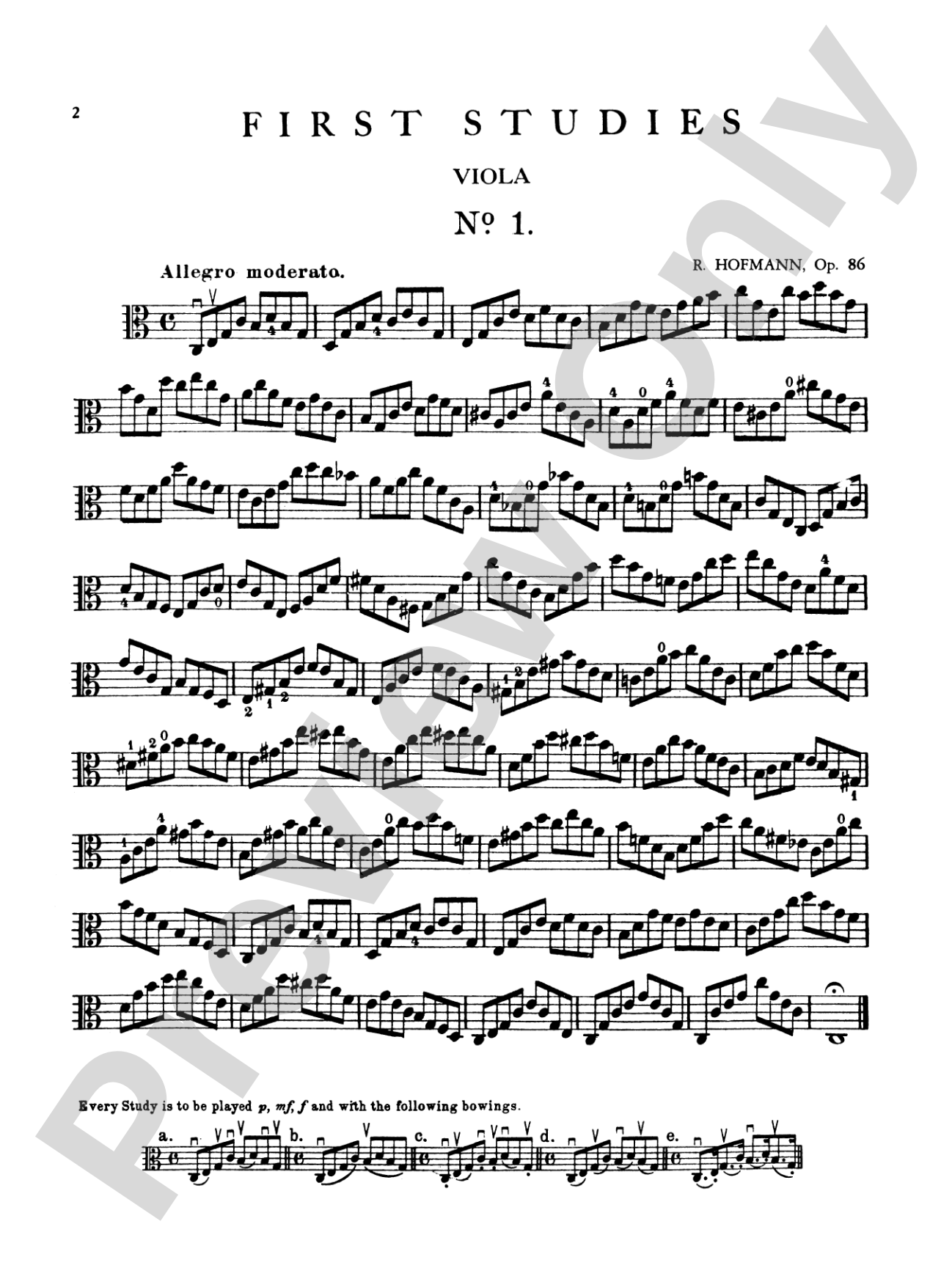

Hofmann: First Studies, Op. 86: Viola Book
By Richard Hofmann
Item: 00-PK-0003451

$7.99
Pickup currently not available
Buy Extra Parts (Digital PDF Download)
| Product | Price | Quantity |
|---|---|---|
| Hofmann: First Studies, Op. 86 | $0.99 | |
| Hofmann: First Studies, Op. 86 | $0.99 | |
| Hofmann: First Studies, Op. 86 | $0.99 | |
| Hofmann: First Studies, Op. 86 | $0.99 | |
| Hofmann: First Studies, Op. 86 | $0.99 | |
| Hofmann: First Studies, Op. 86 | $0.99 | |
| Hofmann: First Studies, Op. 86 | $0.99 | |
| Hofmann: First Studies, Op. 86 | $0.99 | |
| Hofmann: First Studies, Op. 86 | $0.99 | |
| Hofmann: First Studies, Op. 86 | $0.99 | |
| Hofmann: First Studies, Op. 86 | $0.99 | |
| Hofmann: First Studies, Op. 86 | $0.99 | |
| Hofmann: First Studies, Op. 86 | $0.99 | |
| Hofmann: First Studies, Op. 86 | $0.99 | |
| Hofmann: First Studies, Op. 86 | $0.99 | |
| Hofmann: First Studies, Op. 86 | $0.99 | |
| Hofmann: First Studies, Op. 86 | $0.99 | |
| Hofmann: First Studies, Op. 86 | $0.99 | |
| Hofmann: First Studies, Op. 86 | $0.99 | |
| Hofmann: First Studies, Op. 86 | $0.99 |
Parts Added to Cart!
Related Items
First Studies, Opus 86: Viola Book |
$7.95
|
View |
Description
A solo, for Viola, composed by Richard Hofmann.


Don't just read it, hear it, play along with it, and watch your students grow with it. In MakeMusic Cloud, Hofmann: First Studies, Op. 86: Viola Book comes alive with professional accompaniment, adjustable tempo, and built-in practice tools that turn solo practice into real progress.
Open in the Player
Jump straight in and assign it today.
Start Your Free Trial
Open this title and explore the full library in minutes.
Sample Audio
No sample audio found.
Sample Video
No sample videos found.
Additional Details
Series:
Kalmus Edition
Publisher:
Alfred Music
Page Count:
28
SKU:
00-PK-0003451
More about this title
About the Composer: Richard Hofmann
Richard Hofmann (1844–1918) was an Austrian composer and pedagogue whose prolific output for strings established him as a significant voice in late Romantic instrumental writing. His gift for crafting technically engaging yet musically coherent studies made him a staple in string curricula, and his works remain valued for their balance of musical substance and progressive difficulty.
Why we love this
This collection strikes an uncommon equilibrium: studies that build genuine technique without sacrificing musicality or requiring an embarrassing amount of violin repertoire searching. Hofmann's writing respects the viola's expressive capacity while laying out clear technical pathways, making these pieces feel like music first and pedagogy second.
What to expect
Hofmann's writing balances the introspective warmth that the viola does so well with moments of technical assertion. These studies unfold with Romantic sensibility: graceful, occasionally lyrical, and built on harmonic foundations that give players something substantial to hold onto.
Who it's for
Intermediate to advanced viola students who are ready to move beyond early method books and explore repertoire with genuine artistic depth. Teachers seeking studies that serve both technical development and musical growth will find these pieces invaluable for recital preparation and ensemble readiness.
How to get the most out of it
- Shape each phrase with intention rather than playing mechanically through the studies. Hofmann wrote with cantabile in mind, so bring out the lyrical architecture even as you work through technical passages.
- Pay close attention to dynamic markings and articulation choices. These small details are what elevate the studies from exercises to performance pieces.
- Use shifting passages as opportunities to practice smooth position transitions without sacrificing tone quality. The musical context makes intentional, musical shifts feel natural.
How to use it
Program individual studies as recital pieces for intermediate students making their public performance debut, or use the collection sequentially as a guided curriculum spanning an entire academic year. These pieces also integrate well into string studio showcases, where their variety and musical substance distinguish them from standard exercise fare.
Skills your students will build
- Smooth position shifts across multiple registers
- Control of vibrato and tone color in contrasting tempos
- Reading and executing articulation patterns (staccato, legato, detaché)
- Phrasing across longer melodic lines
- Intonation accuracy in diatonic and chromatic passages
- Rhythmic precision in varied meters and note values