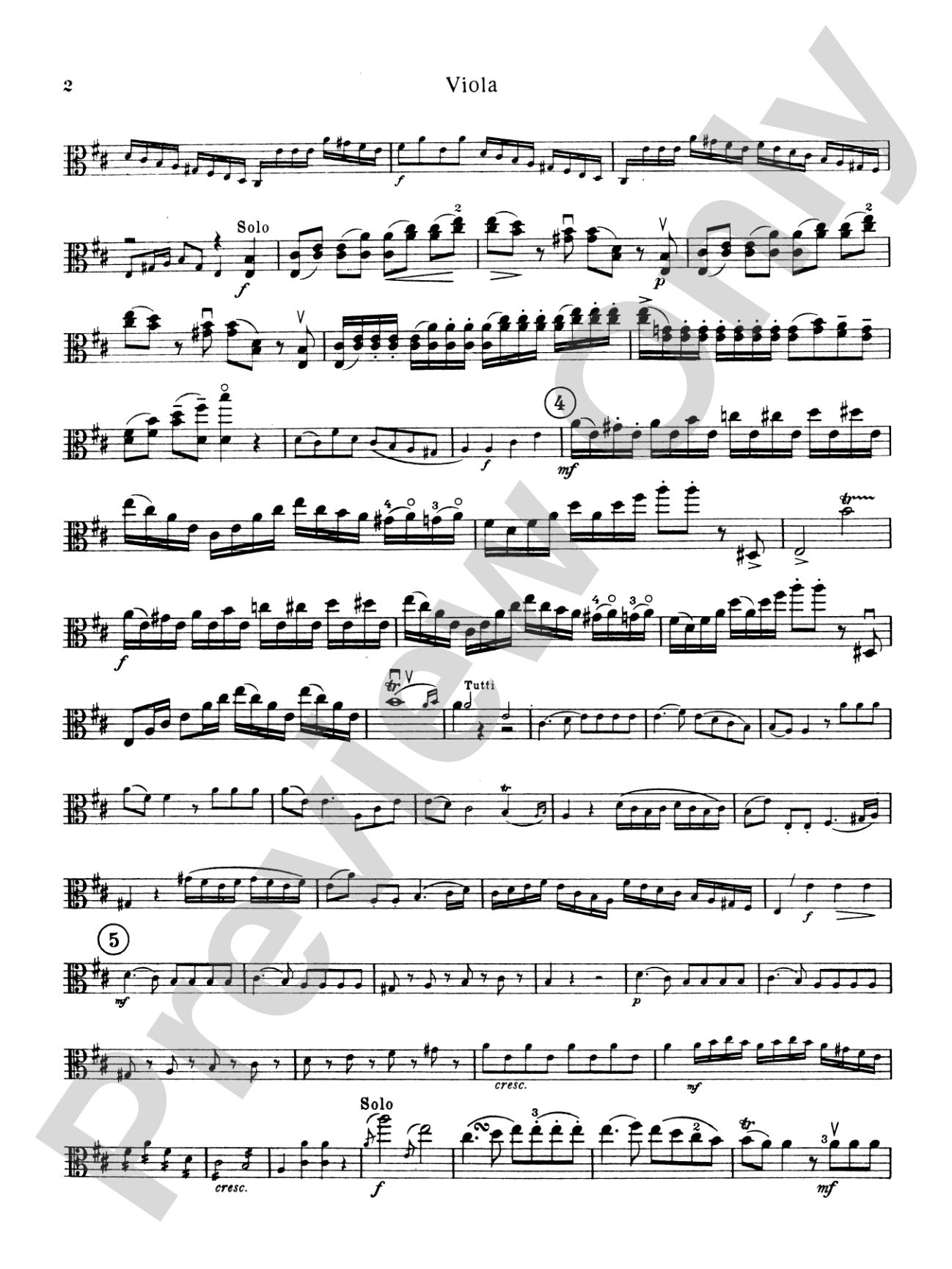
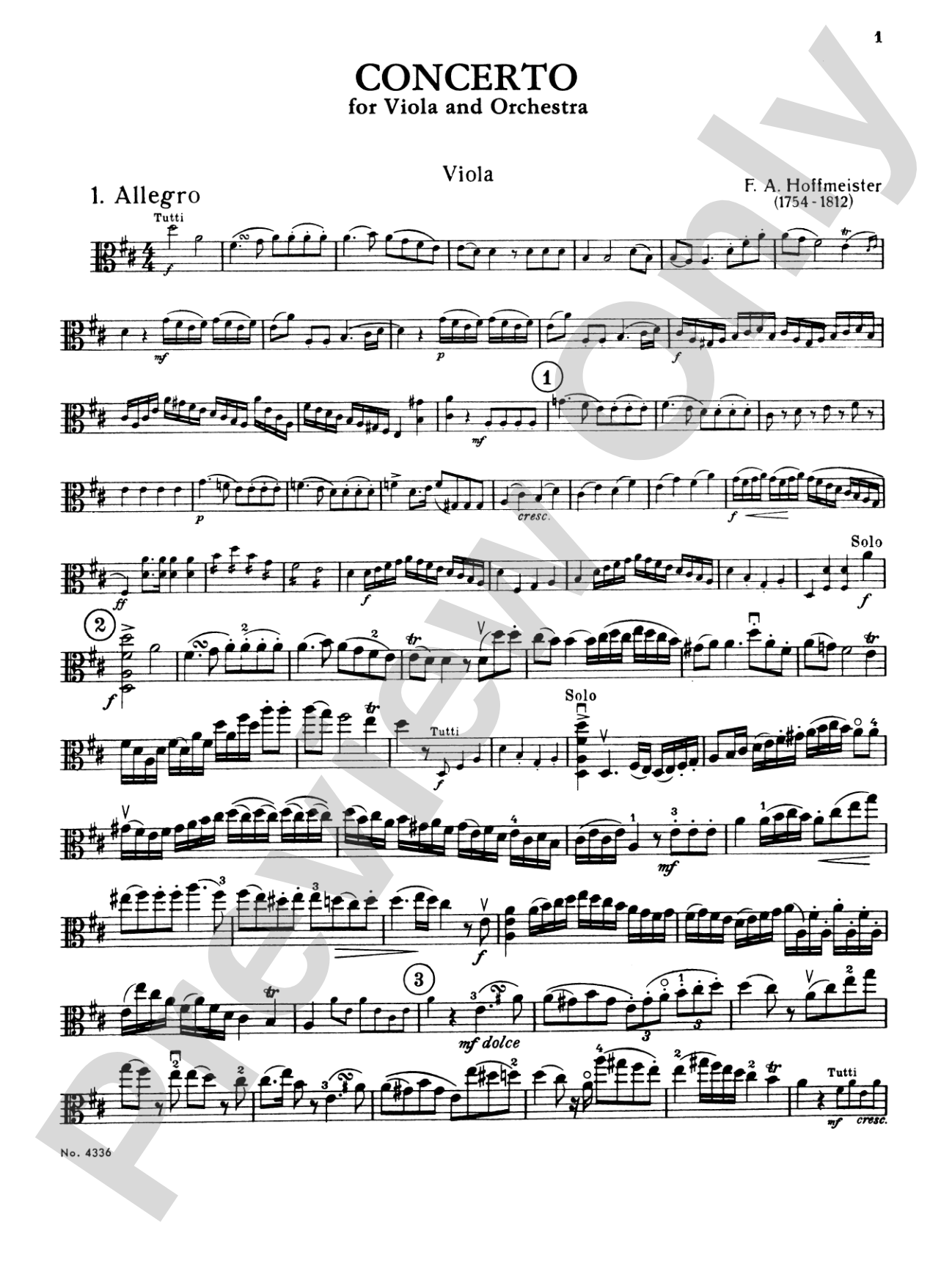
Hoffmeister: Viola Concerto in D Major Sheet Music Preview

Hoffmeister: Viola Concerto in D Major

By Franz Anton Hoffmeister

Item: 00-PC-0010245

Digital Download
$3.99
Description
Expertly arranged Viola and Piano Duet by Franz Anton Hoffmeister from the Kalmus Edition series. This is from the Classical era.

Don't just read it, hear it, play along with it, and watch your students grow with it. In MakeMusic Cloud, Hoffmeister: Viola Concerto in D Major comes alive with professional accompaniment, adjustable tempo, and built-in practice tools that turn solo practice into real progress.

Sample Audio
No sample audio found.
Sample Video
Additional Details
Series: Kalmus Edition
Publisher: Alfred Music
Page Count: 32
SKU: 00-PC-0010245

More about this title

About the Composer: Franz Anton Hoffmeister

Franz Anton Hoffmeister (1754-1812) was an Austrian composer and music publisher whose output spanned symphonies, concertos, chamber music, and sacred works. A contemporary of Mozart and Haydn, he built a significant career both as a composer and as a founding member of the Bureau de Musique, one of the earliest music publishing houses. His concertos remain important pedagogical and performance works for developing musicians.

Hoffmeister's writing for winds and strings reflects the clarity and lyrical elegance of the Classical period. His viola concerto exemplifies his gift for instrumental melody; the work sits comfortably within the performer's range while demanding musicality and technical control. His influence on Classical-era chamber and solo repertoire continues to serve educators seeking works that combine musical substance with reasonable technical demands.

Why we love this

This concerto gives violists a genuine solo work of Classical stature without the extreme technical demands of later Romantic writing. The Kalmus edition provides a clean, reliable score, and the viola and piano duet format makes it accessible for lessons, recitals, and informal performance settings where a full orchestral arrangement might not be practical. Contest and festival committees value Hoffmeister's writing for its musical integrity and the clear development it reveals in a student's tone production and phrasing.

What to expect

The work unfolds with the elegant poise and singing melody that define the Classical concerto tradition. Hoffmeister's writing emphasizes cantabile passages and graceful passagework, allowing the viola's warmer tones to shine without requiring the extreme velocity or range extensions found in later works. The overall character is lyrical and approachable, inviting the performer to focus on beauty of tone and musical line rather than virtuosic display.

Who it's for

This concerto serves intermediate to advanced high school and early college violists preparing for solo performances, competition rounds, or studio recitals. It works well for violists who are ready to perform unaccompanied (with piano support) but still developing the technical and interpretive resources for larger-scale Romantic or contemporary concertos.

How to get the most out of it

  • Shape longer lines with subtle dynamic shaping rather than abrupt contrasts; the Classical aesthetic values line continuity over dramatic gesture.
  • Balance the melodic line against the piano accompaniment so the viola sits naturally forward without excessive projection.
  • Attend closely to the articulation markings in both the viola and piano parts; they often define the character and style of each phrase.
  • Practice the viola and piano parts separately first, then work backward from moments of rhythmic independence to build ensemble confidence.

How to use it

Program this concerto as a featured solo performance in a studio recital or chamber concert celebrating Classical-era string writing. It pairs well alongside other Classical viola or violin concertos for a themed program, and its moderate length (32 pages) fits comfortably into a mixed instrumental recital without dominating the concert. This work also suits competition and festival performance calendars where judges value both musical maturity and stylistic authenticity.

Skills your students will build

  • Sustaining long lines with consistent tone quality across register shifts
  • Interpreting Classical-era articulation and dynamic conventions
  • Ensemble listening and balance with a pianist
  • Solo recital stamina and stage confidence
  • Stylistically informed interpretation of Classical melody and accompaniment texture

You May Also Like