
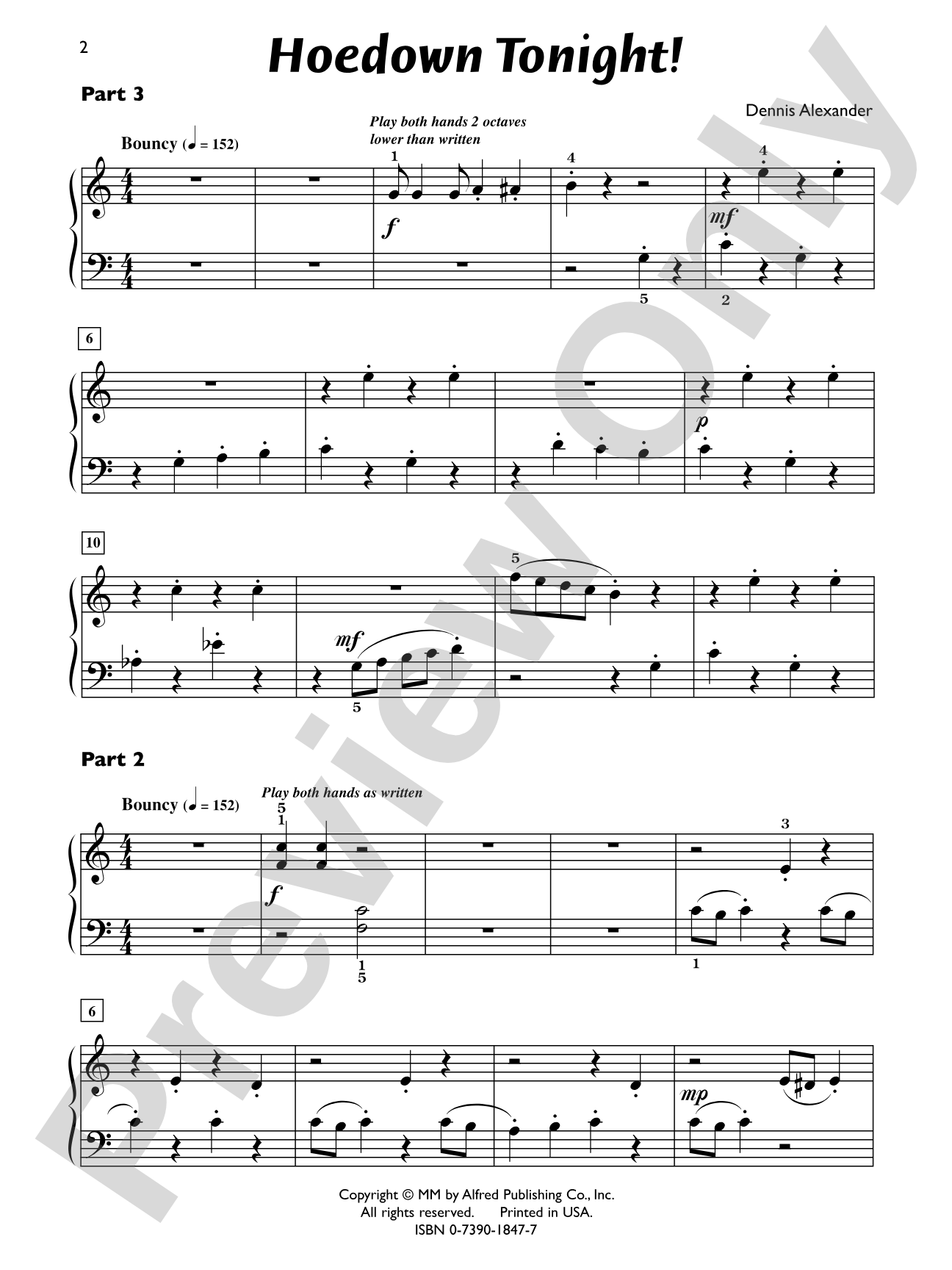
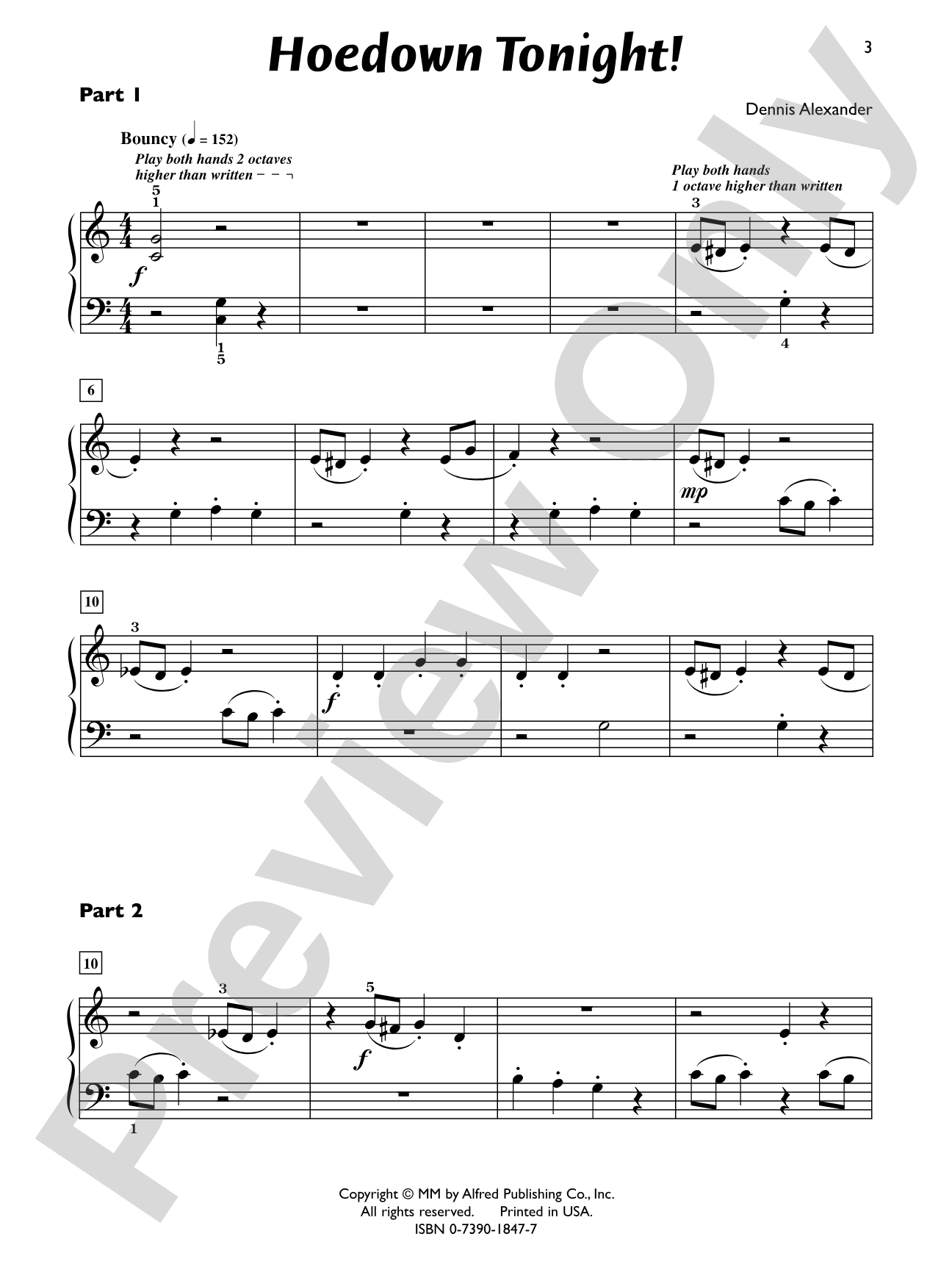

Hoedown Tonight! - Piano Trio (1 Piano, 6 Hands): Piano
By Dennis Alexander
Level: Elementary
Item: 00-PB-0000813
$4.99
Pickup currently not available
Related Items
Hoedown Tonight!: Piano Trio (1 Piano, 6 Hands) Sheet |
$4.99
|
View |
Description
Three young performers will love "bouncing" through this happy piece, filled with infectious square-dance styling. The 4/4 meter and C Major key signature make this one friendly for early students, and the nice blend of staccato and legato, as well as contrasts of soft and loud sections, will provide the young pianists with a valuable opportunity to sharpen their rhythm and ensemble skills. Each of the 3 parts has an important and fun role to play in the performance, and students will love playing it "just for fun," too. A Federation Festivals 2016-2020 selection. A Federation Festivals 2020-2024 selection.


Hoedown Tonight! - Piano Trio (1 Piano, 6 Hands): Piano isn't in MakeMusic Cloud just yet...but it could be. Let us know you'd like to see it, and you'll help shape what comes next. In the meantime, start a free trial and dive into thousands of interactive titles your students can play along with today.
Request This Title
Tell us you want it.
Start Your Free Trial
Explore everything that's ready to play right now.
Sample Audio
1
Hoedown Tonight
--:--
Hoedown Tonight
0:00
0:00
Sample Video
No sample videos found.
Additional Details
Series:
The Alfred Trio Series
Publisher:
Alfred Music
Page Count:
8
SKU:
00-PB-0000813
More about this title
About the Composer: Dennis Alexander

Dennis Alexander has been composing educational piano music since 1986, when he began his landmark partnership with Alfred Music Publishing. Over four decades, he has created more than 400 published works and recordings that have established him as one of the most widely performed composers in piano pedagogy circles worldwide. His career spans university teaching (24 years at the University of Montana as piano pedagogy instructor and department chair), private instruction across California, and an ongoing schedule of recitals, master classes, and clinician appearances at state and national conventions.
Alexander's credentials extend beyond the classroom. He made his Carnegie Recital Hall debut in 1987, has served as collaborative pianist for internationally recognized soloists and chamber ensembles, and has been invited to adjudicate competitions and conduct workshops across North America and Asia. A Kansas native and University of Kansas graduate, he currently resides in Albuquerque and maintains an active composing schedule. His works have been commissioned by numerous state music teachers associations and continue to appear regularly on festival and competition lists.
Why we love this
Alexander writes for the reality of the student ensemble rather than an imaginary ideal one. Three pianists at an early level can actually pull off all the parts here without one person carrying the weight, and the square-dance styling gives the piece instant energy and personality. The blend of staccato and legato articulations, plus dynamic contrast, teaches real interpretive skills while keeping the fun factor high.
What to expect
Bouncy and spirited, with the infectious energy of a square dance filtered through a chamber music lens. The piece swings between moments of rhythmic precision and lyrical ease, giving performers a sense of control and playfulness in equal measure.
Who it's for
Three young pianists who are ready to collaborate but still building foundational skills. The elementary level, C Major key, and 4/4 meter create an accessible entry point for trio playing without sacrificing musical substance.
How to get the most out of it
- Balance the three parts by rehearsing each line separately first so all three pianists understand their individual roles before combining them together.
- Nail the rhythmic precision of the staccato passages by counting out loud as a trio during early rehearsals, then gradually shift to listening for the bounce rather than counting.
- Shape the soft and loud sections deliberately; a quiet section loses impact if the contrast isn't clear, so encourage each pianist to commit fully to dynamic changes.
- Lock in together at section boundaries by having one pianist count off before transitions, establishing confidence across all three parts.
How to use it
Program this for a recital or festival setting where you want to showcase ensemble work at the elementary level without overwhelming young performers. It pairs well with solo repertoire by the same composers, creating a sense of progression and stylistic coherence across the program.
Skills your students will build
- Rhythmic ensemble coordination and listening across three independent parts
- Articulation contrast (staccato vs. legato) and clarity of touch
- Dynamic shaping and expression (soft and loud sections with intentional contrast)
- Reading and maintaining independence while blending with other pianists
- Confidence in trio communication and synchronized entrances