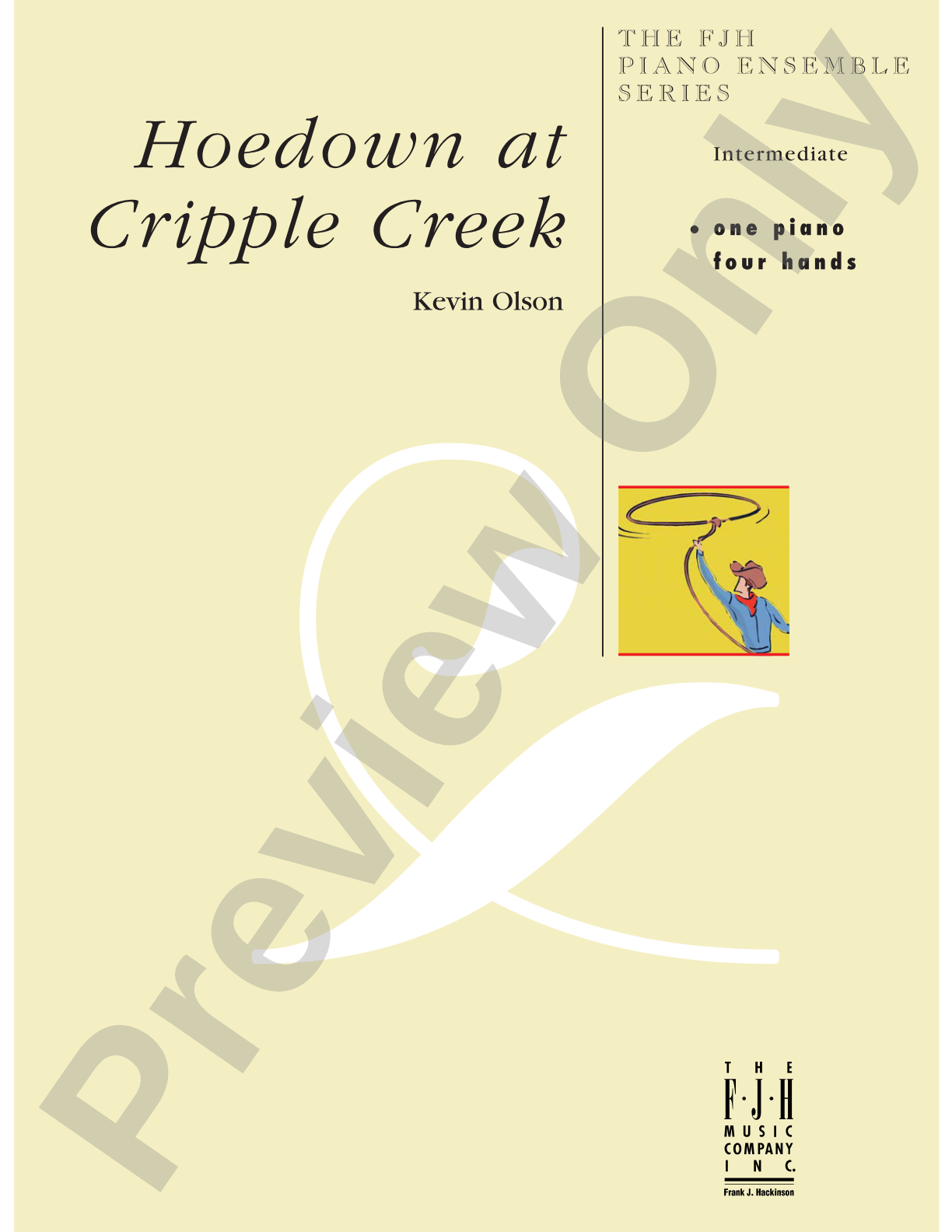
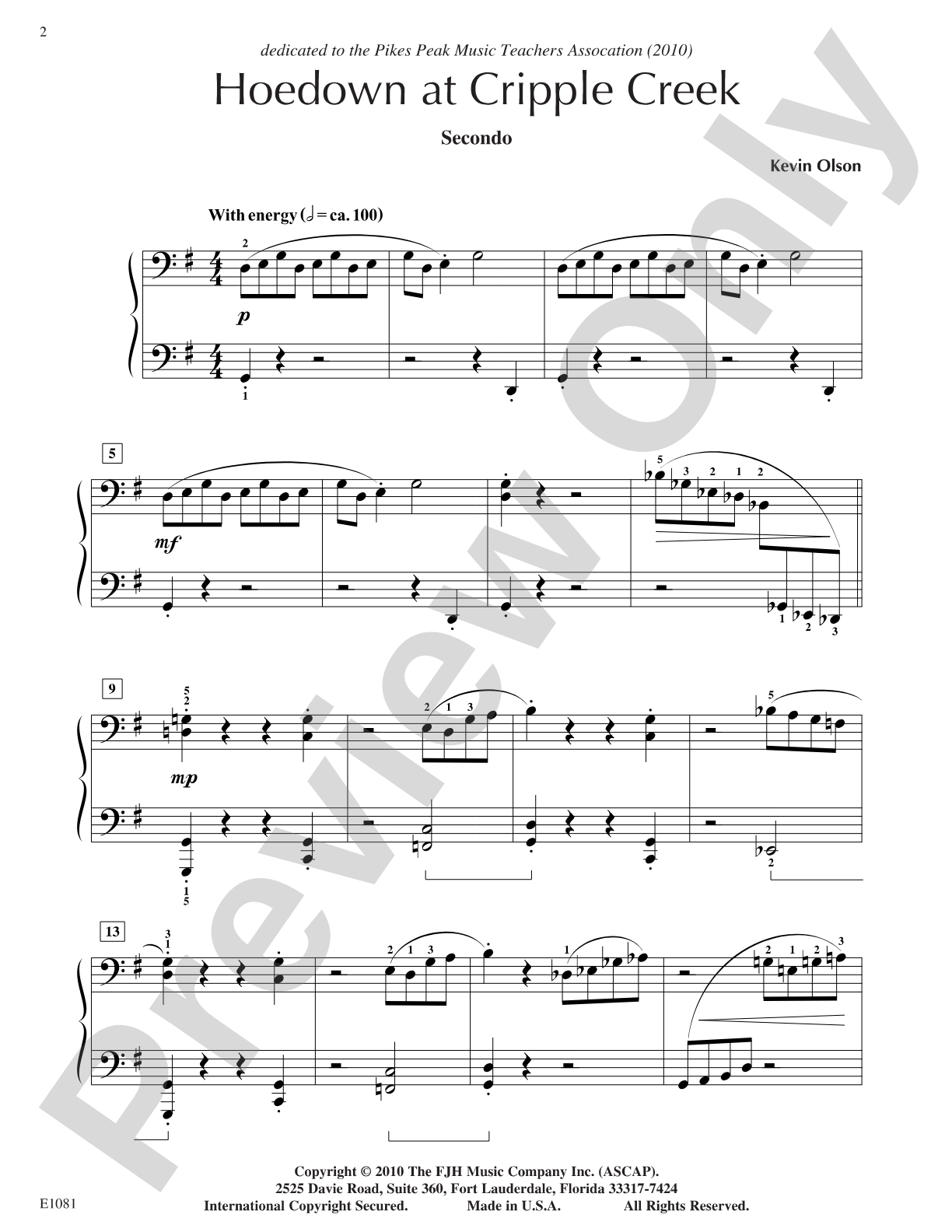
Written in the key of G Major this energetic duet for one piano, four hands, will provide some foot stomping fun! This ensemble piece portrays the traditional hoedown feel with a contemporary flair! Students will really enjoy playing this piece at recitals and for fun!
Discover MakeMusic Cloud: thousands of interactive titles your students can play along with today.
The arrangement balances authentic hoedown DNA with enough harmonic color to keep intermediate players engaged. It's the kind of piece that gets genuine joy from an audience without requiring concert-hall solemnity, which means your students will feel the fun they're creating rather than just executing it.
What to expect
Boots and movement. The piece has that infectious toe-tapping quality of a fiddle tune, grounded in G Major's brightness, with enough contemporary color in the accompaniment to keep things from feeling stale or overly nostalgic. You're playing something rooted in folk tradition but written for modern ears.
Who it's for
Intermediate pianists working on ensemble literacy and stylistic flexibility. This duet works equally well for studio teachers building confidence in young students or classroom musicians ready to experience true four-hand partnership at the same instrument.
How to get the most out of it
Establish the groove early in rehearsal by playing the rhythm section parts together first. The drive of a hoedown comes from locked accompaniment, so lock it.
Push the tempo slightly once both hands are secure. Hoedowns live on momentum; a tempo that feels slightly brisk in slow practice will feel just right in performance.
Listen for the energy shift between sections. Mark where the piece opens up or intensifies so both players know when to lean in or pull back.
Catch any tendency to rush the sixteenth-note figures. Crisp articulation matters more than speed here.
How to use it
A perfect closer for a spring recital or ensemble concert where you want to send the audience out smiling. It also bridges beautifully between classical technique work and improvisational or folk-based repertoire, so consider pairing it with traditional arrangements or bluegrass-influenced pieces on the same program.
Skills your students will build
Four-hand coordination and listening to a partner at the same instrument
Maintaining a steady pulse and groove under syncopated melodic lines
Voice independence between primer and secondo parts
Stylistic authenticity in folk-based music (rhythm, articulation, phrasing)
Reading and executing rhythmic figures typical of traditional dance music
You May Also Like
Scan to Complete Your Purchase
Use your phone's camera to scan the code below
You'll log in on your phone and the order will be added to your account