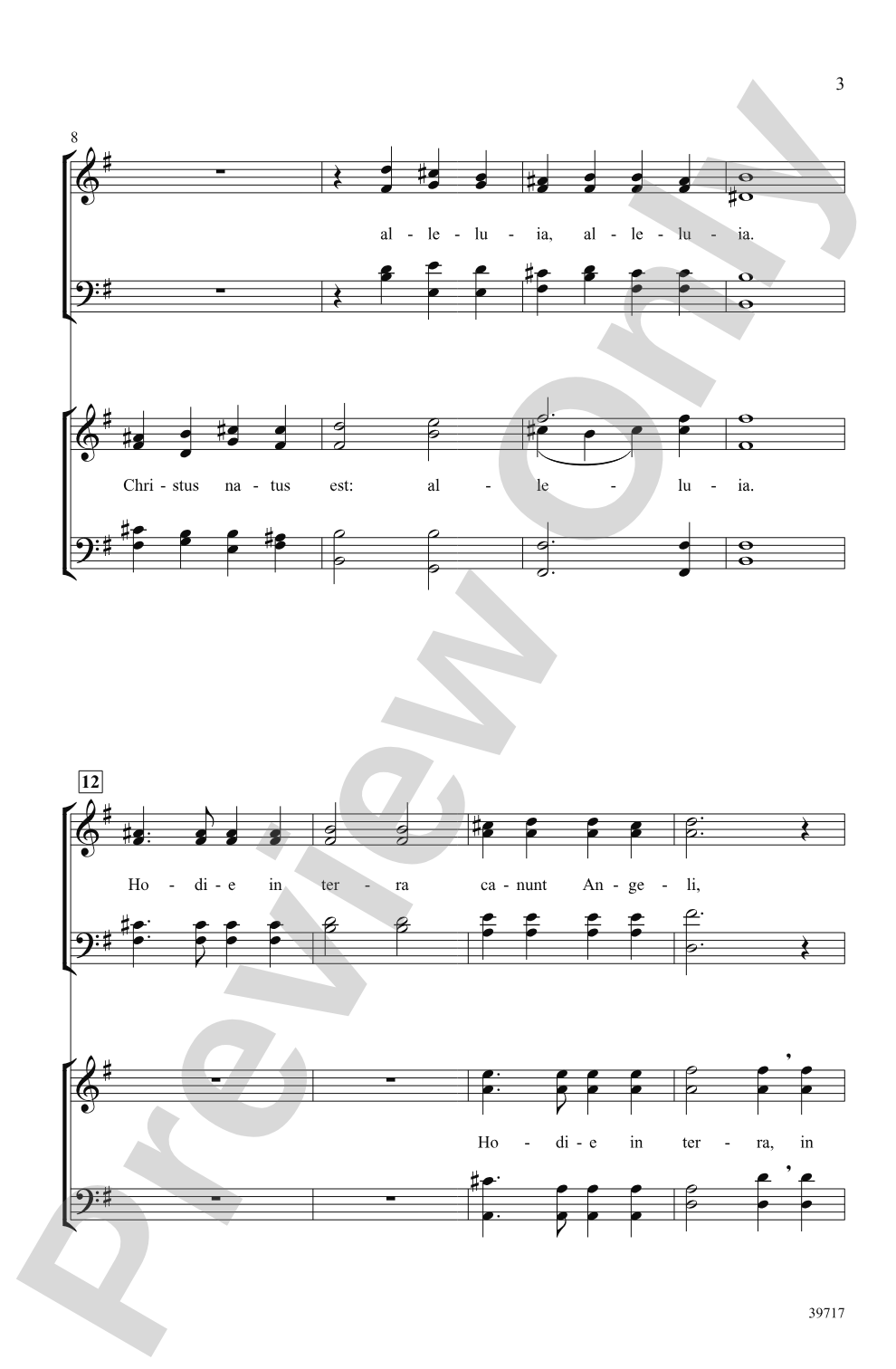
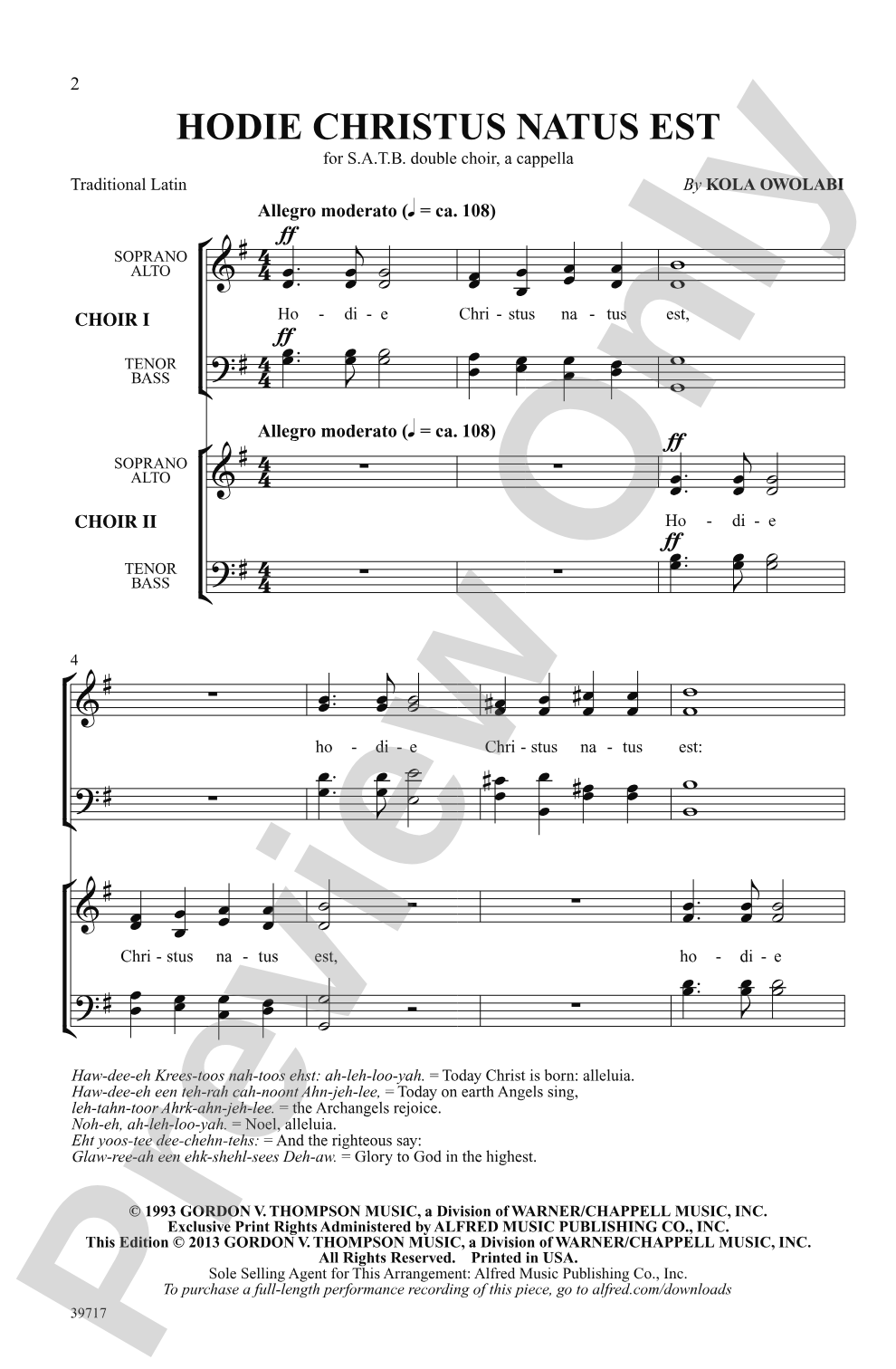
Hodie Christus Natus Est Sheet Music Preview

Hodie Christus Natus Est: SATB Choral Octavo

By Kola Owolabi

Item: 00-PO-0001560

Digital Download
$2.05

Minimum order quantity: 20 copies

Description
Perform this majestic double choir motet antiphonally, surrounding your audience or in traditional formation. As evidenced by the work's Renaissance character, this contemporary composer was influenced by his many years of singing 16th century music with a cathedral choir.

Hodie Christus Natus Est: SATB Choral Octavo isn't in MakeMusic Cloud just yet...but it could be. Let us know you'd like to see it, and you'll help shape what comes next. In the meantime, start a free trial and dive into thousands of interactive titles your students can play along with today.

Sample Audio
0:00
0:00
Sample Video
Additional Details
Series: Alfred Choral Designs
Publisher: Alfred Music
Page Count: 8
SKU: 00-PO-0001560

More about this title

About the Composer: Kola Owolabi

Kola Owolabi is a composer whose deep immersion in Renaissance choral music has shaped his compositional voice. His years singing cathedral repertoire from the 16th century informed his approach to this work, bringing historical authenticity and structural clarity to contemporary sacred writing.

Why we love this

This motet carries the weight and dignity of Renaissance polyphony while remaining entirely singable for modern choirs. The antiphonal layout transforms your choir into a dynamic spatial experience, and the eight-page score moves quickly enough to hold ensemble focus without requiring virtuosic technique.

What to expect

The piece unfolds with the ceremonial grandeur of a cathedral service, voices weaving together in gentle counterpoint that feels both reverent and alive. Renaissance harmonic language meets contemporary clarity, creating music that feels timeless rather than historical.

Who it's for

Any SATB choir seeking Christmas repertoire beyond the conventional carol. This work suits choirs comfortable with polyphonic texture and directors interested in exploring spatial sound design.

How to get the most out of it

  • Experiment with placement before settling on formation. Antiphonal writing works well with choirs facing each other across the room or positioned on opposite sides of the stage; even a front-back split can create conversational effect.
  • Balance the dialogue between choirs carefully in rehearsal. Mark dynamic shifts between full ensemble passages and solo choir moments so the architectural quality of the motet emerges clearly.
  • Shape phrases with Renaissance sensibilities: lean into text, breathe at cadences, and resist pushing tempo. The harmonic language will feel most resonant when singers listen vertically rather than rushing horizontally.
  • Record a rough performance early in rehearsal to hear how acoustics affect the antiphonal design in your performance space.

How to use it

Place this in a Christmas concert's second half, perhaps after more familiar congregational works, to deepen the liturgical mood. It pairs well with instrumental interludes or organ accompaniment and works equally in formal concert settings or worship contexts.

Skills your students will build

  • Reading and singing Renaissance polyphonic texture
  • Performing antiphonal or spatial music effectively
  • Balancing blend and clarity across four voice parts in a double choir configuration
  • Interpreting text through Renaissance harmonic language and cadential points

You May Also Like